May-June 2026
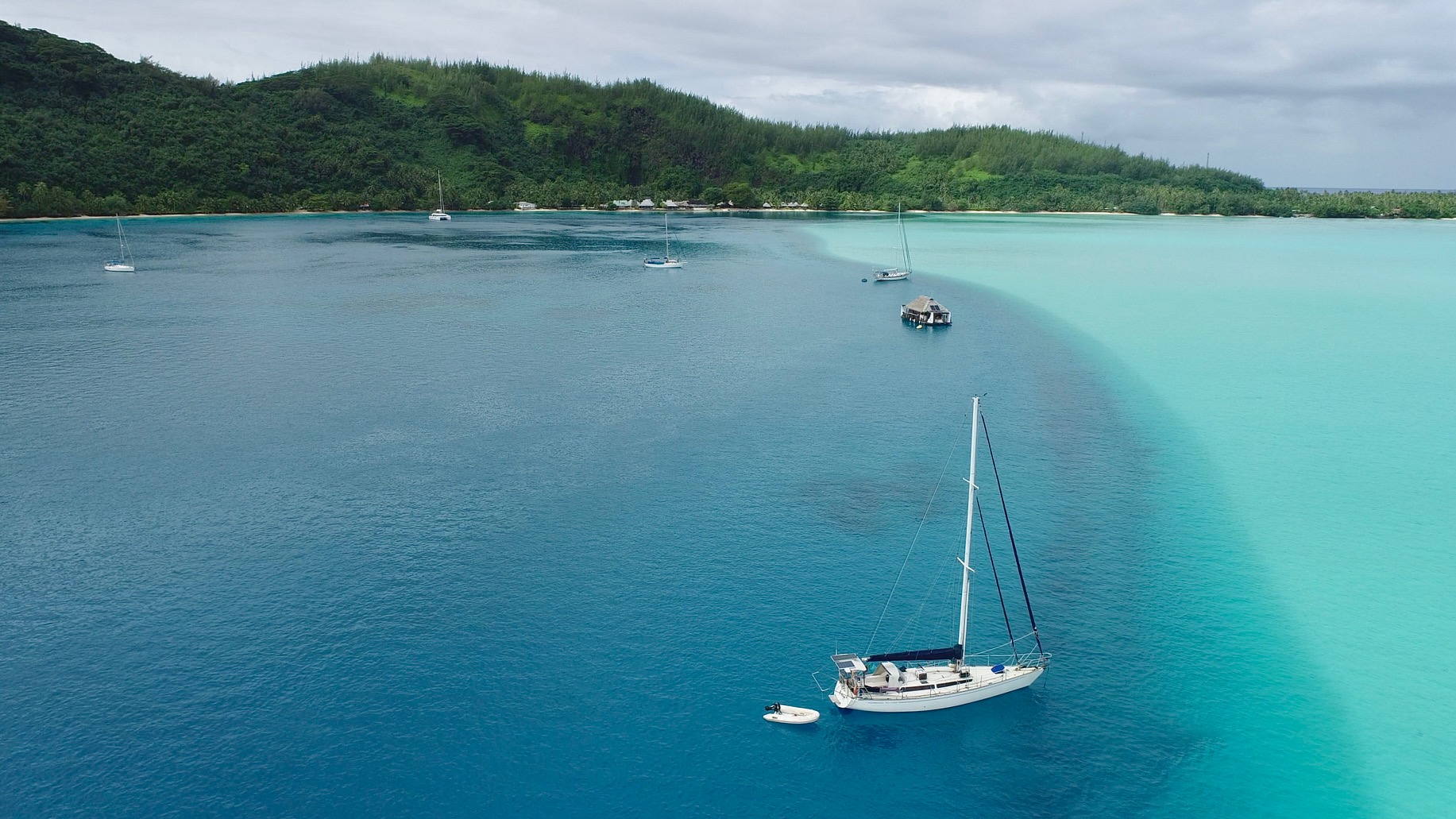
(photo credit for featured image above goes to Roger Fenwick on “Atisha”)
The sudden loud thud on the cabin top sent us shooting up into the cockpit to find that the gooseneck -the part that secures the boom to the mast- had broken. We were on our way from the Tuamotus to Tahiti, a short 2-day passage. It had been somewhat unpleasant with an uncomfortable sea motion and veering wind. To top that off, we were both a bit off colour probably from some dodgy chicken we had before leaving. It was that veering wind that precipitated an accidental gybe pushing the boom across the boat and stressing that old gooseneck. We do have a boom break that should have slowed the boom, and prevented the large force, but for some reason it did not work on this day.
Although it was raining and generally miserable, we were grateful that it was daylight. Phil swung into action and got the main sail down with some difficulty, and proceeded to secure the mast-end of the boom by using the main sail halyard. We continued on under just the headsail and were relieved when Point Venus on the north of Tahiti came into sight. We anchored in that same bay as Captain Cook, and licked our wounds. In addition to the broken gooseneck, we had a broken running back stay and sustained some tears in the dodger. After a good night’s sleep, we continued on to the Papeete Marina where we had fortunately already reserved a berth for a few days.
Papeete Marina is situated along the main road of the Tahitian capital. As soon as we pulled into our berth, our senses were overwhelmed by civilization – people and vehicles dashing around, traffic noise and emergency sirens, the earthy smell of dirt and vegetation.
I got busy with messages and e-mails trying to identify the right business to deal with our broken goose neck. After a couple of false starts, we found the right person, and the boom along with the broken piece were quickly whisked off to his workshop at the other end of Tahiti.
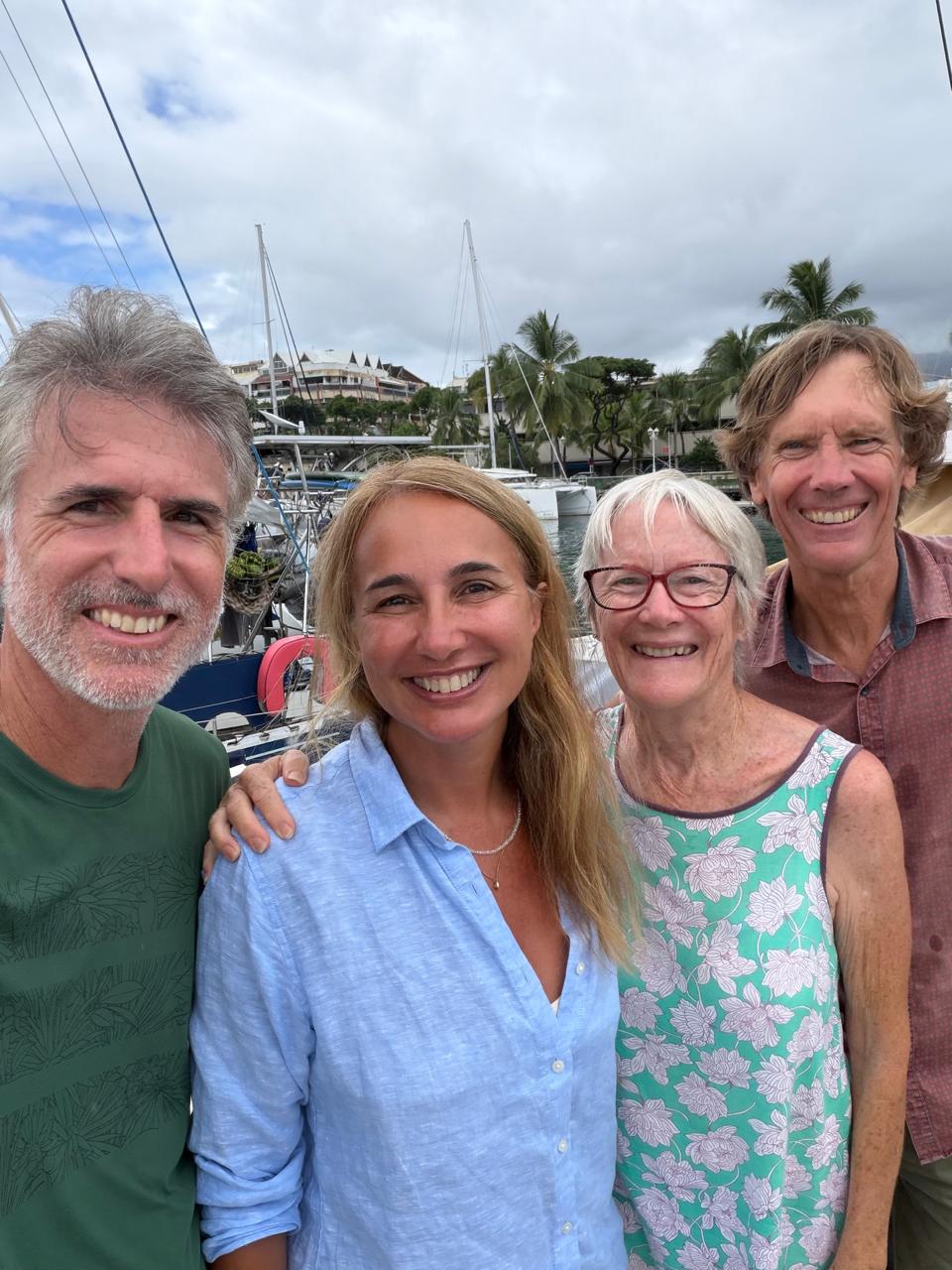
Delightful Brazilian couple, Andre and Lila, who were berthed near us in Papeete Marina. They are just starting on their cruising adventures. We were sorry to be going in different directions.
While we waited we caught up with friends, Noelene and Geoff from Onyx, also in the marina and who we hadn’t seen for a while, and made good use of the central location to stock up on provisions for our forthcoming westward passages. We were pleasantly surprised to see Pat from Fairtide berthed near Onyx. We had met Pat in Tahuata the previous year. He had been anchored near us and Phil noticed he was a solo sailor so we invited him on board one evening. We also squeezed in a visit to the Tahiti and Islands Museum where we learnt some more about the settling of French Polynesia. People of the Lapita culture migrated from Taiwan down through the Philippines and Indonesia and out east through the Pacific. Unbelievable that they travelled thousands of miles against the prevailing wind without knowing that they would eventually find land. It did take them many generations and about 3000 years to work their way across the Pacific as far as the Marquesas, the Gambiers and Easter Island, and north to Hawaii. Some of them worked their way back to New Zealand in the last stage of Pacific settlement.
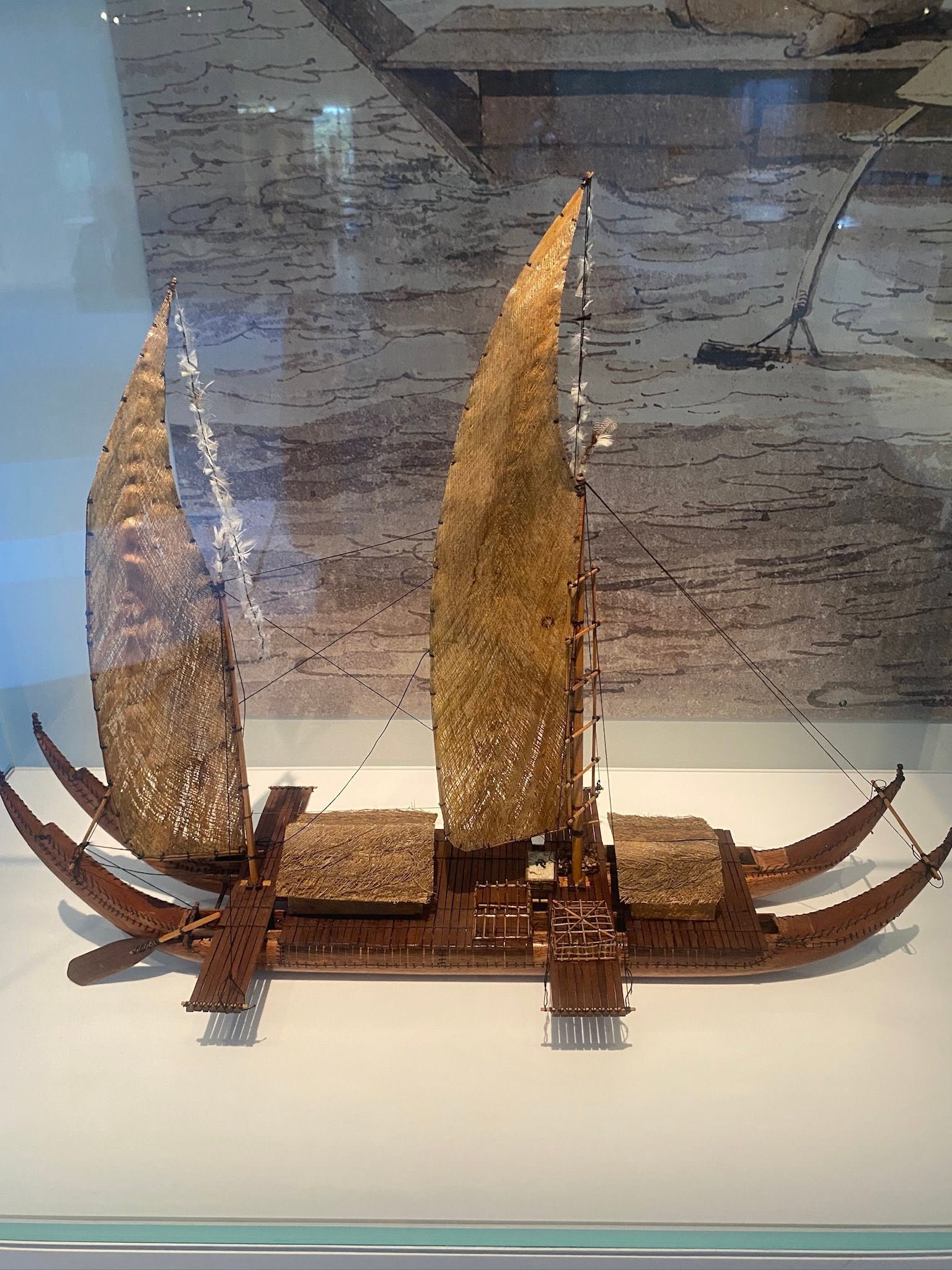
This is the type of boat that the people who settled the Pacific islands travelled in for many miles over the open ocean

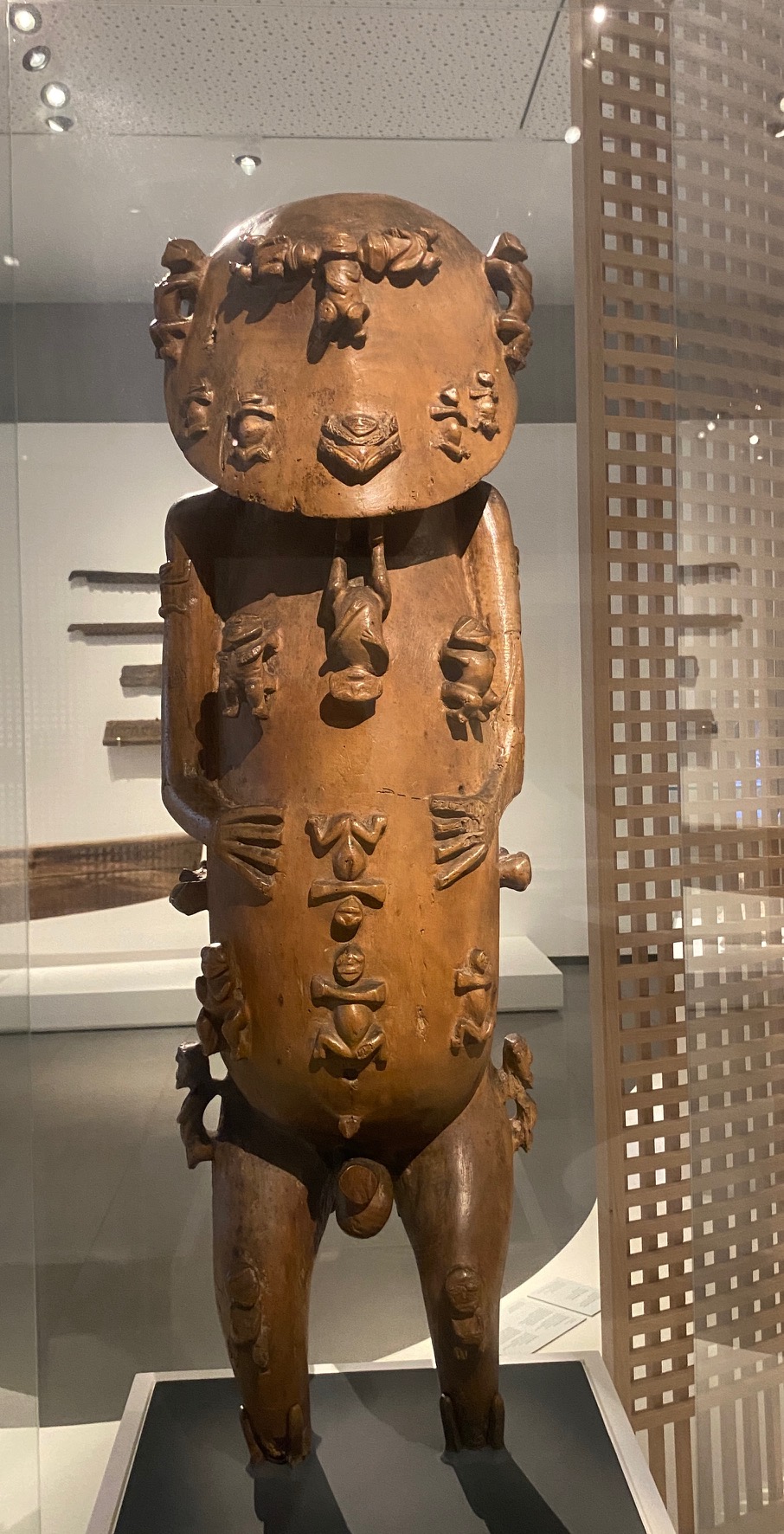
Highly decorative cloak, and a different take on a tiki in the Tahiti and Islands Museum
As we had not been able to go ashore at Point Venus, we took the bus up there expecting that there might be some interesting information about Cook’s visit and his measuring of the transit of Venus, but we were disappointed on that score.
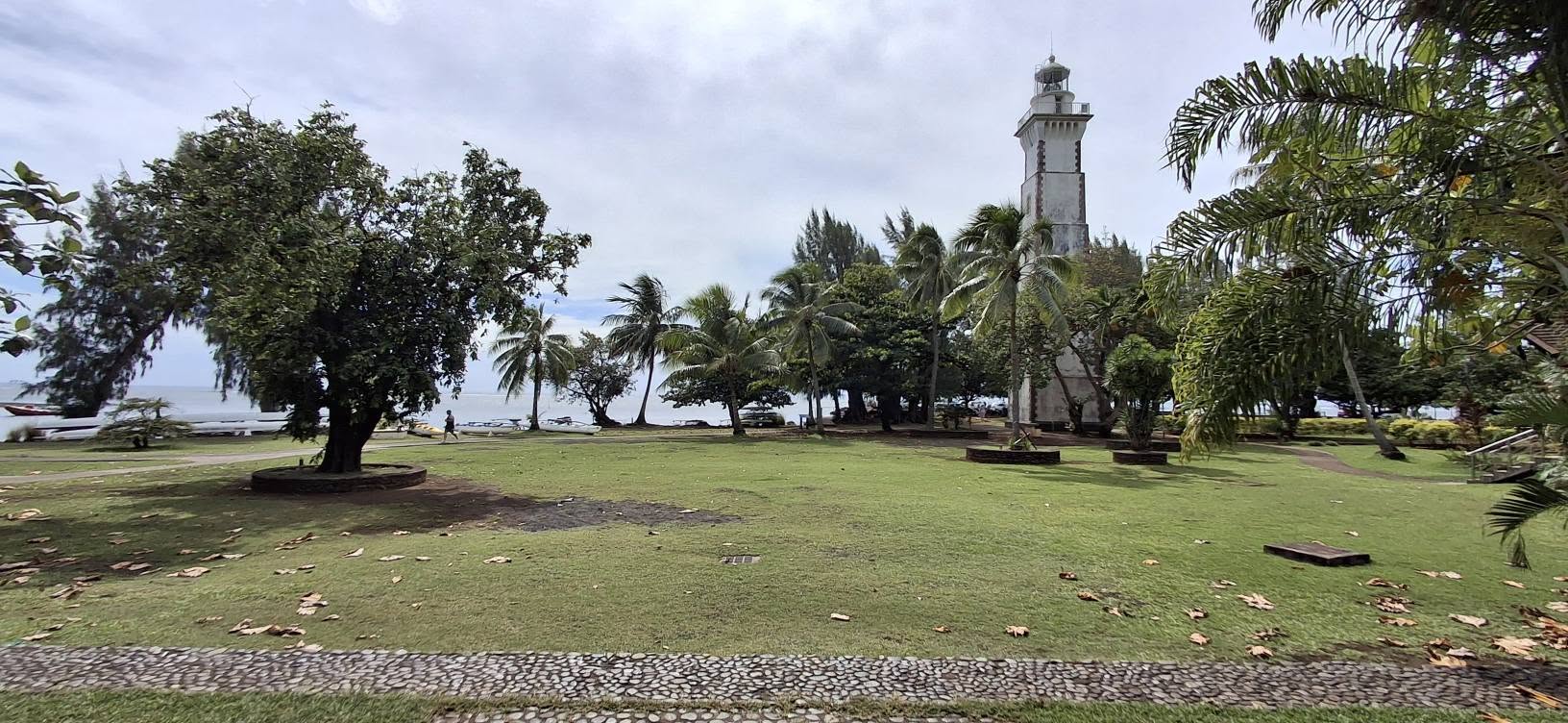
Point Venus with a view of the lighthouse designed by Thomas Stevenson, the father of Robert Louis Stevenson who wrote the famous novel “Treasure Island”
Our final days on Tahiti were consumed by major boat jobs. We picked up the boom, re-installed it and re-fitted the mainsail and its bag. Unfortunately the reefing lines were stolen from the workshop but the owner very quickly offered to replace them with new ones. It was a bit annoying to have another job to do but the upside is that we have new lines. Thanks to our friend Kirke on Curious, the tears in the dodger were patched.


The broken gooseneck and the complete new fitting in the boom

Phil and our friend Pat carrying the repaired boom from the drop off point to the boat which was tied up to the public dock in Papeete
We also replaced our very rusty anchor chain with brand new chain. The fact that I can write that in one sentence belies the effort required for the actual job. We arranged to use the technical dock at Marina Taina for the day so we could effect the swap. It turned out to be a day of considerable surge which rushed straight in to the dock lurching the boat around so it was very uncomfortable. It was hot hard work pulling out the 140 metres of old chain, cleaning out the dirty rusty anchor locker, and the bow topside and hull. Then we had to haul the 100 metres of new chain out of the barrel and lay it on the deck to measure and mark off every 10 metres. At least we were able to use the electric anchor winch to get the new chain into the anchor locker. It was a struggle to lift the anchor off the dock and get it re-attached to the end of the chain but we managed. We were glad to be off that dock and out at anchor again.
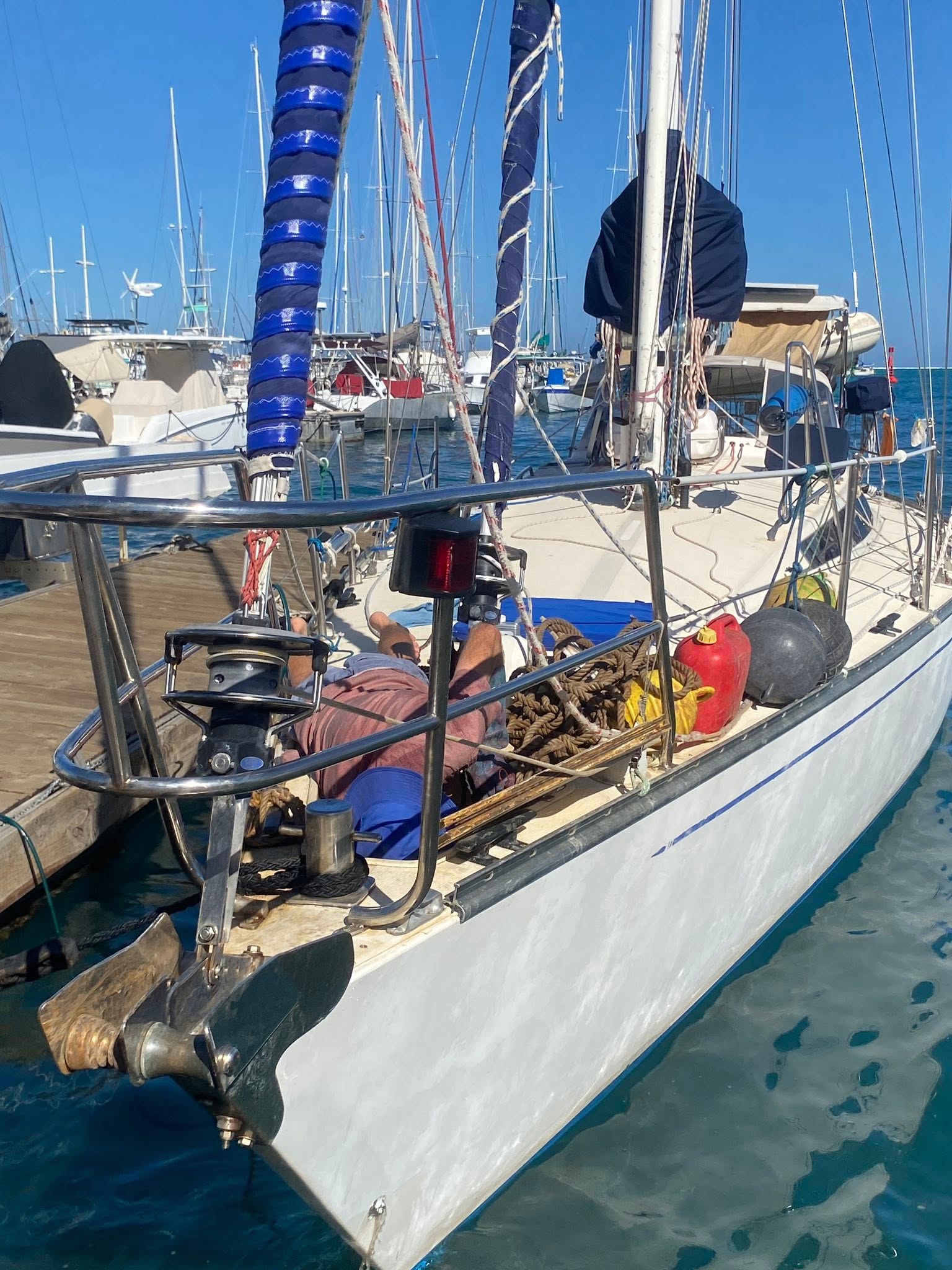
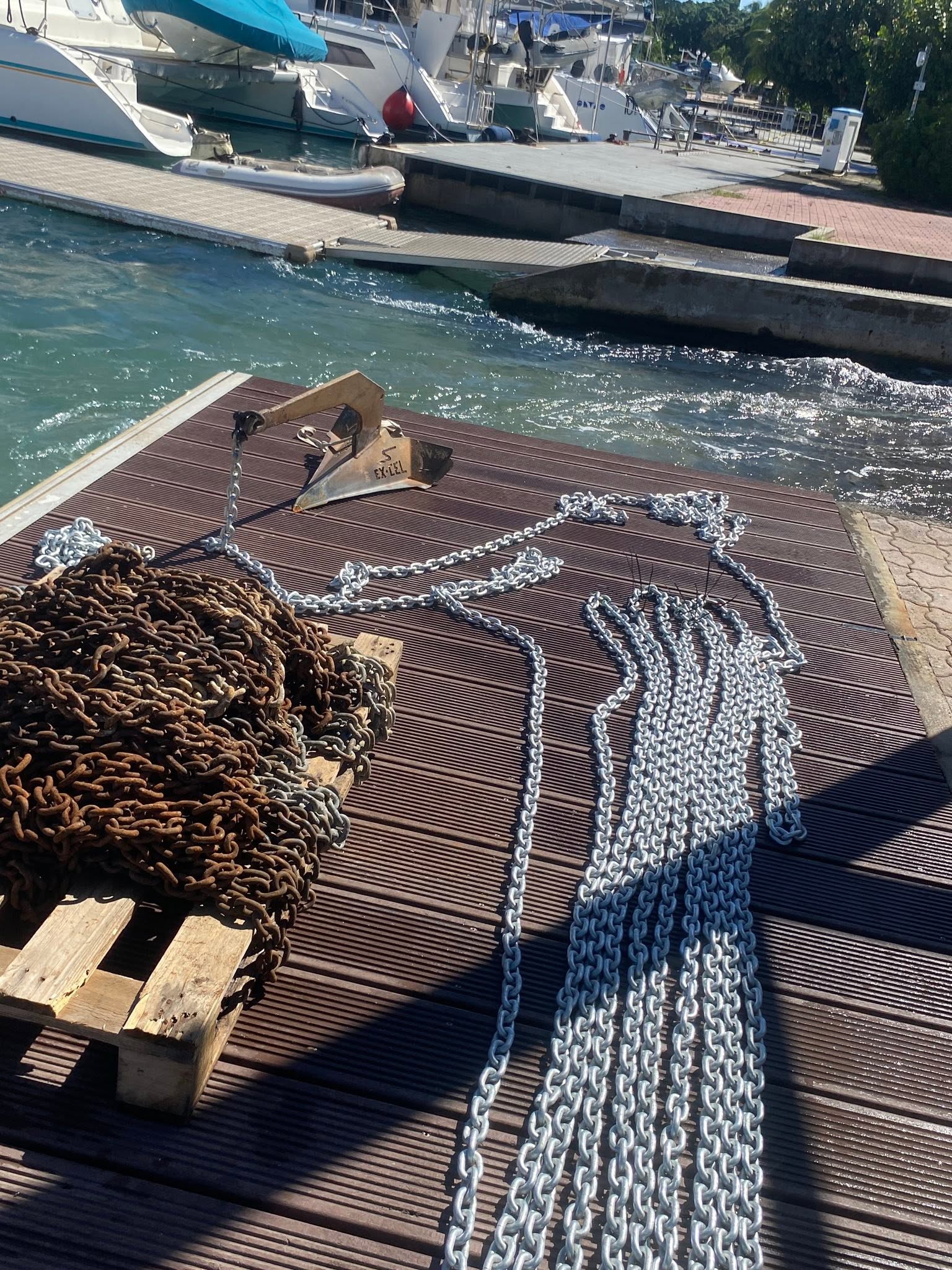
On the left – Phil hard at work cleaning out the anchor locker ready for the new chain. On the right- out with the old and in with the new
With the boat work completed we were free to start exploring the Society Islands, starting with Mo’orea, only 15 miles from Tahiti. We anchored in the stunning Cooks Bay (yes, he was here too), surrounded by magnificent lush mountains.
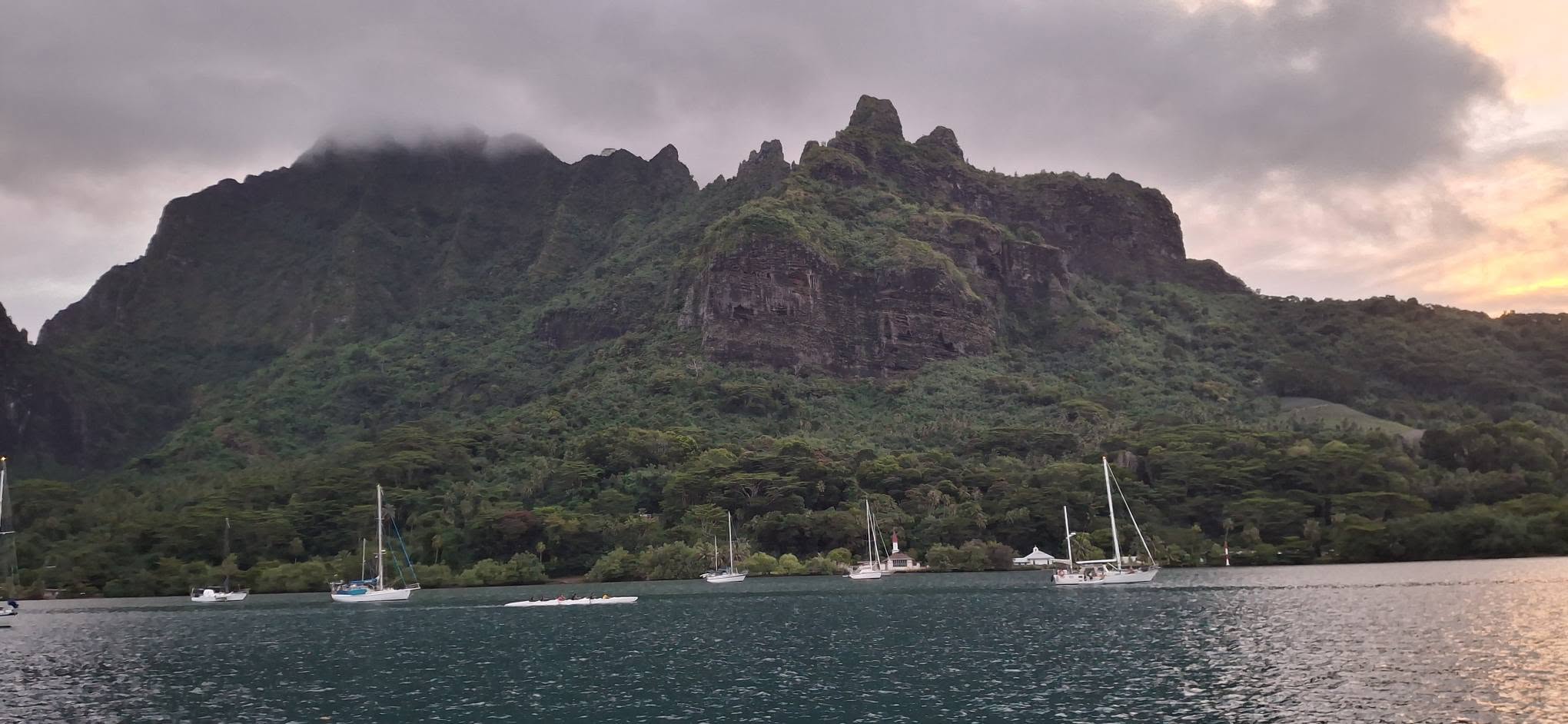
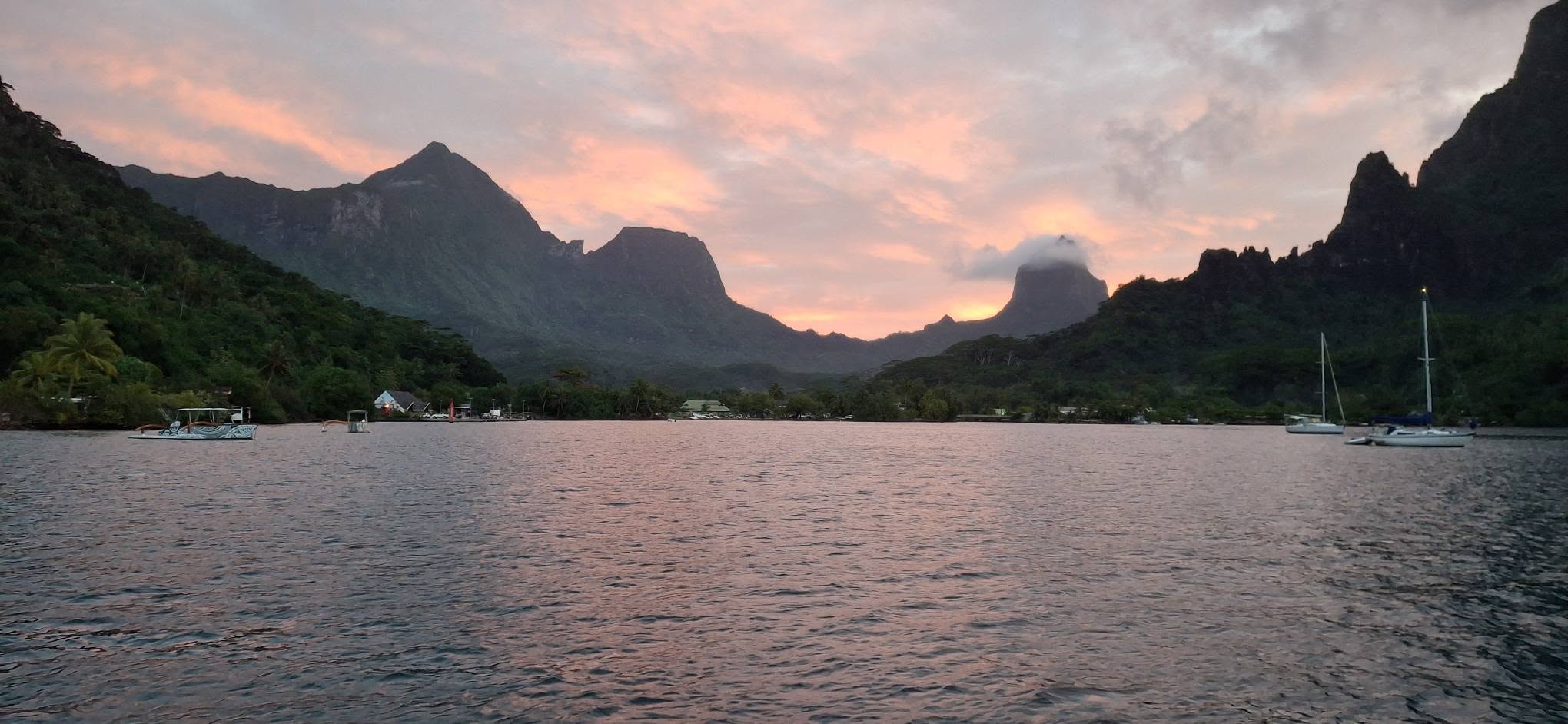
A couple of different views of Cook’s Bay, Mo’orea
Those mountains were calling and so we did the long hike up to the Three Pines Lookout for wonderful views. Every time we do a hike like that I’m so grateful that we are able to be physically active.
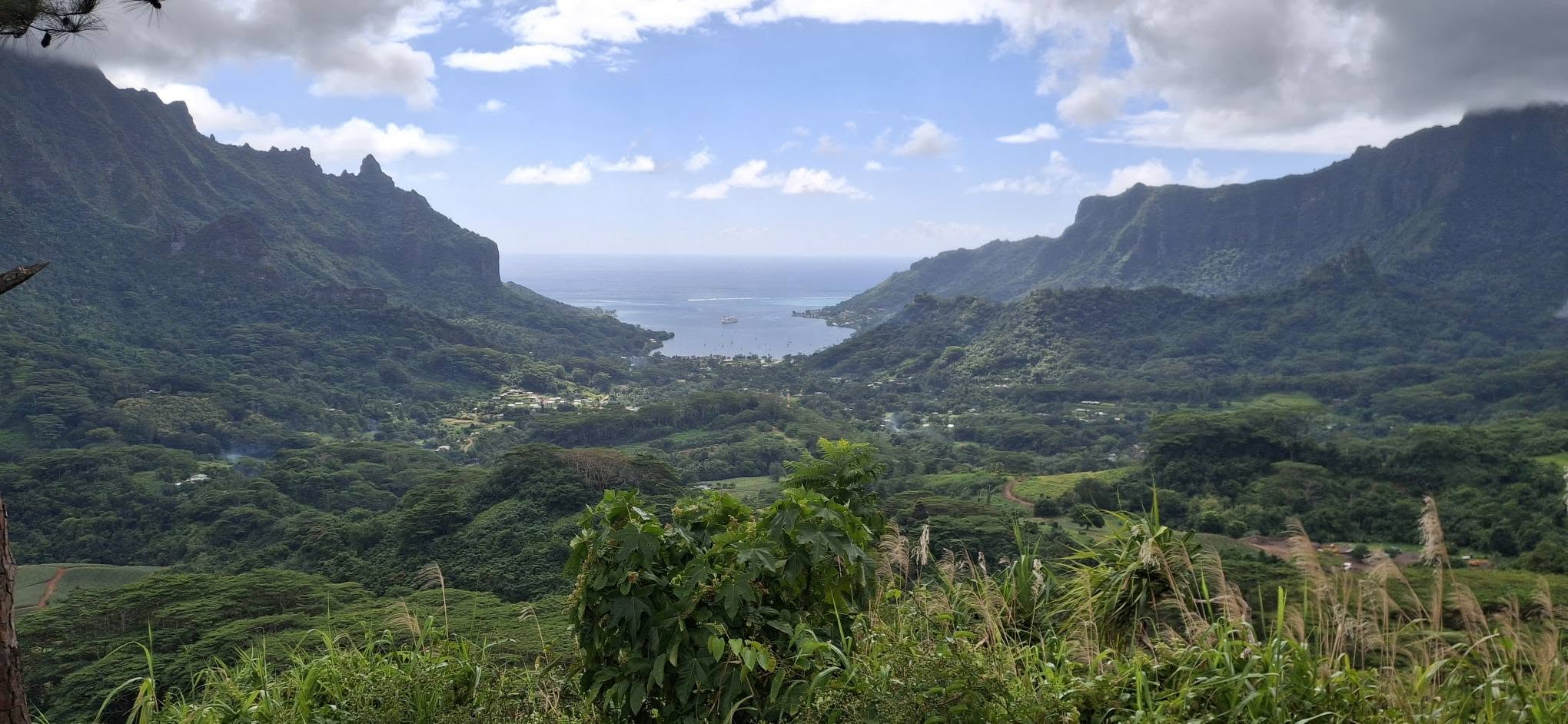
View of Cook’s Bay from the Three Pines Lookout
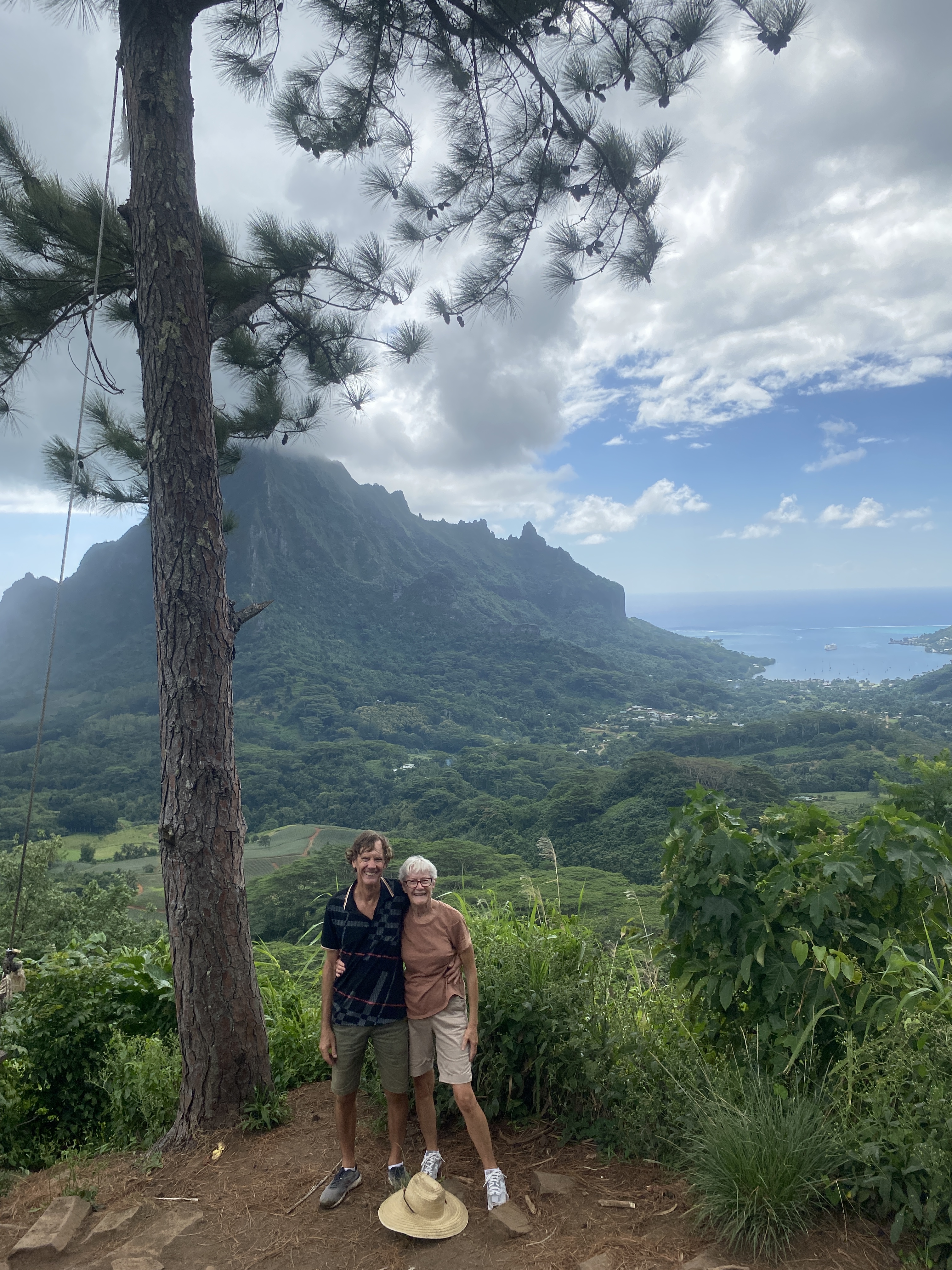
Two hikers happy to be at the top
On another occasion we did an easier 16 km walk through more beautiful country around to the next bay where we visited the local museum.

We met these guys on our walk back from the next bay and had a bit of fun with them
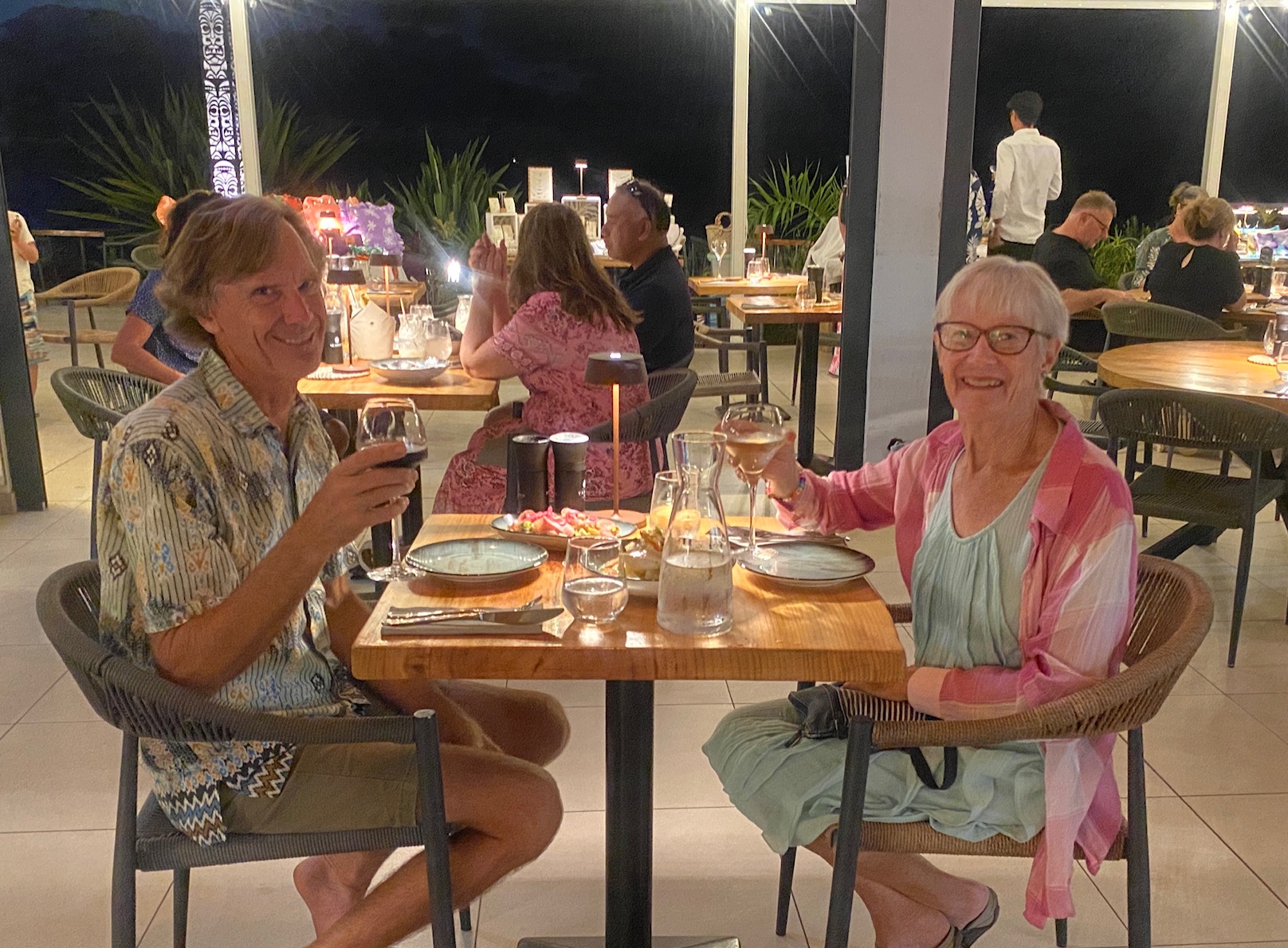
Enjoying a belated birthday dinner at a rather swish restaurant in Cook’s Bay
We continued on through the Society Islands visiting Raiatea, Huahine and Bora Bora. The exquisite colours of these islands stimulated endless awe for nature’s palette – the verdant vegetation and white sand of the islands set in water that runs from turquoise, to cobalt to indigo, with an azure sky above.
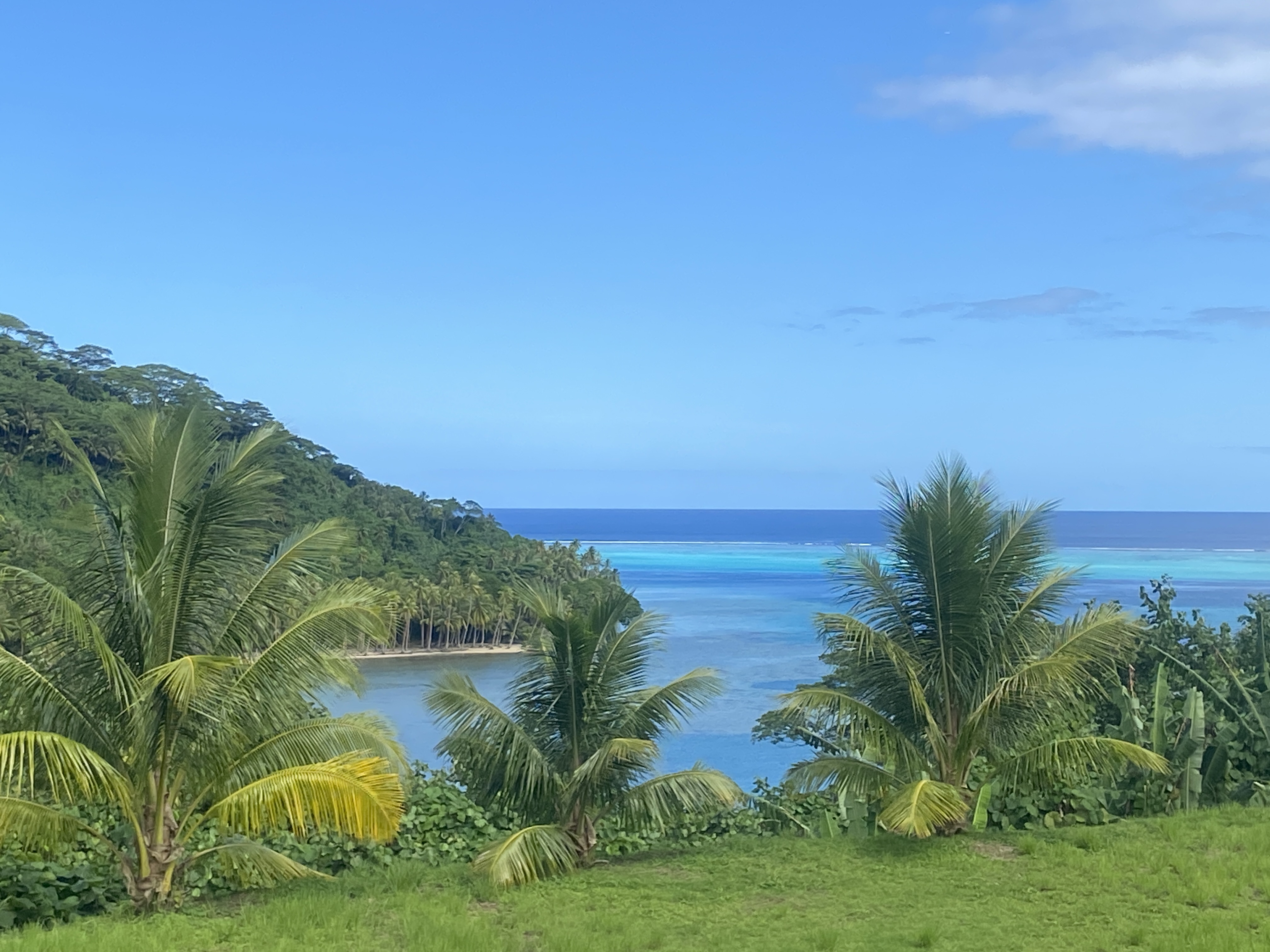
Beautiful colours are everywhere
On Huahine we visited the ruins of Marae Anini, a temple complex was dedicated to Hiro, the god of thieves, sailors and voyagers, and Oro, the god of war. The grouping of sailors and voyagers with thieves might say something about how the earlier societies viewed sailors! The last priest of this marae told a missionary in 1818 that he could remember at least 14 human sacrifices made there to honour Oro.
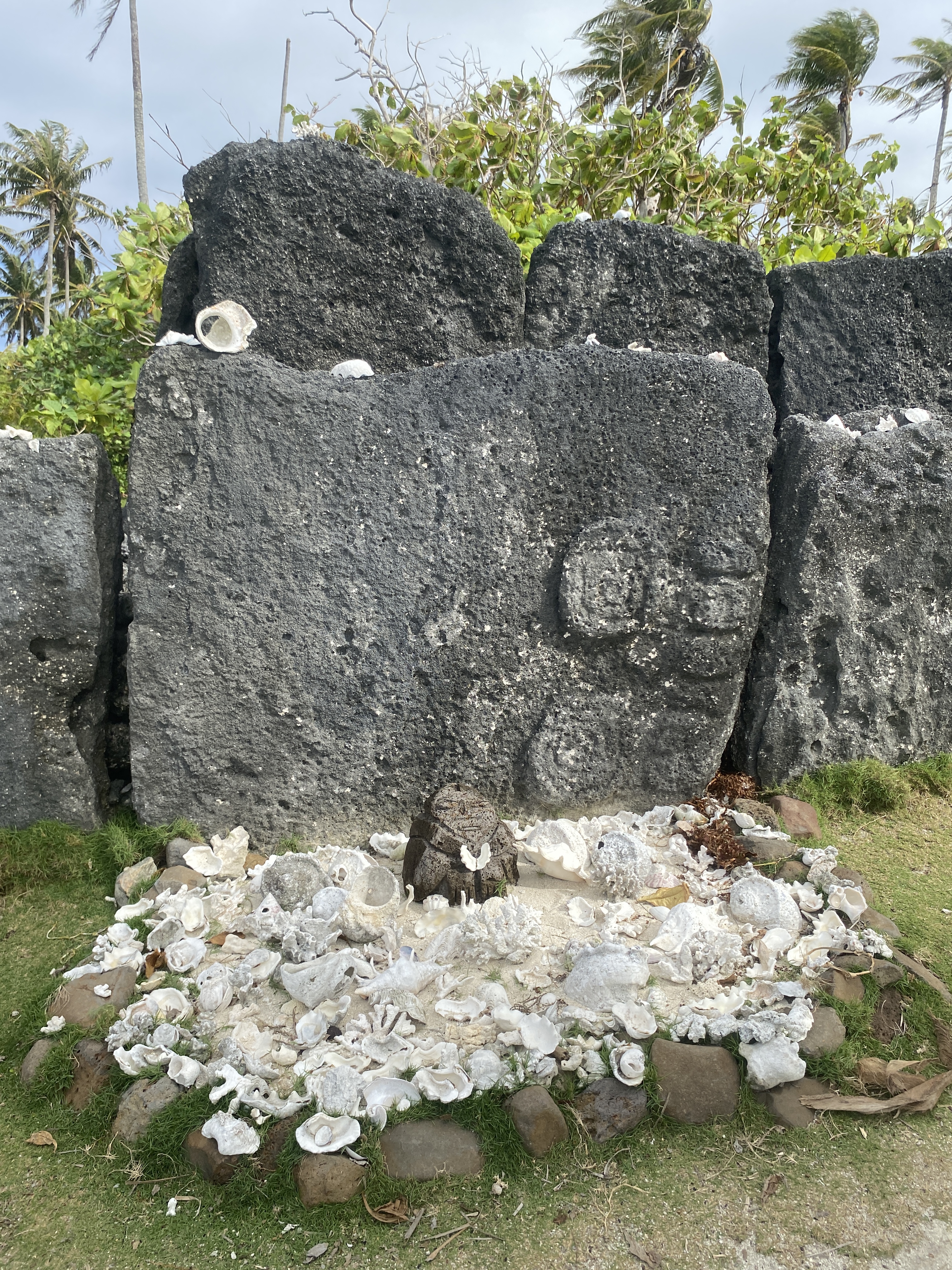
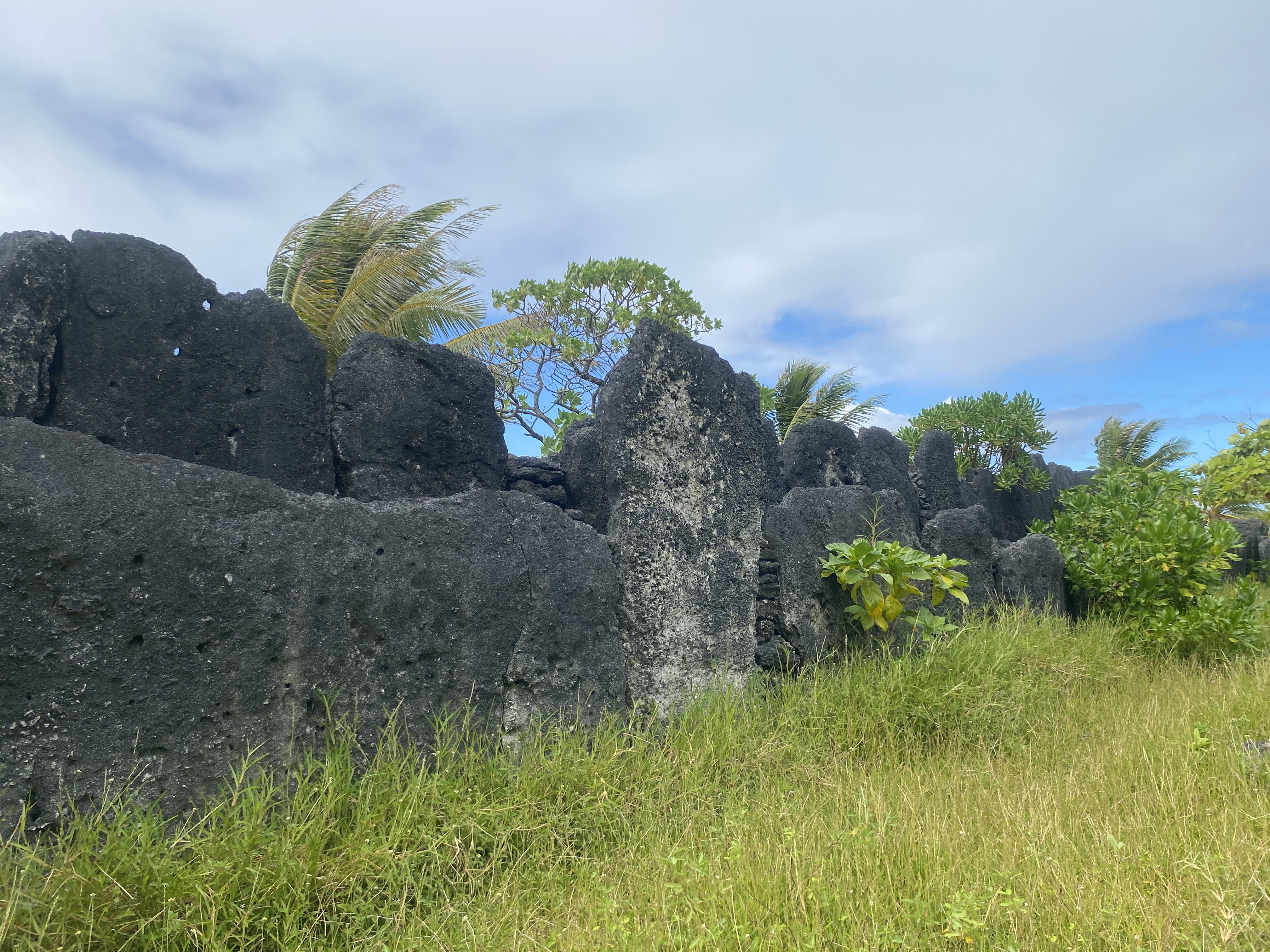
The little that is left of Marae Anini, although I think these shells are more recent additions
To counter that rather gruesome thought, we went for a restorative walk inland starting at a rather gorgeous white sandy beach. The afternoon hush of the forest was the perfect background for the sweetness of the occasional bird call. Lizards skittered back and forth on the path in front of us. The surf crashing on the reef was muffled in the distance.
A forecast significant southern swell demanded that we find a secure anchorage and saw us spend six days or so bunkered down in Faaroa Bay on Raiatea, along with a group of others. While there we combined a trip to the botanic gardens with a visit to a nearby “farm” to top up our fruit supply. The gardens were delightful dinghy ride along a quiet creek that emptied into the bay. We got to know a group of new friends and enjoyed a crowded but happy sundowners on our boat the night before we moved on to the next anchorage.
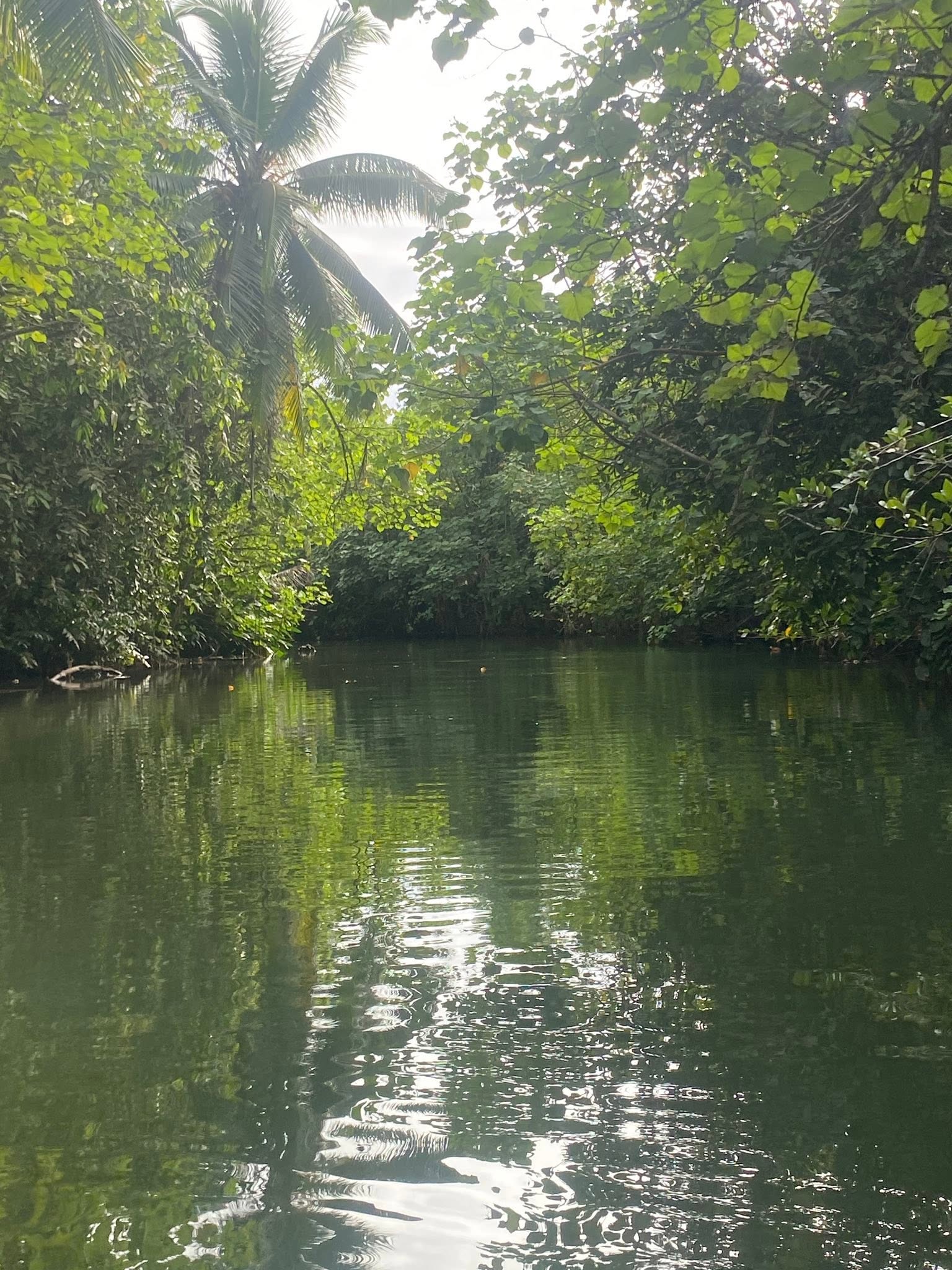
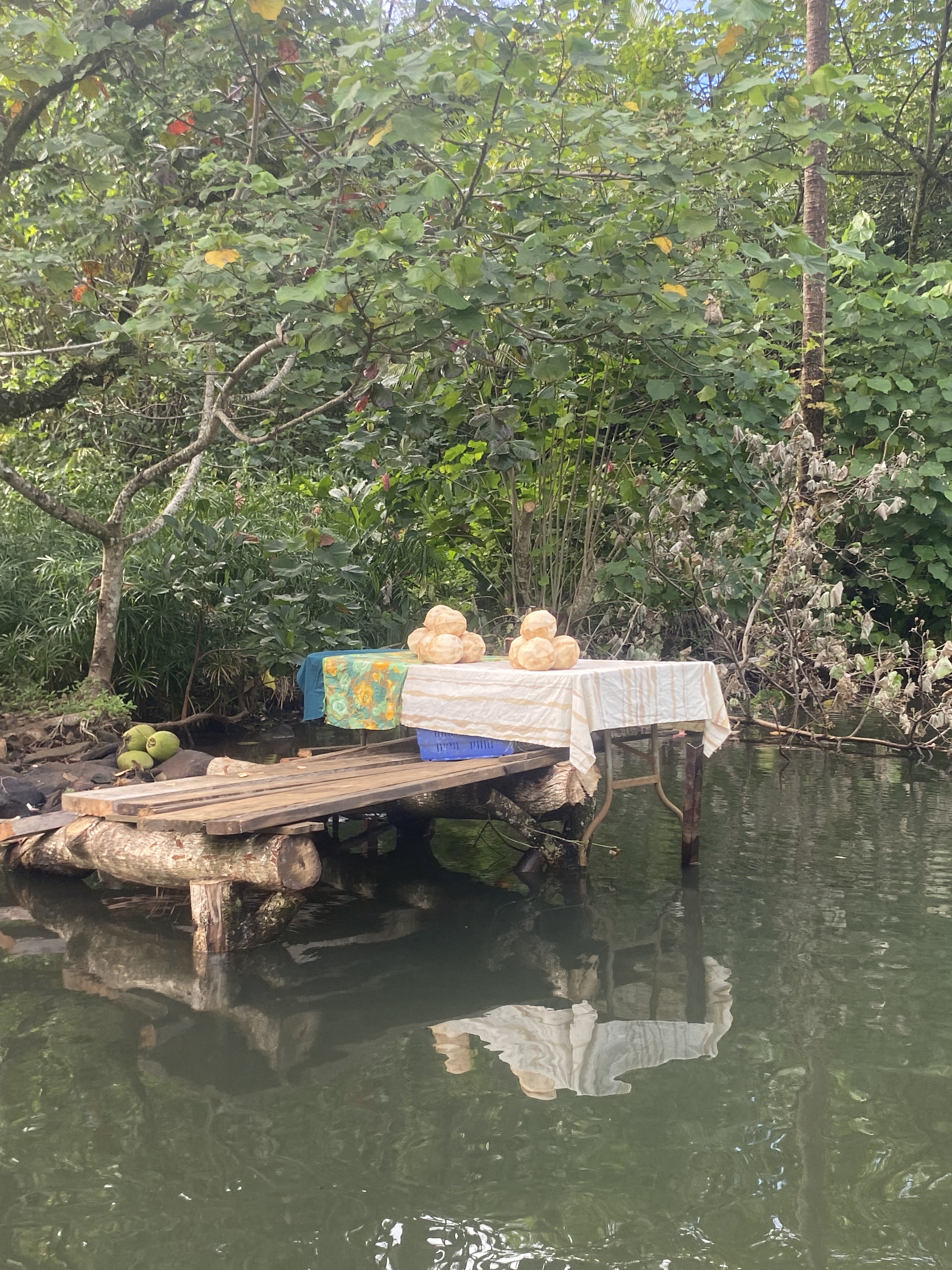
The creek leading to the botanical gardens with a “fruit stall” along the way
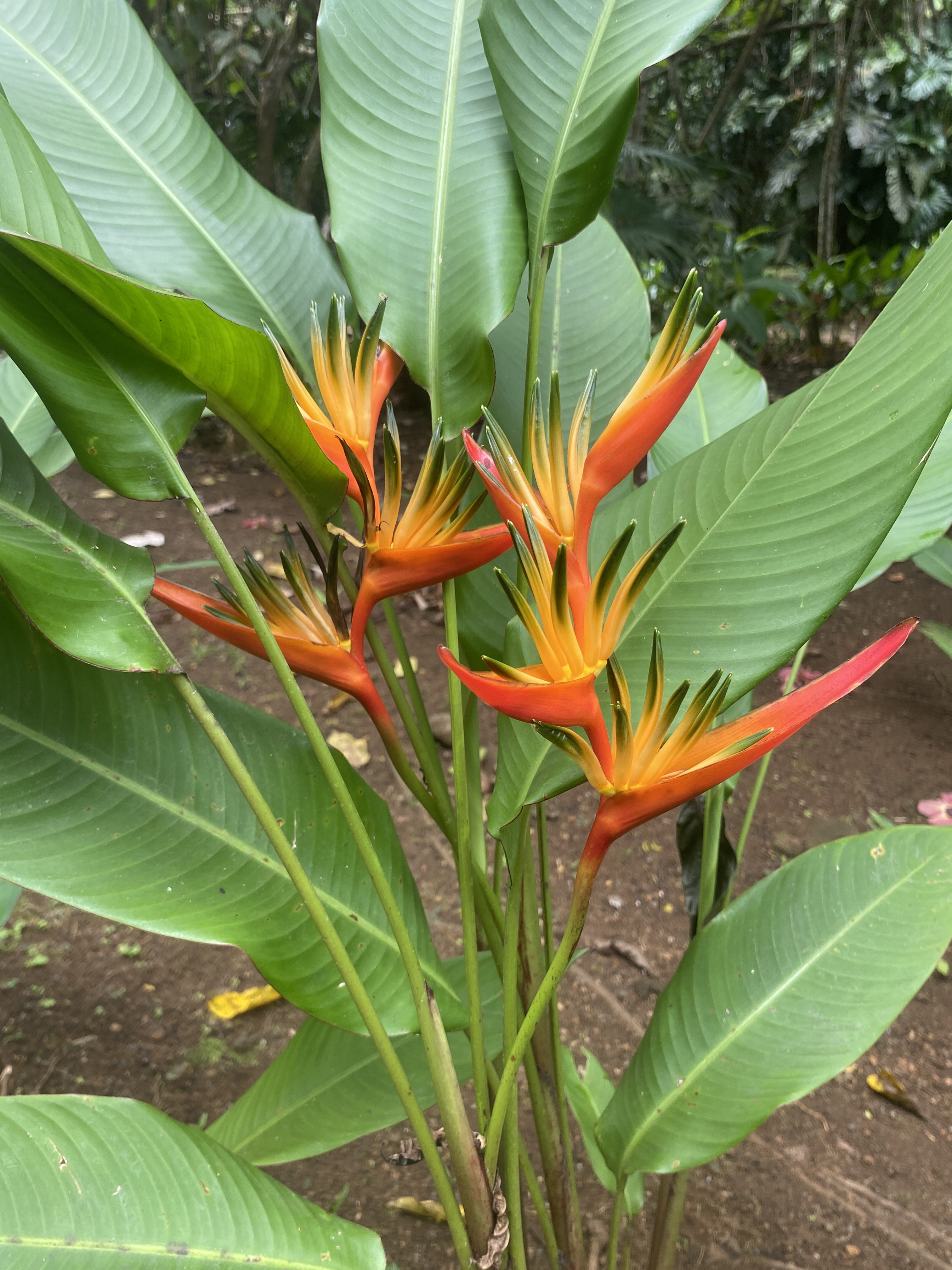
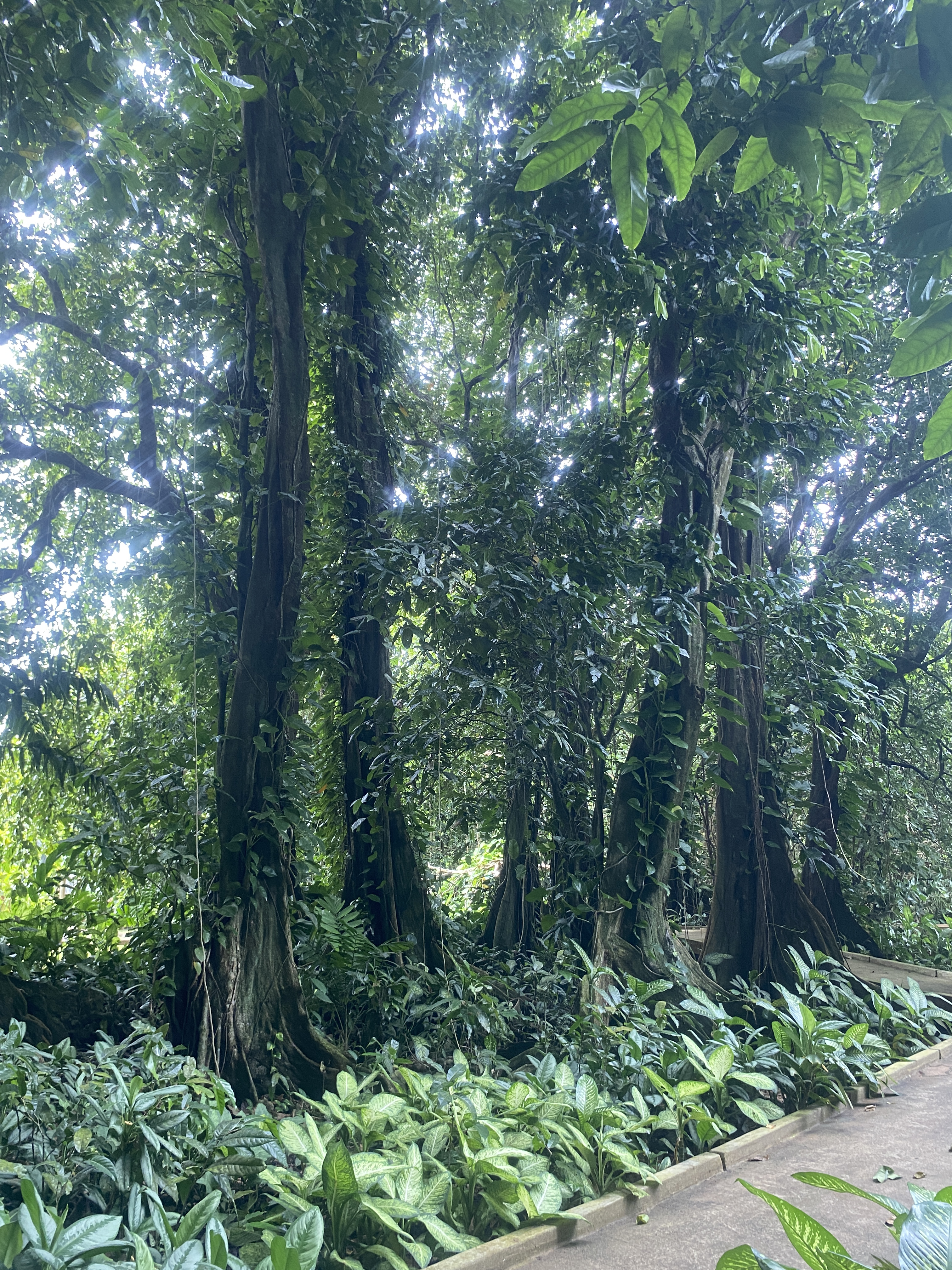
Vibrant tropical flowers, and cool paths through displays of various foliage plants

The farmer harvesting some rambutan for us
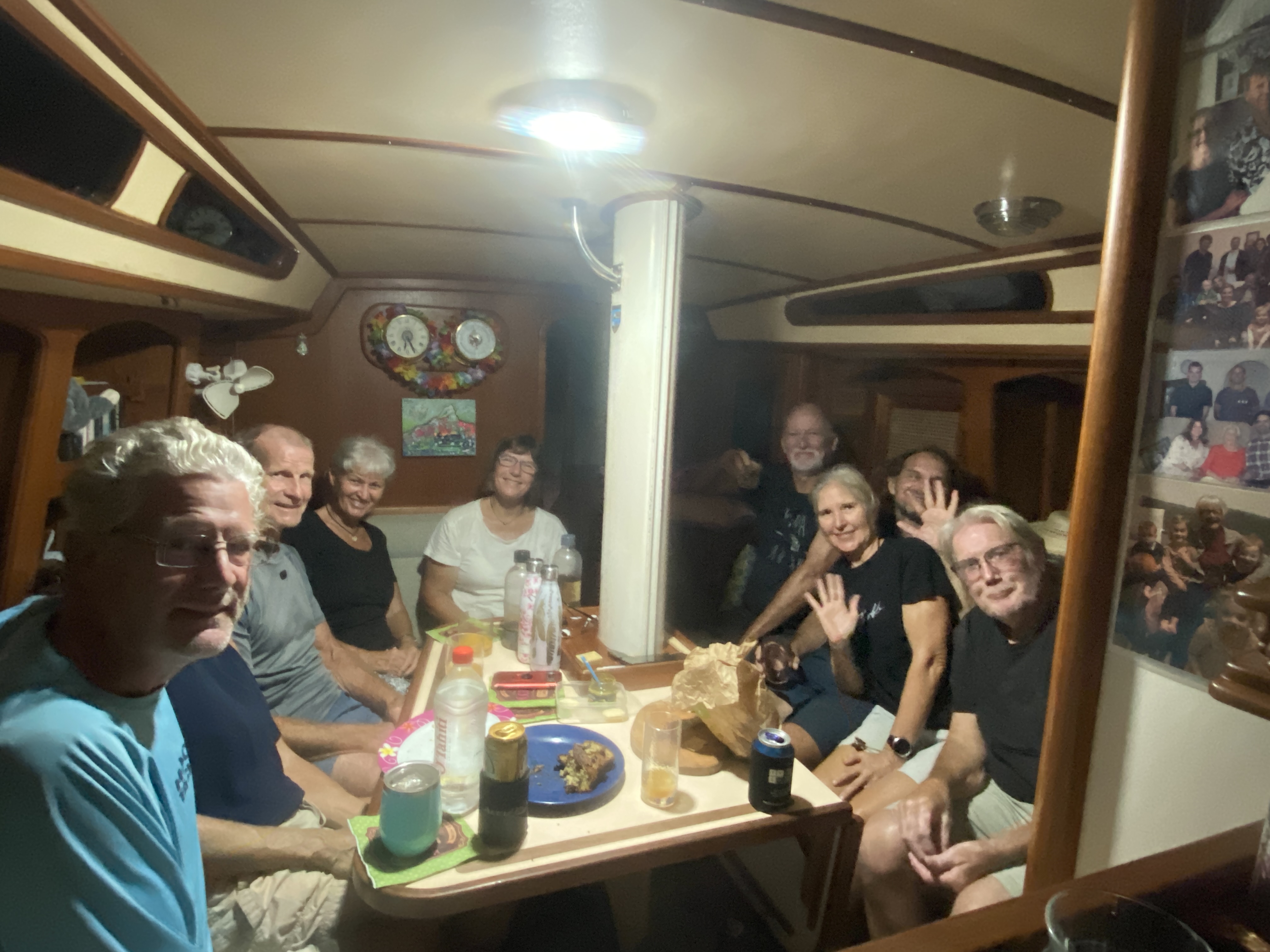
The Faaroa Bay gang on board Paseafique
In preparation for checking out of French Polynesia and further re-provisioning, we moved to another anchorage on Raiatea. Our timing was lucky for one of our new buddies, Pat, who had got into a spot of bother trying to tie up to the town dock in quite strong on shore winds. Between us, and Jenny and Roger on Atisha, we managed to help Pat secure his boat so he could get fuel, and then move to another section of the dock. We all needed a cold drink and a lie down after that!
We had an easy sail over to Bora Bora, another spectacular location and the last of our French Polynesian harbours. Unfortunately our stay there was coloured by the weather, and yet another breakdown. One of the reasons for going to Bora Bora was for Phil to climb Mt Pa’ia but It was quite windy and rainy, which would have made the hike untenable as the last section involves almost vertical climbing over rock using ropes. Furthermore, the mountain top was shrouded in cloud virtually the whole time we were there.
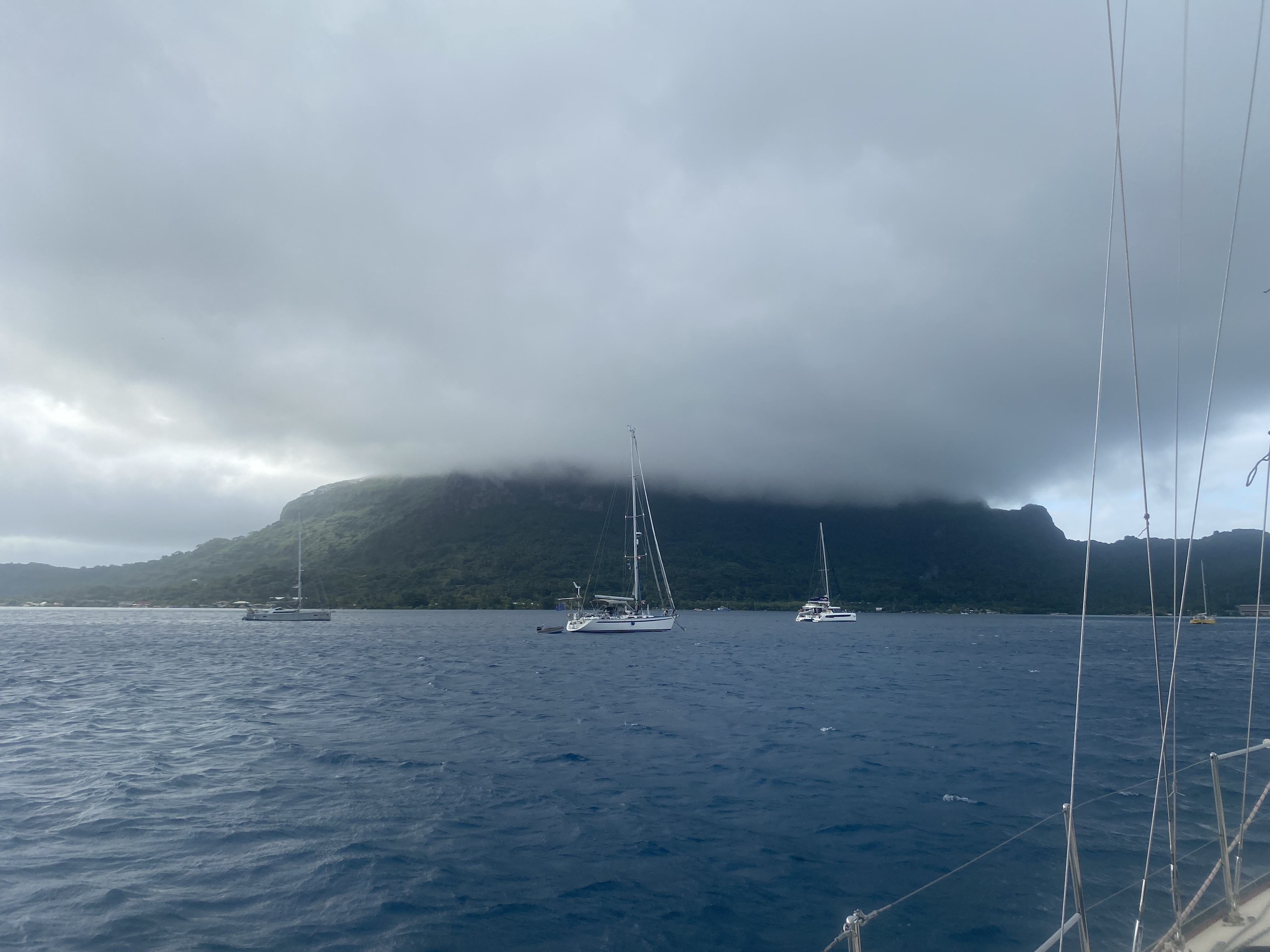
No point climbing to the top of Mt Pa’ai in these conditions!
When the wind died down somewhat and the rain cleared, we could get ashore for some exploring but just as we approached the dinghy dock and Phil throttled back the engine, it stalled, and it wouldn’t start again. So we then spent a very frustrating few hours trudging up and down the muddy main strip of Bora Bora chasing new spark plugs and the relevant tools to change them, clean fuel and oil in case that was the problem, and finally an outboard mechanic. The petrol station sent us to a marine business but their mechanic only worked on their internal jobs (?), but the guy did give us a phone number for someone else. We didn’t have a local sim card so we went back to the petrol station to ask if they could phone the guy for us, which they willingly did, but the phone number was missing a digit! Defeated, we returned to the dinghy dock. While all this was going on, we had an offer from a NZ yachtie couple to tow us back to our boat which would have been quite an exercise due to the distance and the small outboard on their dinghy. It was very kind of them to offer as they were anchored in a different direction. Then a solo sailor, Steven, who was from our anchorage turned up and he offered to tow us back to the anchorage. While we were waiting for Steven to return from his errands, Phil decided to give the outboard one more try, and it started!! So we managed to get back to the boat under our own steam, and the outboard has been working fine since then – until the next time.
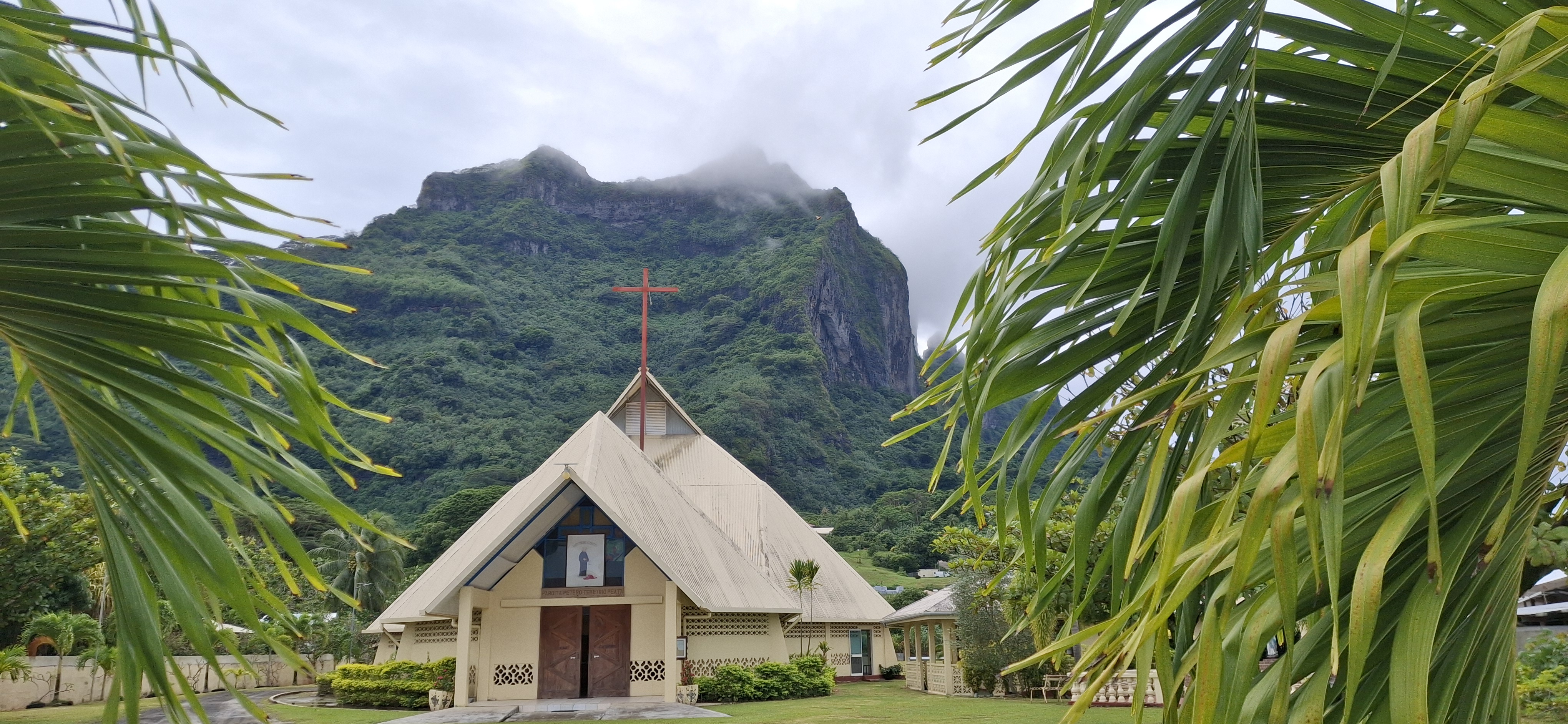
This is a very religious part of the world
During our time in the Society Islands, a recurring topic of conversation amongst our yachtie pals was the selection of route to get across the so-called dangerous middle – the stretch of Pacific Ocean between French Polynesia and western Pacific destinations including Samoa, Tonga, and Fiji. It’s a long stretch of about 1,400 nm with not many ideal places to break the trip, a fact that is further complicated by the increasing unpredictability of the weather, the changing location of the South Pacific Convergence Zone (which is an area of unstable weather, erratic winds and squalls), and ocean swell generated by storms in the Southern Ocean. There are basically two main routes. The “southern” route which makes use of the last two small atolls of French Polynesia, two Cook Islands (Aitutaki and Palmerston), and Niue as stepping stones to Tonga. The French Polynesian atolls both have passes which can be very difficult, Aitutaki has mooring difficulties and is quite expensive especially if you get stuck in there due to poor weather, and Palmerston and Niue are both open roadstead anchorages. Of course there is the option to miss one or all of those stepping stones. The “northern route” can incorporate those last two French Polynesian atolls if desired, and then heads up to the northern most Cook Island, Tongareva (Penrhyn), before turning west towards Samoa. There is the option to call in at Suwarrow, an uninhabited atoll of the Cook Islands, but strictly speaking yachts are not meant to stop there unless the rangers are in residence, and this year their arrival wasn’t expected until August at the earliest. The legs are longer on the northern route so it requires patience to wait for the right conditions. After much discussion, we opted for the northern route, going straight to Tongareva from Bora Bora.
We were a little bit sad that the outboard problems, breaking the boom gooseneck, and some poor weather took the edge off our enjoyment of the delights of the Tuamotus and the Society Islands, but our visa had run out and it was time to set sail for new horizons.
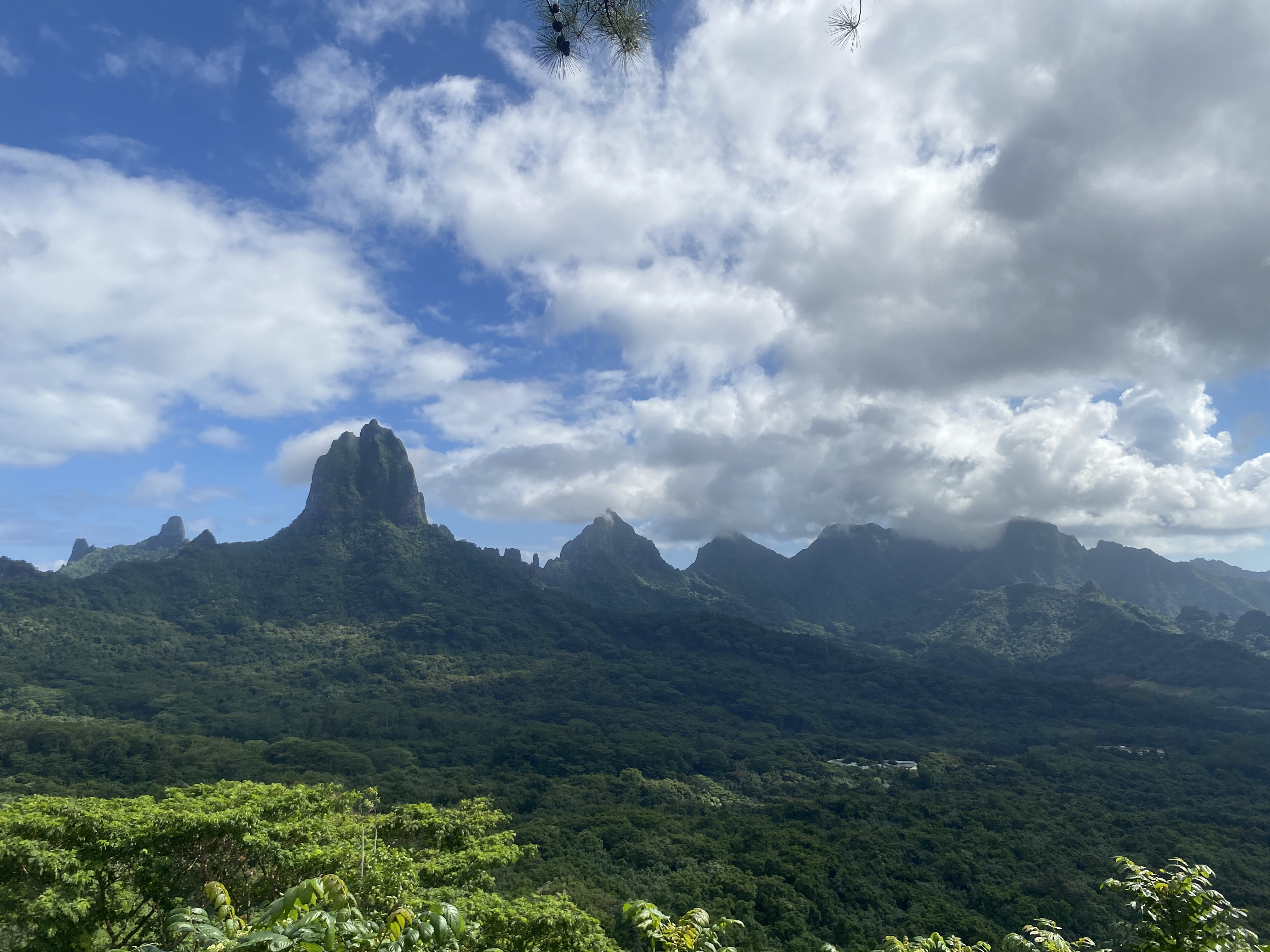
Follow our boat on NOFOREIGNLAND: https://www.noforeignland.com/boat/4748245372764160
 paseafique
it’s always lovely reading amount your adventures Lesley asked Phil ❤️
LikeLike