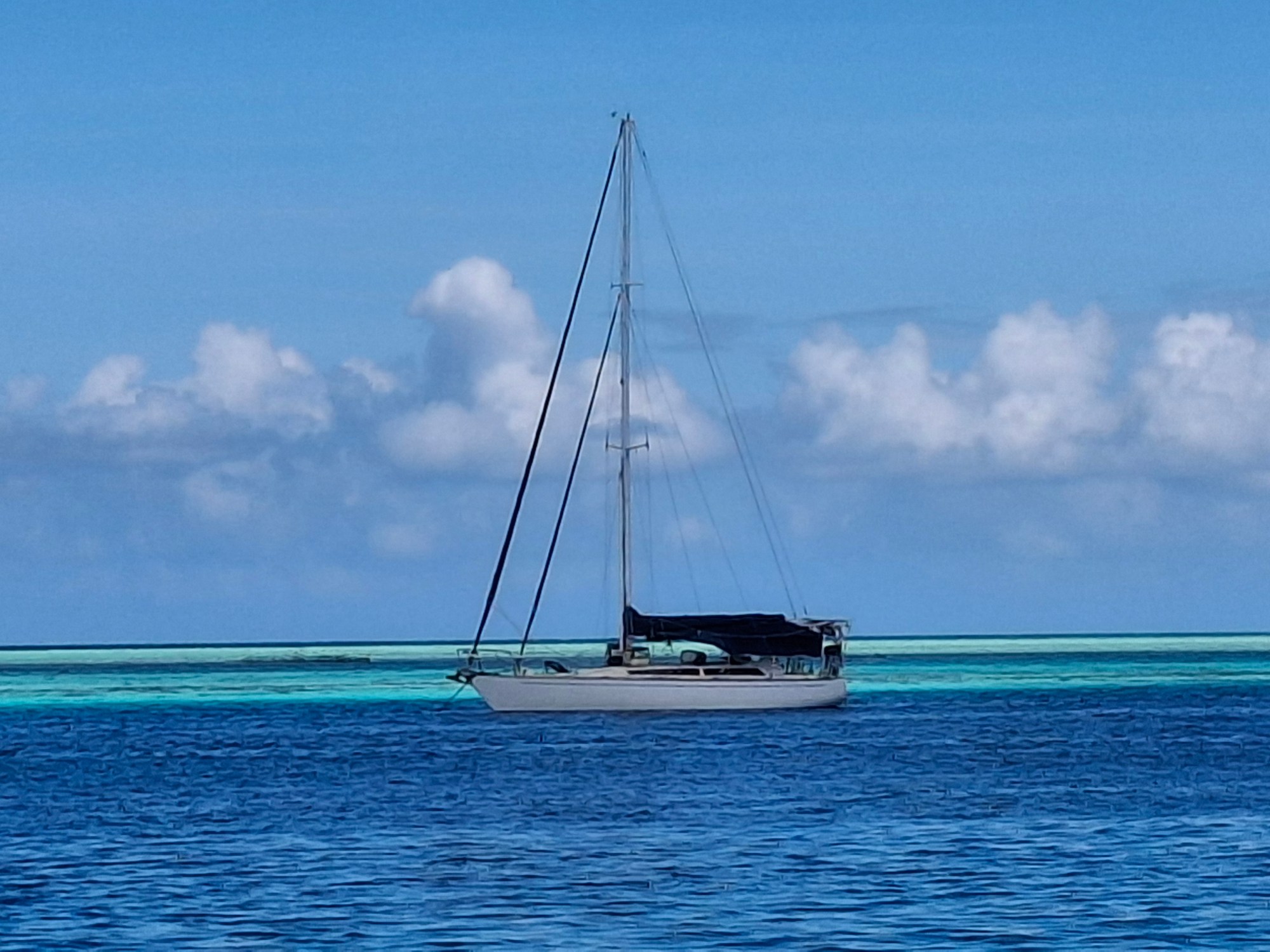
April 2026
Although we had already spent close to three months in the Marqueases in 2025, we decided to have another week or so on Tahuata -our favourite island there. Time in the water testing all the systems before departing for the Tuamotus was sensible too.
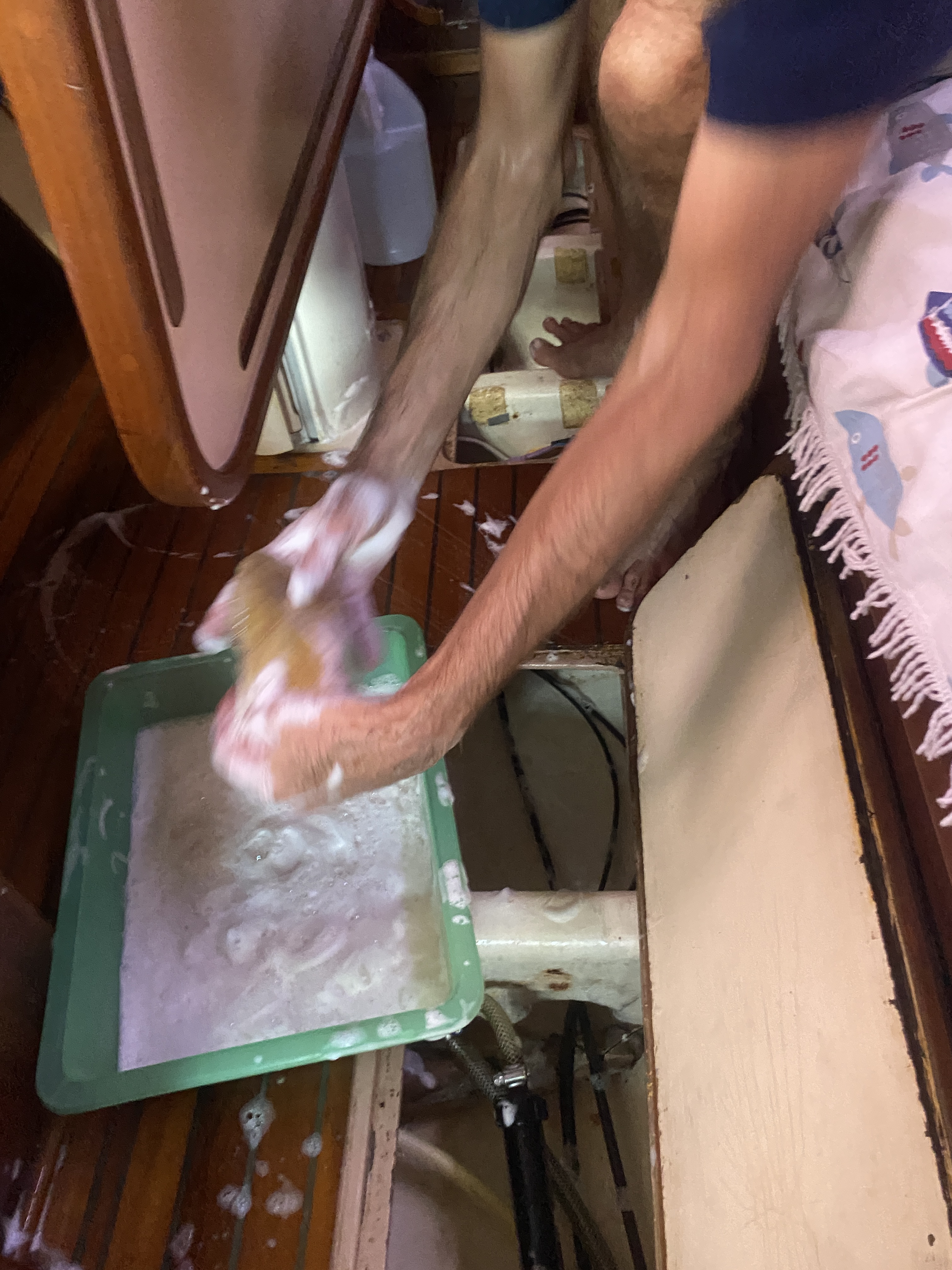
A funny thing happened on that short trip from Hiva Oa to Tahuata. The inspection hatch on one of our water tanks had not been closed tightly enough and so some water leaked out and made its way onto the floor and into the bilge. That’s not the funny thing though. We pulled up the floor boards to mop up the water in the bilge and as soon as we started to do that with our sponges, we found ourselves with suds everywhere! We puzzled over how on earth that had happened. The only conclusion we could reach was that some laundry detergent, stored in the bilge during the passage from Panama, had leaked, and we hadn’t noticed it until the water got in there too.
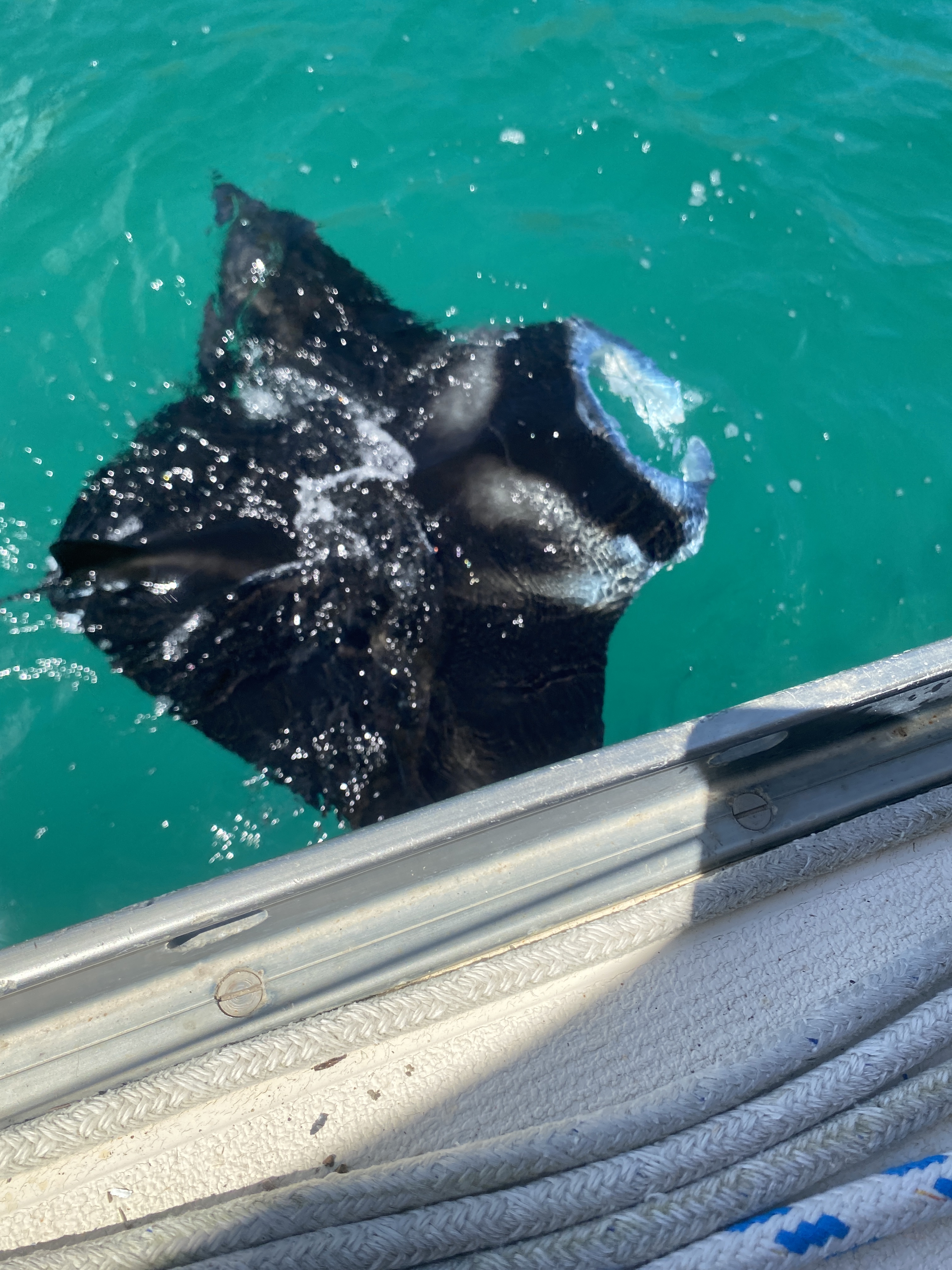
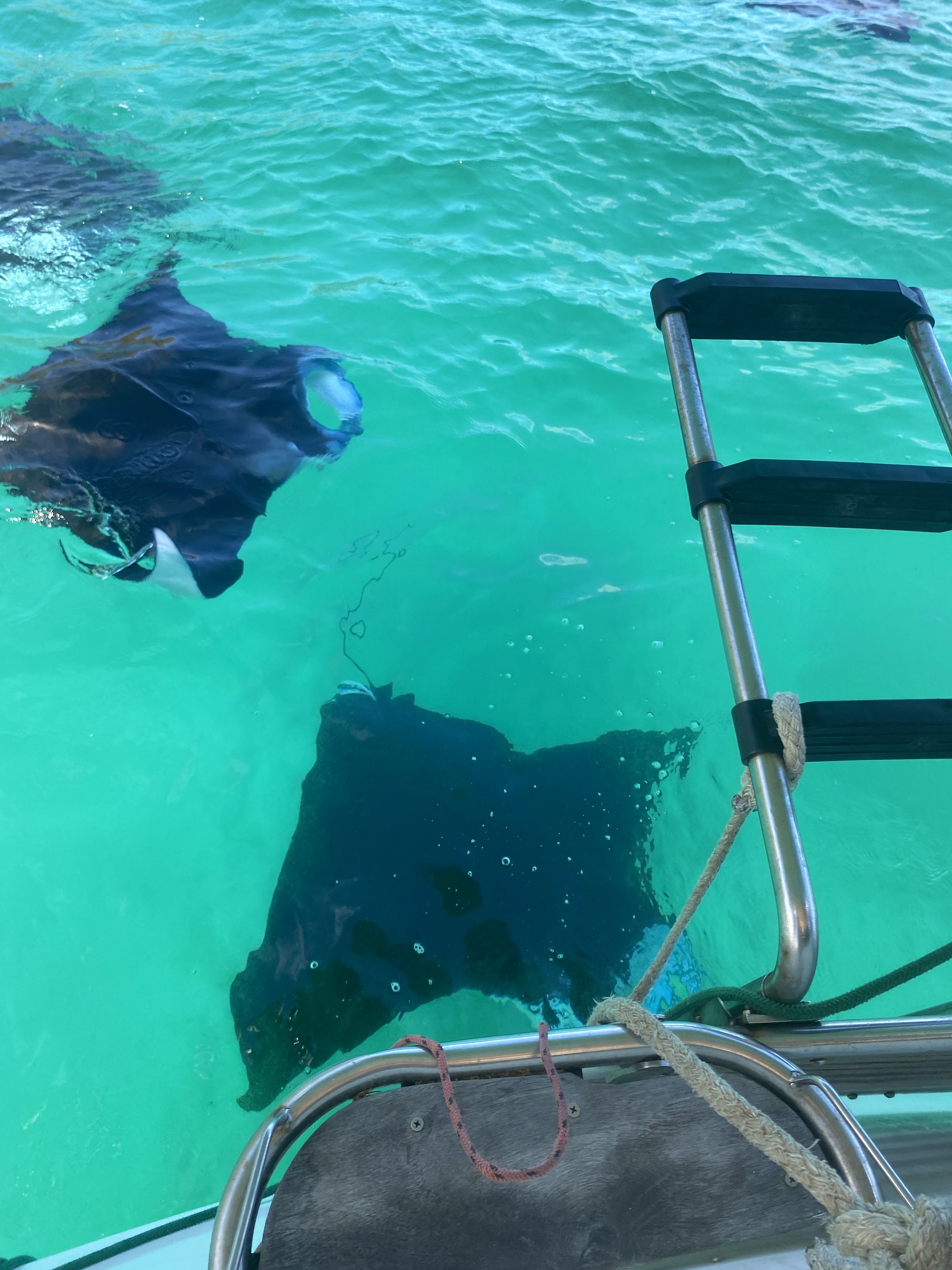
Tahuata once again entranced us with pretty anchorages, warm-hearted people and interesting wildlife. We were treated to a memorable morning visit by manta rays when we were anchored in Hanamoena Bay. We had seen a very large squadron of them feeding just outside the bay the previous evening and we spent ages watching them, willing them to come into the bay. Alas the sun set without a visit. Early the next morning we spotted a couple of them in the bay not far from our boat. Their numbers swelled as these couple were gradually joined by many more. What a magical morning it turned out to be!
Swimming with them was a delight. They are the most gracious of creatures, “flying” through the water, tumble diving, and flashing their white undersides. Curious creatures, they will swim quite close as long as you don’t try to pursue them. I had to keep reminding myself that they are harmless and resist the urge to move away from them. After we were back on board, they hung around for ages patrolling up and down the length of the boat, seemingly encouraging us to re-join them. I’m always fascinated to observe animals in their natural environment and the manta certainly kept me entertained.
It was rewarding to have underwater video footage taken with Phil’s new camera, so we could re-live the swim with them. I had given some thought to pieces of kit that would make the time in the Pacific more memorable, and so I bought Phil an underwater camera for his birthday while we were in Australia. He was over the moon to be able to use it and shoot some great footage.
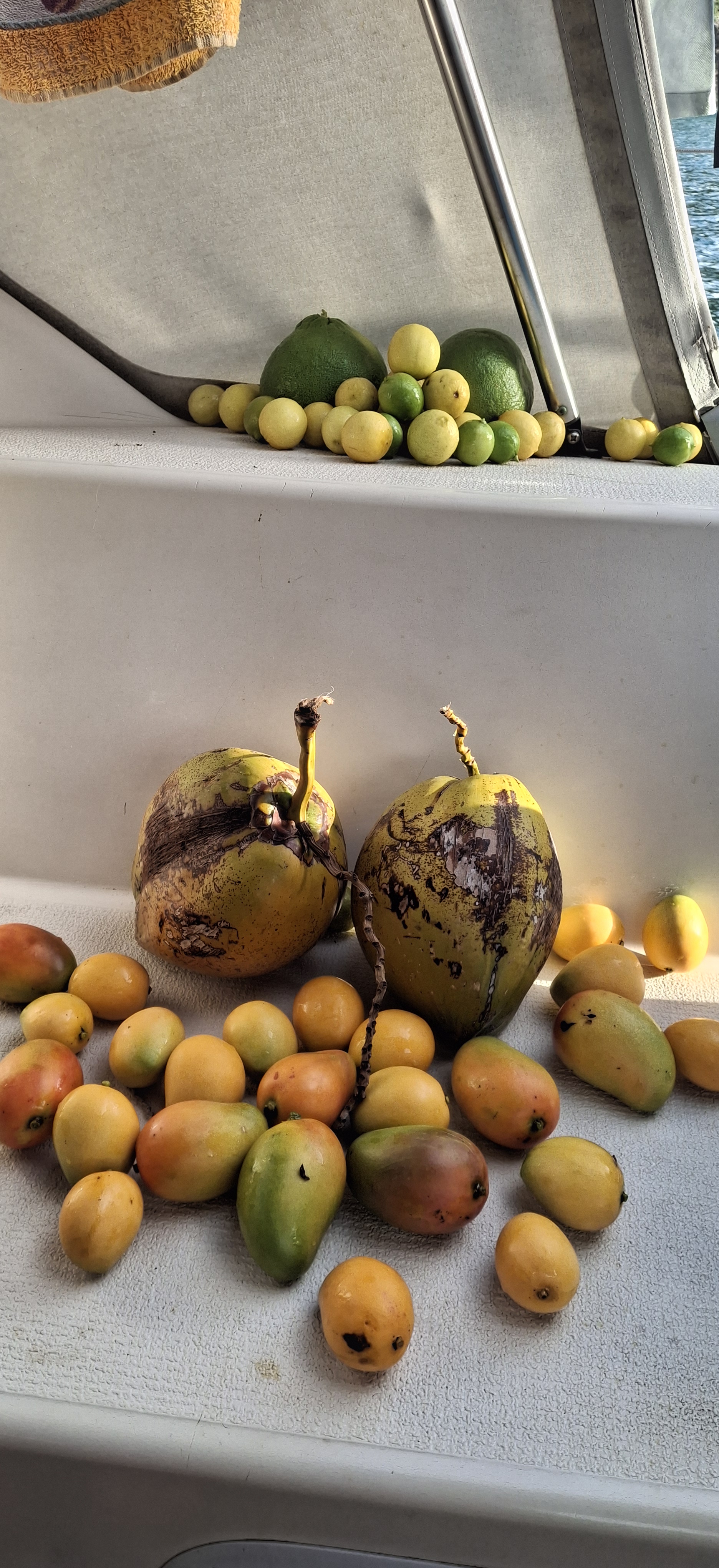
We filled the boat with the Marqueasan bounty of pamplemousse, limes, mango and bananas in readiness for our next adventure. We had previously noted a good banana plantation at Vaitahu so I returned there to buy a bunch of green bananas from the smiling grower. He was so generous that not only did he accept the insufficient remaining coins I had as payment, but he also gave me some mangos.
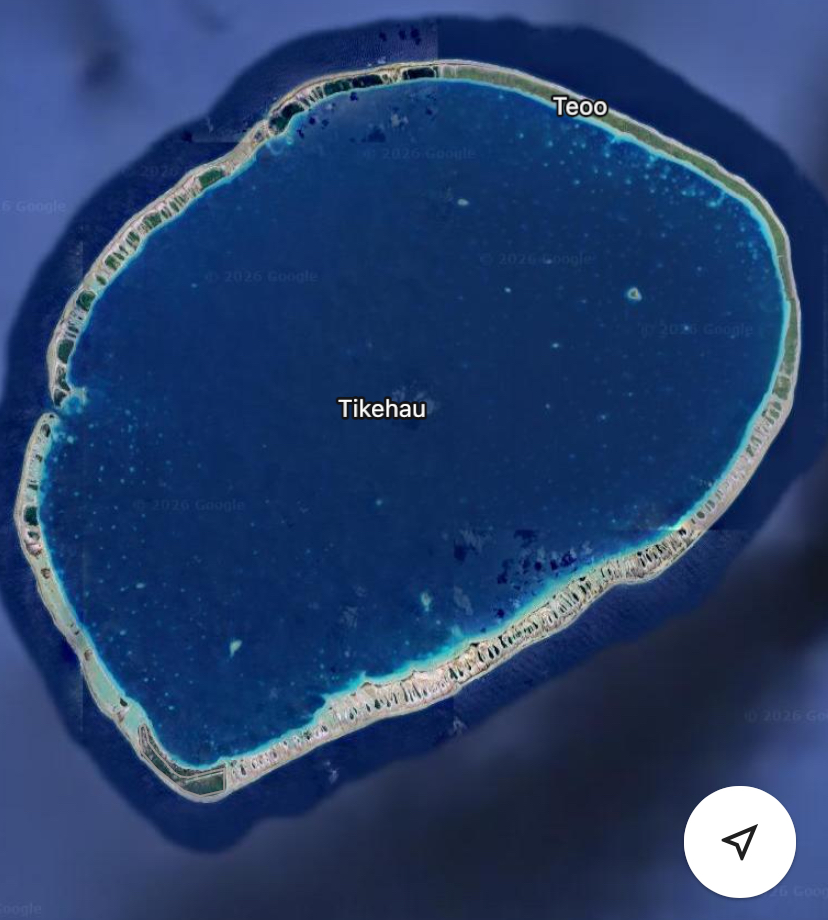
Additional preparation was required for our next destination – the Tuamotu Archipelago, which at 80 or so coral atolls is the largest chain of coral atolls in the world. Many are uninhabited. For us as cruising sailors, the Tuamotus would be our introduction to dealing with navigating passes into an atoll, dodging coral bommies, and different anchoring techniques required to protect not only the coral, but also our boat. We invested time in researching the various ways to estimate the best timing for the passes to avoid strong outgoing current or wind against current situations. It’s not a simple matter of just checking the tide times as there are not tide stations for each atoll, and various weather conditions influence the amount of water inside the atolls. I downloaded google earth images of the atolls into our navigation software to assist with picking our way across the atoll lagoons to favourable anchorages. We learnt about how to float our anchor chain to reduce the risk of getting it wrapped around coral outcrops to prevent damaging the coral. While floating the chain does decrease holding power to some extent, it gives insurance against the nasty situation of needing to urgently leave an anchorage but being stuck because the chain has wrapped itself around some coral and become wedged. I have to confess though that all this got my imagination into overdrive and I was worrying about all sorts of potentially unpleasant scenarios almost all of which ended with Paseafique up on a reef somewhere!
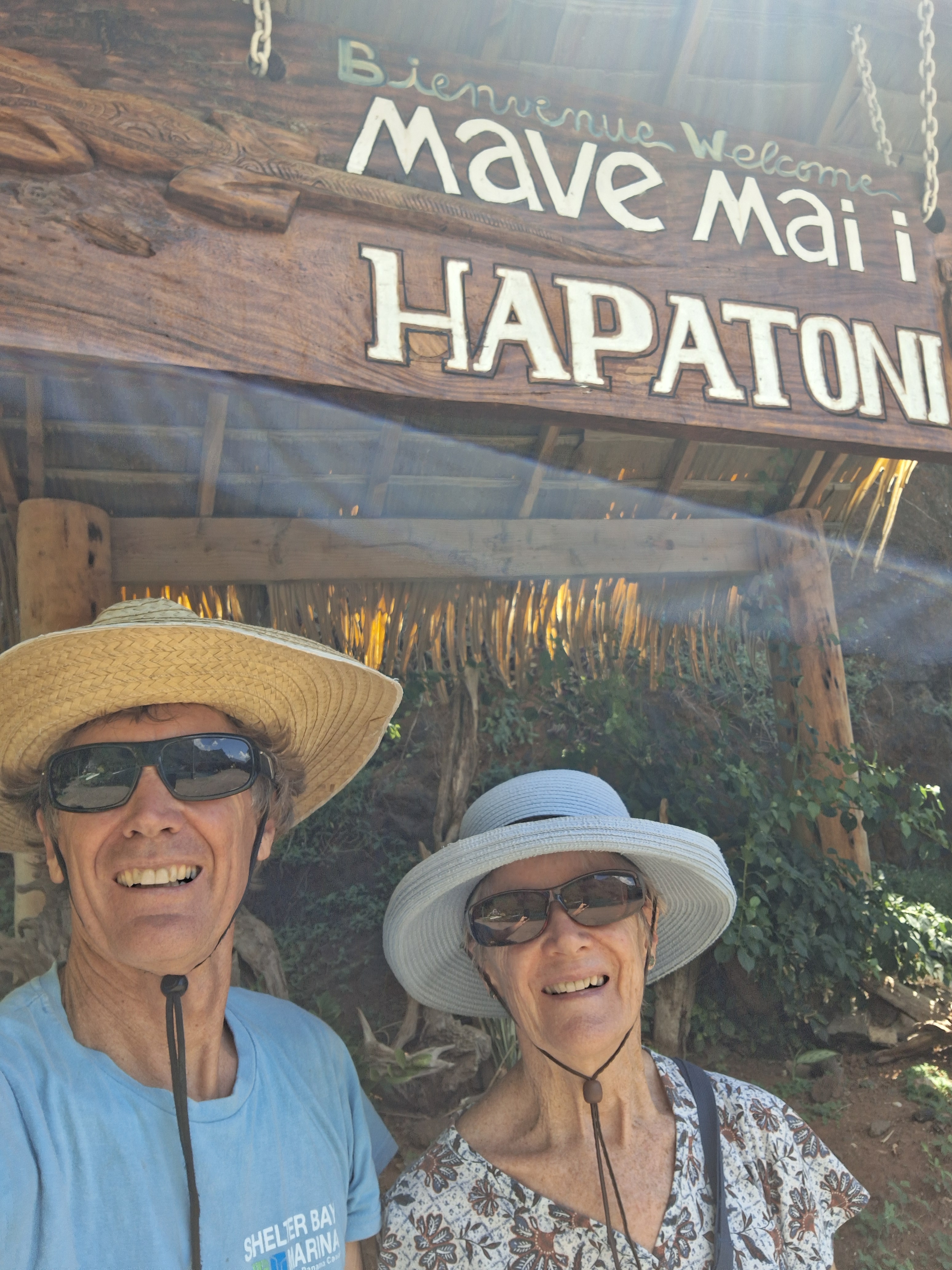
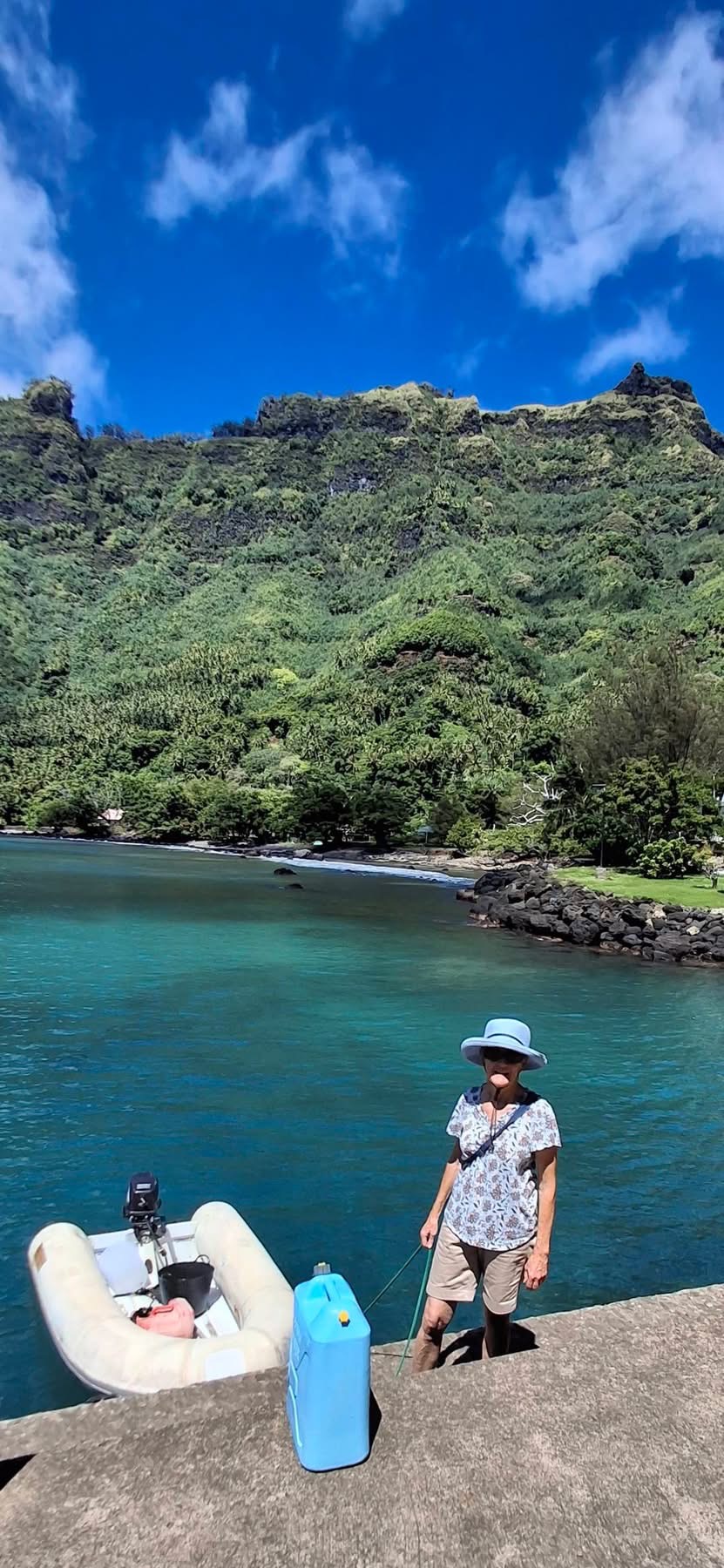
We had anxious day or two after our outboard engine stopped working just as we were about to depart for the Tuamotus. Thankfully Phil managed to fix it and so we were able to spend our last day in the Marquesas ashore in Hapatoni, our favourite village. But the outboard had more in store for us.
The 500 nm passage to the Tuamotus was a dream. A brisk first day allowed us to make 190nm, after which the winds became lighter as forecast. The calm sea made for quiet and comfortable sailing on a beam reach for the second and third days. Clear sunny skies gave way to oh so starry nights. The price for such glorious weather was a very hot boat-it was 36 degrees down below at one point. The fourth day was more challenging as the wind swung behind us requiring diligent sail trim. The closer we got to our destination, the further away it became because the wind died off even more. A couple of small rain clouds gave us some much-needed puff right towards the end.
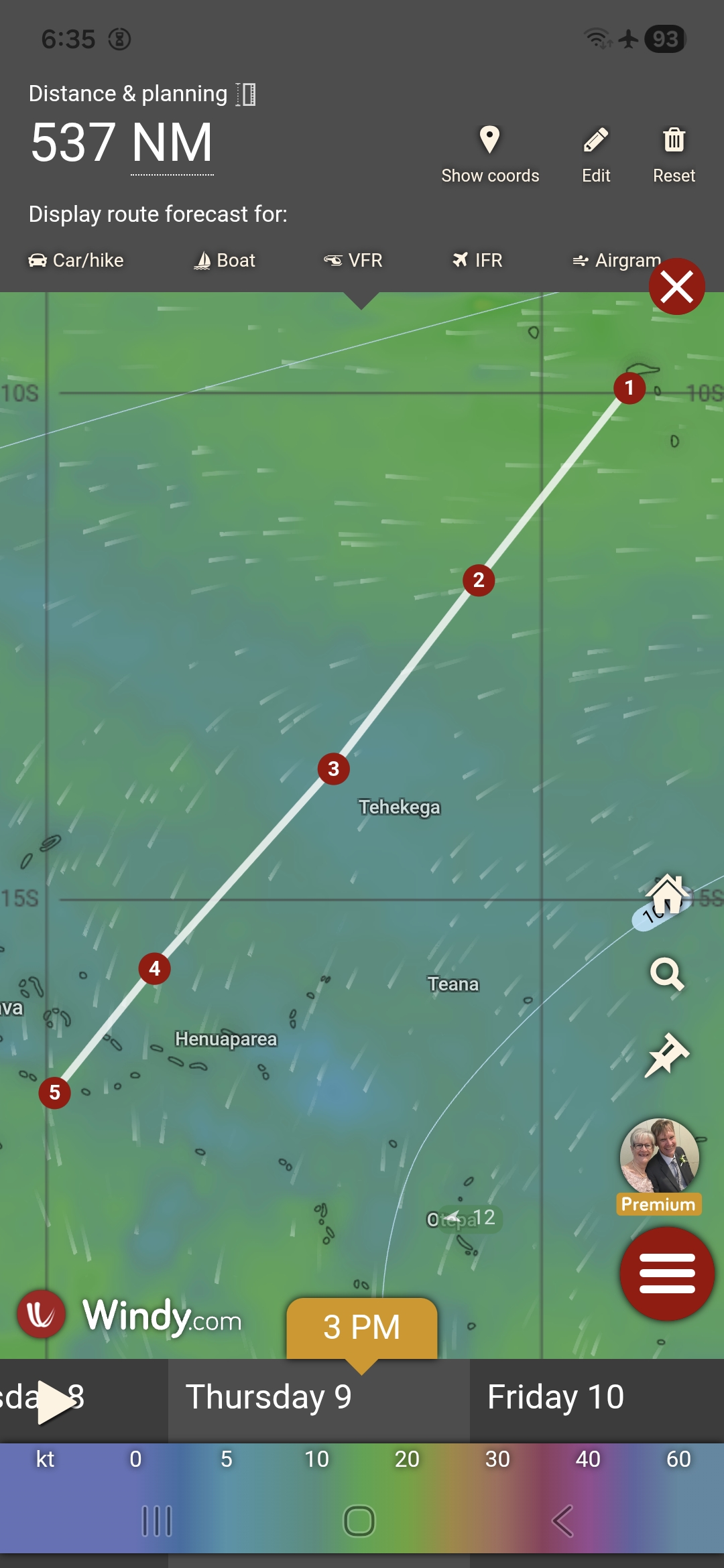
We arrived at the pass into Tahanea about 2 hours after we had planned which we thought was pretty good over a four-day passage with variable wind speed. The tide was running into the atoll so we had an easy current assisted motor through the wide pass. It took another couple of hours to motor to our preferred anchorage at the other end of the atoll, and there we were anchored in a tropical paradise with a stunning vista of crystal clear water, coconut trees and white sand. Here we did not need to float the chain as there were few bommies and it was easy to find a clear area in which to anchor.
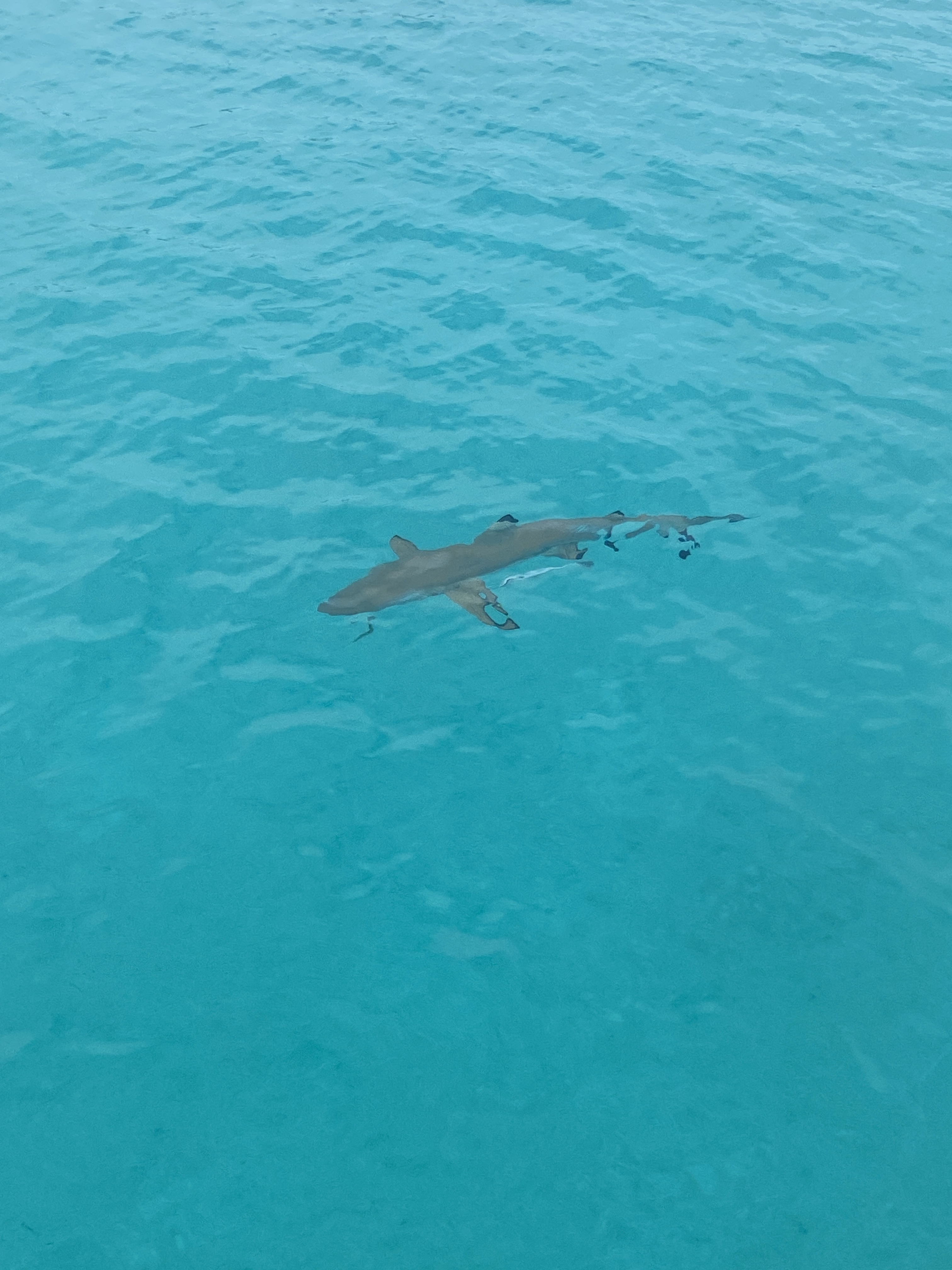
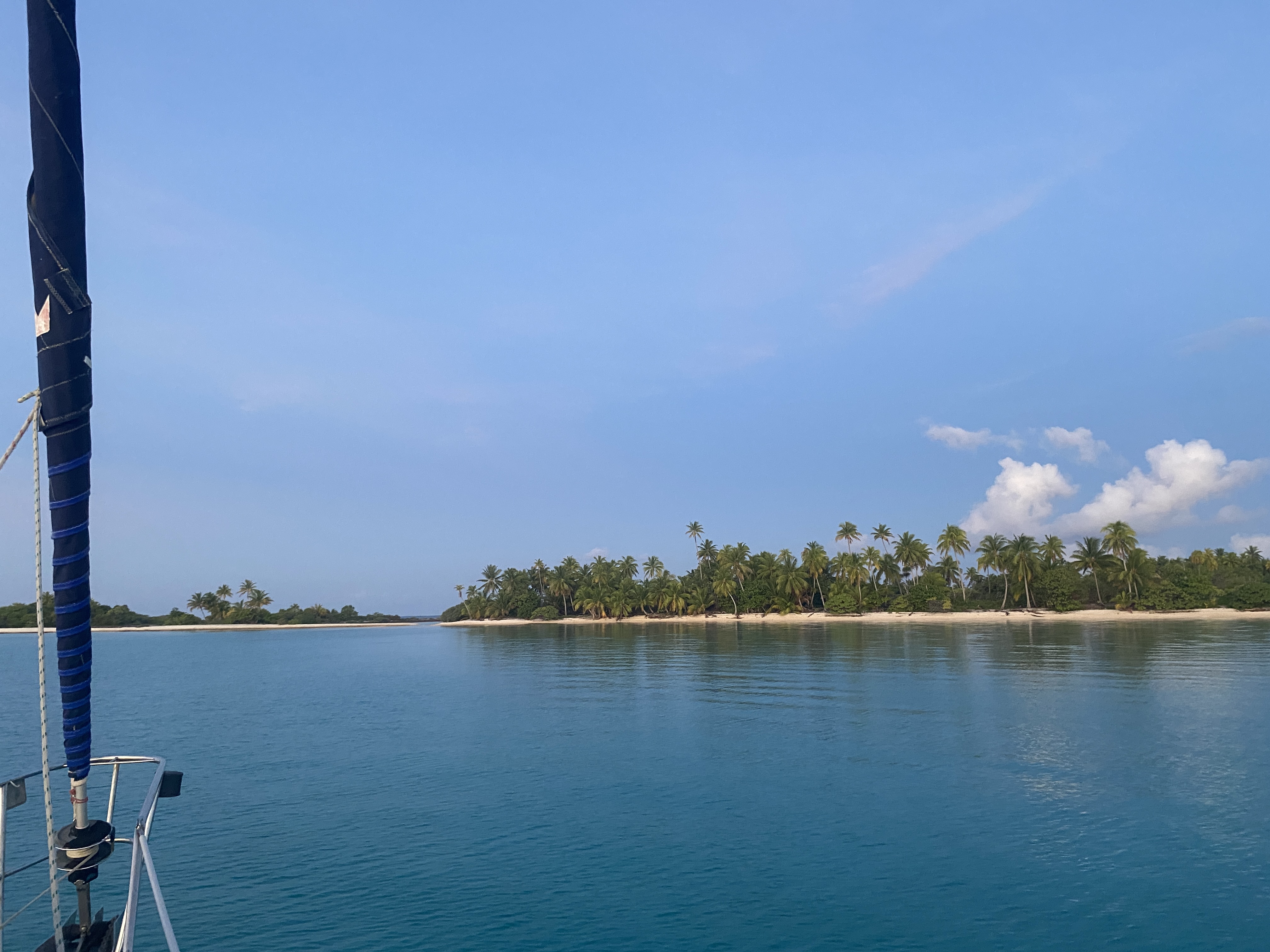
Black tip reef sharks welcoming us to Tahanea, and our stunning view of our first anchorage in the Tuamotus
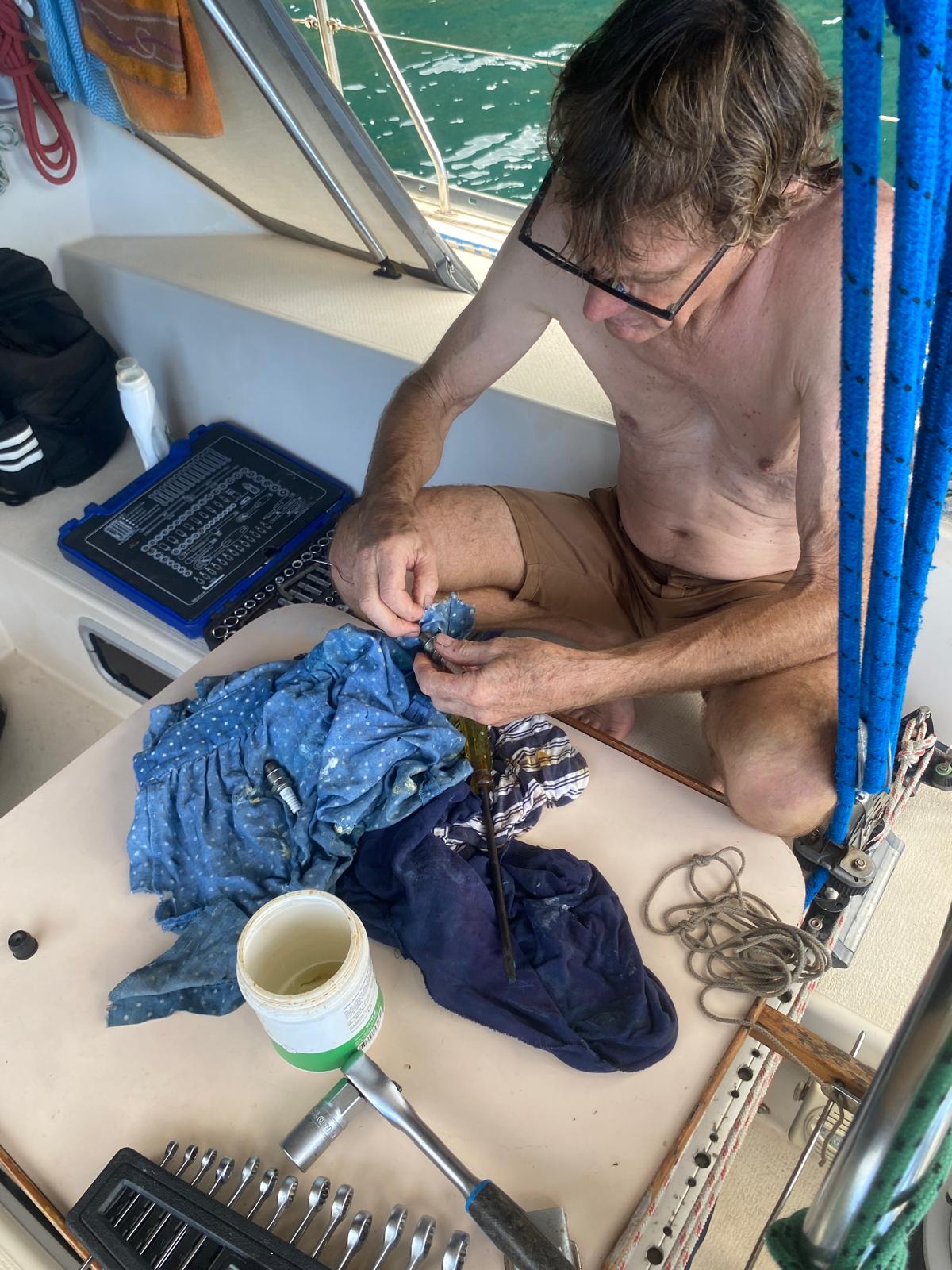
Snorkelling, diving, swimming are the main pastimes in these atolls so we enjoyed a few days getting into the swing of lazy mornings, and afternoon snorkelling. But the idyll did not last very long. Two important pieces of kit let us down. First Phil’s new camera, supposedly water proof to 10M, leaked during a surface snorkel and we were unable to resurrect it after drying it out. What a disappointment as I had put quite some effort into researching my purchase. Second, the dinghy outboard broke down again, and nothing that Phil (with assistance from Google and phone-a-friend) could do would bring it back to life. As far as we could tell, we needed new ignition coil. So I busied myself on-line, ordered one and arranged for it to be delivered to Fakarava, our next atoll. In the meantime, we were limited to snorkelling within swimming distance from our boat, and indeed we had some lovely experiences in a couple of locations before we left Tahanea.
The logistics of leaving Tahanea, and arriving in Fakarava were in our favour so we had a short sail to Fakarava south pass, and an easy entrance. The anchoring there near the south pass was not so easy though. It is seriously littered with bommies and so here we needed to float the chain. For various reasons, we had to re-anchor twice and both times the chain was caught. Fortunately, we managed to free it without the need to dive. We really didn’t feel comfortable there so we moved to Hirifa in the south east of the atoll – a heavenly sandy anchorage where there was no need to float the chain.
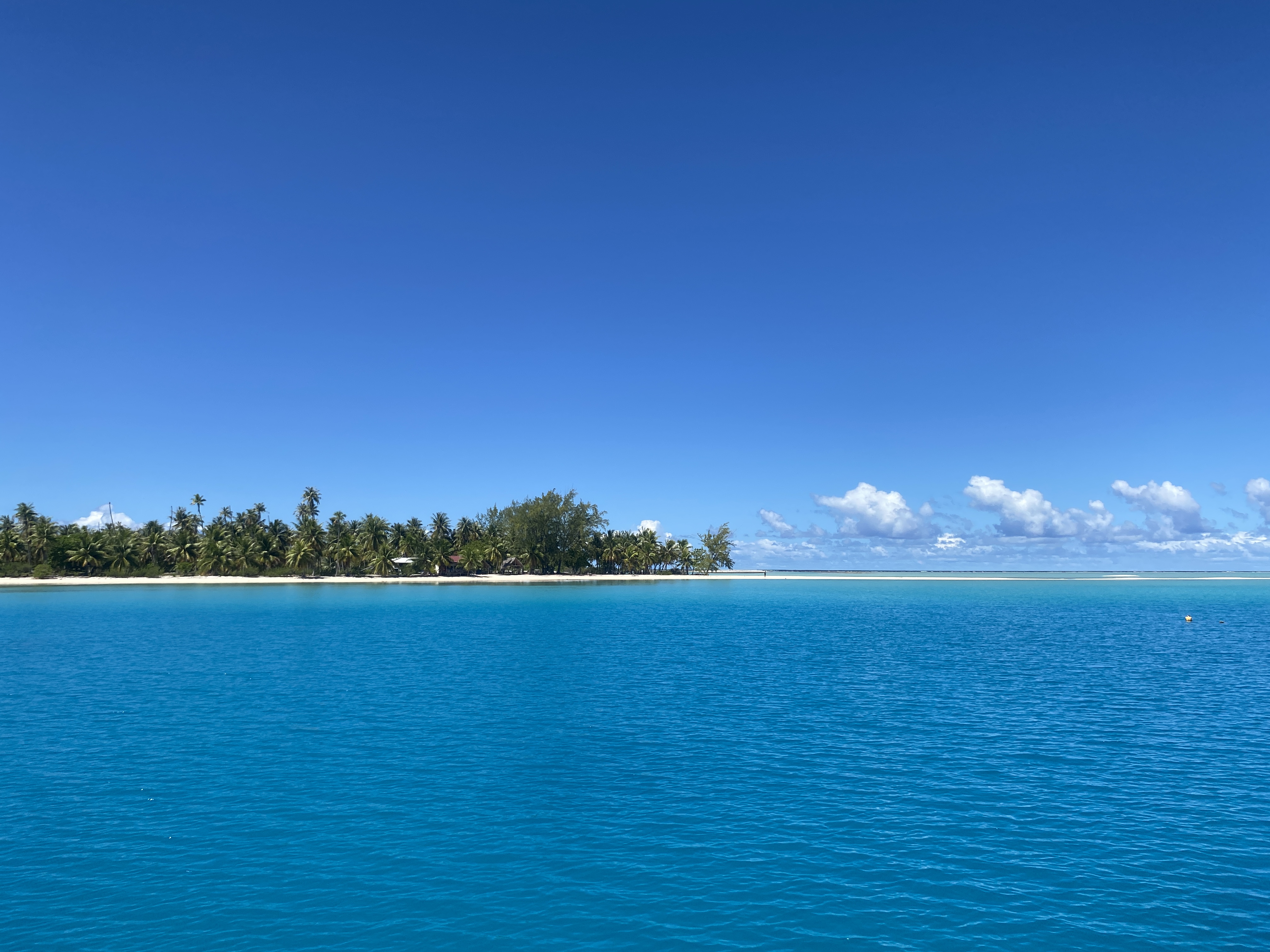
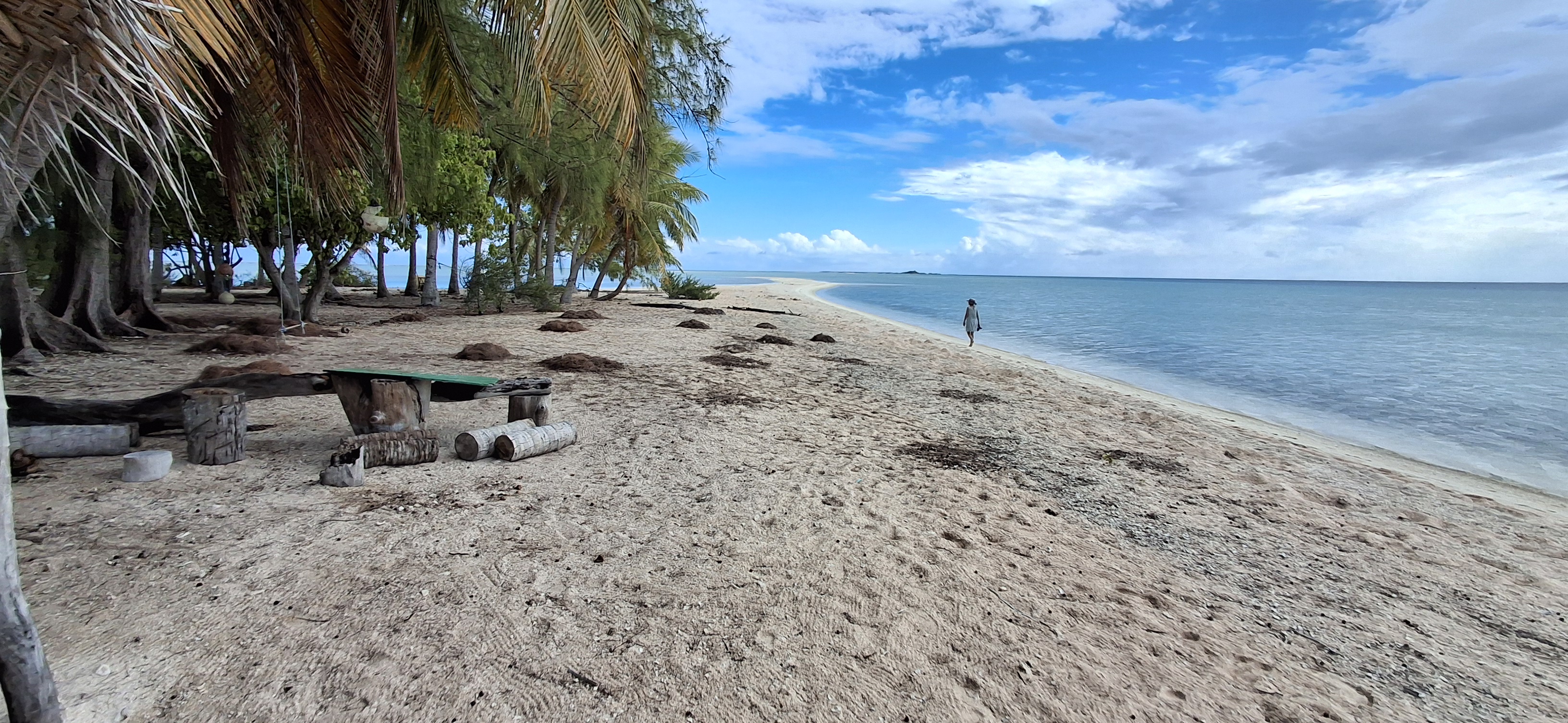
Hirifa anchorage from the boat and from shore
The silver lining to the inoperable dinghy was that we did a dive and snorkel with one of the commercial diving companies based in Fakarava. The whole atoll is a UNESCO Biosphere Reserve and the south pass is legendary for the “wall of sharks” along with a myriad of other marine life. The dive company we chose, Enata, were excellent. As it had been a while since Phil had dived, they recommended a refresher dive, which meant he went one-on-one with an instructor.
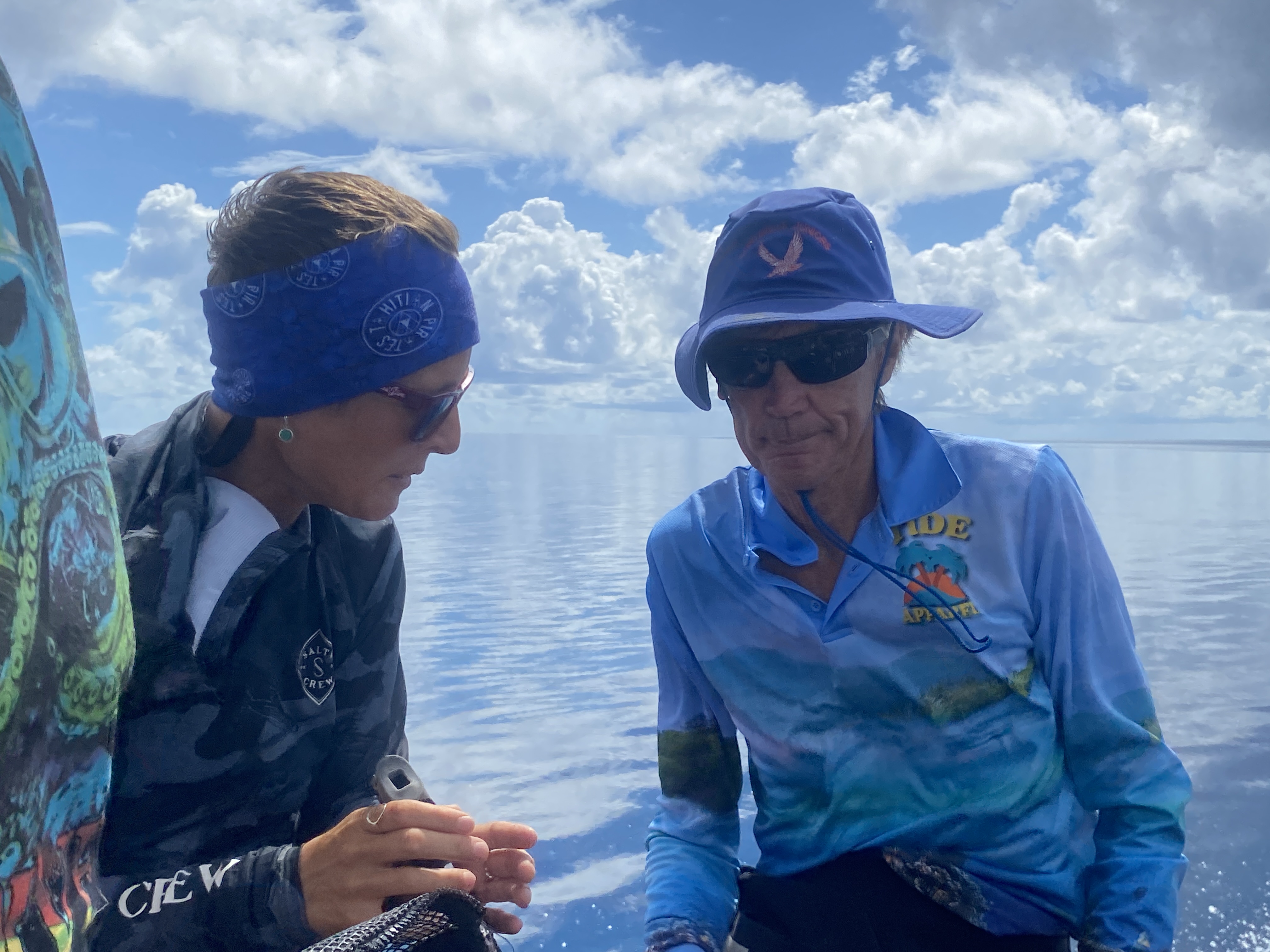
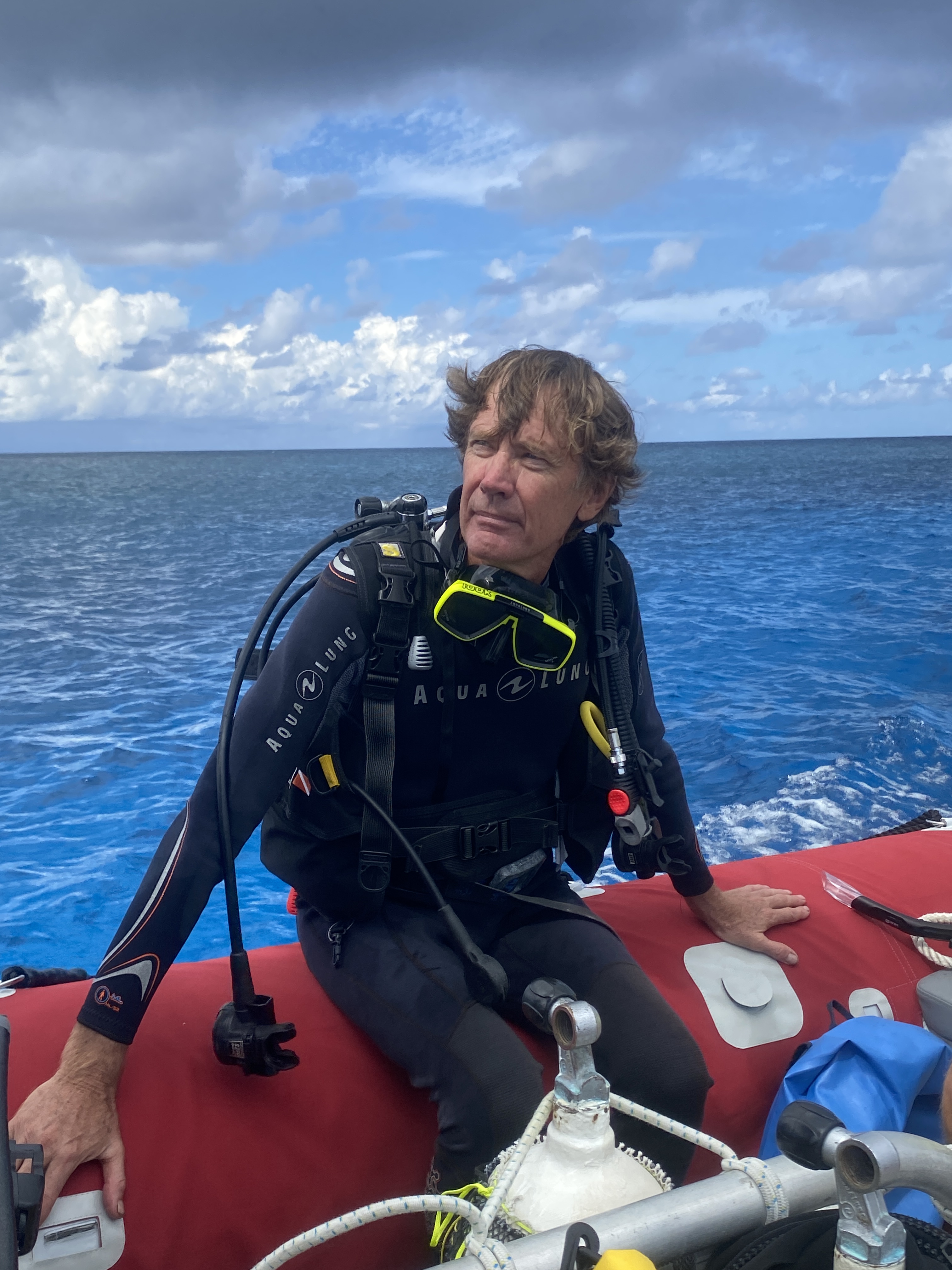
Phil getting a brush up of his diving skills and then ready to go!
After the divers had been put into the water, the boat took the snorkelers (including me) to the ocean end of the pass, and dropped us there so we could drift through the pass with the incoming tide. What an absolute feast for our eyes and a thrill for our hearts to be immersed in such a marine wonderland. The massive wall of healthy coral is home to so many colourful fish, large and small, it is hard to know where to look. There are indeed many sharks, most of which were relatively small reef sharks – the ones that I saw anyway. I was a bit nervy still after my close encounter with a shark in the Marqueases, and I had to work hard to control the urge to jump out of the water. After a welcome break including a warm cuppa and snack, we were in the water again snorkelling around the coral garden that lies just inside the pass. Phil’s refresher dive only included the one tank, so he joined the snorkelers here too. Friends emphasised that we should not miss this pass, and they were right. It will be one of our highlight memories. The great pity is that we didn’t have the underwater camera to record it.
Eventually the part for the outboard arrived and with much relief Phil fixed it. It was the first time in our 11 years that we were stranded without shore transport, and we did not like the experience at all. We did paddle to shore on occasion when it was relatively close and the wind was not too strong, but our dinghy is not designed for rowing. Obviously our snorkelling expeditions had been seriously curtailed as a result.
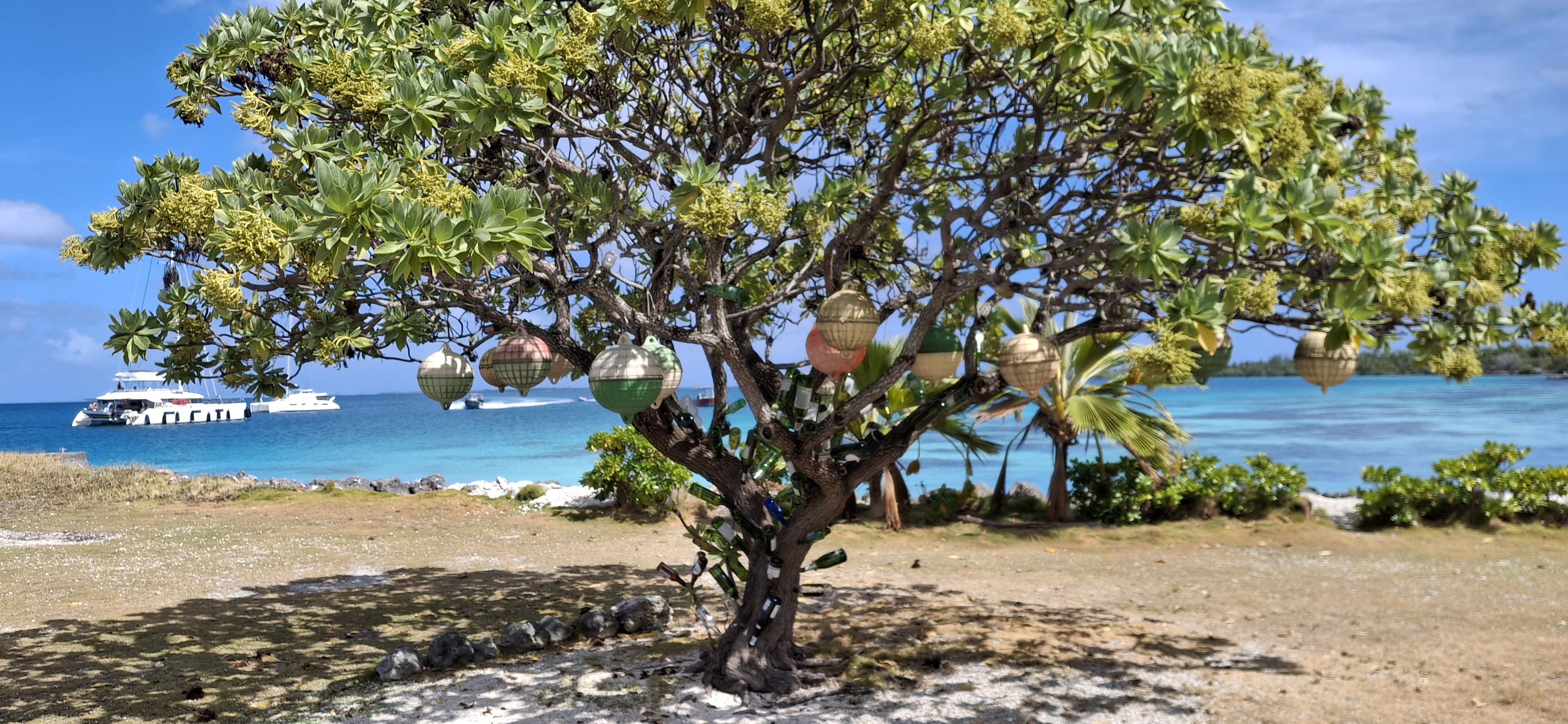
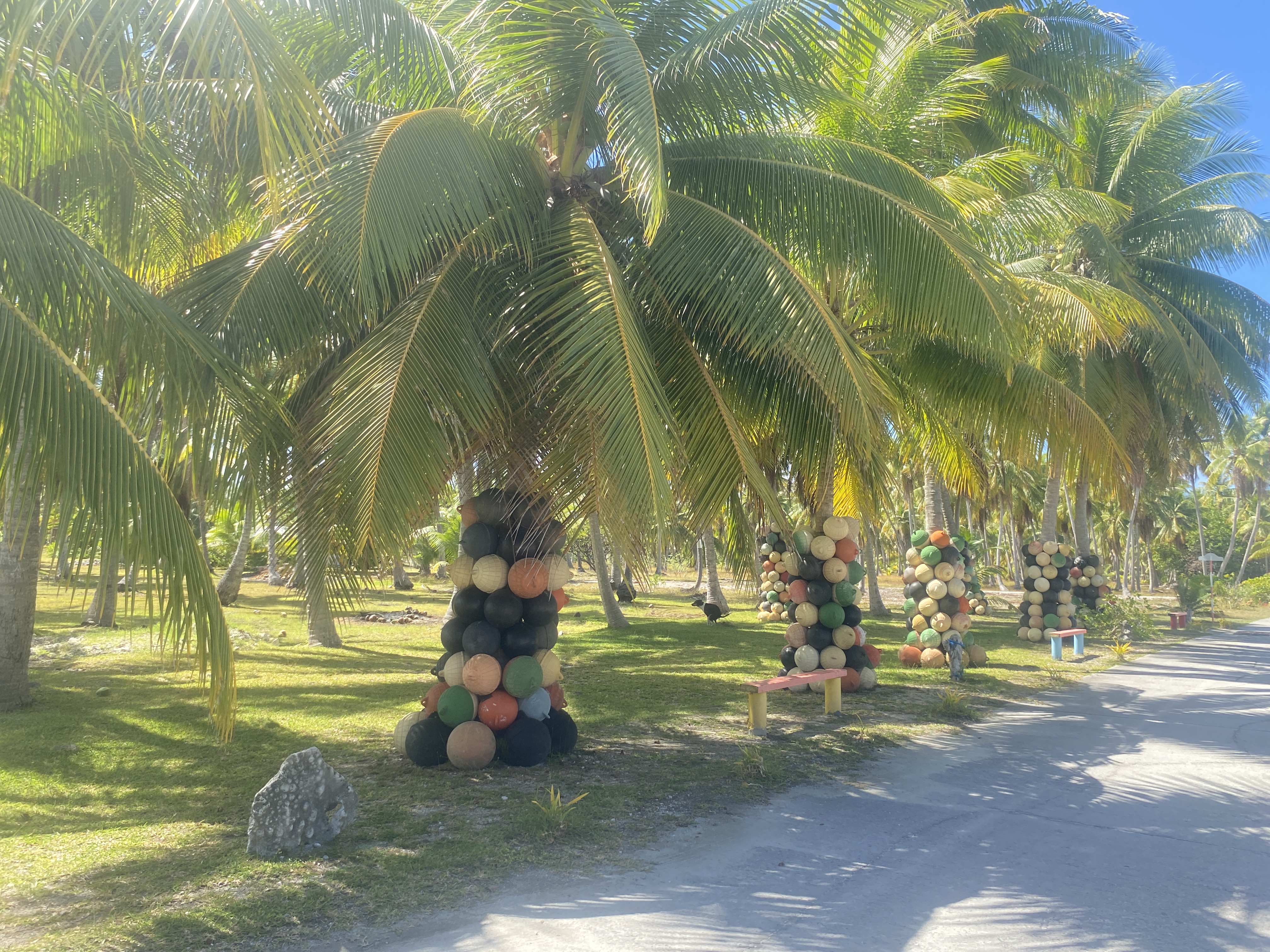
Tuamotus style tree decorations – pearl farm floats have more than one use. We used these kind of floats to keep our anchor chain clear of coral outcrops in some of the anchorages
We moved up to a mooring near the north pass of Fakarava, in readiness for departure to the next atoll, Toau. Now that we had the use of the dinghy again, we happily snorkelled several bommies near the pass one of which was just a delightful coral garden brimming with fish.
An easy motor through the Fakarava north pass saw us on our way to the north “pass” on Toau, which was not far away. I say “pass” as it is a blind pass – so there is a pass through the fringing reef but the reef inside the atoll is high in that area and so prevents larger boats going all the way into the atoll.
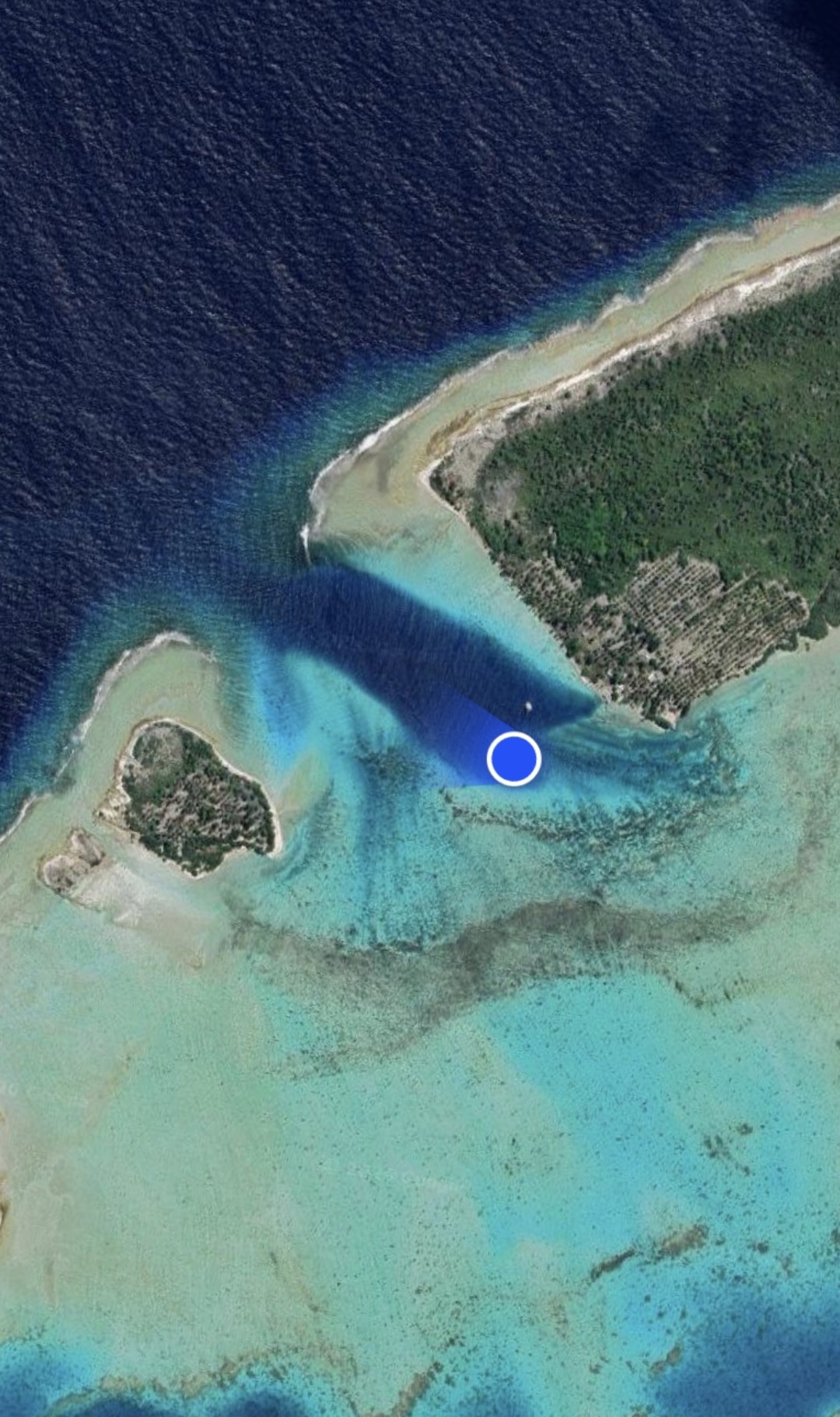
Arial view of the “blind” pass at Toau
It’s a stunning location, although it’s not a very roomy anchorage. There are a number of mooring balls in there and we had been worrying a bit about what we would do if there were none available for us. We felt the rush of good luck when a friendly girl from a nearby boat directed us to a vacant mooring in front of her boat, and then helped us find the submerged rope for it. We spent three days or so in there luxuriating in the vista, the clear water, and some snorkelling.
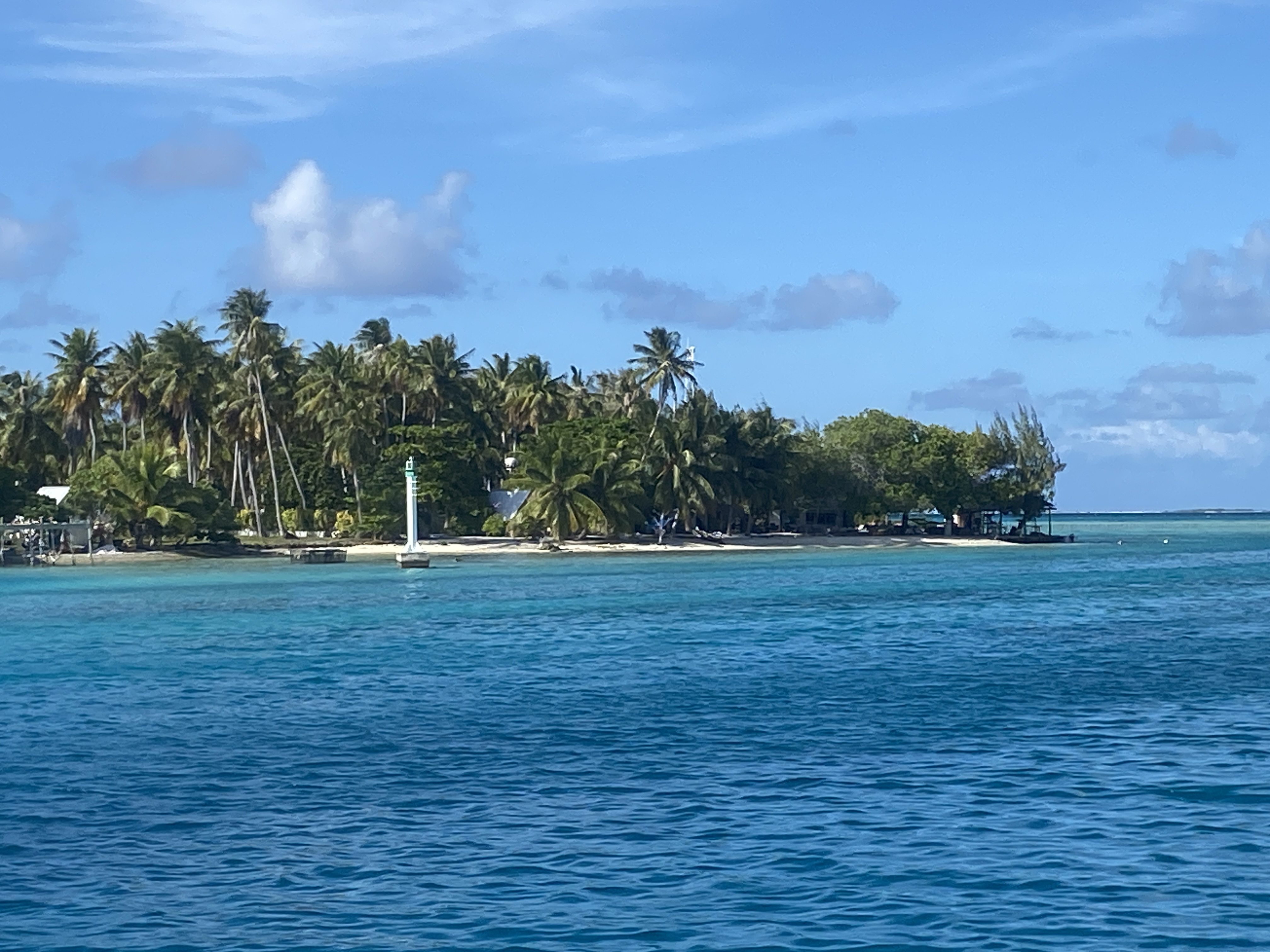
View from the boat in Toau
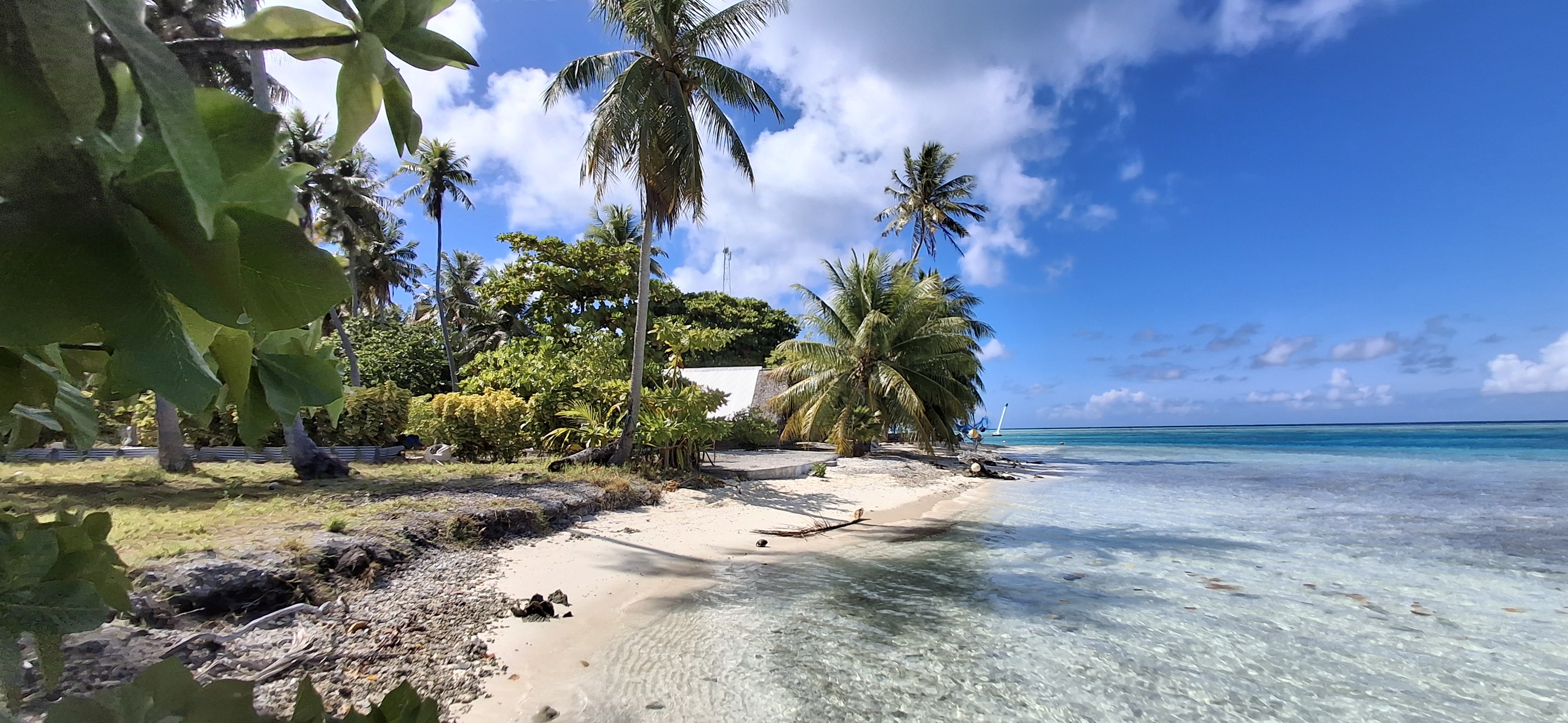
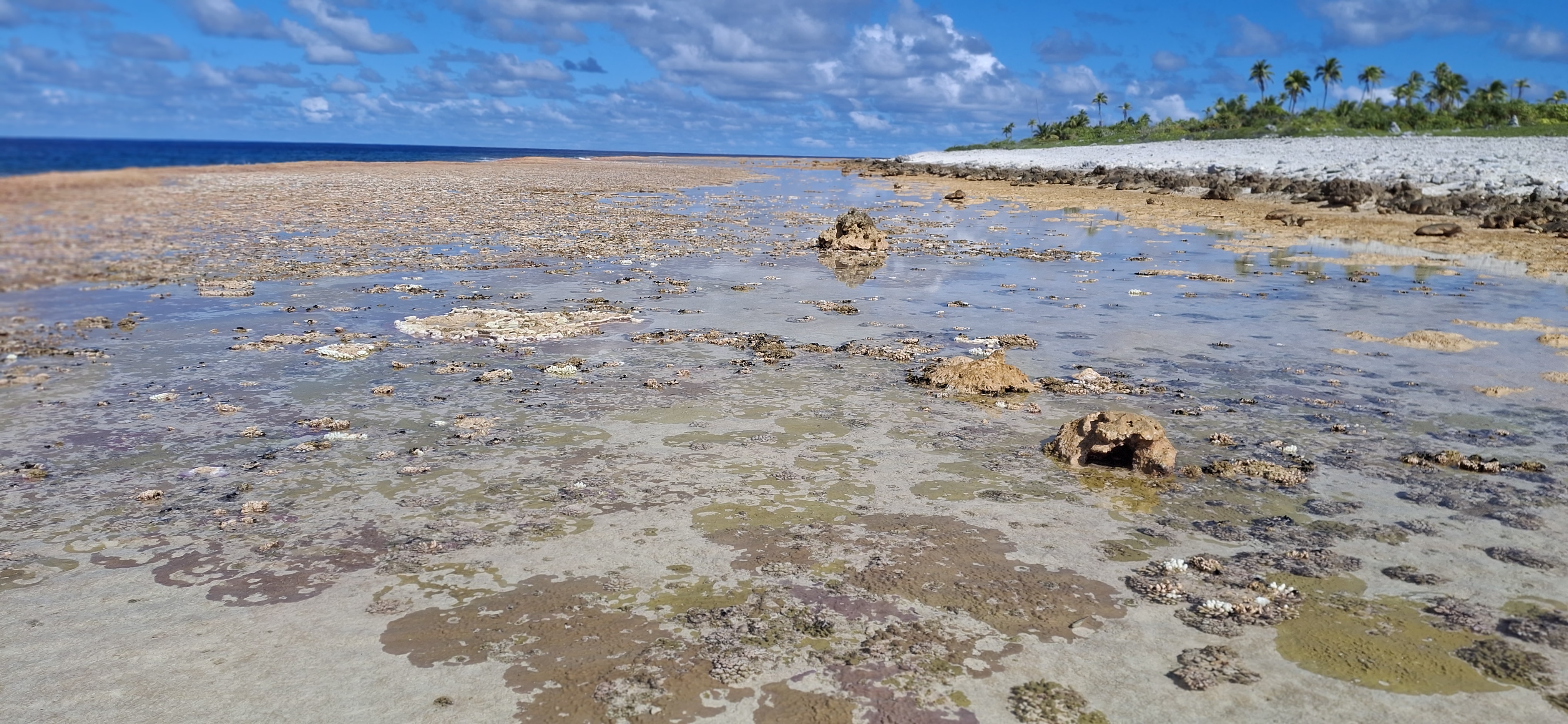
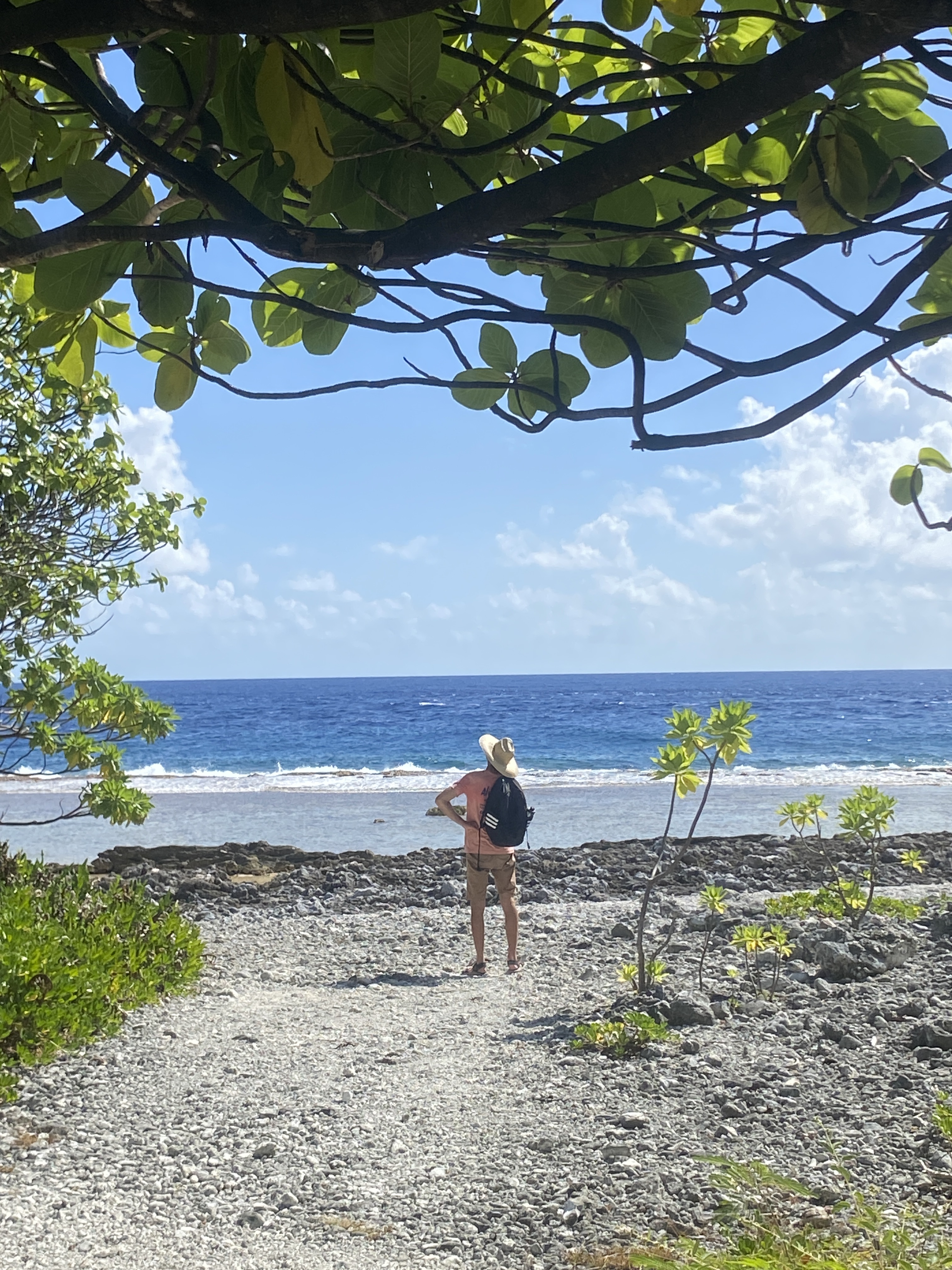
Gorgeous walking ashore on Toau
There is a lot to love about the Tuamotus – crystal clear water, remoteness, isolation, marine life, very few insects, and no swell. After nearly 4 weeks there, we were ready to move on. Many people spend months cruising around the atolls, but we had had our fill with the three we visited. We were ready for civilisation again.
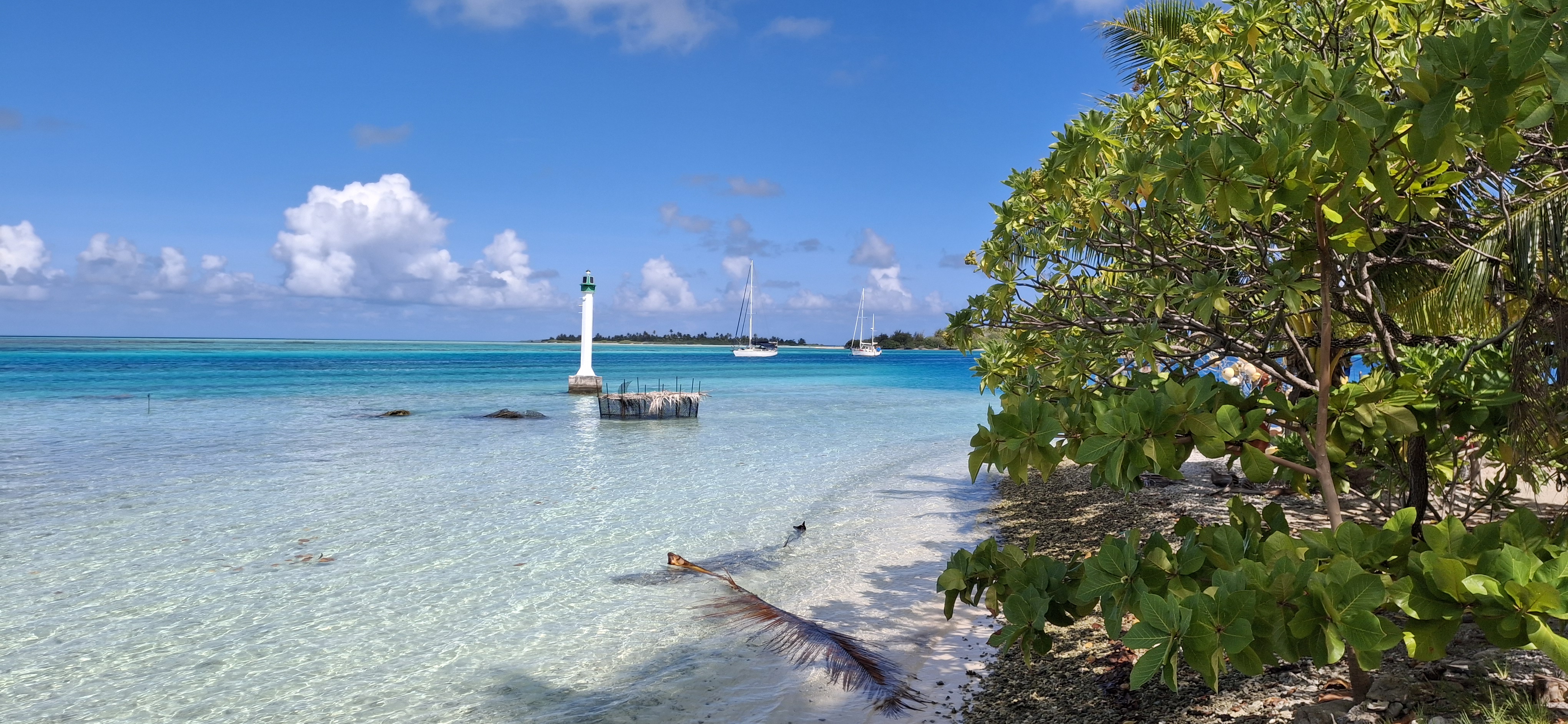
Follow our boat on NOFOREIGNLAND: https://www.noforeignland.com/boat/4748245372764160


very nice report.
LikeLike