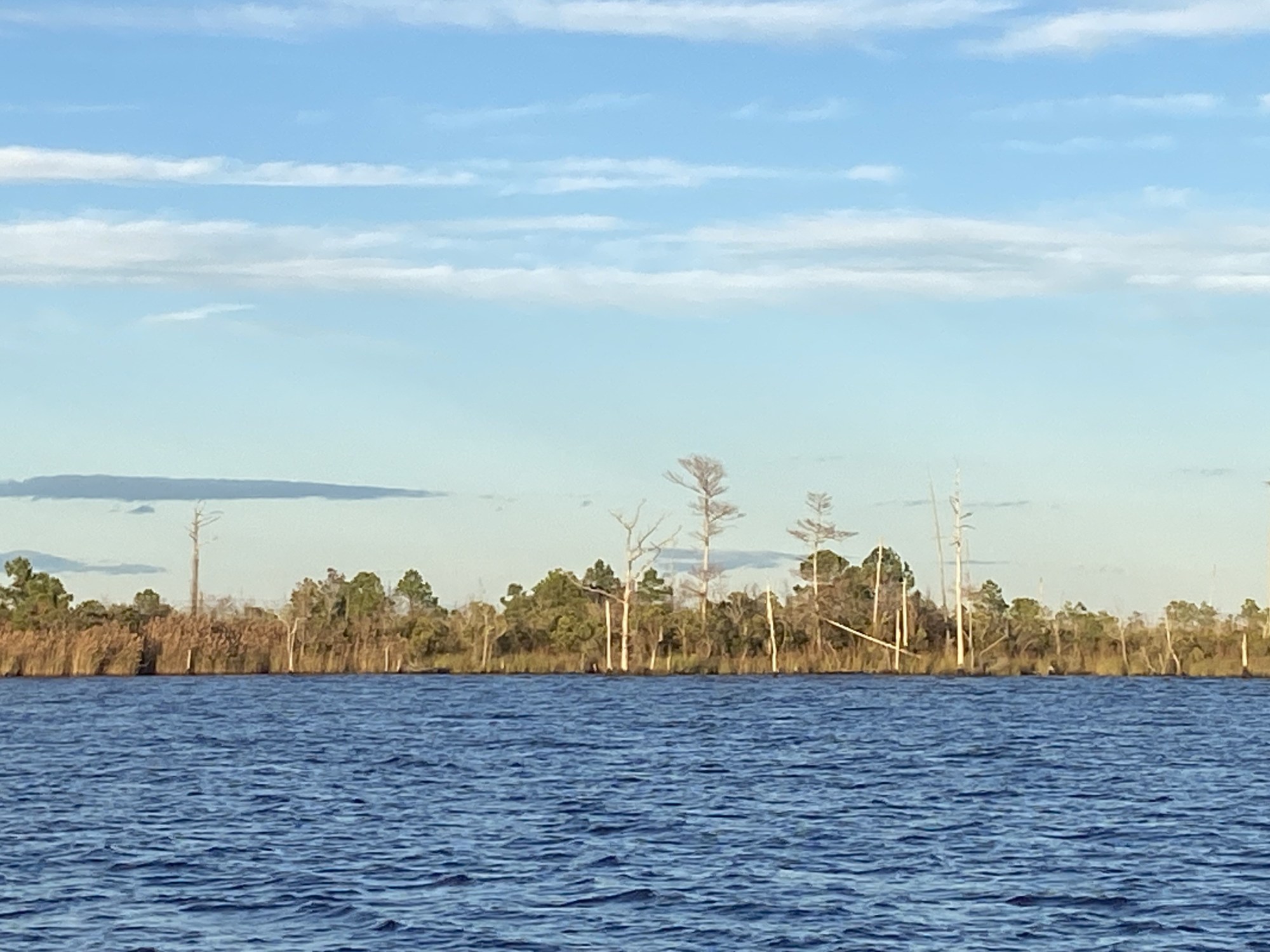
November 2024
And now for something quite different for us blue water cruisers -the Atlantic Intracoastal Waterway. This inland waterway is a series of rivers, bays and canals that runs from Norfolk to Miami, USA. We decided to take the stretch south from Norfolk, Virginia to Beaufort, North Carolina for a few reasons.
After much consideration and discussion of tactics with other cruisers, we settled on a plan to leave the US for the western Caribbean from Beaufort rather than Norfolk. The powerful north flowing Gulf Stream current is closer to the coast at Beaufort giving us the opportunity to cross it early in our passage when we have a good reliable weather forecast. A second advantage to Beaufort is that the Gulf Stream is somewhat narrower near there reducing the time needed to cross it and thereby reducing our exposure to a potentially rough section of our passage. We could have sailed from Norfolk to Beaufort along the US coast but this would mean having to sail around Cape Hatteras -a fairly notorious cape for which very settled weather is best. The inland waterway seemed like a good alternative for reaching Beaufort, providing us with a different kind of navigational challenge and an opportunity to see a different part of the US.
In addition to considering the wind, the inland waterway requires users to factor in operating times for the only lock in that section, heights of the fixed bridges, the times for the opening bridges, the depths (it can be quite shallow in some places), and the options for anchoring.
We started with an easy first day -a three-hour motor to a place called Great Bridge where, after going through and under several bridges and the lock, we tied up at a free public dock for two nights.


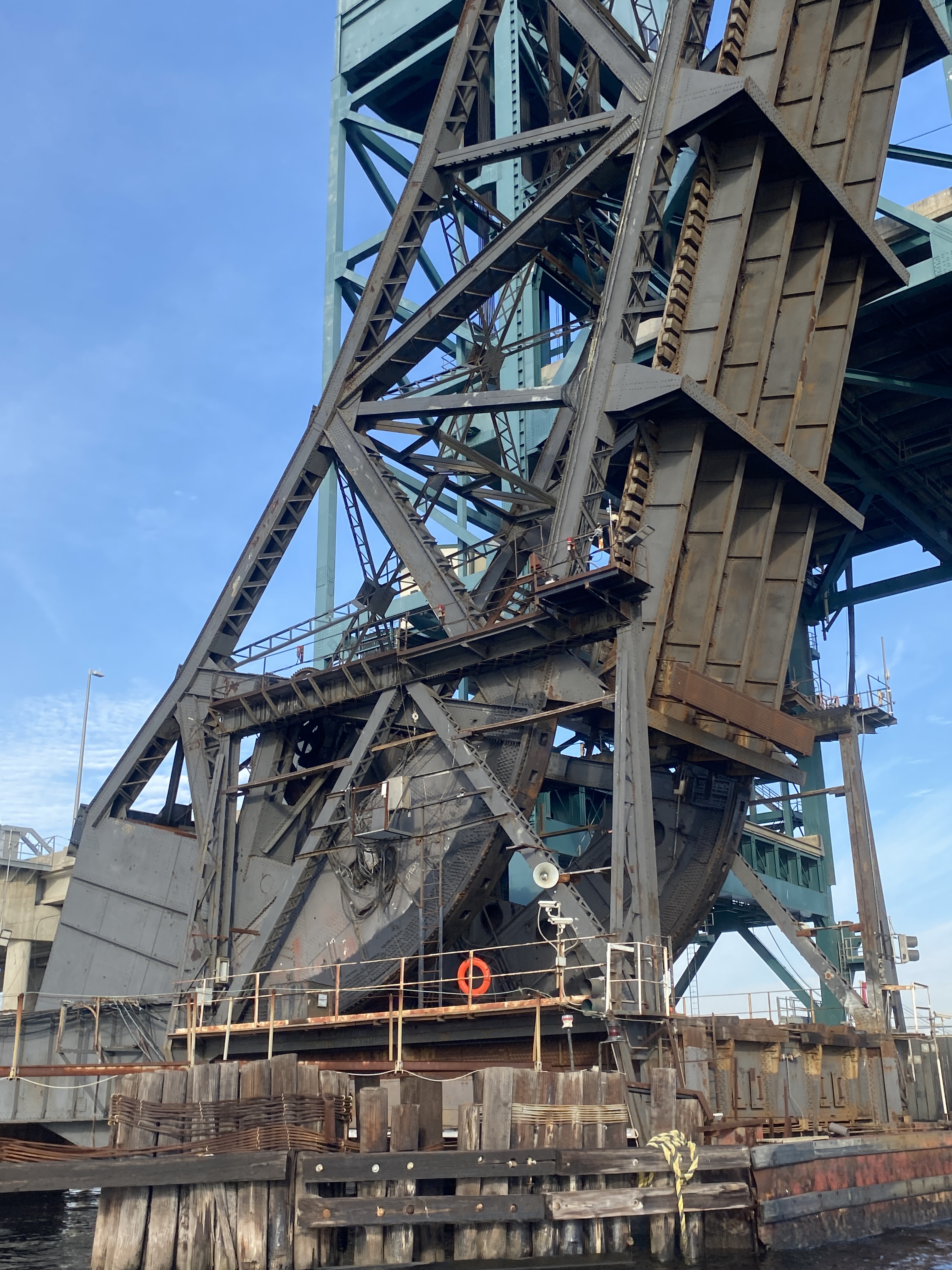
Lots of infrastructure!
Not only was this a good place to stock up on groceries for our forthcoming passage, it has some interesting history which we stumbled on when visiting the local library and then small museum. Great Bridge was the site of a battle in December 1775 between the English and some of the American settlers who believed that their rights were being eroded by the British governor. The patriots defeated the British here and apparently this victory factored in the overall success of the Revolutionary War in Virginia.
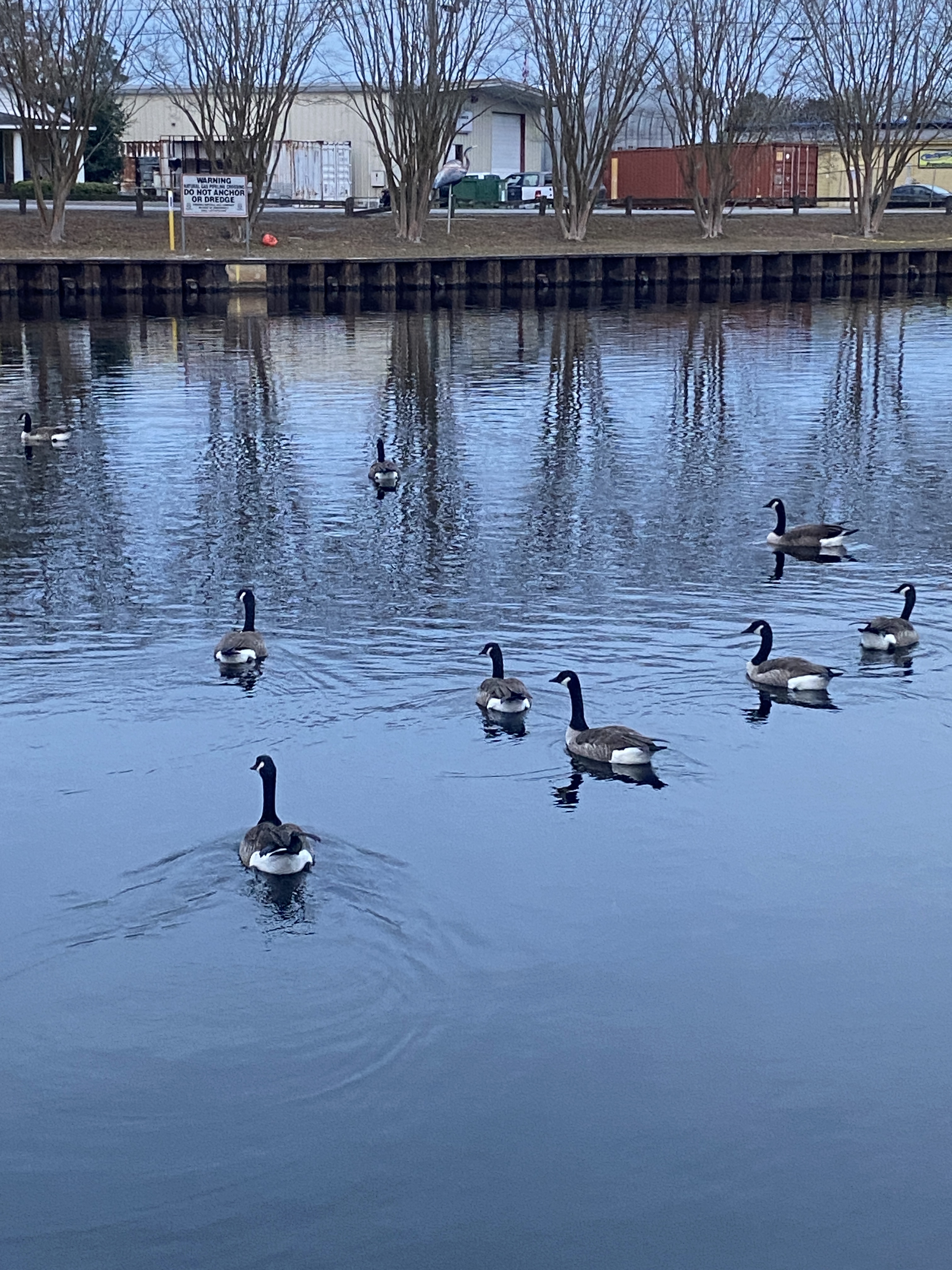

The peaceful setting at Great Bridge
After our two nights on the dock, we cast off the lines and set out on a schedule to pass through three bridges at the appointed opening times. All went well and once we cleared the last bridge, we were able to turn off the motor and enjoy a quiet sail taking in the different scenery. We reached our planned anchorage by lunchtime but we decided to take the good conditions and keep going to Broad Creek. We knew that the wind would not be so much in our favour for the next couple of days.

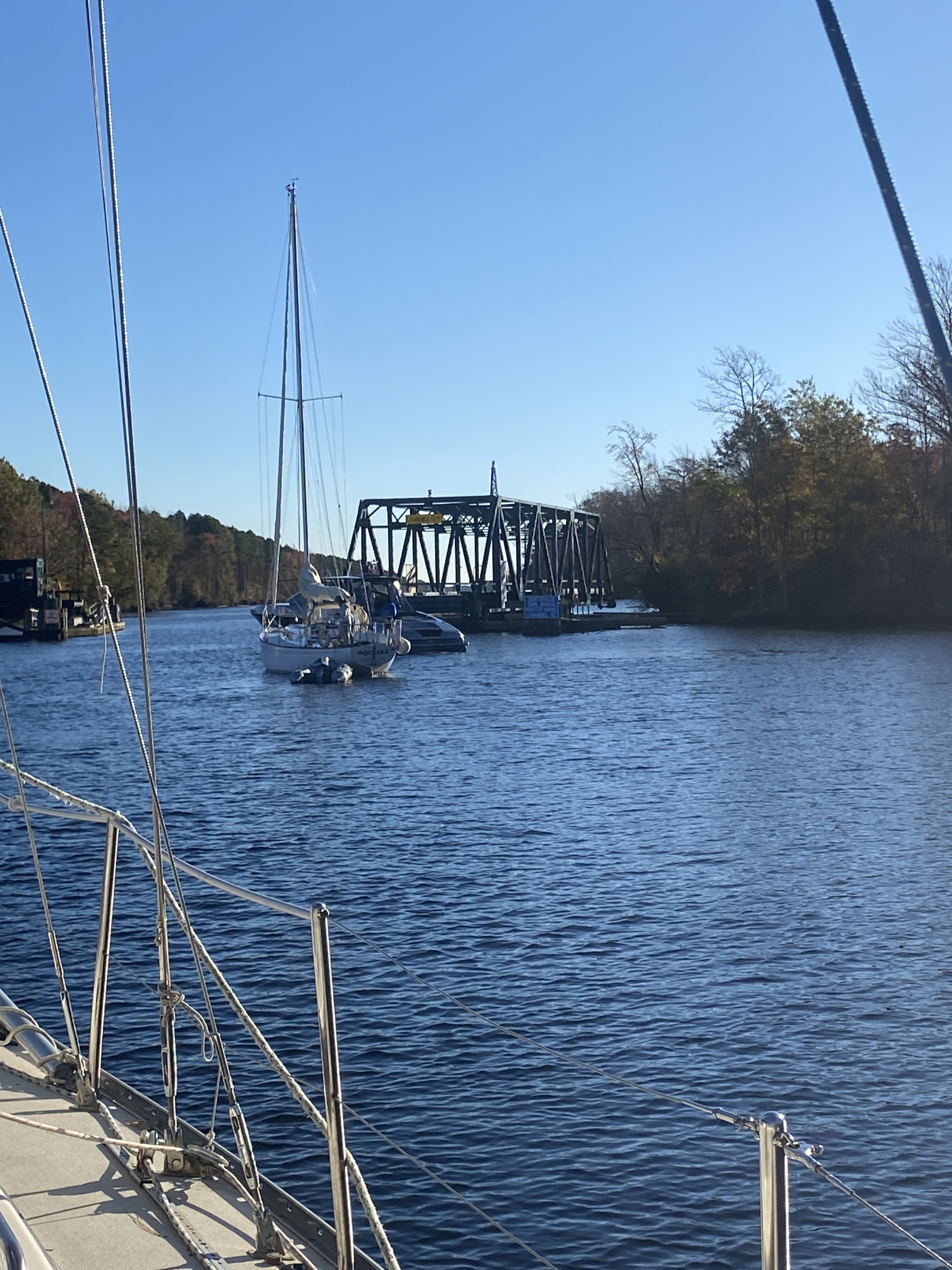
There was quite a range of different types of bridges and opening mechanisms
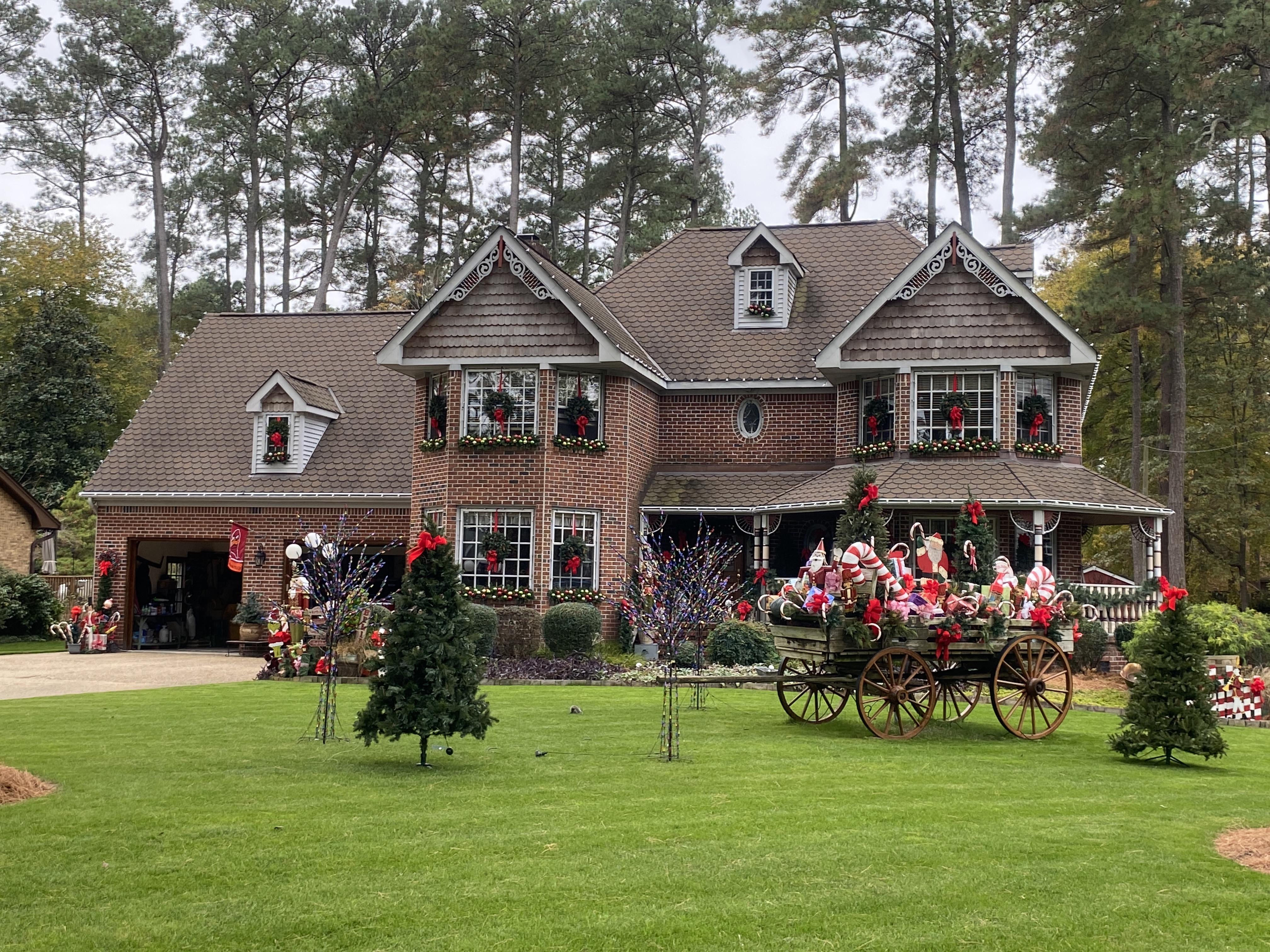

Some of the houses along the way – left hand one in Great Bridge, right hand one around the Broad Creek area
The next section of the waterway included traversing Albemarle Sound, an open stretch of water. We knew it would be quite windy but decided we needed to just keep going so that we were well positioned to start a long west going section in favourable conditions in a couple of days time. The wind was one thing, but the short sharp waves were quite another. The surrounding water is very shallow and so a strong wind can create uncomfortable conditions. And uncomfortable it was for a couple of hours until we reached the upper Alligator River and more protected water. We anchored for the afternoon and night on the north side of the Alligator River bridge. As we listened to the chat on the VHF radio between the bridge and boat traffic, we were a bit concerned to learn that there was a problem with the bridge opening mechanism. Yikes! We wanted to go through this bridge the next day.
Come the next morning and the bridge problem had been resolved so we were on our way again. After an uneventful day we anchored for the night in Stumpy Creek Bay, aptly named as there were indeed quite a few tree stumps sticking out of the water -and no doubt there were some under the water too which made us very cautious about going too close to shore for anchoring.
The next day saw us heading mostly west along the 20nm stretch of the Alligator River-Pungo River Canal. We lifted anchor at 7am and headed off into the sunny, but cold, morning (10 degrees C in the cabin) with only light winds. The first part of this canal is relatively narrow which gave us a good view of the shoreline and some very pretty scenery. Phil was on alligator watch as he thought that the muddy banks would be ideal territory for them. Alas there were none to be seen but there was much excitement when he spotted a black bear high up in a tree rummaging for its breakfast. Shortly after we saw a vulture and also a bald eagle.
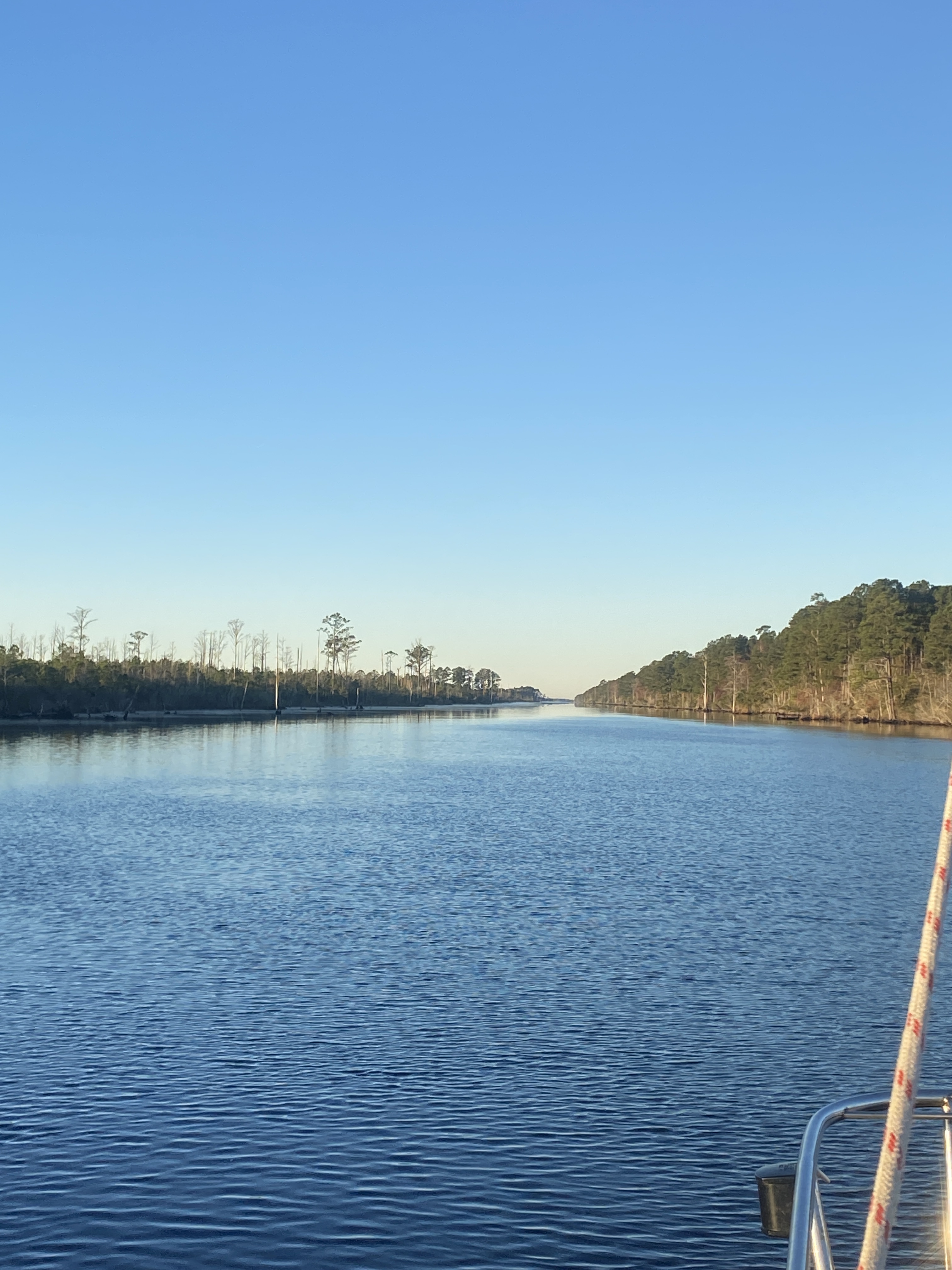

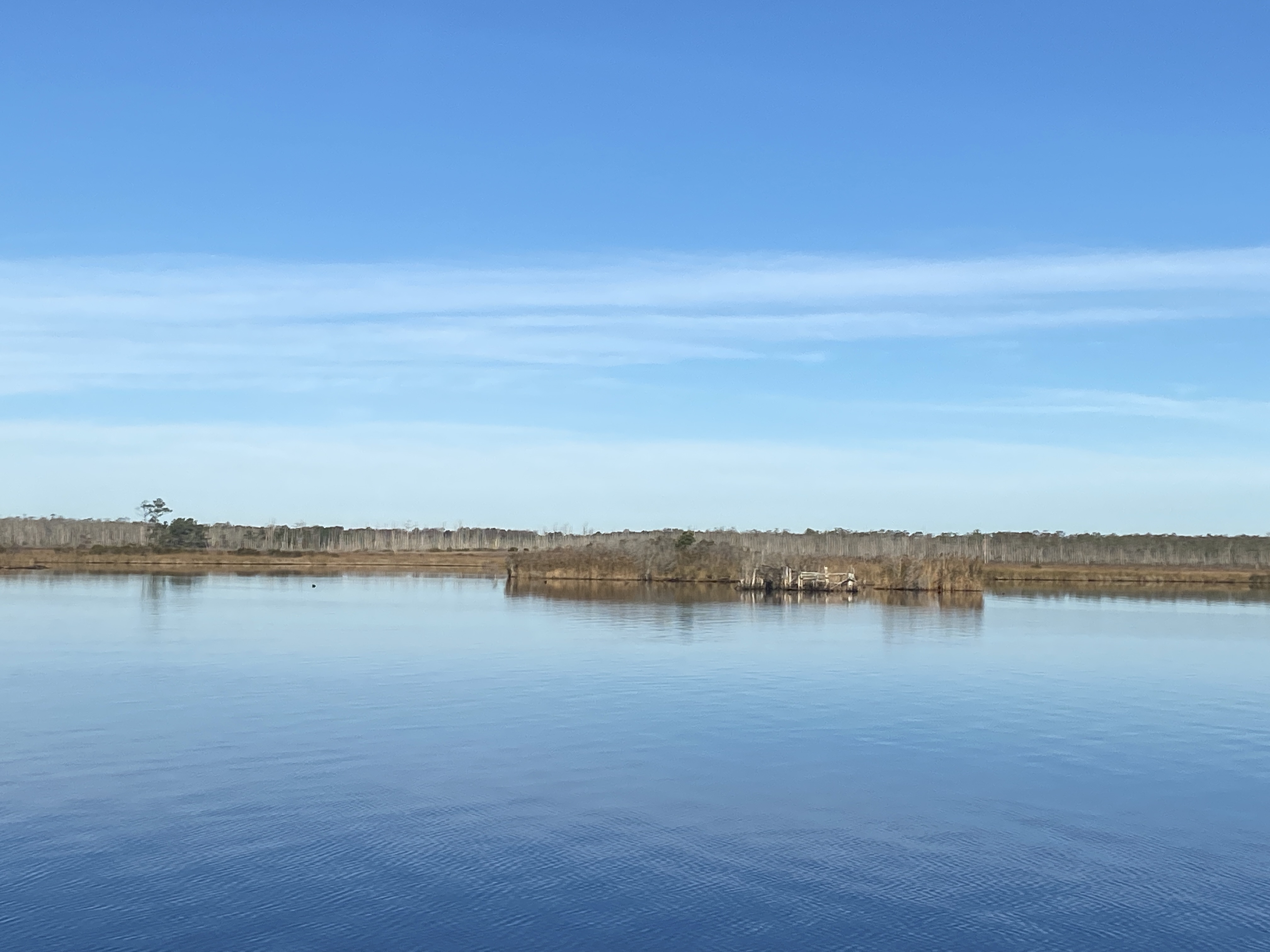
With some trepidation we passed under the lowest bridge we had encountered and cleared it with not much room to spare. We exited the canal into the Pungo River (the name of which won’t be a surprise if you have been paying attention), and by lunchtime we were anchored at Belhaven, a very small town, where we planned to spend two nights while we waited for the right wind to continue south.

We went ashore the next morning mainly to stretch our legs and hopefully pick up some fresh provisions. Just when we were getting close to the dinghy dock, and had had enough walking, we stumbled across a little piece of Christmas joy.
On our way to the supermarket earlier we had passed a hall in which there seemed to be some kind of miniature train display although it was closed at the time. When we returned, we could see people inside but when we tried the door it was locked. But a very friendly woman opened the door and invited us to come in even though they weren’t open-Phil was keen but really? Miniature trains are not high on my list of must see items. Inside we found two older couples setting up the most amazing miniature display of a town, based on Bellhaven, and its surrounding area complete with trains, cars, and fire engines whizzing around. The detail was incredible and reflected local history. Many of the buildings had working parts eg., the sawmill cutting logs. It belongs to one man but the senior citizen group all help to assemble it each Christmas. It’s then open for visitors from end November. Apparently people come from all over the district and many families visit it several times over the time it’s open. I so wished I could have transported our grandchildren there! Once again, we found something of interest in a very nondescript place.

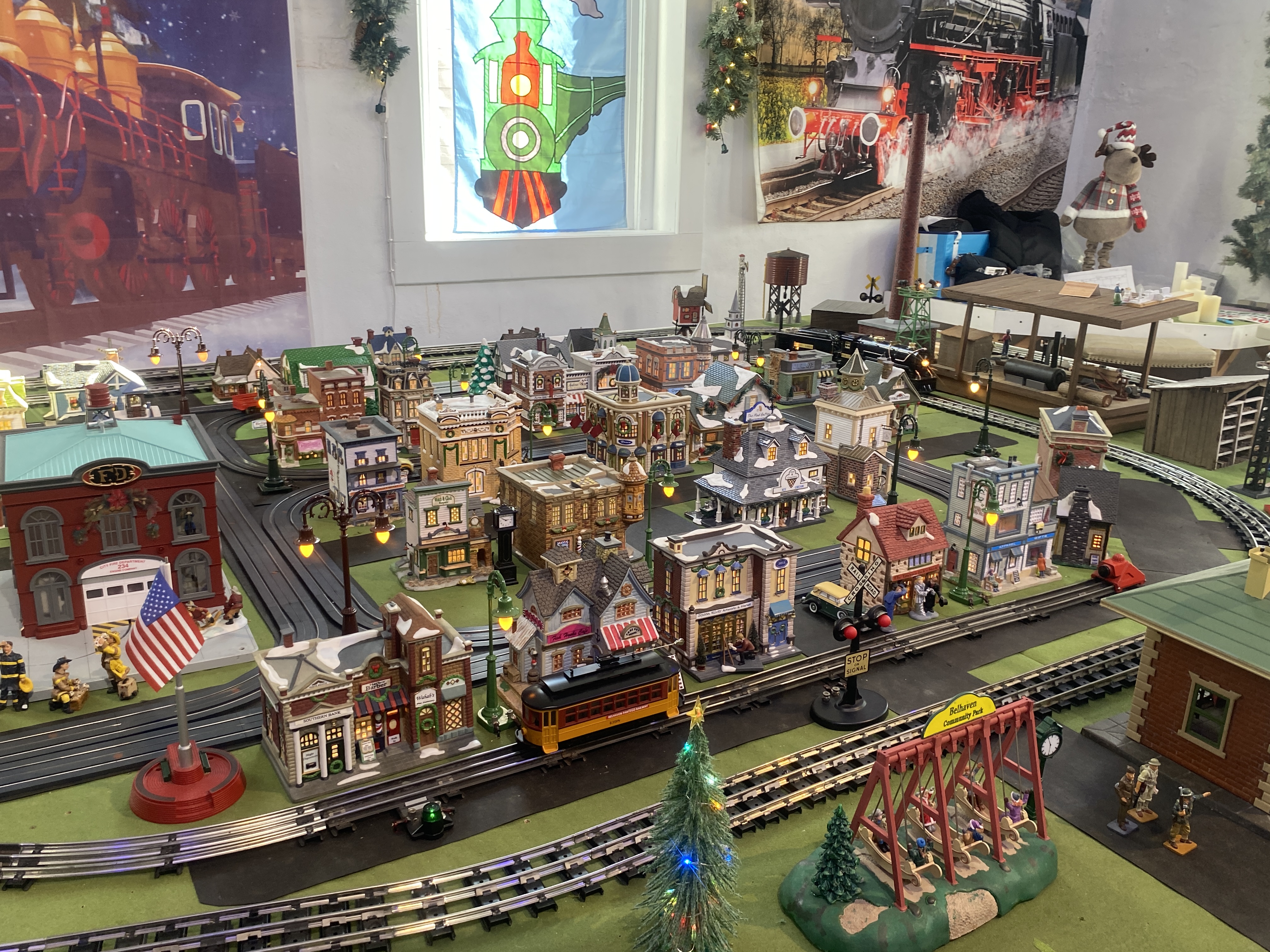
The miniature railway display in Bellhaven
It all sounds very pleasant, which it was except for the cold! By now it was starting to get very cold on the boat. We needed multiple layers of clothing, thick fluffy socks, blankets for sitting in the saloon in the evening, and doona and blanket at night. Our feet were almost continually cold – especially mine as my circulation is not the best. We were counting on getting a weather window for our Jamaican passage without having to wait out more of the late fall/early winter chill.
We continued on through the waterway to our final stop in Oriental, North Carolina where we spent two nights in the smallest marina in which we have stayed. We were busy as bees preparing for the forthcoming passage to Jamaica with the usual jobs of shopping (at a supermarket called Piggly Wiggly!), cooking, washing, and filling with fuel and water. The marina and town had a very friendly atmosphere. Of course there was lots of checking the weather and thinking through various strategies for crossing the Gulf Stream.
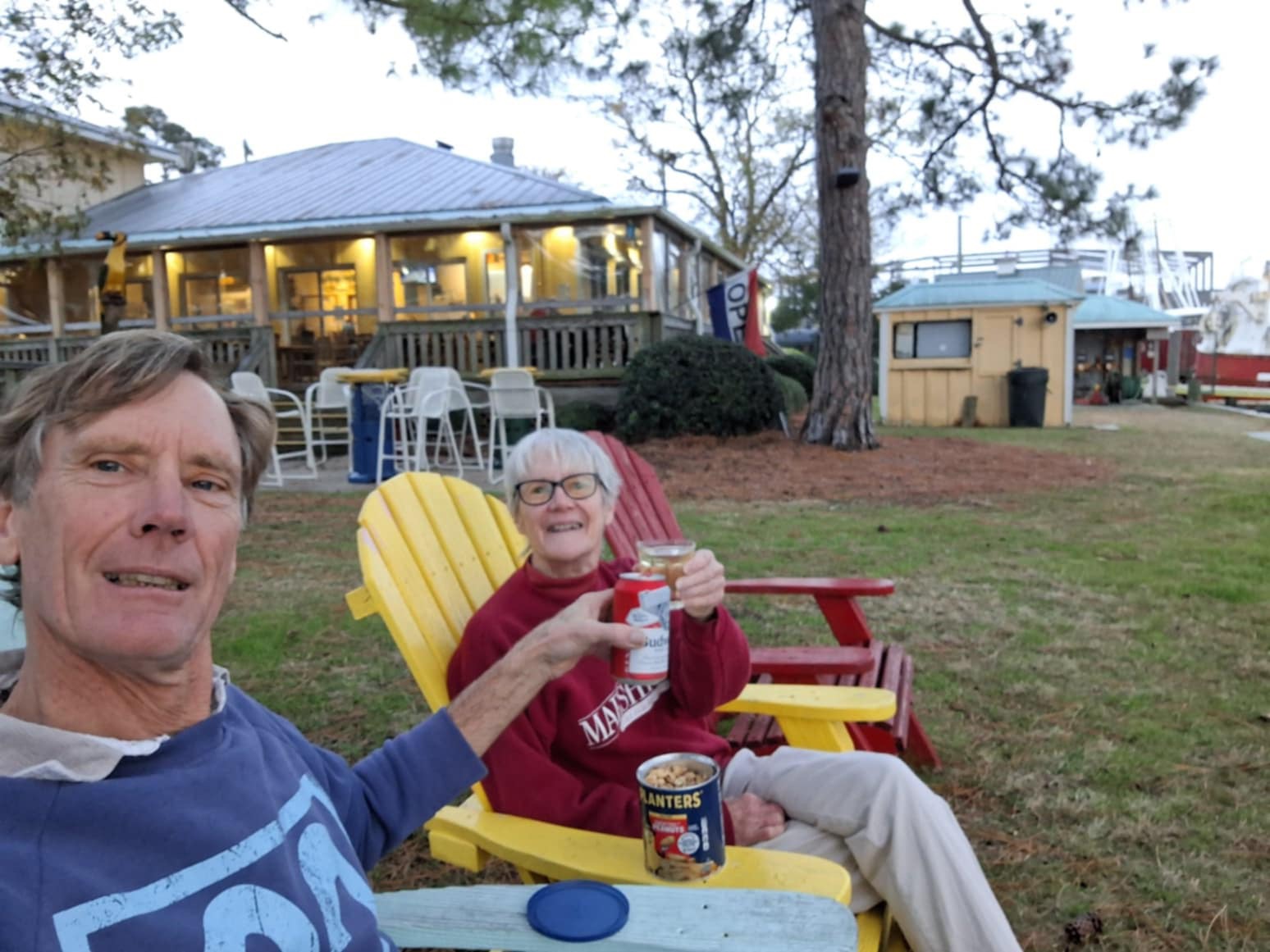

Jobs done, we could enjoy a short sundowner before getting back to the boat and under the doona!
We left the marina at exactly 7am as planned and completed the final stretch of waterway leading into Beaufort. We were very pleased when the latest forecast for the current of the Gulf Stream showed the perfect place for crossing it -a narrow part setting north, and after crossing that we would enter a section of south-east going current which is exactly the direction we want to go. Our timing also meant we would start crossing the stream before dark. All was set for a good start to the Jamaican passage, and our escape from the cold.


Terry would have enjoyed reading this Leey & Phil… Looking forward to the next instalment… xx Lyn
Yahoo Mail – Email Simplified
LikeLike