
Who would have thought that after all the places we have been, Nova Scotia would turn out to be a highlight -and that’s mainly due to the wonderful welcoming people we met along the south eastern coast as we made our way from St Peter’s in the Bras D’Or lake to Shelburne.
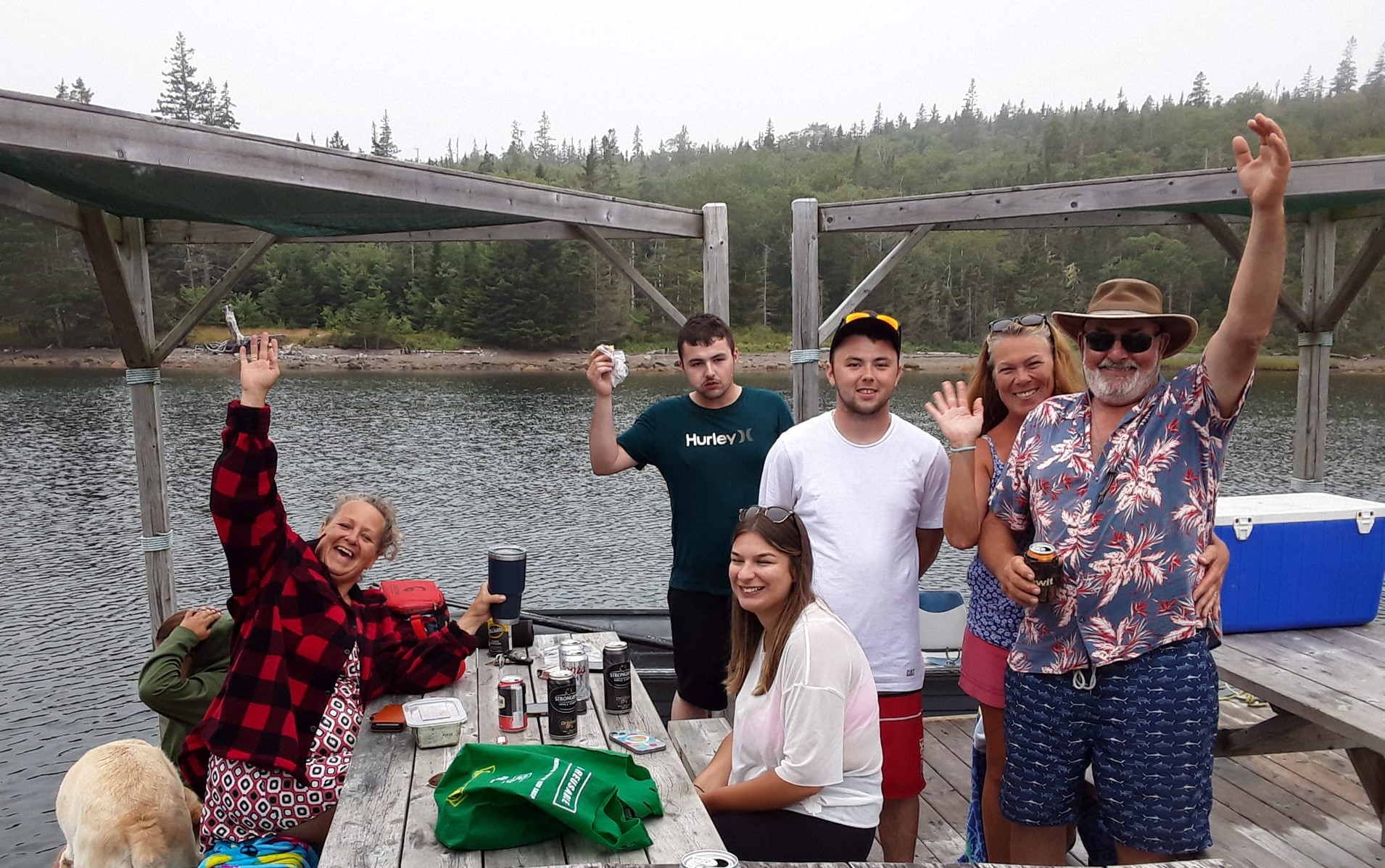
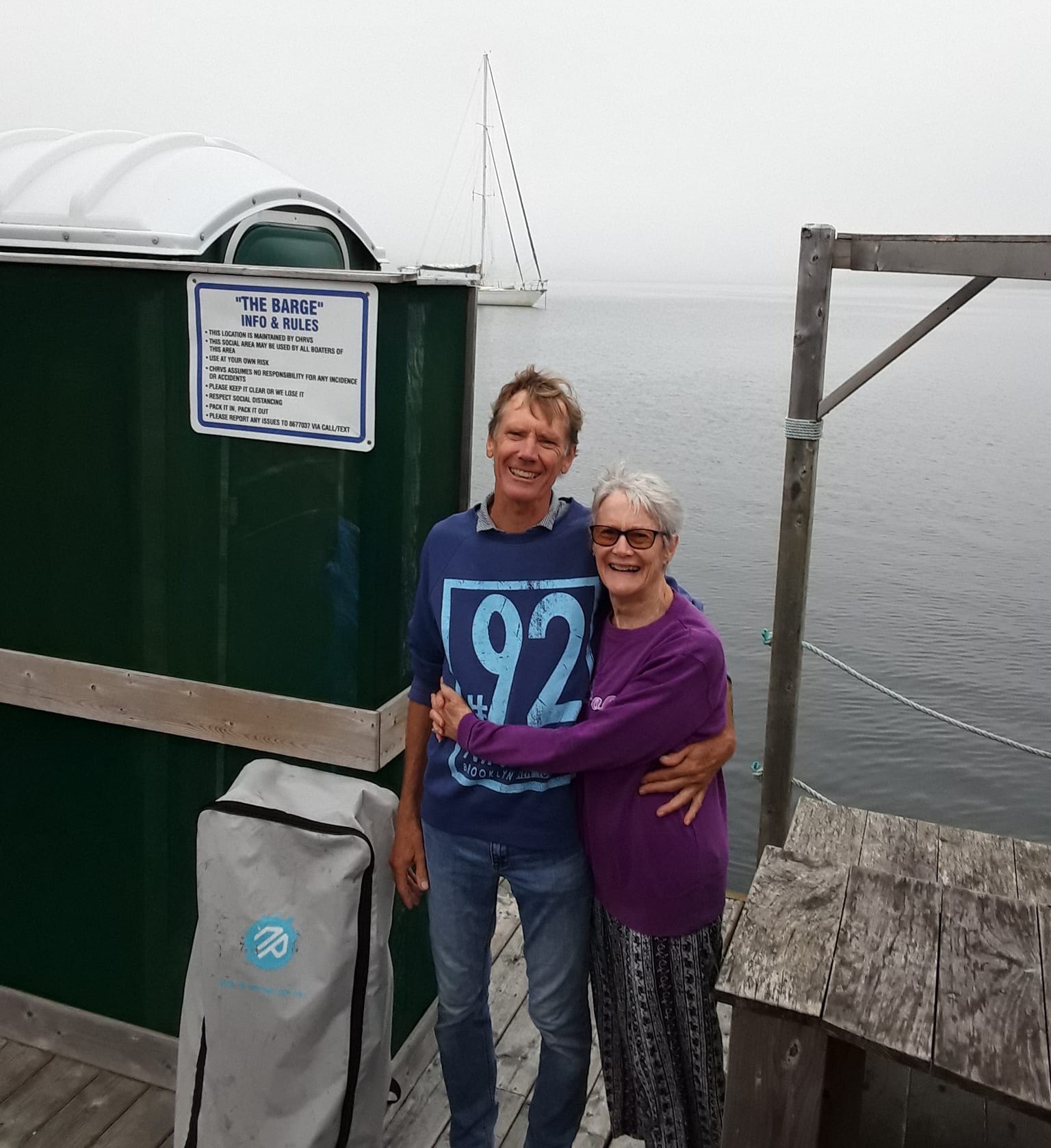
One of our first anchorages once out of the lake was in a cove behind a hill called Mount Misery, so named because almost all of the original colonial settlers died within their first year of emigration due to the harsh winter. As we rounded into the cove, we saw a rather large floating object right where we had thought we would anchor. Initially annoyed at being thwarted, we were incredulous as we got closer to it and discovered that it was basically a floating picnic area complete with tables and chairs, a BBQ and a toilet cubicle!

As the afternoon progressed it became obvious that the cove and the picnic pontoon were popular with the small power boat crowd as they buzzed in and out, stopping to make use of the facility. This was a location calling out for a BBQ tea and so we gathered all the necessities and dinghied over to join the like-minded group of Canadians also making the most of the pleasant conditions. We couldn’t have been made more welcome and we were quickly adopted as part of their group. We whiled away the afternoon and evening chatting to them and making merry. For us, this location was anything but miserable.
We had come to Nova Scotia to escape the hurricanes and strong weather systems that sometimes penetrate this far north. With one of these systems looking like it was headed our way, we took refuge in a town called Sherbrooke, located about 20 kms inland up the St Mary’s River. The old part of the town has been preserved as a museum with 25 original heritage buildings dating from the 1860’s. Farming, fishing, timber and later gold created a very busy and prosperous town. Keen to explore the village, we were very disappointed to find that since Covid it has been operating on reduced hours and would be closed for the days that we anticipated staying. Still, we went ashore to explore and found that we could walk around the village and peek into the windows of the various buildings. We came across a woman and her granddaughter feeding some very handsome donkeys in a stable and struck up a conversation (with the woman, not the donkeys!). One thing led to another, and before we knew it, the woman was volunteering to take us into any of the buildings that we particularly wanted to see, as she had the keys to the village! So we were very privileged to have a personal tour of the impressive general store, and the mansion belonging to the store owner, and the town mill. Not only were we happy to have seen inside at least some of the buildings, but we were uplifted by our “guide’s” generosity.


Inside the old general store, Sherbrooke Historic Village

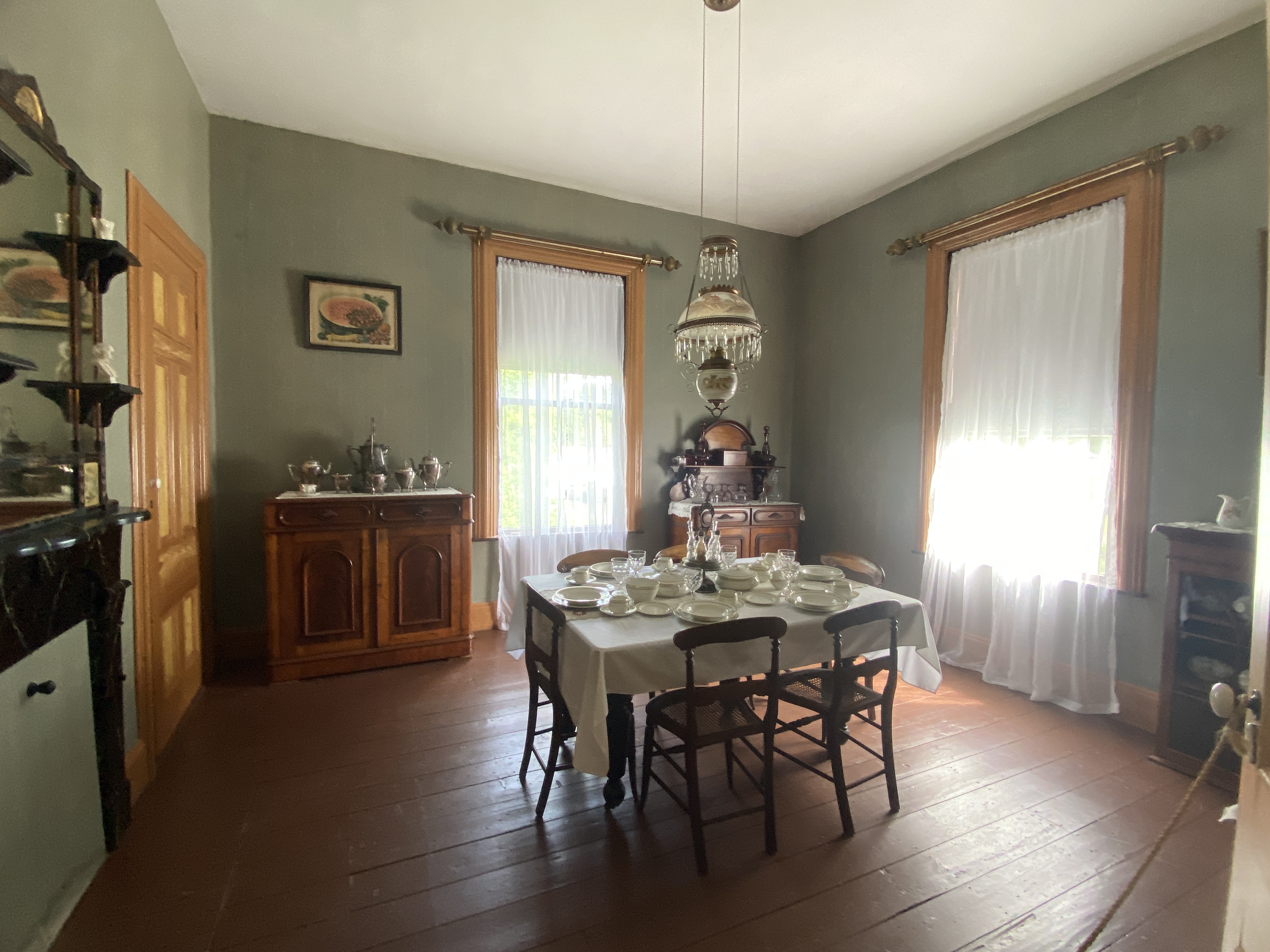
The town mansion belonging to the obviously successful general store, Sherbrooke Historic Village
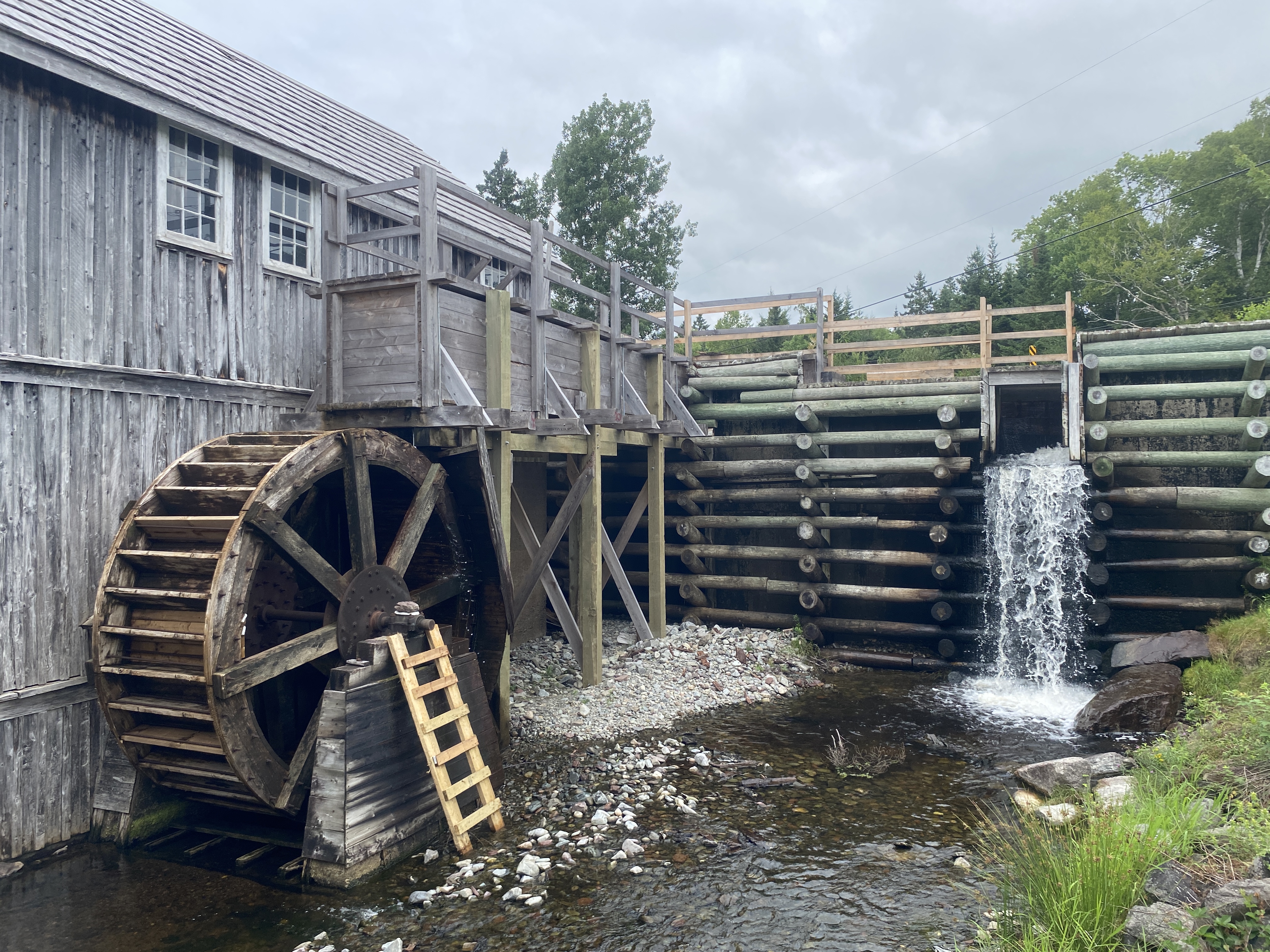

The old mill, Sherbrooke Historic Village
The bad weather which had sent us up St Mary’s River dissipated and we were soon on our way, but not for long as another system appeared in the forecast and so we took refuge again by heading into Sheet Harbour, some distance up the West River.


It was a tad cold as we sailed the Nova Scotian coast, dodging the occasional threatening weather system
On the way into Sheet Harbour, we stopped for the night in Malagash Cove, so that we would have the current in our favour to go up the river the next day. Early in the morning, I saw that someone had posted a photo of Paseafique anchored in the cove on Instagram, and before long I was chatting on-line to one of the residents in the cove.

One thing led to another, and before long Bruce and Tanya were paddling out to Paseafique on their stand-up paddle boards, and joined us for coffee. We felt an immediate connection with them and had a great chat. They were thrilled to have met us – Bruce always notices the boats that anchor in their cove but ours was the first one that he had actually been able to contact through social media.

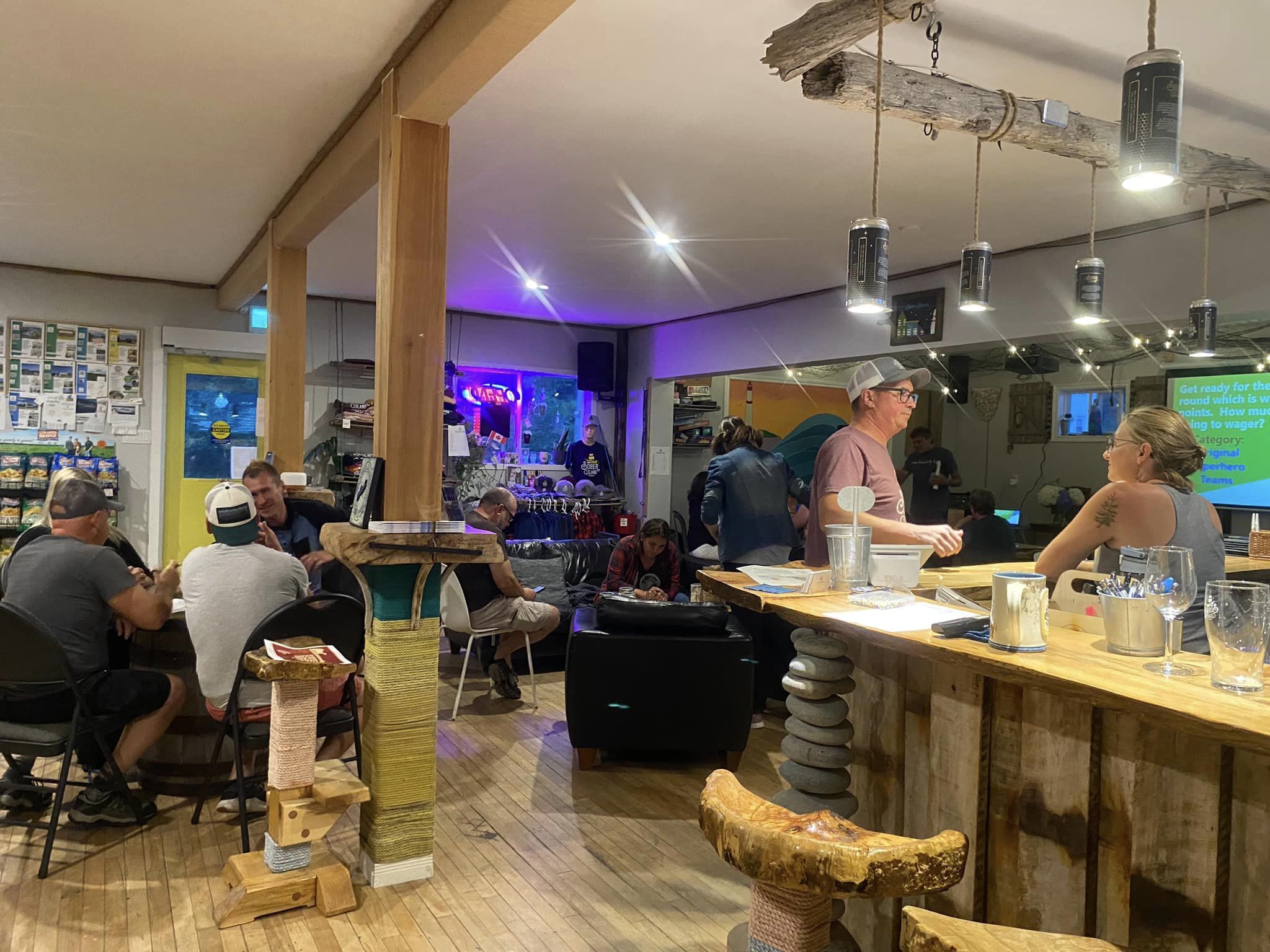
We pushed on up the river and anchored in Sheet Harbour. Ashore in the small town, we were intrigued to find a boutique brewery with the amusing name of “Sober Island Brewing Company”. We went in to check it out, and the friendly staff encouraged us to come back that evening for their regular trivia night, and the couple of patrons having a lunch time ale suggested that we could form a group with them. When we returned that evening, the owner, Nancy, was behind the bar and straight away she told us she knew who we were as she had recognised us from the photo that Tanya had shown her. Tanya works at the restaurant next door and had been telling Nancy about us. We got settled at a table, the lunch time patrons returned and joined us. Before long, Bruce turned up to join his regular crew for the trivia night and we felt like we were fast becoming locals. Not local enough to put in a good score on the trivia questions though.
The next day, with a bit more time on our hands before the weather system passed by, we went for a walk along the harbourside to the local library. We often visit local libraries, not to borrow books, but to get a feel for the community by browsing the local papers and ascertaining the kinds of events run by the library. Oh, and there is often also free wifi. We were made extremely welcome by the librarian, found some very comfortable reading chairs and settled in for a few hours. There was even free tea and coffee and some snacks provided.
Apart from the friendly folks, Sheet Harbour is a pretty place.
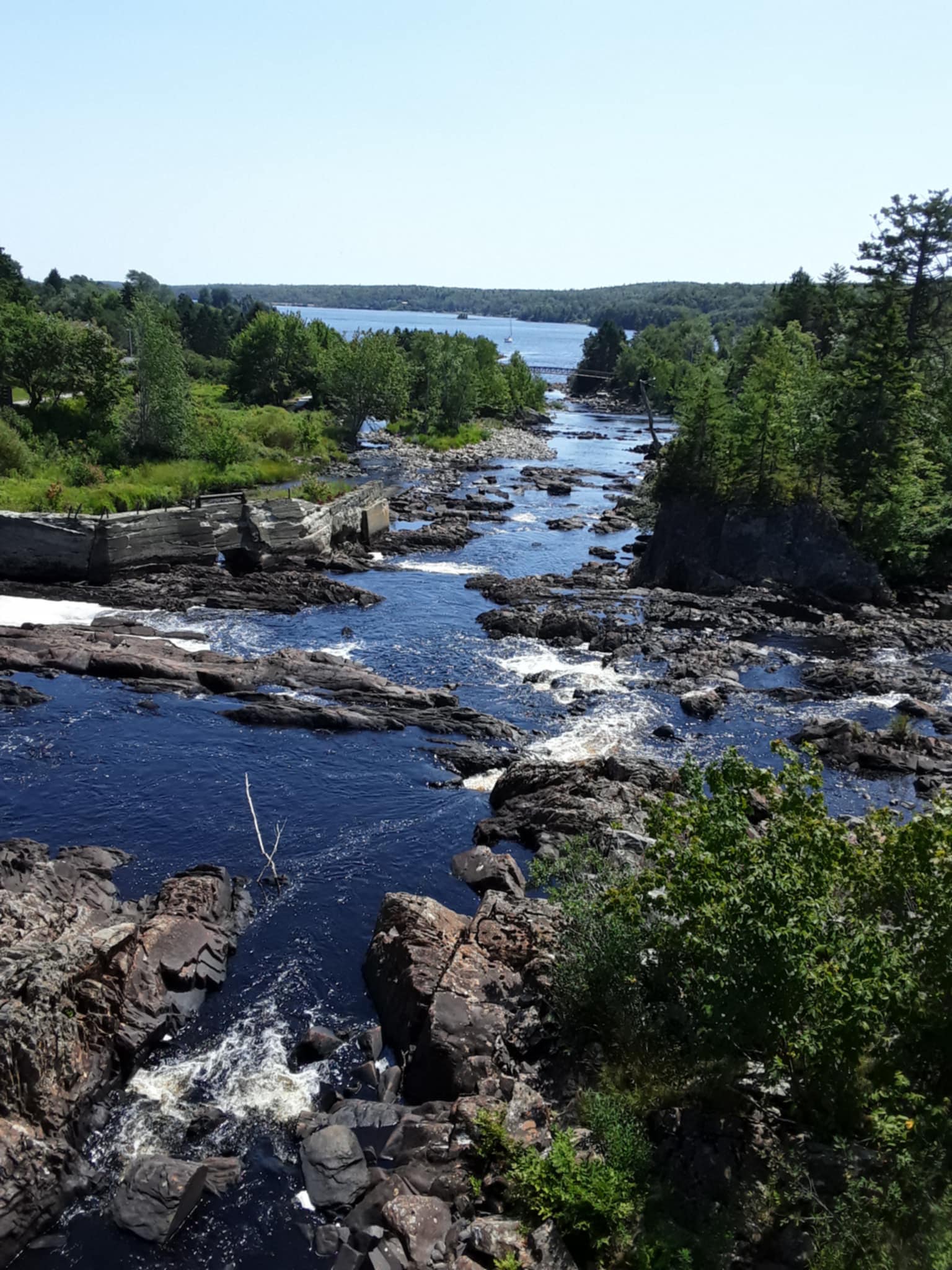
North west arm, Sheet Harbour – Paseafique just visible in the distance


The warm welcome was just as apparent in the capital, Halifax, as it was in the smaller communities. People working in their front gardens were often up for quite a chat to us as we passed by their houses, as were people enjoying walks along the harbour and in the parks. The staff at the Armdale Yacht Club treated us like old friends, which of course encouraged us to return often for happy hour or dinner. One of the club members even lent us the special tool we needed to put the spinnaker pole track back on the mast.

spinnaker pole track back to the mast
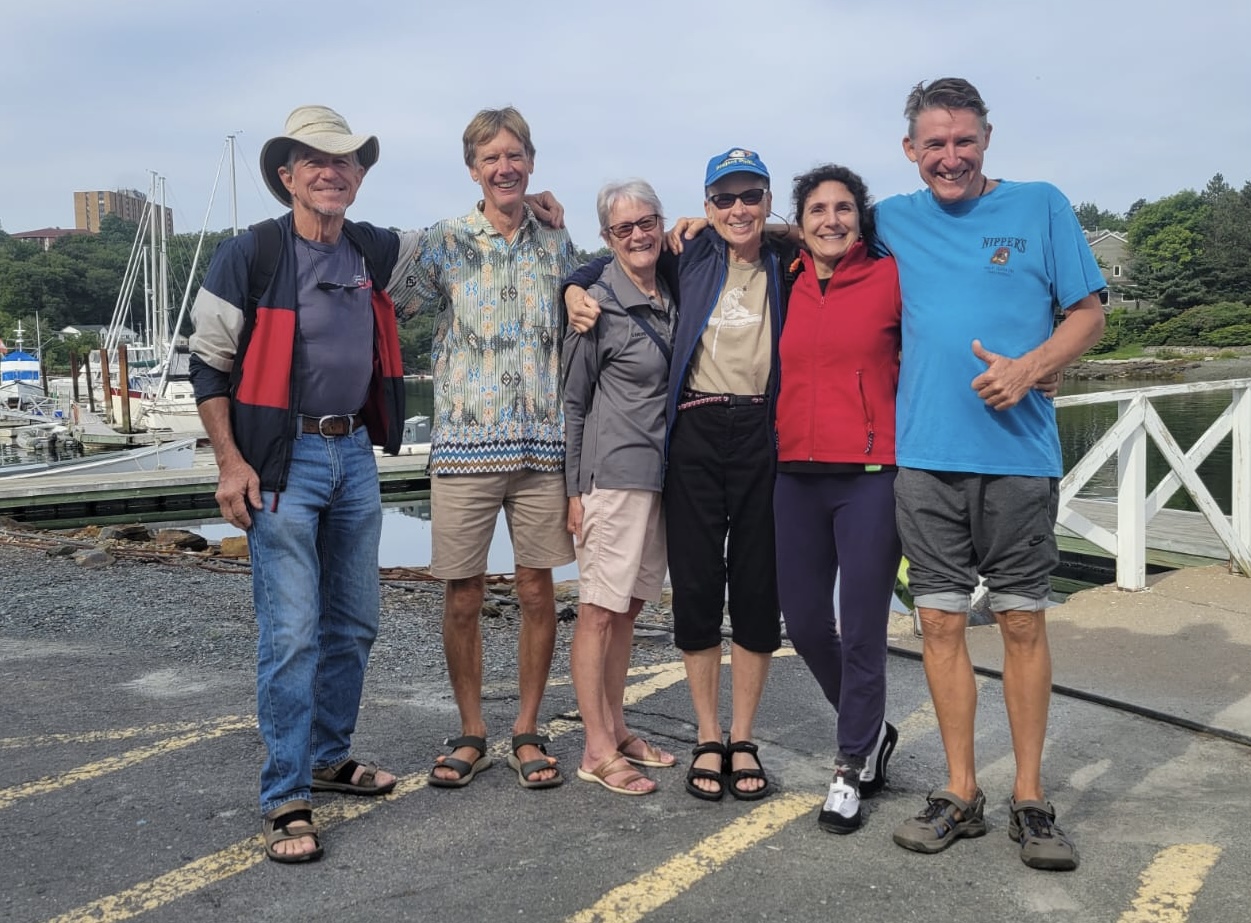
We had another kind of warm welcome waiting for us in Halifax too – our good friends Adrian, Marianna, Jack and Jan were also anchored here. It was a reunion for us as we had not all been together for quite some time. We soaked up each other’s company, shared meals and drinks, and had a picnic on a perfect late summer evening. Our circle of friends had expanded to include a local sailor, Ben, who we had “met” through a WhatsApp group, and who had been very helpful giving Phil tips on the Bermuda to Nova Scotia passage which Ben has done a couple of times. Ben was a font of local knowledge and also facilitated delivery of some packages for us with a local postal address – having somewhere to send deliveries is a god send when you are a wanderer.
The generosity of Nova Scotians also helped us solve another delivery dilemma. We had ordered a new propellor for the dinghy from a dealer some kilometres away and could have paid for a courier to deliver it to Halifax, but that would have added considerably to the cost. I posted a request on a local face book sailing group on the off chance that someone might be driving between the dealer and Halifax and could make a slight detour to pick up the prop. Lo and behold I had three or four offers to pick up the prop for us, and someone even volunteered to bring it out to our boat!


Dappled autumn sunlight on a walk around the anchorage at Halifax, where we saw plenty of these cute little creatures

While in Halifax, we visited the Maritime Museum of the Atlantic where we learned about a special connection between Halifax and the Titanic disaster, and about the biggest man-made explosion until the atomic bomb was dropped on Japan.
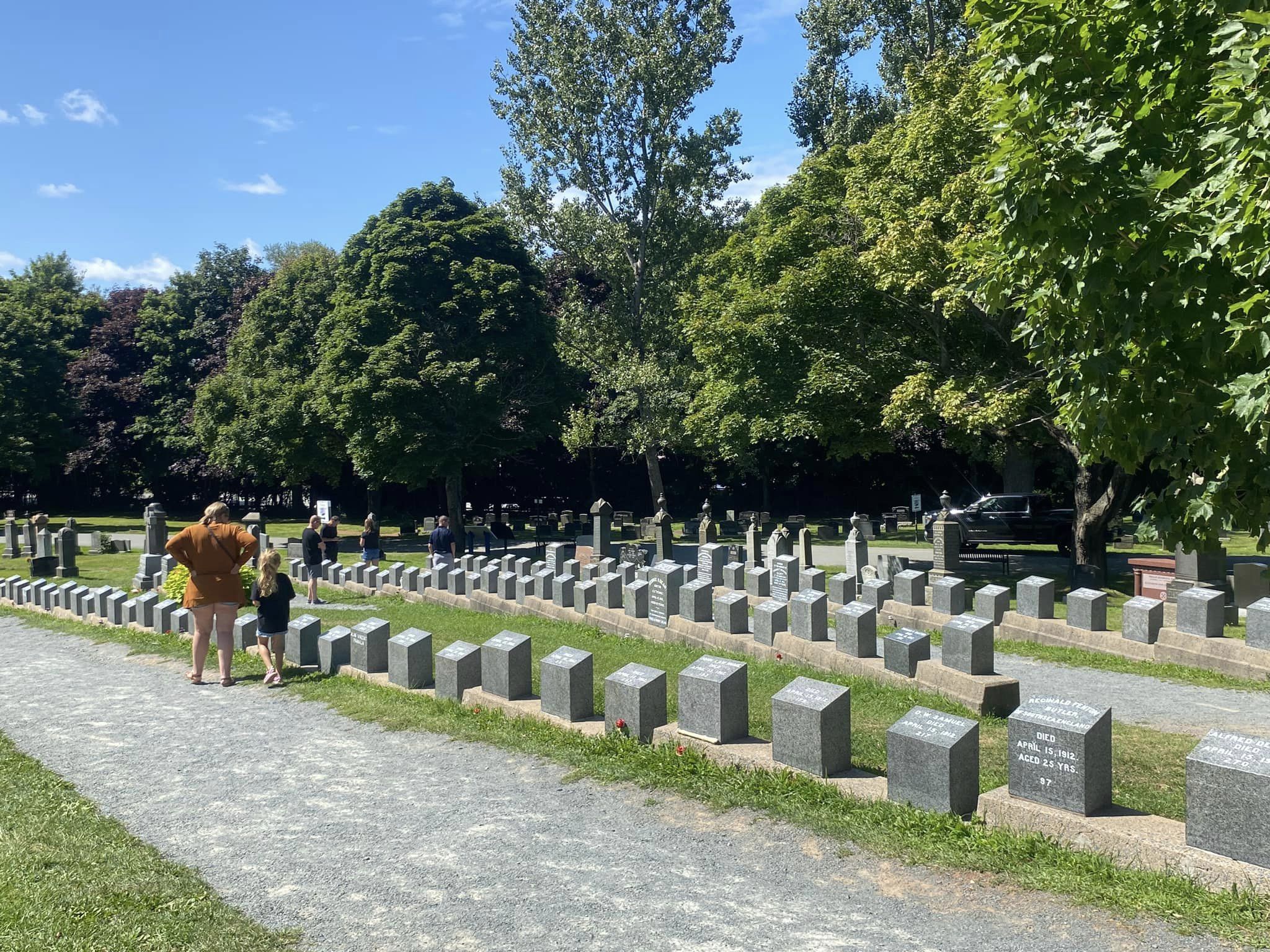
When the “Titanic” was sinking and distress signals sent out, the ship “Carpathia” was 58 miles away and steamed to “Titanic’s” location in time to rescue those who had abandoned ship into the life rafts and transport them to New York. In the meantime, White Star Lines, the owner of the “Titanic”, hired cable ships from Halifax to retrieve the dead bodies from the icy Atlantic waters. Cable ships and their crew were well suited for such an exercise as they were normally deployed in rough and cold conditions to repair underwater telegraph cables. The cable ships brought 209 bodies to Halifax, where the few personal items on their bodies, and any identifying marks, were carefully and systematically catalogued which allowed the identification of many of the people who lost their lives.

A large proportion of the deceased were buried at the Fairview Lawn Cemetery in Halifax. White Star Lines paid for their burial and a plain headstone marked with their victim number, and name if known. Sadly, a child was one of the first victims recovered and the cable ship crew were so moved that they paid for a memorial service and also for a larger headstone on his grave. His name was added some years later when DNA testing established his identify.


The shoes of the unknown child which in this case didn’t help with his correct identification. He was mistakenly identified until DNA testing confirmed his true identify.
The methods used to identify the “Titanic” victims were subsequently employed to identify those people killed in the Mont Blanc disaster that beset Halifax in 1917. The “Mont Blanc”, a French ship loaded with high octane fuel and explosives bound for Europe and the World War I effort, was entering the Halifax harbour. At the same time, a Norwegian ship was leaving and unfortunately the two collided in an area known as the Narrows, initiating a chain of events that led to the explosion of the “Mont Blanc’s” dangerous cargo. Utter devastation ensued as something like 100,000 pieces of metal rained down on Halifax, killing 2000 people, destroying 1,630 houses and buildings, and damaging a further 12,000 buildings.
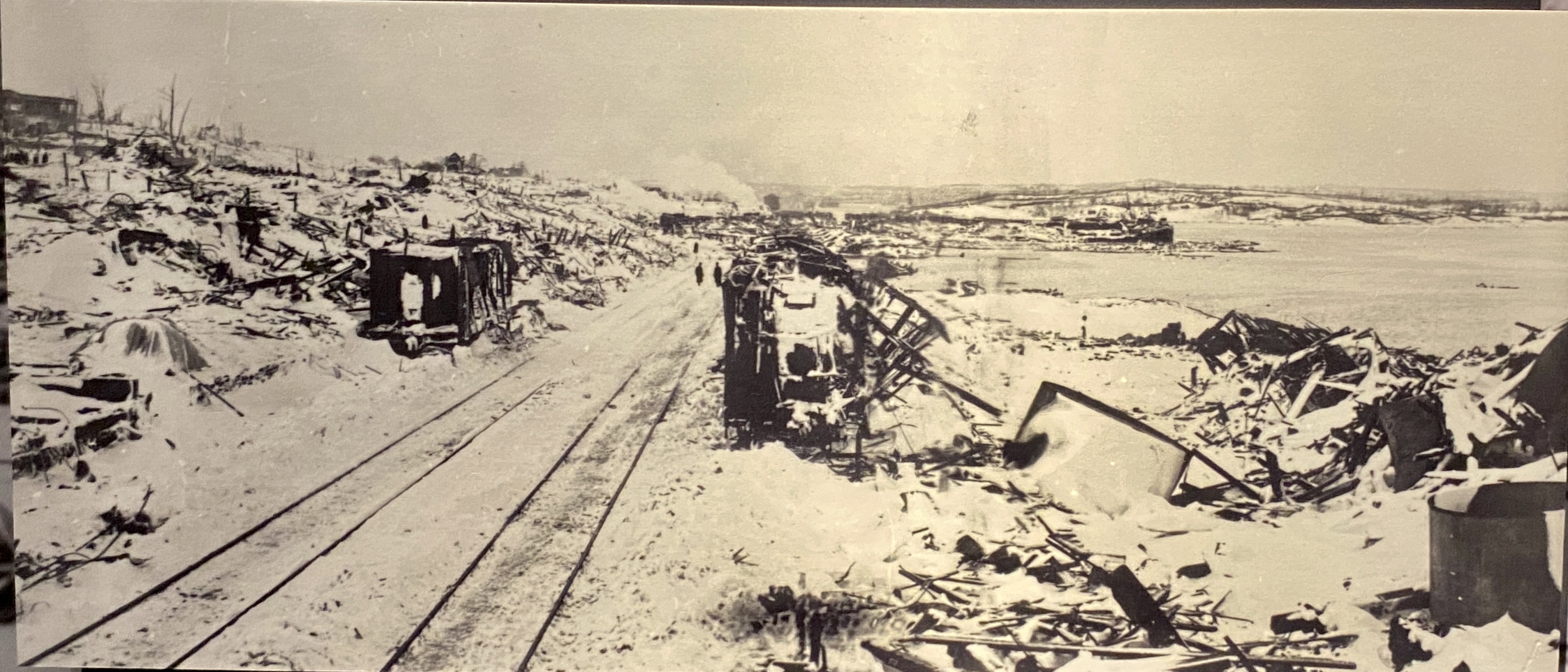
Such was the force of the explosion that a piece of the “Mont Blanc” anchor weighing 500 kgs was hurled to a residential area 3.8 kms from the harbour. The city of Boston was one of the earliest and most significant responders to this disaster sending a train packed with supplies to Halifax. Every year since then, a giant Christmas tree is sent to Boston from the grateful population of Halifax.

anded after being blasted across Halifax
While in Halifax, I discovered an initiative called Project Bookmark Canada through which poems and book extracts are placed on signs in the Canadian locations where these literary works are set. Since I’m a bit nutty about good books, this idea really appealed to me, and given the time, I could easily follow this literary trail around Canada, stopping long enough to read the full poems and books in each site.

In Lunenberg, a colourful historic fishing and boat building port, we were re-united with Liz and Steve on Liberte who we had not seen since the Caribbean. Liz had been a stalwart support while I was recovering from the hip surgery, sending frequent encouraging messages from afar. It was great to see them again and to swap ideas about routes from Cuba to Panama, something that we have all been thinking about as each potential routes has a drawback.

While in Lunenberg we visited another fabulous museum – the Fisheries Museum of the Atlantic which covers the history and development of fishing in the area, the lives of fishermen, the preservation of local marine life, and the development of safety at sea. In addition to well curated static displays, the museum included short videos, talks and demonstrations. A large section of the museum is devoted to the story of a schooner called “Bluenose”. She was specifically built to beat the Americans in the International Fisherman’s Race. It had to be an active fishing boat to compete and it was nearly wiped out by another boat in its first fishing trip. While the Americans might have won the first fisherman’s race in 1920, “Bluenose” won all the subsequent races until the last one in 1938. Nova Scotians are immensely proud of the “Bluenose” and it is featured on their 10-cent piece.


The “Bluenose” and a plaque honouring it’s achievements.


On the left is a red channel marker kitted out with a bell so that sailors can “find” it in the fog. As the water moves the buoy it rings the bell – on this one you could actually see where the bell was wearing. On the right is a panel from the museum section that focussed on the lives of the early fishermen. Even today I could identify with some aspects- the need for entertainment and hobbies, reliance on each other and the traditions of the sea.


A beautiful sunset after some rain at Bridgewater, and a not so beautiful surprise when we pulled up the anchor the next morning!
Our last landfall in Nova Scotia was Shelburne, another historic fishing and boat building port. Here we encountered more generous hosting by Liv, a young local woman just getting her life organised to start a cruising adventure. Through Liv, we enjoyed the hospitality of the Shelburne Yacht Club. We were pleased to see our friends Liz and Steve again, and Phil was very excited to meet up with Ian and Kim on Astrolabe who he had last seen in St Peter’s Nova Scotia. Shelburne was a prolific producer of dory boats, the sturdy vessels used by fishermen all over Nova Scotia and nearby areas. The dory shop museum here was another fascinating glimpse into the past.


The scenery along the Nova Scotian coast is very pretty and it’s no wonder there are brightly coloured chairs everywhere strategically positioned to enjoy the views. In addition, there are many park benches, often named in memory of someone, encouraging people to sit a while and commune with nature.
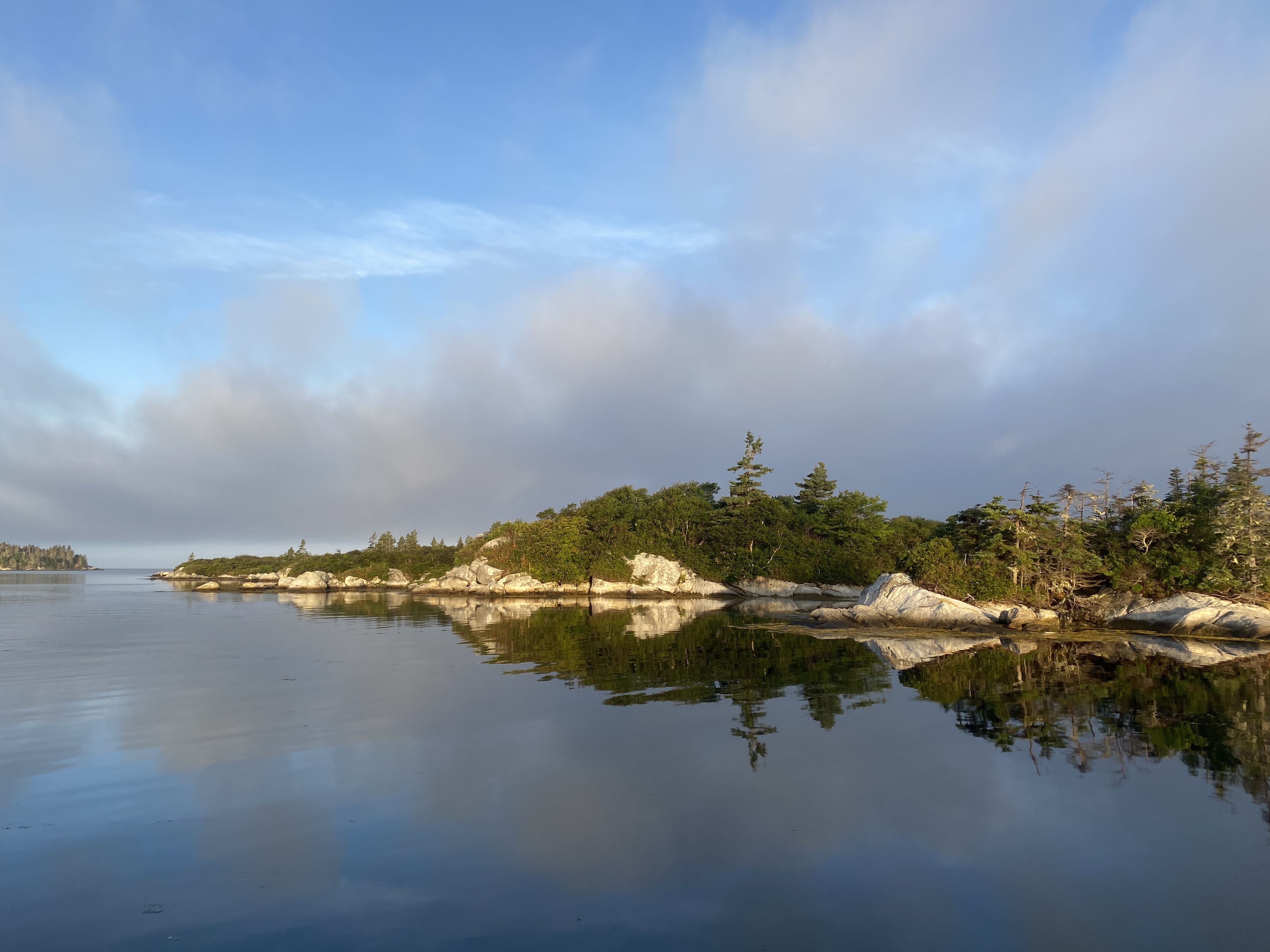
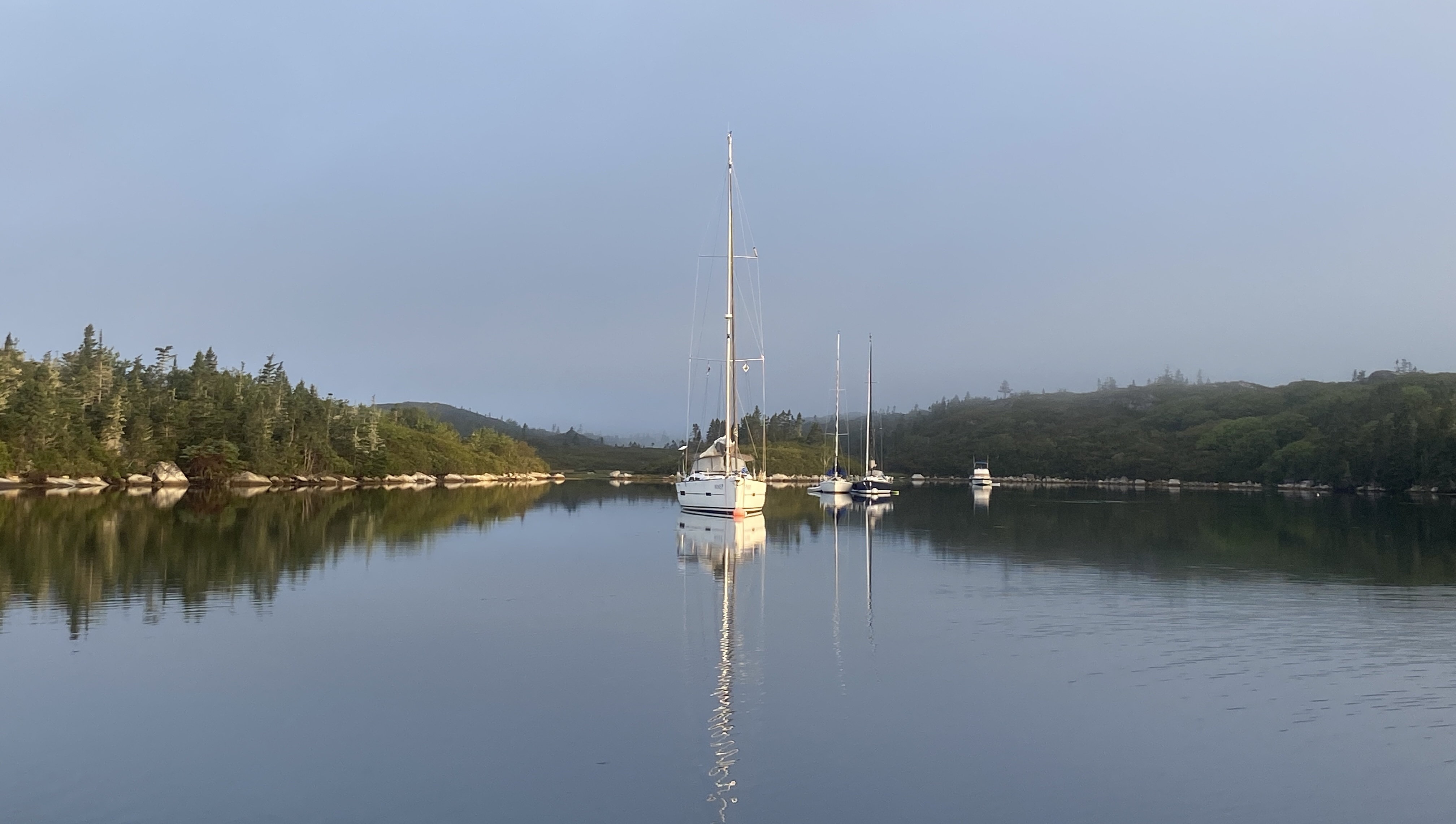
The peaceful anchorage at Rogues Roost
The delightful scenery and uplifting friendliness we encountered all along this coast more than made up for the mostly windward sailing as we made our way from St Peter’s to Shelburne. Our visit to Nova Scotia will be a cherished memory.

Follow our boat on NOFOREIGNLAND: https://www.noforeignland.com/boat/4748245372764160
 paseafique
Look at you two… you have come so far…. Wow! Rebecca
Sent from Yahoo Mail for iPhone
LikeLiked by 1 person
Great picture and history… l follow you since year, l get my Self in The indien océan year ago with a sailing Boat and l just miss it ….have a Good time sailer pierre from france Living in Berlin germany
LikeLike