
I do love a good set of data that tells a story. When we were recently asked to do a live steam talk for our home club cruising group, I had cause to review our sailing log for this season. I uncovered a very good reason as to why we had been feeling, well, meh. So far this season, we have sailed 1,515 nm over two months. On its own, that doesn’t have much meaning. But comparing it to last season starts to tell the story. Last season, we sailed 1,657 nm in 5 months. On average, we have sailed more than twice as far per month this season compared to last season. So more time sailing and less time lingering. We knew there would be more sailing this season as our goal is to leave the Med and cross the Atlantic. While we have had some wonderful sailing conditions, we weren’t however prepared for how much we would miss the richness of immersing ourselves in the places we visit and interacting with the locals.
There have been highlights though. Phil had long held a desire to visit Malta, being somewhat intrigued by its history. Time in Malta was also likely to help us with the requirement to only spend 90 days in any 180-day period in the EU countries that are part of the so called Schengen zone – which is most of Europe. Although Malta is within this zone, the authorities there take a relaxed approach with yachties and sign us in on a crew list, rather than by stamping passports. It’s the passport that counts when it comes to Schengen time. So we set off and had an at times boisterous sail from the south of Sicily to Malta, averaging about 7 kts per hour. Grand Harbour at Valetta, the capital of Malta, is one of the world’s most impressive harbours, but unfortunately anchoring is prohibited in all but one of its small bays, which as you can imagine gets very busy in the summer season.

Consequently, we based ourselves in a comfortable anchorage to the south, with the unpronounceable name of Birzebbuga. Maltese is one of the Semitic languages as are Hebrew and Arabic. Even though it uses the Roman alphabet, it’s almost impossible to guess at the pronunciation of place names like Ta’ Xbien, or Il-Hofra z-Zghira.

We joined our friends Liz and Steve from Liberte in the anchorage with the unpronounceable name and so we did some exploring together. A walking tour of Valetta proved to be an excellent introduction to the fascinating history of its establishment by the Knights of St John in 1566. Malta was given to the Knights, who at that point had lost their base in Rhodes, by the King of Spain. It was not an act of pure generosity by the King. He was apparently concerned about security in that part of the Med, but he didn’t necessarily want to use Spanish resources to protect it. So in giving it to the Knights, he figured that they would establish themselves there and consequently protect it. The King’s strategy worked as the Knights, assisted by the local population, defeated the invading and attacking Ottomans against all odds in an astonishingly bloody battle in 1565. It was after this battle that the Knights built Valetta, creating a magnificent fortress city which became something of a cultural centre since the Knights brought many artists in from elsewhere to lavishly decorate their buildings.
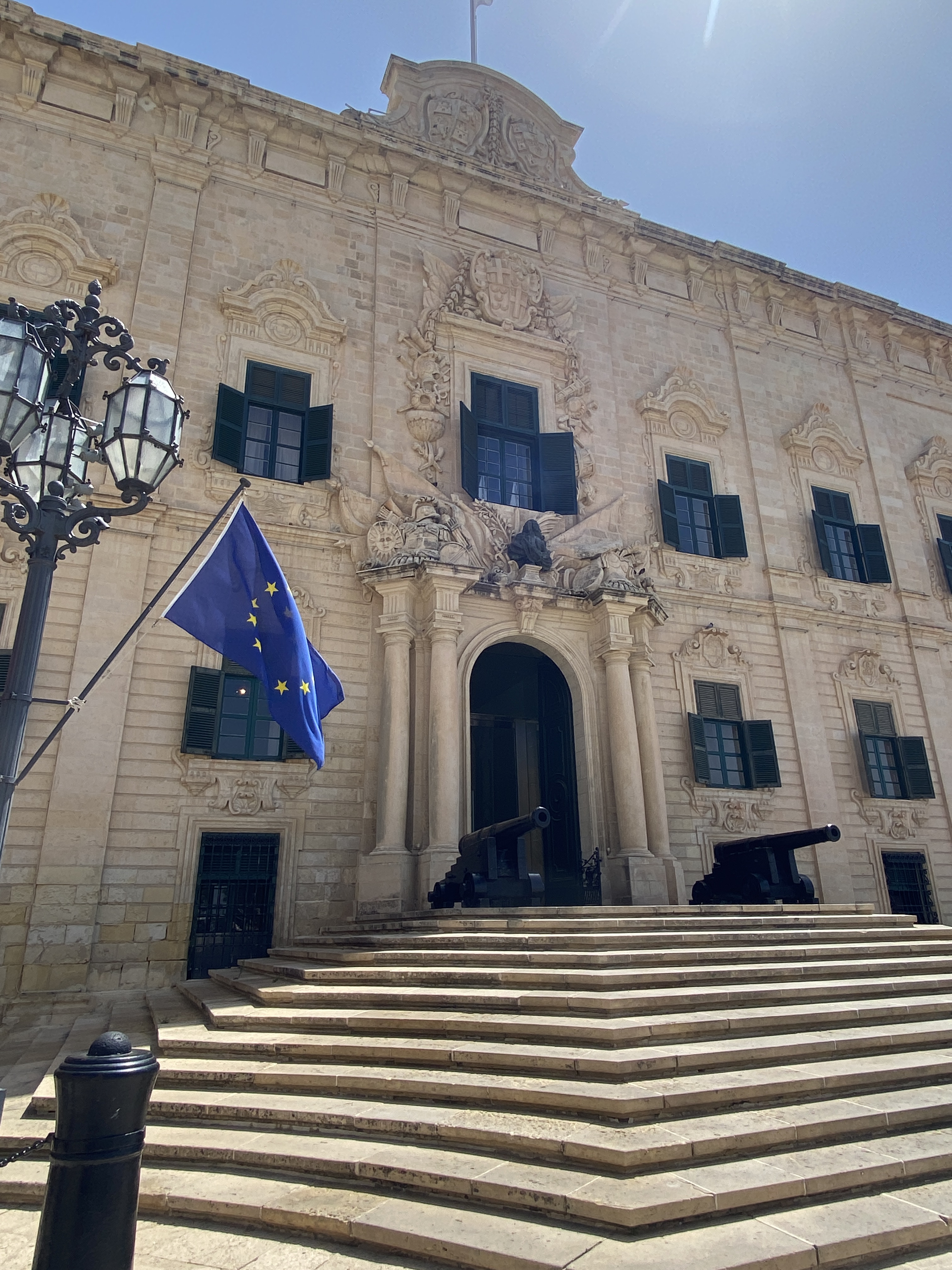


This same legendary stoicism was displayed by the Maltese during World War II when they endured ceaseless bombing – in fact some of the heaviest bombardments of that war. The bombing severely disrupted the supply of food to Malta, which is unable to produce sufficient food for its needs. The population was actually starving when minimal rations arrived on a couple of Allied warships, averting the population’s surrender.


Of course Malta was inhabited well before the arrival of the Knights. For example, the city now called Mdina was founded in about the 8th century BC by the Phoenicians and later inhabited by the Romans and the Arabs. The rich medieval and baroque architecture of the city bears witness to its past inhabitants. It was home to Malta’s noble families, some descendants of whom still live within this walled city. Many religious orders have also based themselves there over the years, establishing lavish churches and monasteries. We used Malta’s well organised bus service to make a day trip to Mdina with Liz and Steve. It is a lovely place to visit, with winding laneways and open plazas, and magnificent views to the coast.


It was in nearby Rabat that St Paul lived for a time after being ship wrecked on the island around 60 AD. While on Malta, St Paul converted most of the inhabitants to Catholicism and that religious influence is more apparent than anywhere else we have visited. Not only are there many churches and monasteries, there are religious statues mounted on the corners of buildings, and many private houses have similar statues in the courtyards and religious plaques depicting the various saints on the wall near their front doors.

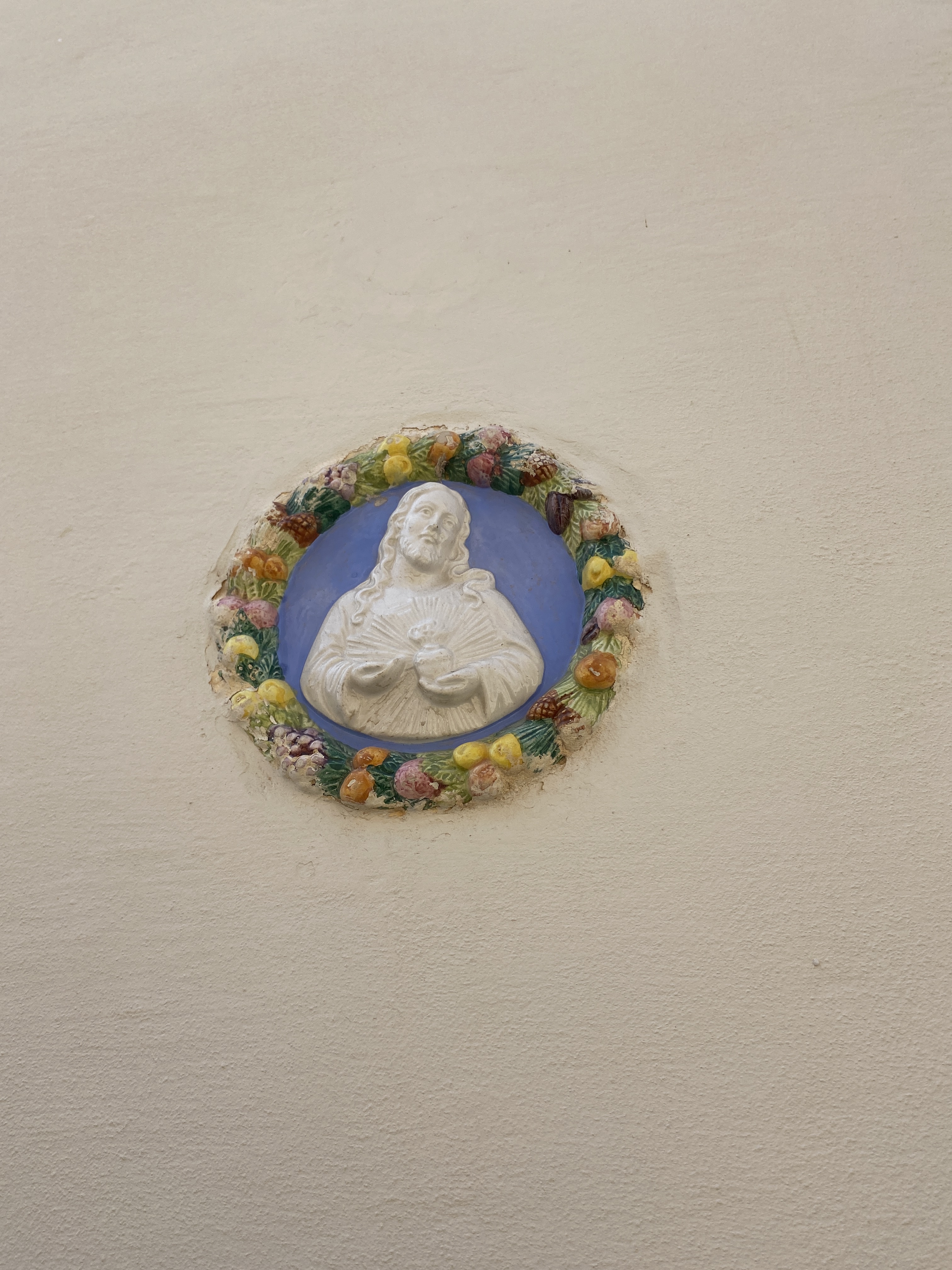

I visited St Paul’s grotto, and as in Cyprus, had to pinch myself that I was actually standing on the same ground as St Paul. Not that I am particularly religious, but I had heard a lot about him during my Catholic upbringing and we in Australia are so far away from many of the people and events that have shaped the world that it’s surreal to actually physically be in these places.
In our research on Malta’s attractions, we came across the so-called inland sea – an enclosed body of water open to the sea by a very small tunnel through the rocky coast of Gozo, the northern-most island of the Maltese archipelago. Phil was very keen to take the dinghy through the tunnel, but we needed the right weather conditions as it is on the west coast, open to the prevailing winds. My nerves jangled as we repeatedly pored over the weather forecasts, while Phil was literally willing the forecast to be good enough. And good enough it was so we made our way around to Dwerja Bay to anchor for the night. What a glorious place, and we actually had it to ourselves for the night – a rarity in the busy summer season. In the morning, Adventure Man and myself set off in the dinghy and navigated our way around to where we thought the entrance should be. I’ll let the pictures tell the story, but suffice to say I was extremely nervous. Adventure Man confessed later to being a bit nervous himself until we passed through the initial surge at the entrance to the tunnel! We both agreed though that it was definitely a highlight once back safely on board Paseafique.


One of the other highlights had nothing to do with sailing or traveling and everything to do with celebrating. We left Paseafique tied up at a sailing club in Catania, Sicily, and flew to Rome for a four-day festival associated with the wedding of Beth, the daughter of long-time friends, to a lovely young man, Olivier. We have known Beth since she was a baby and so it was such a joy to be able to be at her wedding, to witness their happiness, and to share that with our friend, Leonie, mother of the bride. Our base for the four days was a superb villa outside Rome, where we stayed with Beth, her family, and some close friends.
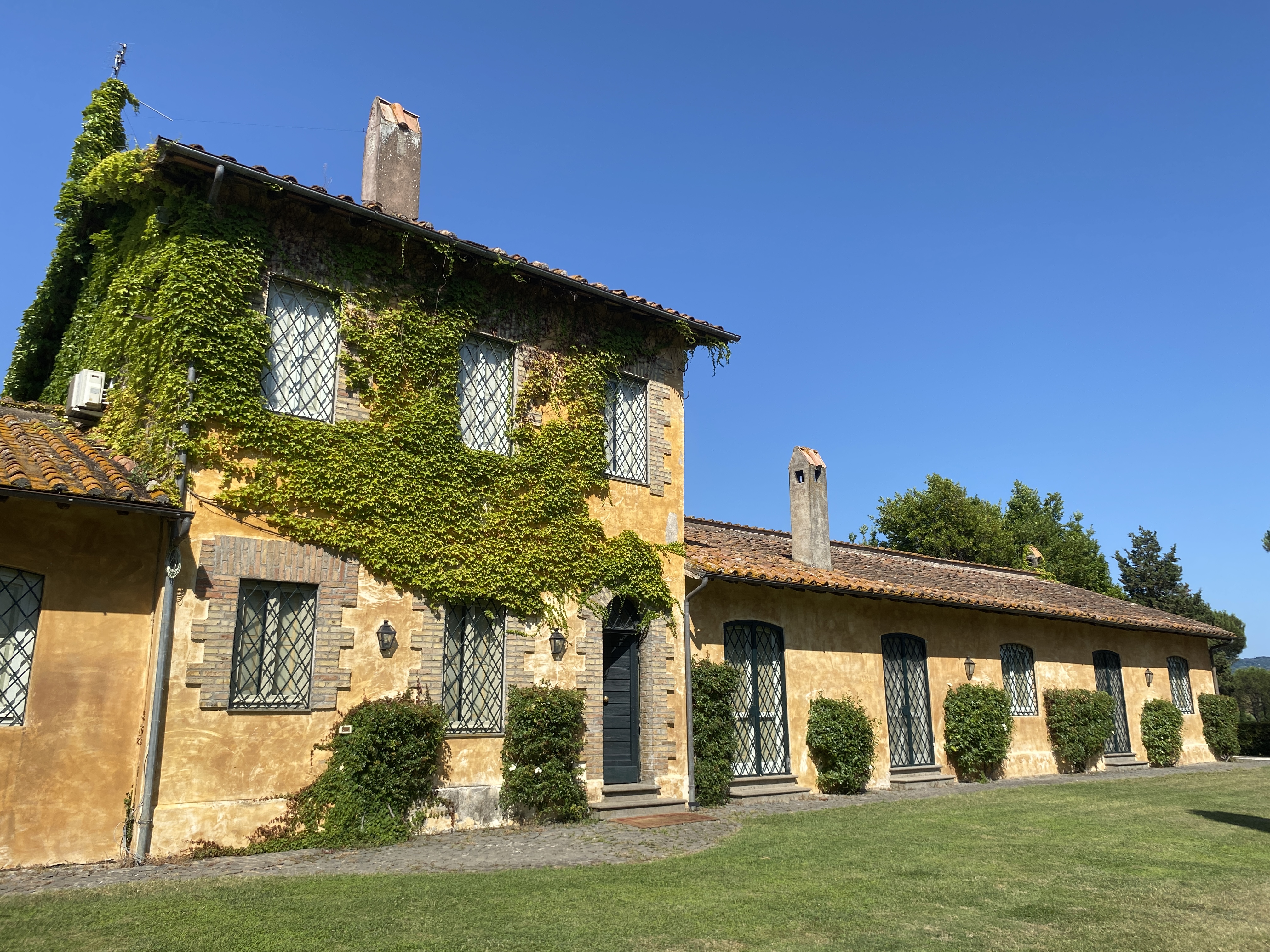
The “festival” started with an informal dinner at the villa for the two families and a few close friends. It was a great opportunity to get to know Oli’s family who had travelled from the UK, Belgium and the US. Cocktails at a roof top bar in Rome followed the next evening, the wedding eve, for all the guests who had already arrived in town.
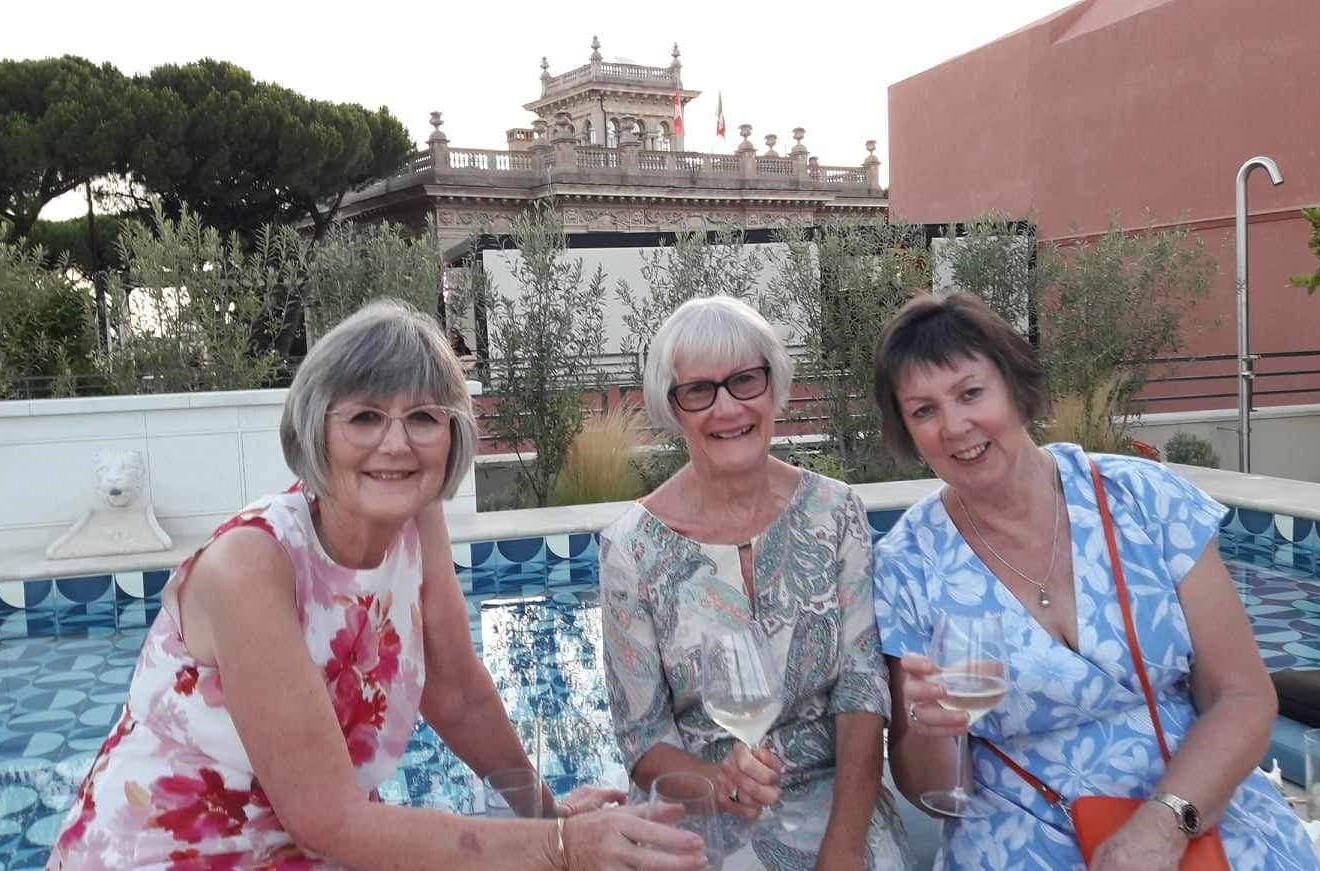

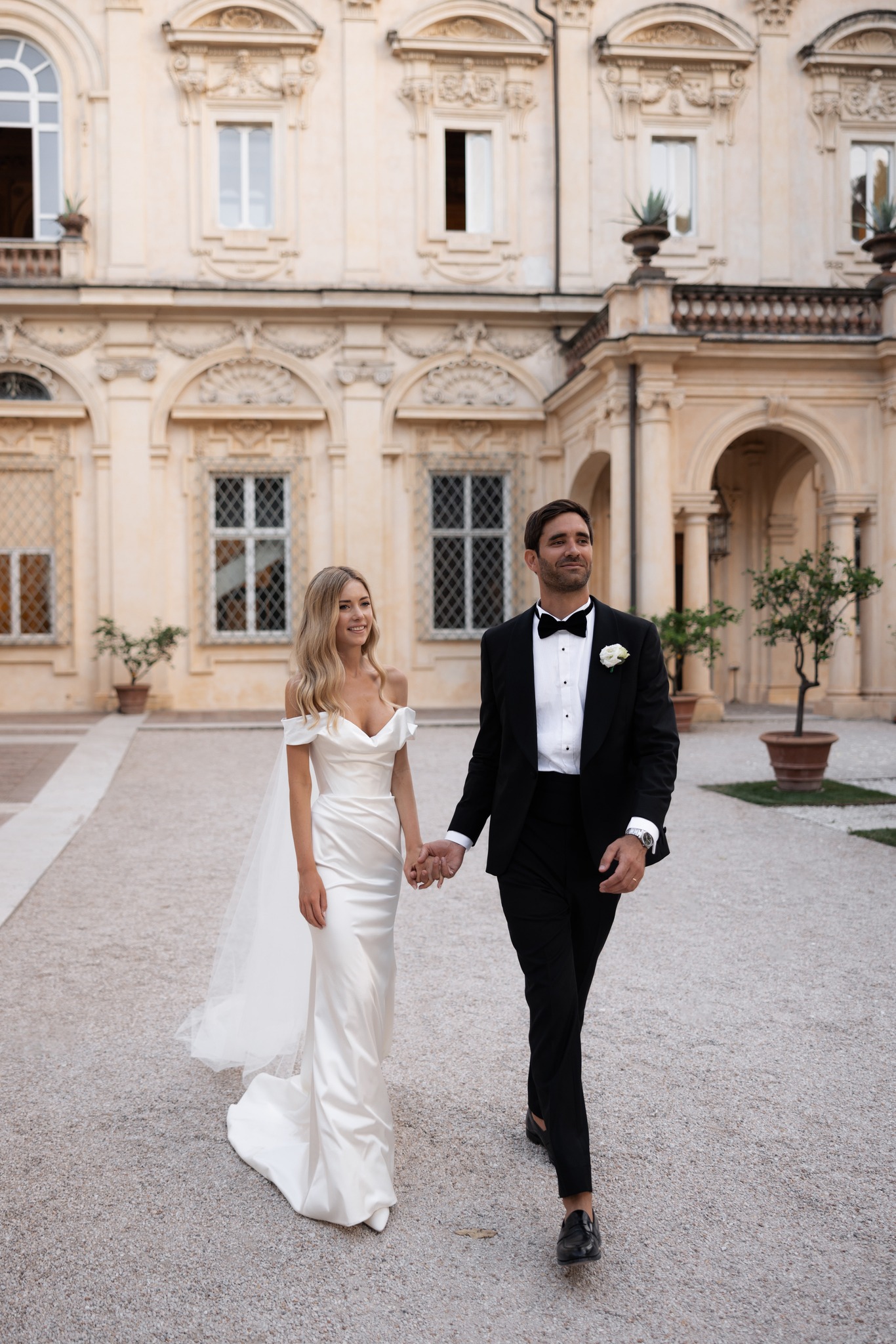
The wedding itself was like a fairytale. The setting was the stunning Villa Aurelia, a 17th century villa in Rome itself. The room was full of love as the bride arrived and walked down the aisle arm in arm with her Mum. The ceremony was beautiful as Beth and Oli exchanged vows that they had written themselves. Then it was onto a sumptuous dinner served in the gardens, followed by dancing and partying. It was a more subdued crowd who gathered at our villa the next afternoon for a recovery pool party!

We used the return trip from Rome to Catania to stop in Naples so we could visit Herculaneum. Mount Vesuvius has a reputation of destroying Pompeii in 79 AD, but it also destroyed Herculaneum – a nearby town once on the coast of Italy. We went there on the advice of friends, as it is a smaller site (so easier to cover in one day) and apparently better preserved. Herculaneum had become a resort town for the Roman aristocracy and was wealthier than Pompeii so had a lot of richly decorated and extravagant buildings. So much pumice and ash came out of the volcano that the coastline was extended seaward 500 to 1000 metres. Overall the town was covered with 23 meters of ash. Thousands died mostly from a fireball of hot air.


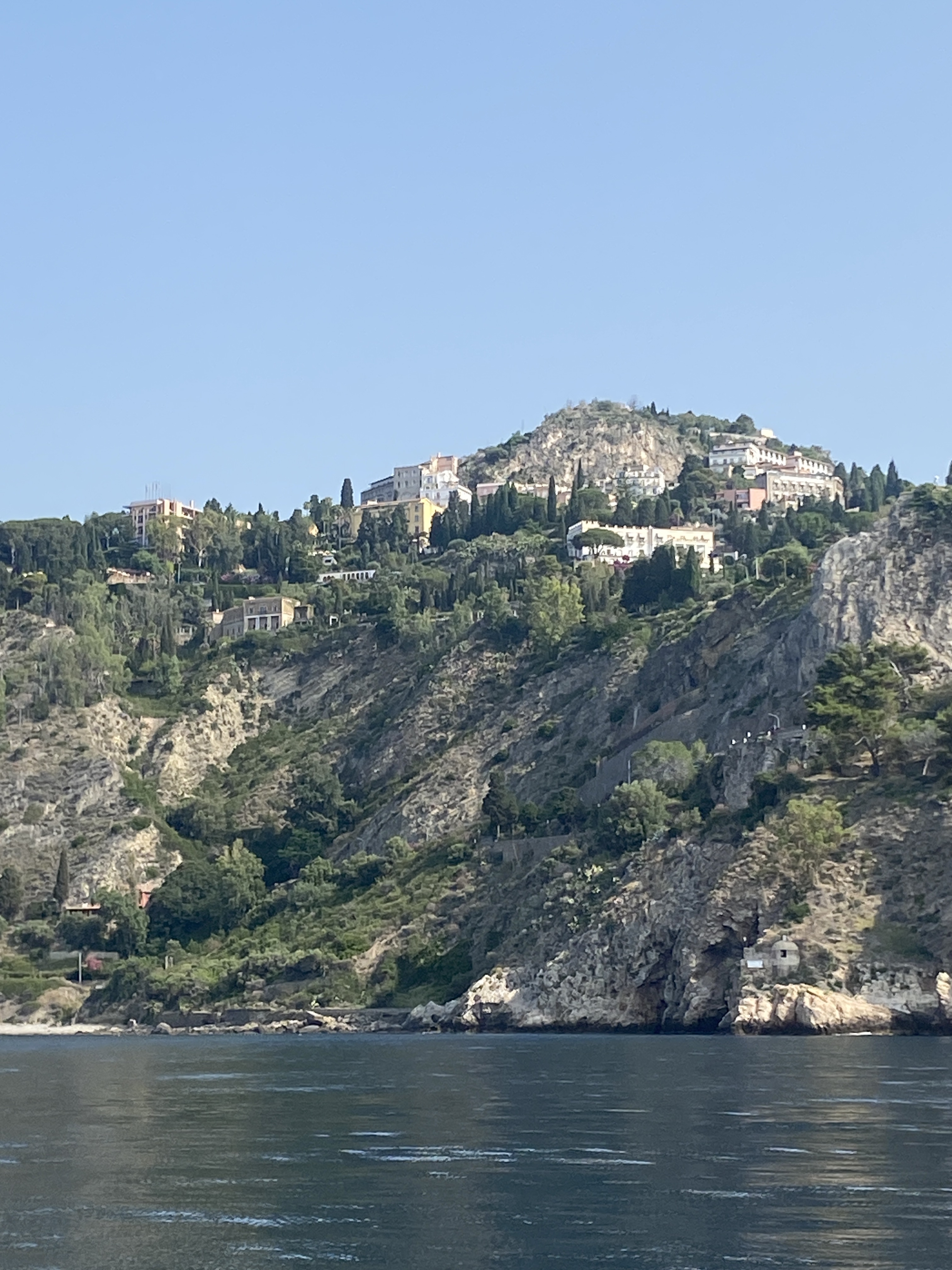
Back at the boat, we headed north along the Sicilian east coast with one overnight stop at Taormina.

Right: Taormina- one of the locations for the filming of the second series of The White Lotus
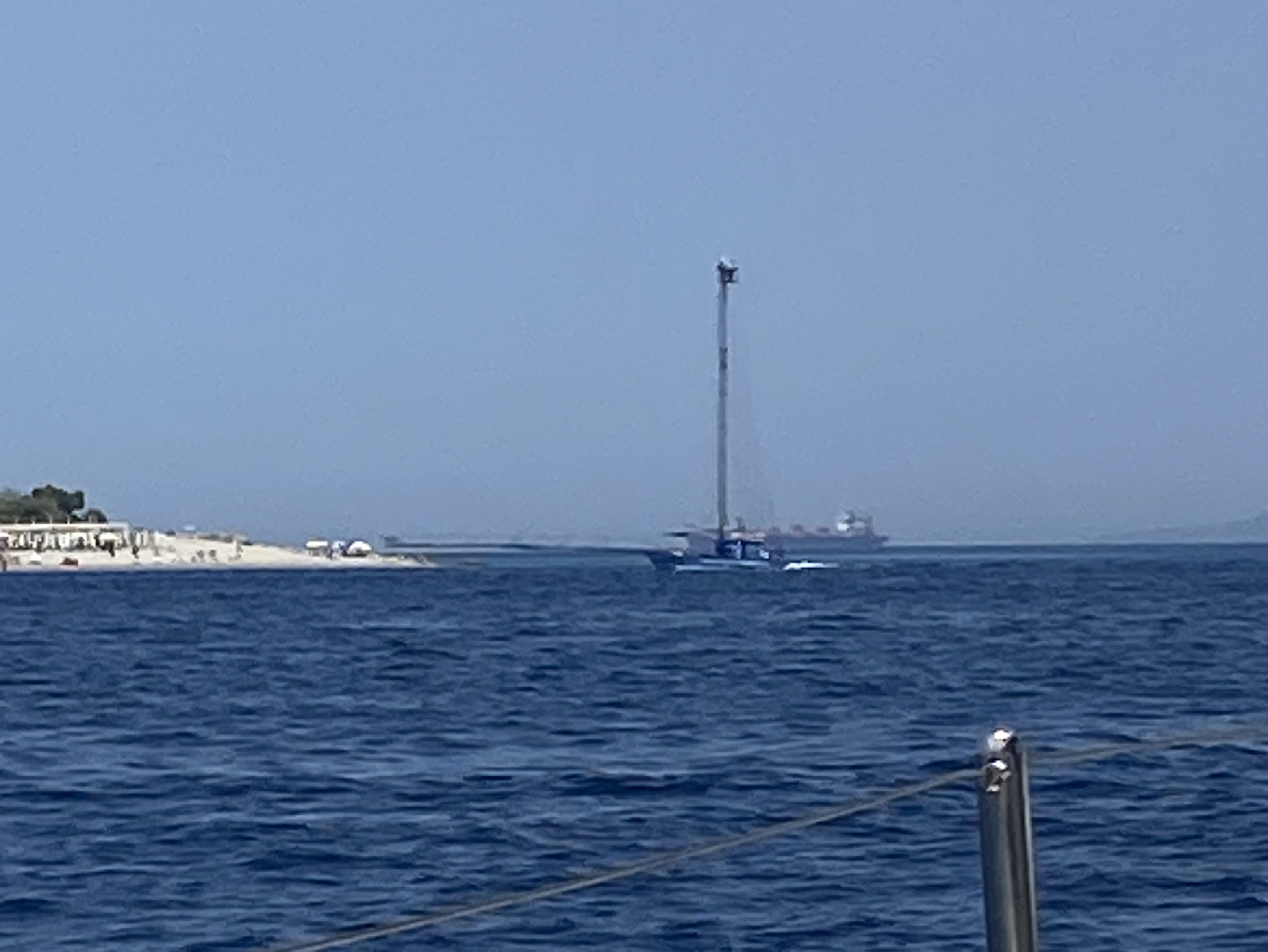
We transited through the Messina Strait, after much research on the currents and tides in this relatively narrow stretch of water between Sicily and the Italian mainland. This strait does have a bit of a reputation for whirlpools and rough water as a consequence of opposing currents. Our research yielded a good dividend as we transited without any problems and with current in our favour.
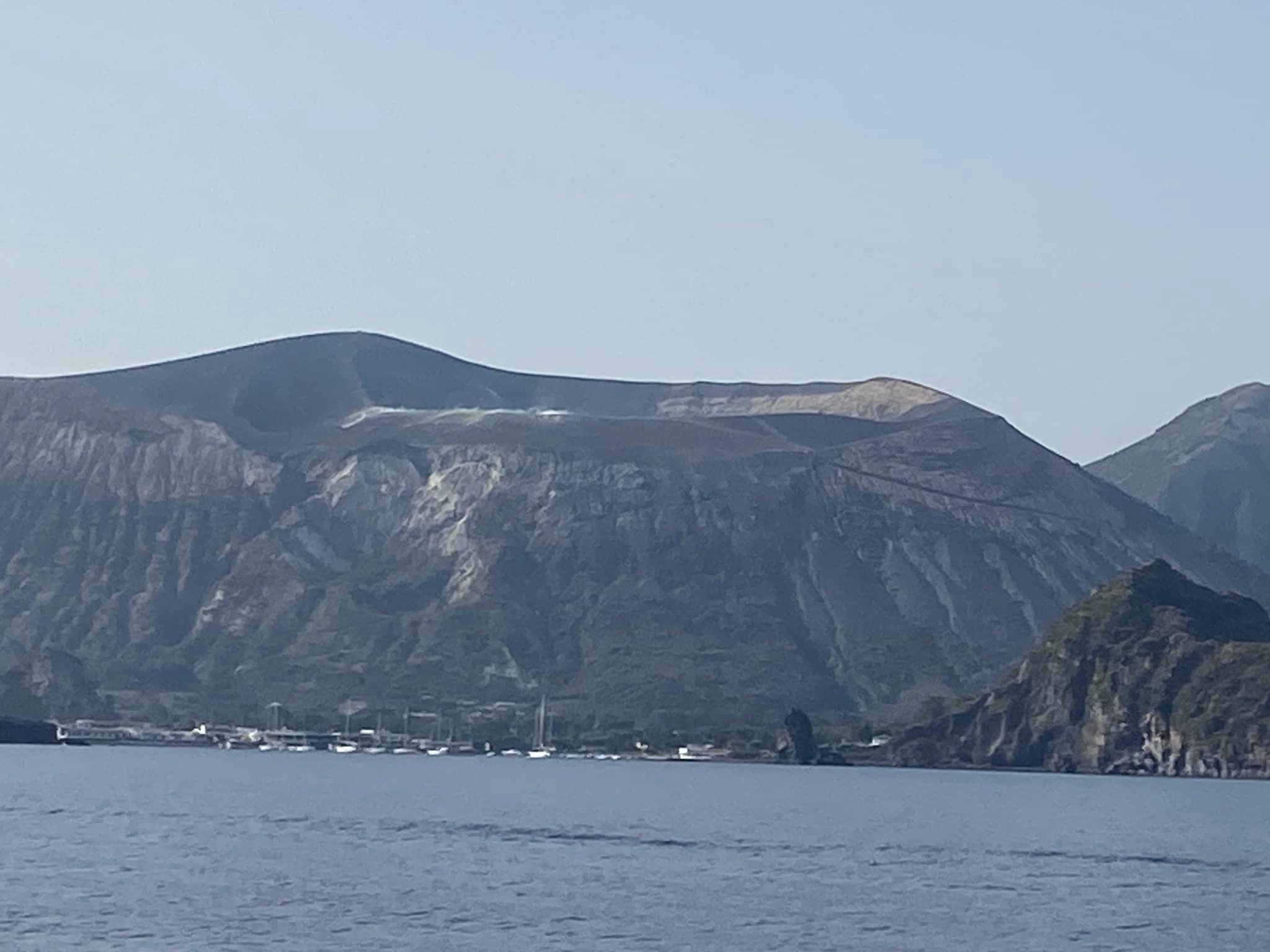
Once through to the north of Sicily, the Aeolian Islands beckoned. This UNESCO World Heritage Site is a volcanic archipelago and a favoured cruising destination, which includes the active volcano Stromboli. Unfortunately time was against us and the best we could do was one night in an anchorage with a view across to Vulcano (yes, it’s a volcano and an island), and then marvel at the other islands as we sailed past on our way to Sardinia.

The passage to Sardinia was a strange one. There was very little wind at the start so we motored for a while until the wind came in, and then we had quite a pleasant sail for just over 24 hours until we ran out of wind. Reluctantly we started the engine (there is always reluctance to start the engine on Paseafique), and motored our way through a very dark, and damp night. During my watch, I kept thinking that I was seeing something moving out of the corner of my eye in different places in the cockpit. It was making me jittery and giving me the creeps until I realised that it was so humid that water was actually dripping off the davits (the stainless steel structure at the back of the boat for raising and lowering the dinghy). The day that followed was very hazy, hot and windless, making for a very limp and uninspired crew. We finally arrived in Sardinia after 57 hours around half of which was under motor.

Sardinia is a beautiful island and clearly a favourite summer holiday destination. I was transported back to my youth at one of our first anchorages when we went ashore and found delightful beaches and shady areas for camping forming the backdrop for the hubbub of family groups swimming, playing, talking, laughing and lounging in the sun. I thoroughly enjoyed myself having a wander amongst it all.


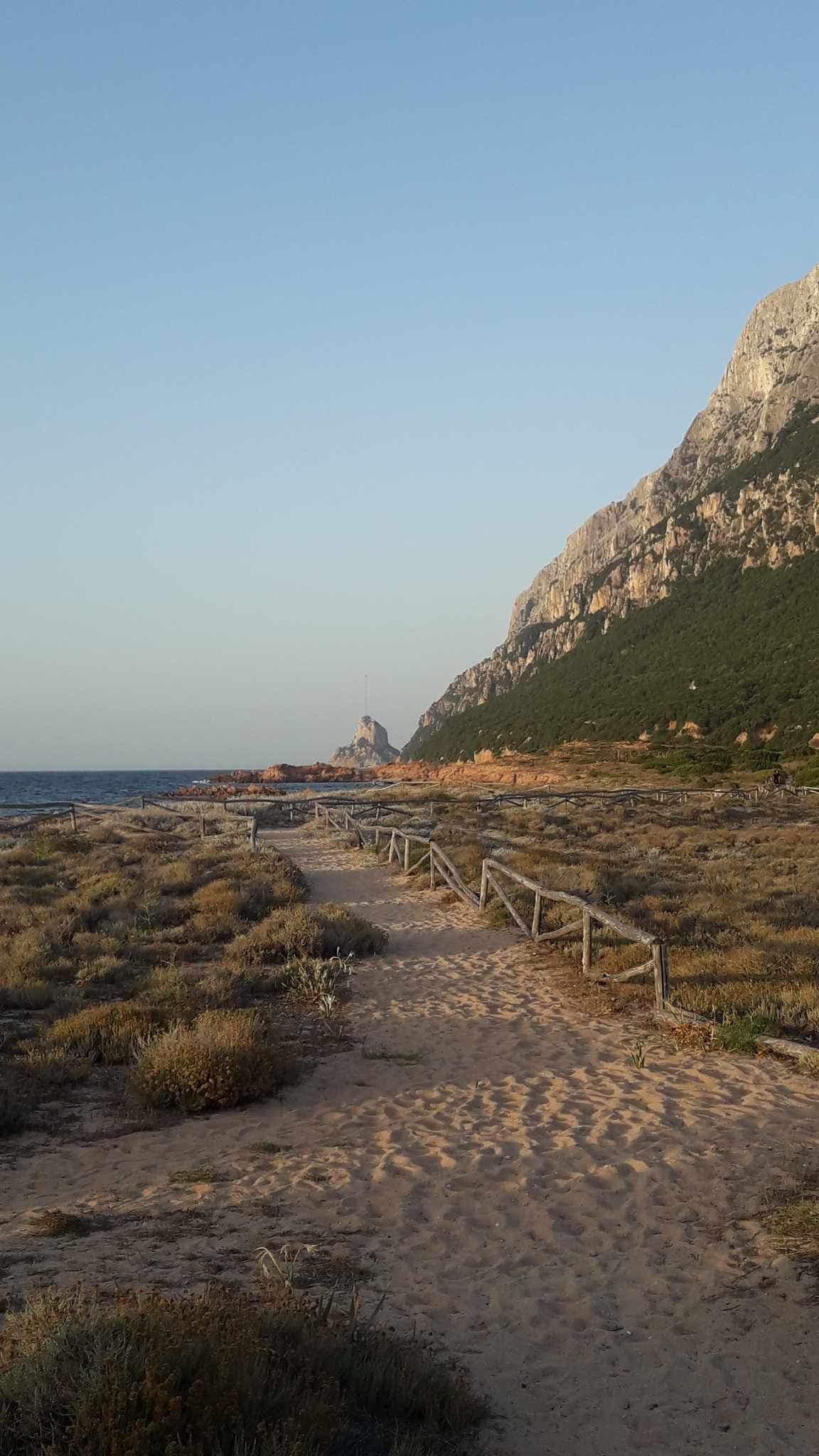
We took up the recommendation of a young couple we met and spent an evening anchored at Tavolara – a very big limestone and granite island lying just off the north east coast. It is another very popular beach but one unfortunate side effect of all this summer holiday fun is that many of the beaches are entirely roped off for swimmers and therefore can’t be used to land the dinghy.
In fact, on some of the beaches, like the one at Tavolara, landing any kind of water craft is prohibited, so one can’t even row the dinghy ashore. We waited until most of the beach lovers had left for the day, and went ashore surreptitiously landing the dinghy at the far end of the beach. We had a leisurely walk in the late afternoon sunshine and discovered that Tavolara is one of the smallest kingdoms in the world. The King of Sardinia verbally made Giuseppe Bertoleoni, a shepherd, King of Tavolara in 1836. In its heyday the island had 50 inhabitants who sustained themselves by goat farming and fishing. Most of the population was displaced in 1962 when a NATO radio station was constructed there. The current King and Crown Princess each run a restaurant on the island, and it appears that the family live there, at least in the summer. However, there is no accommodation on the island.
During our time on Sardinia, many parts of Europe were enduring record summer temperatures and Greece was grappling with a number of serious fires. We did have some very hot days, but these were more tolerable on the boat as there was often just enough breeze to make a difference – and of course we could always jump in the water to cool off. The hottest day we had was the day we had planned to visit Olbia, one of the major towns in the north of Sardinia. When I saw that the forecast for Olbia was 42o, I seriously questioned the wisdom of going. However, as the bus and train were both air conditioned, it was actually not so bad. We did see lots of very red-faced hot English tourists though. There was nothing special about Olbia – I wouldn’t recommend it.
I would like to be able to tell you more about Sardinia, but of the 11 days we spent there, 6 of them were spent sailing. Time was ticking again (well it never stops does it?) and we needed to keep moving west. We did however spend our last night there in a spectacularly gorgeous anchorage next to Isola Piana on the very north west tip of Sardinia.
(thanks to Peter Clark for the title of this blog, and I’m still having trouble with inserting photos into wordpress so sorry if some of them look at a bit strange)
 paseafique
Hey guys… you are looking great!. Please say hi to Liz and Steve too!
Nice to read of your adventures and see the photos. I finished my circumnavigation and the boat is in Georgia for sale. I baught an RV and am touring around the US though haven’t gotten very far yet. I think I RV even slower than I sail 🙂 Where you crossing to when you cross? The Caribbean I imagine? Would be so lovely to see you guys. Rebecca
Sent from Yahoo Mail for iPhone
LikeLike
Simply wonderful!! Thanks for the tour!!
LikeLike
Again, an awesome read. You write so beautifully. I think I said that last time too. I’ll probably say it every time!!
Phew, that’s some mileage. I’d be more than “meh”. We’ve loved the lingering this year.
Malta, our all time favourite. We managed a month there, busy every day. That was before Brexit. Did you visit St John’s Cathedral? Indescribable really.
That wedding was truly a fairytale wedding. Gorgeous.
Loved it all. Wishing you both safe passages. Time is certainly passing quickly xx
LikeLike
Hi Lesley and Phil
I waited until I had the time to properly read and absorb this. Got to be one of the best ‘postcards’ I’ve ever read. I’m tempted to go to Malta next year- and Sicily etc. What a fantastic trip you are continuing to have.
Look forward to the next instalment.
Love Noelene
LikeLike