
August 2022
Albania is definitely not a cruising destination. As we made our way tediously north along the Albanian coast, we consistently had to sail to windward which gets quite wearing especially when it increases in strength during the afternoon as it typically does. Most anchorages are quite exposed and we endured swell most nights, some worse than others. But we found Albania to be such an interesting place so we were still glad to be there.
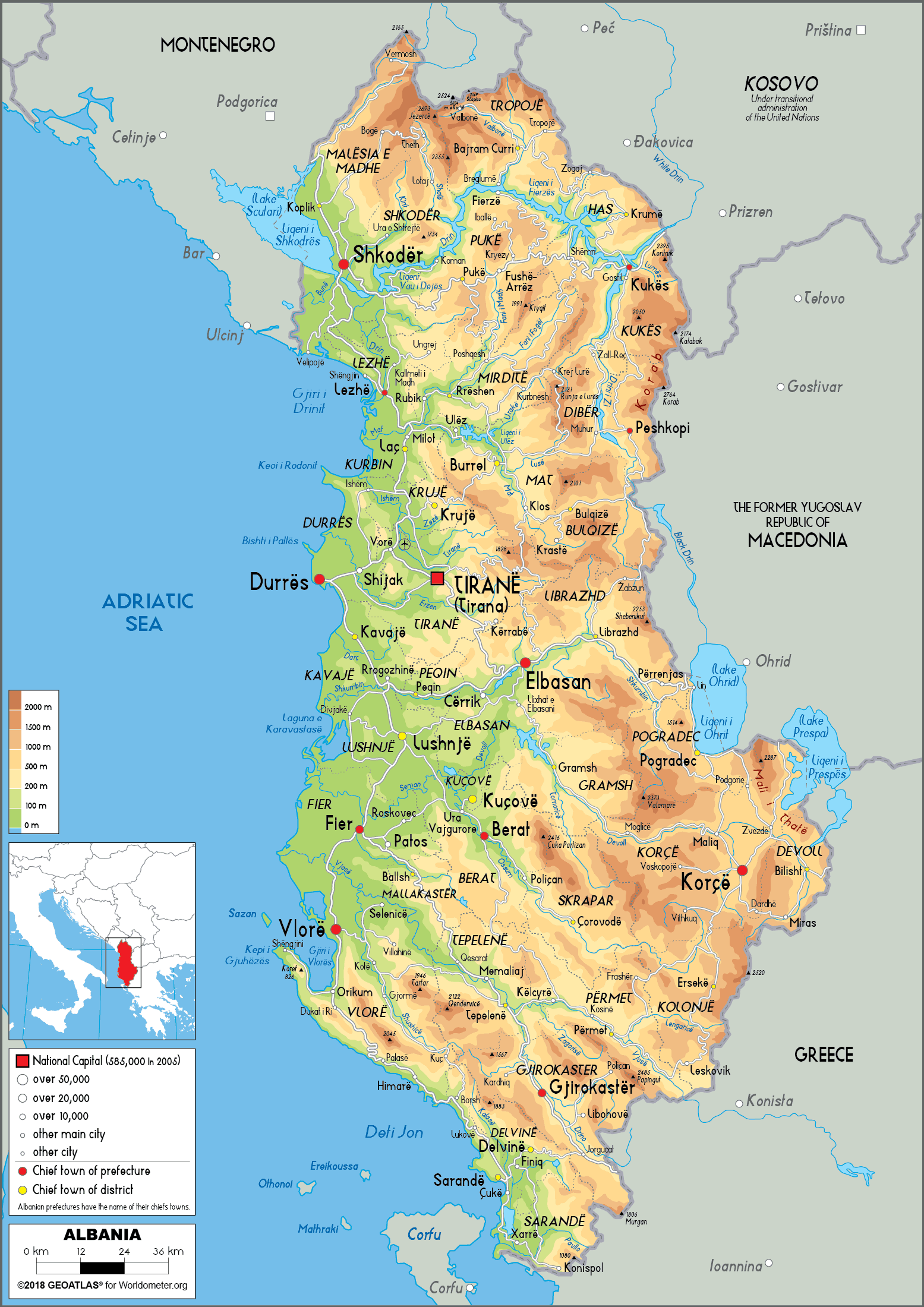
Our favourite anchorage in Albania was Himare – another seaside holiday destination with a pleasant beach fringed by the usual promenade full of restaurants and cafes. The real gem here was the old town of Himare about a 40 minute hot walk up the hill. This area seems to have been settled around the 4th century BC by a Greek tribe. Eventually the Romans conquered it and it became part of the Byzantine Empire, but was subject to attacks by a range of tribes. At some point, the Albanians arrived in the region, and seemingly lived alongside (and probably intermingled with) the Greeks. We certainly found that some locals identified themselves as ethnically Greek, while others were proudly Albanian – although many also spoke Greek. The Ottomans tried rather unsuccessfully to gain control of this area but were met with significant resistance from the local population, which lasted for 5 centuries until the establishment of the Albanian state. The old town has winding stone paths, with houses in varying stages of decay, behind stone walls. There are however, some houses which are still occupied, presenting active life amid the ruins.


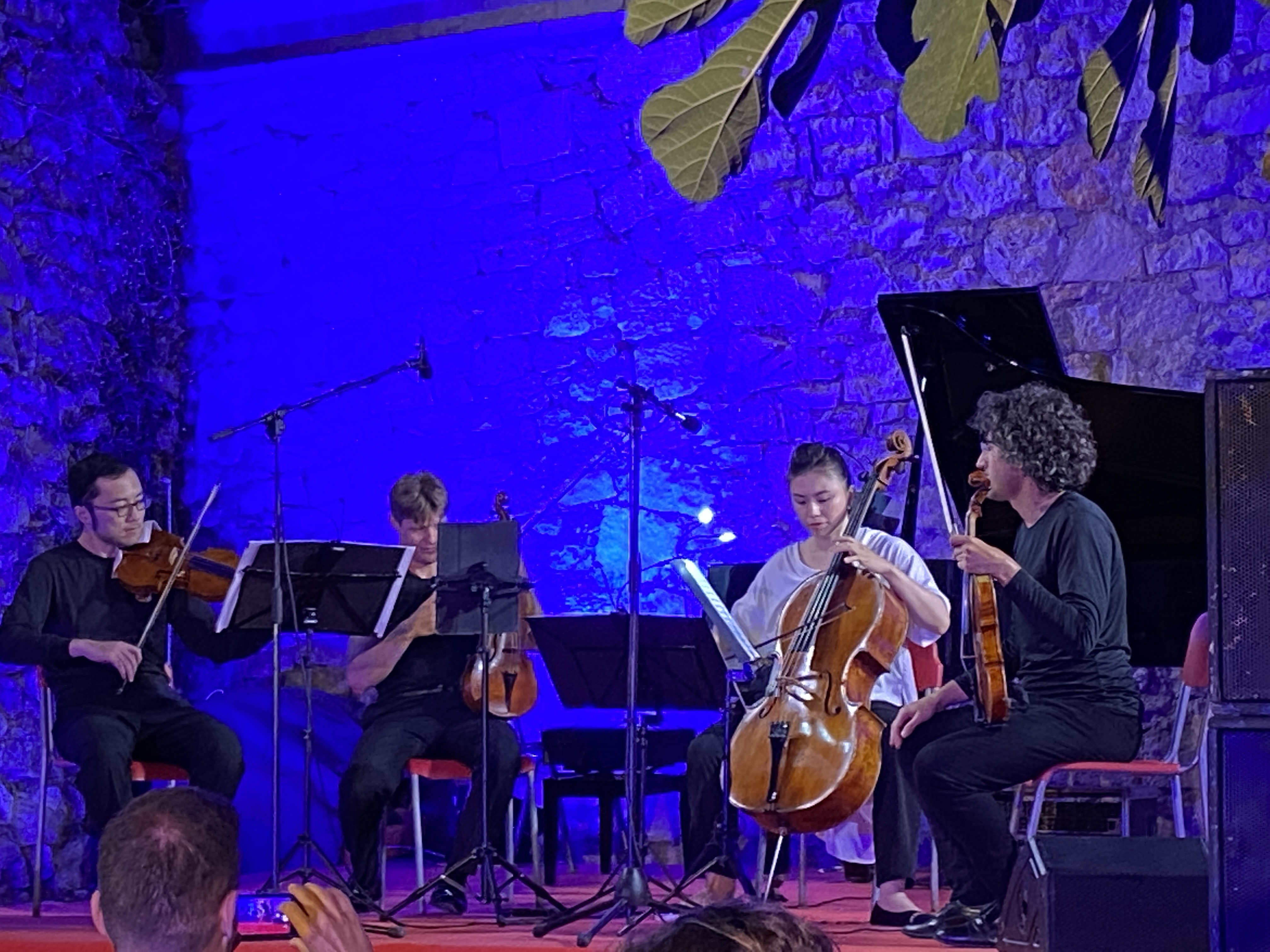
We discovered that there was an international music festival currently being held in the old town, and so we returned around 7 in the evening to find we had an hour to spare before that night’s concert. At a loose end, we went for another delightful wander through the winding paths in the cool of the early evening, with the setting sun sending the most beautiful light through the village.
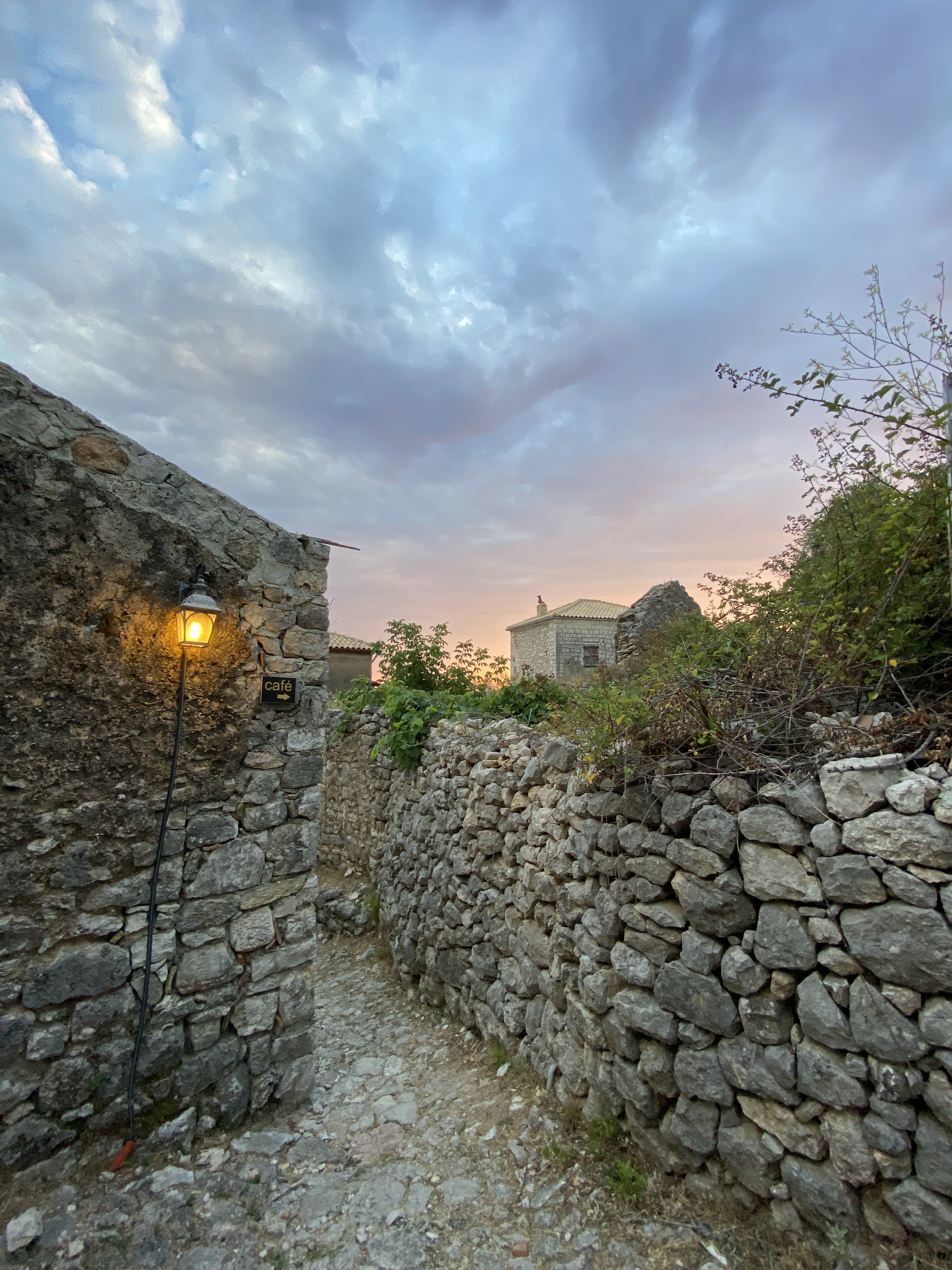
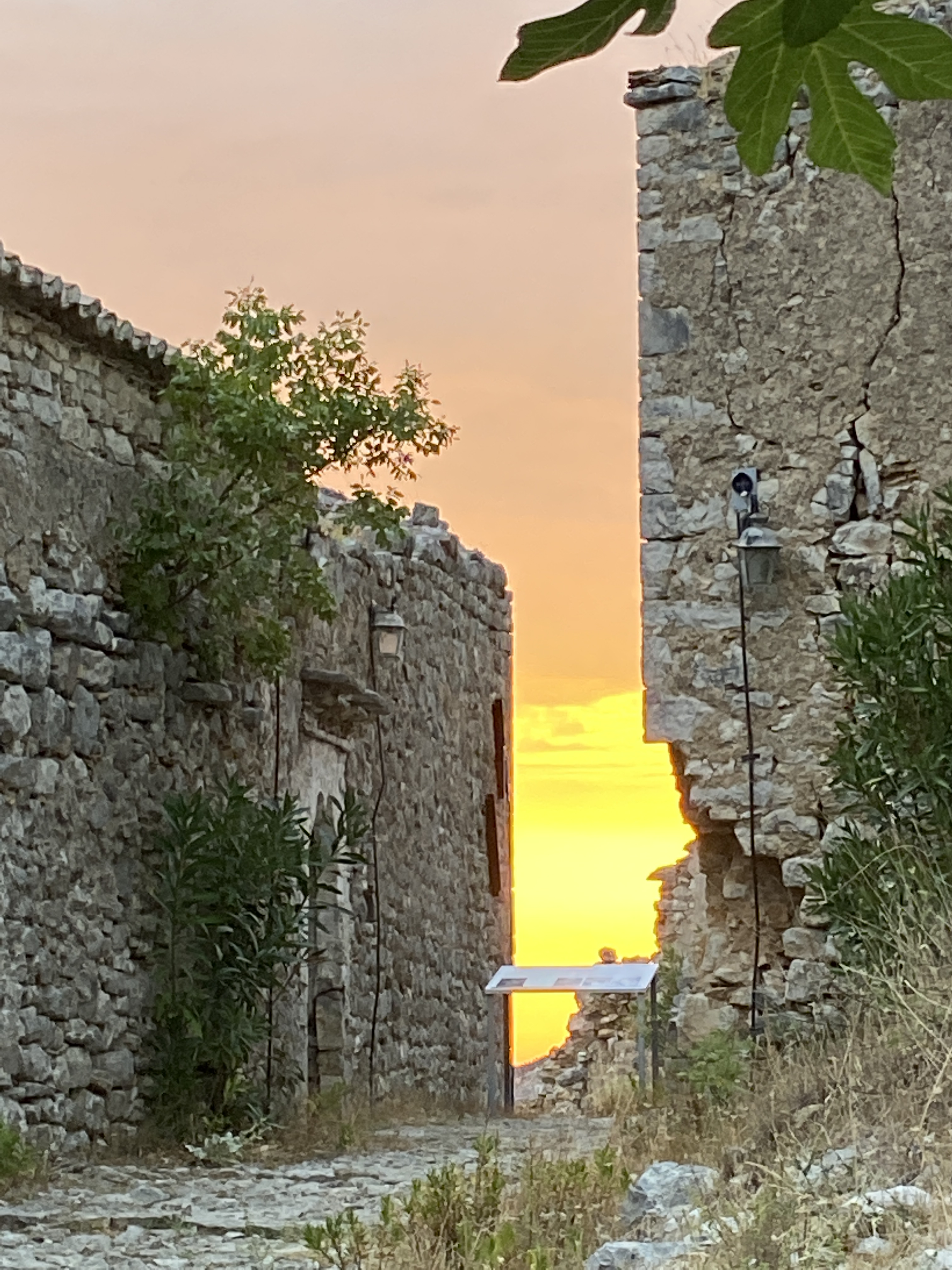

We feasted on fresh figs for dessert before making our way back to the concert site for a fabulous performance by the multi-national string quartet.
Afterwards, we stopped at a bar for a drink, and met a very animated group of about 10 younger adults playing “Mafia” – a party game involving the assignment of roles and an aim to kill off players in the various roles (if you haven’t heard of it, you will have to google it as I’m not going to explain it any further). It was an interesting choice of game, given the reputation of the Albanian mafia. It was fun to watch them and reminisce about our backpacking days. They were a multi-national group and it was very interesting talking to them when the game was over. When they discovered we had sailed to Albania from Australia, it was shots of local raki (also known as rocket fuel) all round. Most of the contents of my glass went into the pot plant next to me.
We had a short stop at Vlore – one of the bigger seaside towns. We tried to rent a car here to make another road trip, but there were none available as by now it was mid-August and peak summer holiday season. Eventually we arrived in Durres, Albania’s main port, after an unpleasant passage during which we initially had light winds and later passed through a squall which delivered rain, thunder, lightening and 30 knot gusts.

While exploring Durres, we noticed that there was a very high proportion of relatively new luxury cars on the roads: Mercedes, BMW, Citroen etc. The average wage in Albania is between AUD$380-760 per month. There had to be something going on with all these luxury cars, plus the shops selling luxury brand goods. At one point, we stopped on a street corner to get our bearings and a couple of Albanian guys struck up a conversation with us, just the usual chit chat – where were we from etc, and they offered some reflections about how bad communism was for the country, and the current poor state of Albanian’s political system. Their complaints were that many of the current politicians were family members of the former communist party elite, and that corruption was rife. They assured us that the bad Albanian criminals are mostly operating off shore, running drug importation “businesses”. However, quite a lot of the proceeds of these operations are directed back into Albania. Eventually one of these two Albanian guys pulled out his mobile phone and showed our friend Adrian a photo of a Masserati, saying he could have it for 30,000 Euros (AUD$44,000 approx) but that he could only drive it in Albania because it had been stolen in Europe and shipped to Albania. Obviously, customs at Durres port have to be in on this scheme also.
Rather than buy a stolen car, we managed to secure a rental car in Durres, which was a story in itself. After ringing around a few rental agencies without success, I found one that could provide us with a car for a few days. Adrian set off to seal the deal as he was to be our driver. However, there was no agency at the address provided on line, so he rang them again. No problem, they undertook to drop the car to us near the harbour area the next morning. So we secured our boats at anchor and came ashore with our bags early the next morning, leaving the dinghy in the rather shabby small boat harbour. We were in touch again with the car rental provider about the exact pick-up location, where he eventually turned up in – guess what – a Masserati! This was not our rental car though. He drove us to another location in Durres, down a side street, where our rental car was waiting (but still no office apparent). We checked that we had insurance, paid him the money, signed a rental agreement and the car was ours for a couple of days, without even having to show a licence.
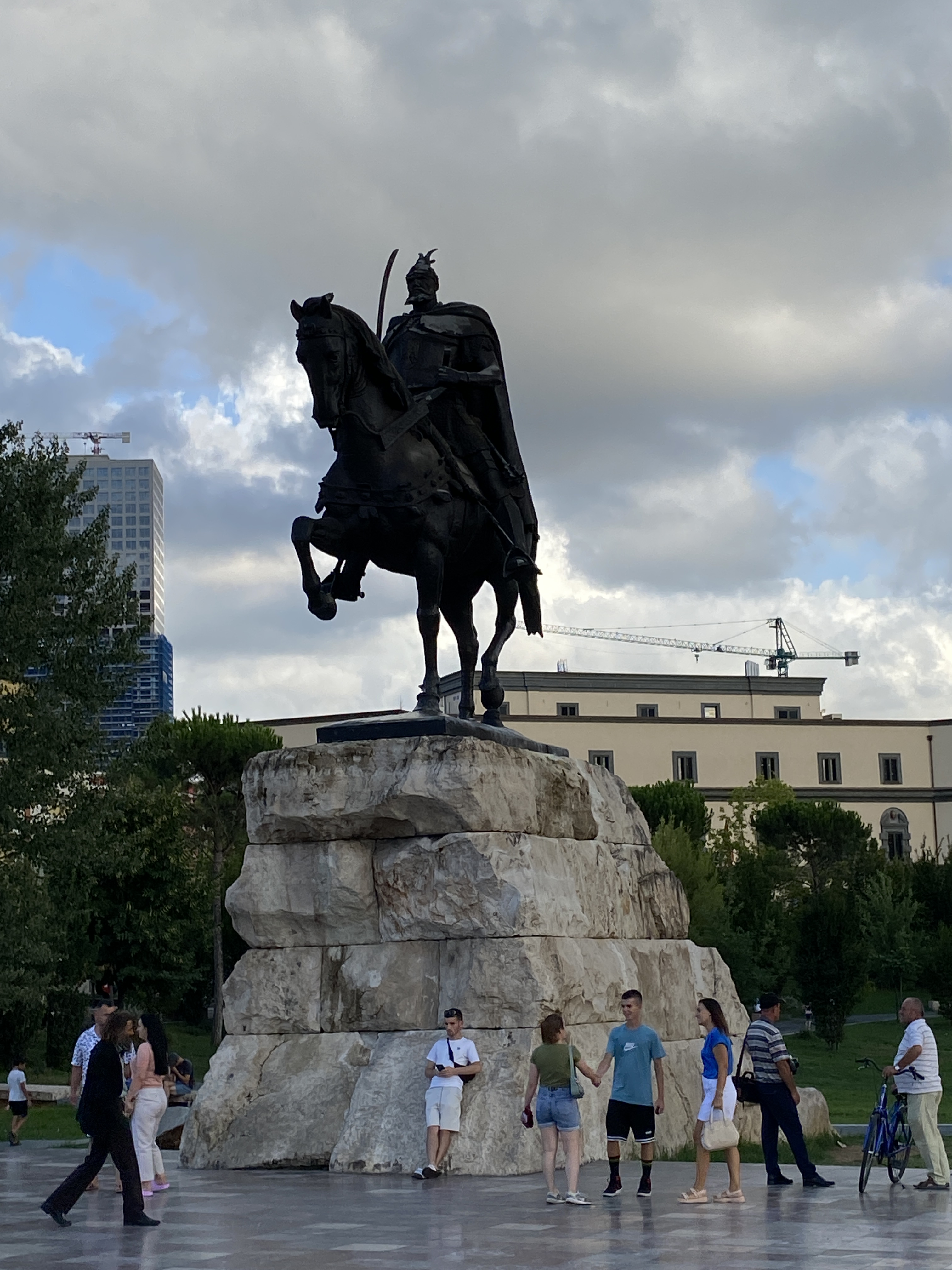
So we four musketeers were off again on another Albanian road trip. Our destination for the first night was Shkodra, right up in the north near the border with Montenegro. Shkodra is an important city in Albania’s history. It was the capital of the Illyrian state (the western part of the Balkan peninsula) until the Romans took over. The city was part of the Venetian republic until the Ottomans conquered it in 1479. However, Shkodrans were a very active part of the cultural and political resistance to Ottoman control and this resistance eventually led to independence from the Ottomans, according to my Bradt travel guide. It was a long drive up there, and we made a few of the usual detours to explore the surrounding countryside.
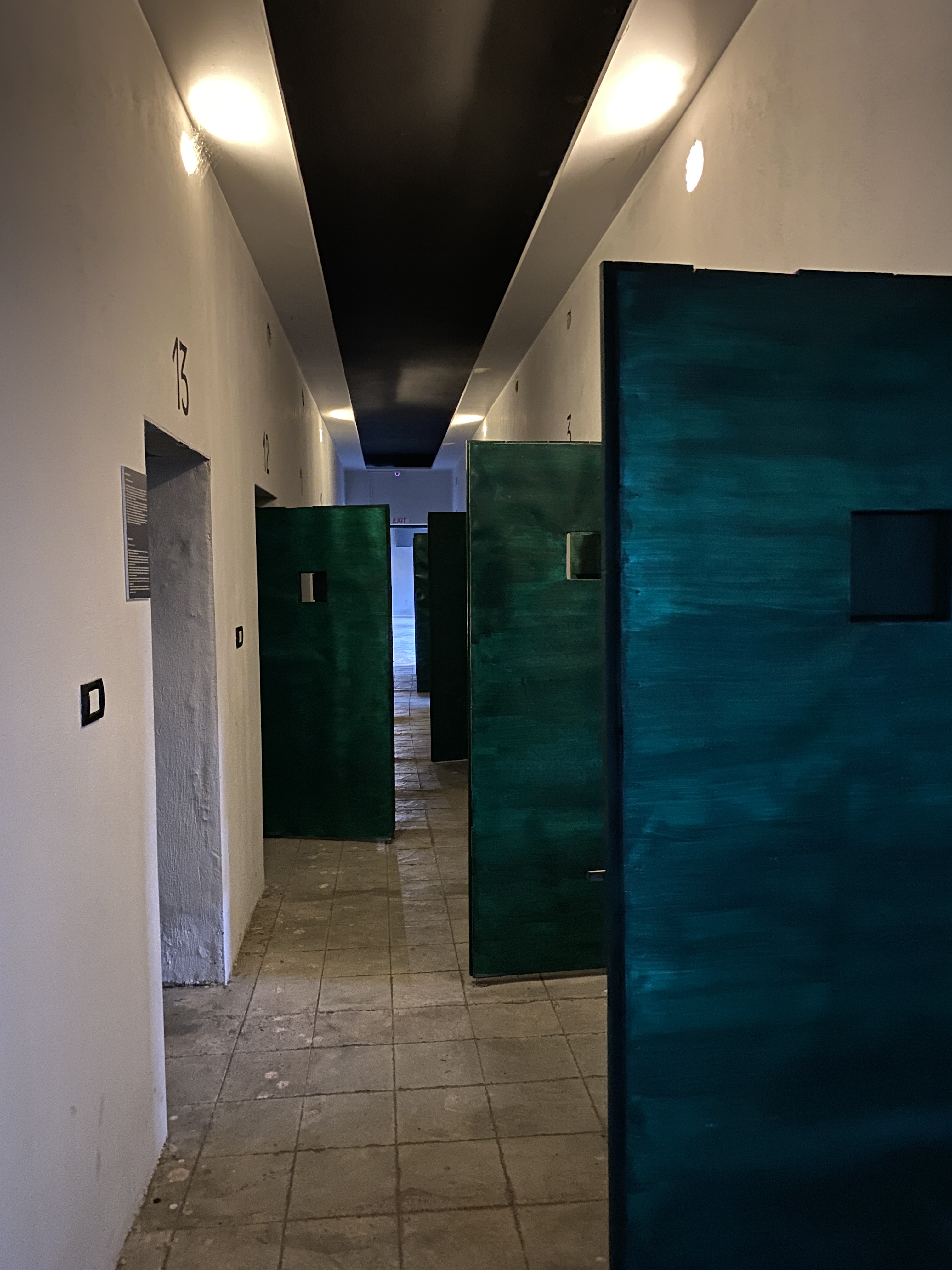
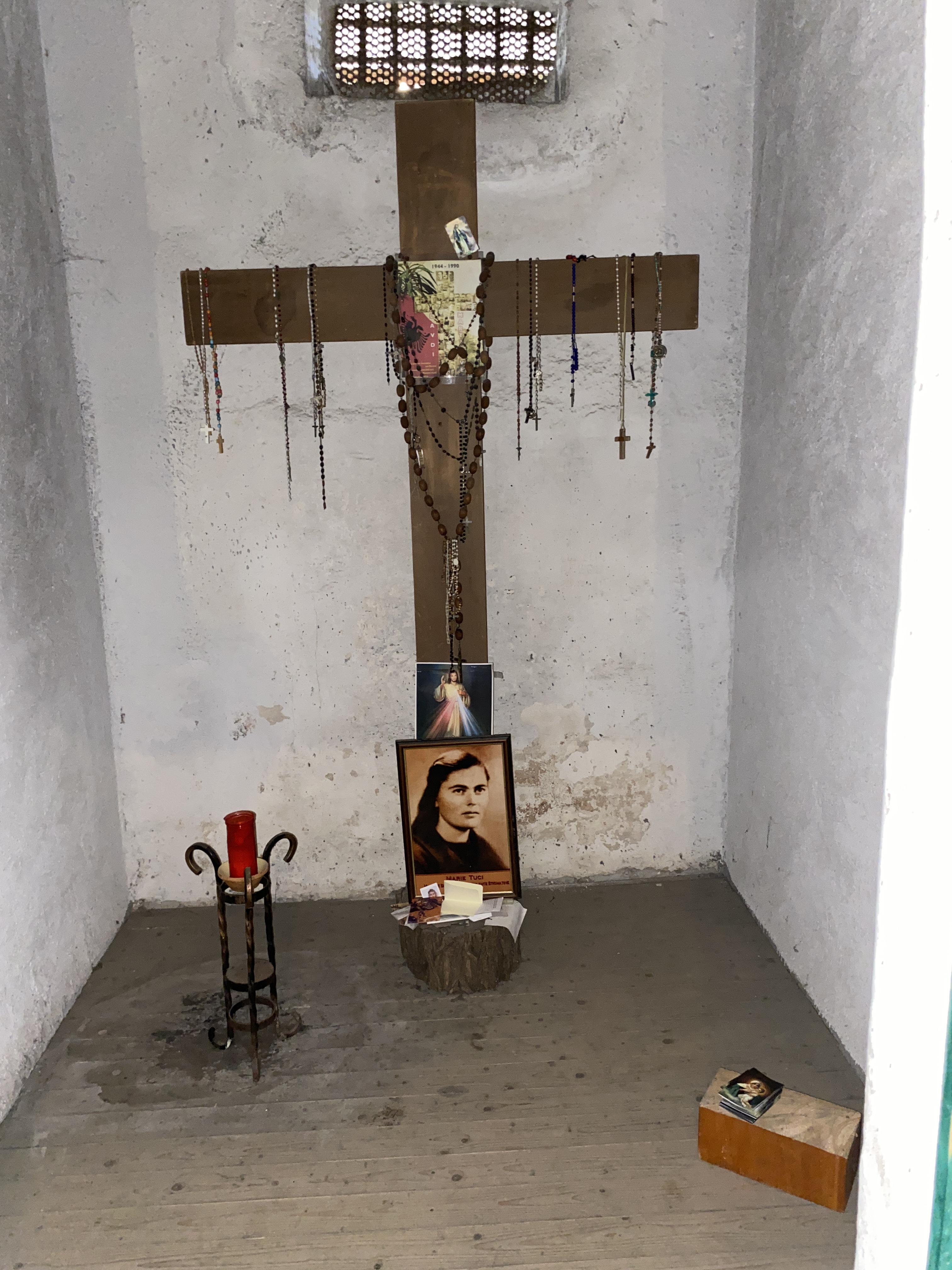
While in Shkodra we visited two places that could not have been more different- the Site of Witness and Memory (dedicated to those who were tortured and killed during the communist era), and a Venetian mask factory.
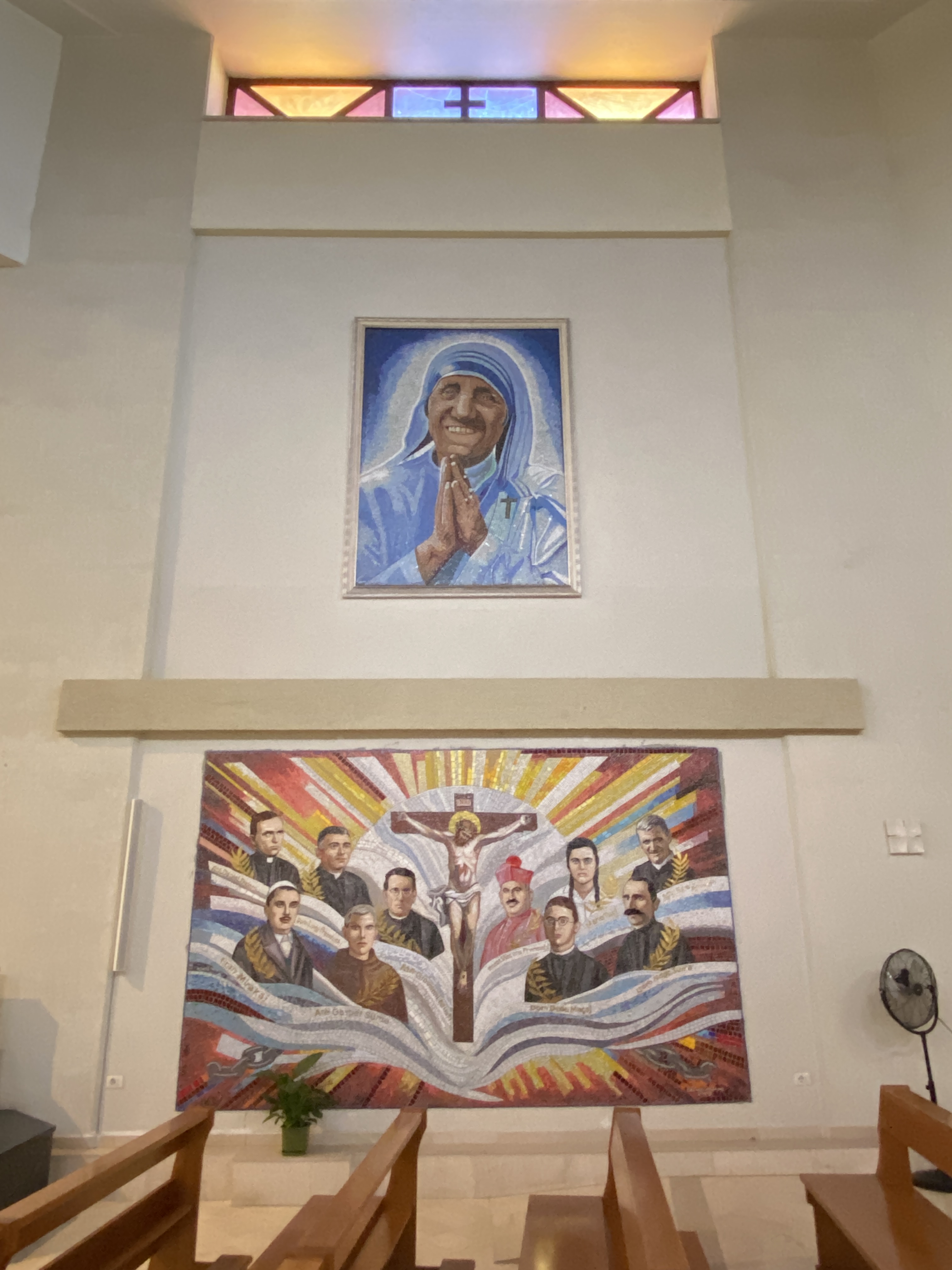
The Site of Witness and Memory is located in a former Franciscan seminary that became the regional “office” of the Ministry of Internal Affairs during the communist government. There wasn’t much office work going on in here though. Thousands of people were detained, interrogated and tortured here. It is a grim place to visit, but nonetheless provides the opportunity to understand this part of Albanian history. It is mostly photos and documents, with lots of printed information on panels around the walls. The prison cells are open for viewing also. The staff member on duty at the time of our visit had a degree in history and we had interesting discussion with him that confirmed what we had been hearing from people on the street – that there is a high level of dissatisfaction with the current government, which is still replete with former Communist regime officials and their children, with the level of corruption, poor opportunities for the people, and drug smuggling. He predicted a strong possibility of future unrest in the country.
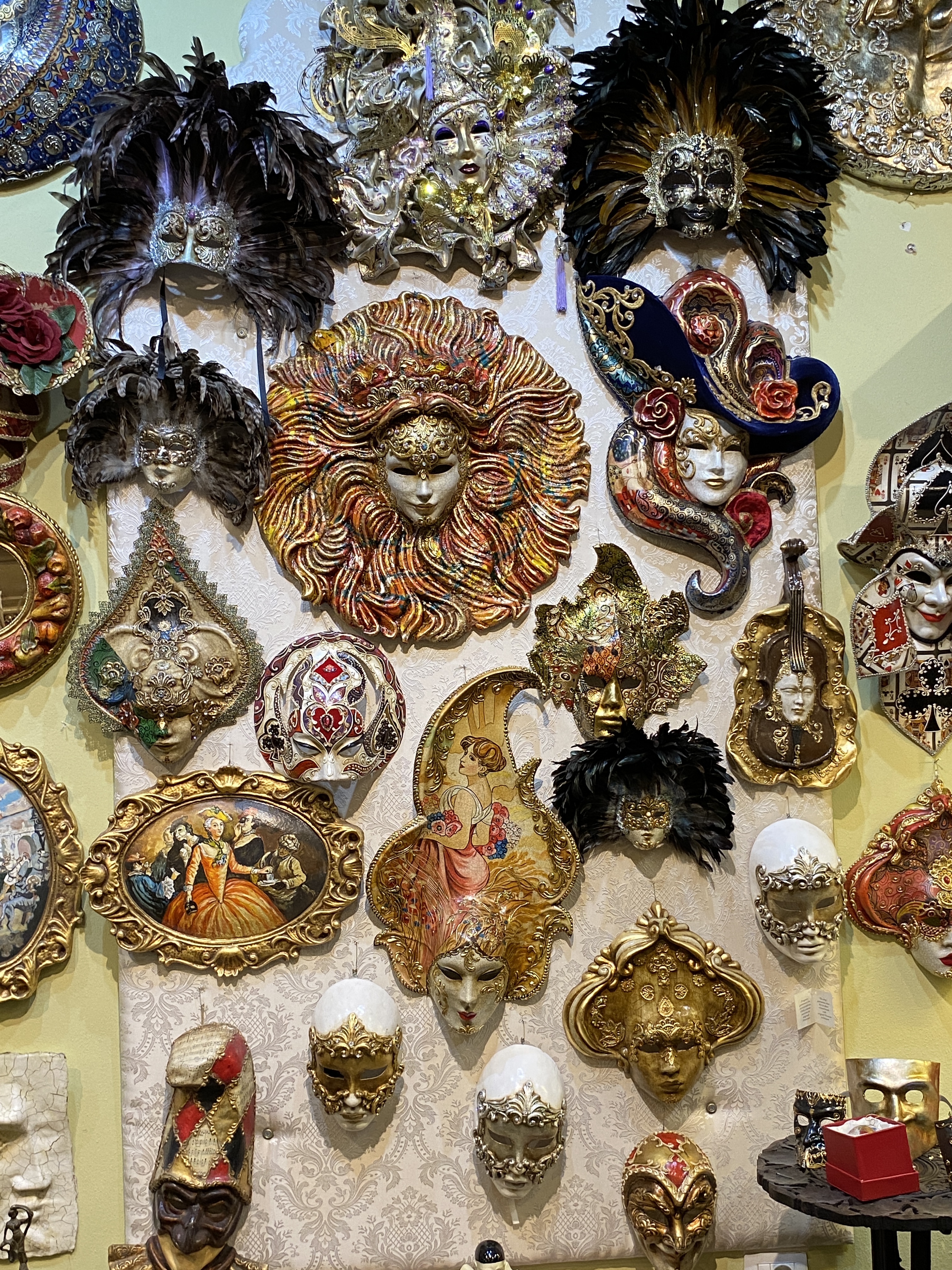
I had spotted the Venetian mask factory while browsing the city on google maps, and given that our friend Marianna comes from that area of Italy, I thought a visit might be a good experience. We were not prepared though to have our socks knocked off by the sumptuous display of masks that lay before us when we entered. Wow! This was really a gallery full of masks, each of which was a stunning piece of art.
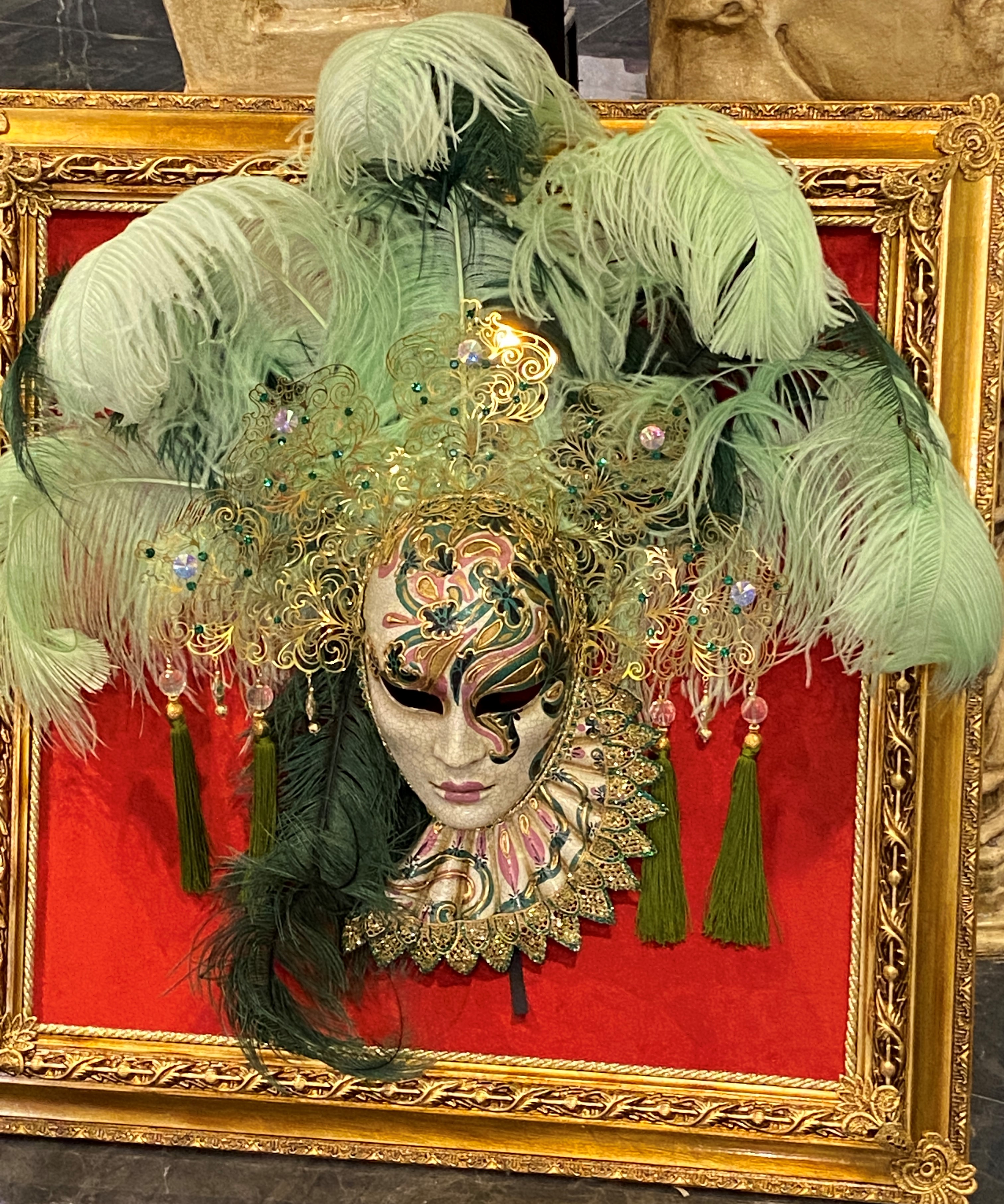
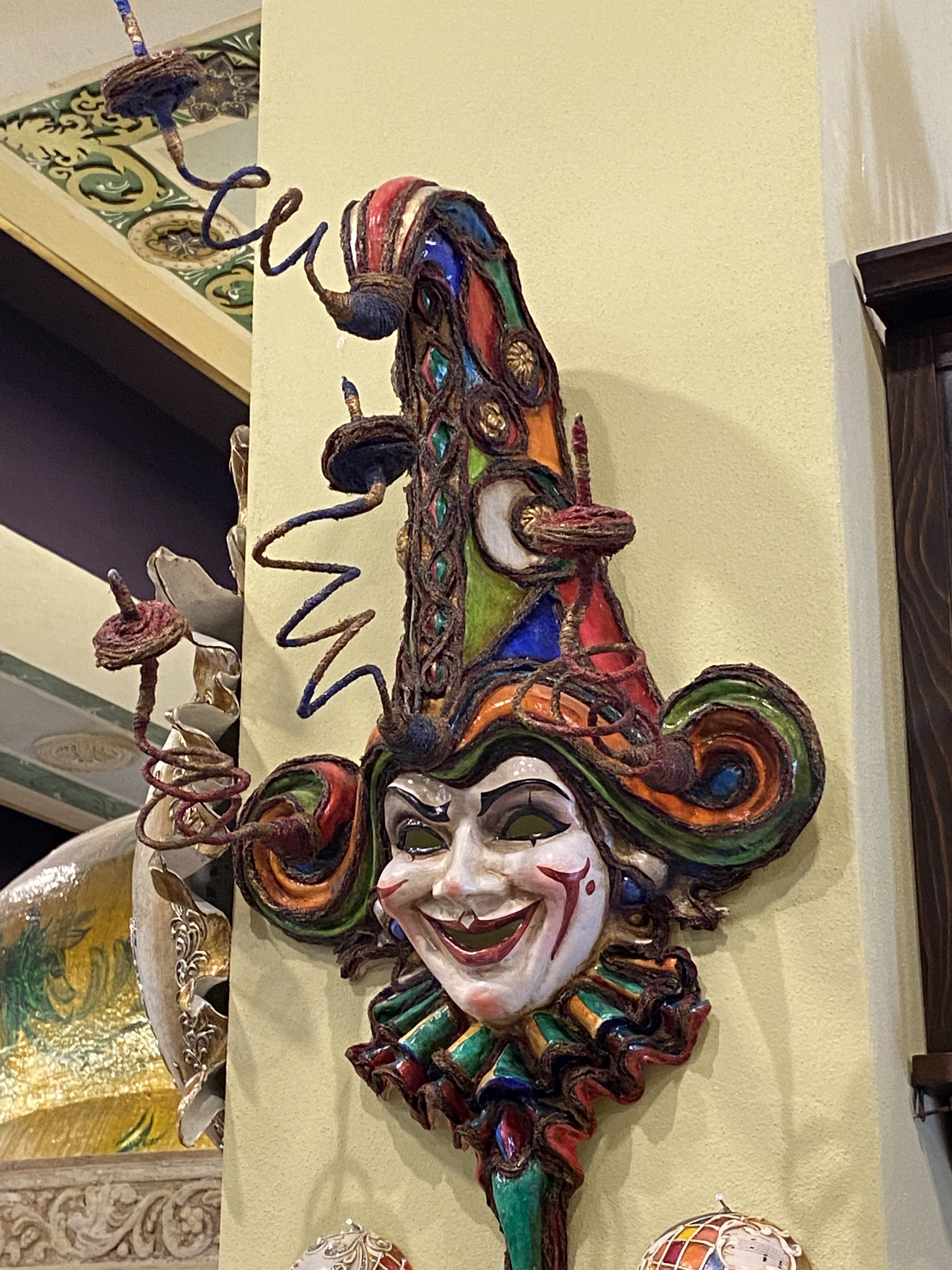
The manager took us on a tour of the workshop where about 10 women of various ages were making these magnificent items. It was a thrill to watch the artists at work – how lovely to spend your working days being so creative. It was not really a factory – each piece is a little different as the creators have some artistic licence, even though they are following certain styles. There are smaller items that are churned out for those who want to buy a piece of Venetian art but don’t want to spend the dollars on the larger, more unique items. The manager told us that this business started after the owner visited Venice and thought it would be fun to make a mask. This led to him providing the undecorated masks to workshops in Venice, and eventually to his team learning the art of decorating the masks and gradually building the business from there. Now they have shops not only in Venice, but also in some other major world cities.

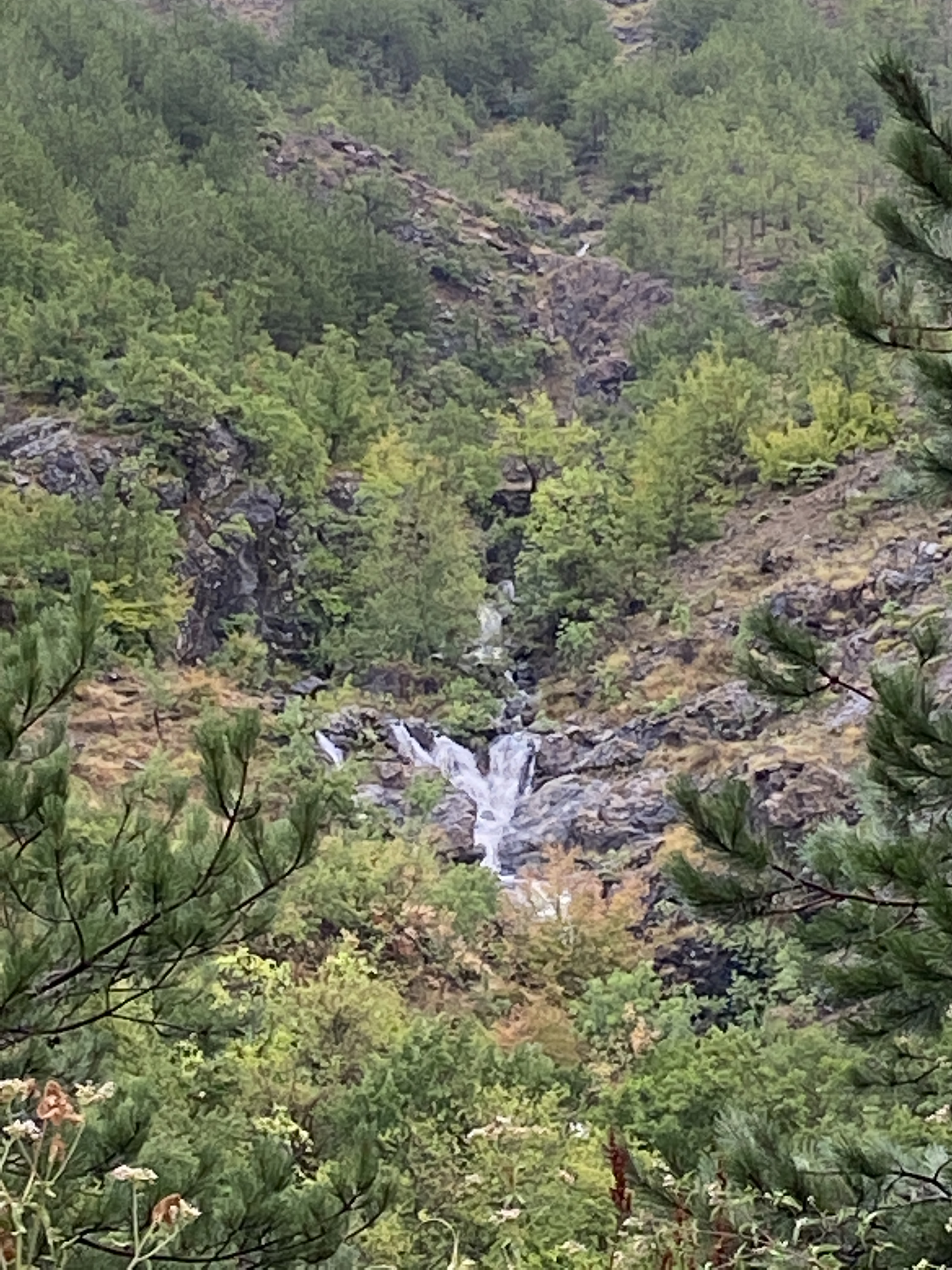
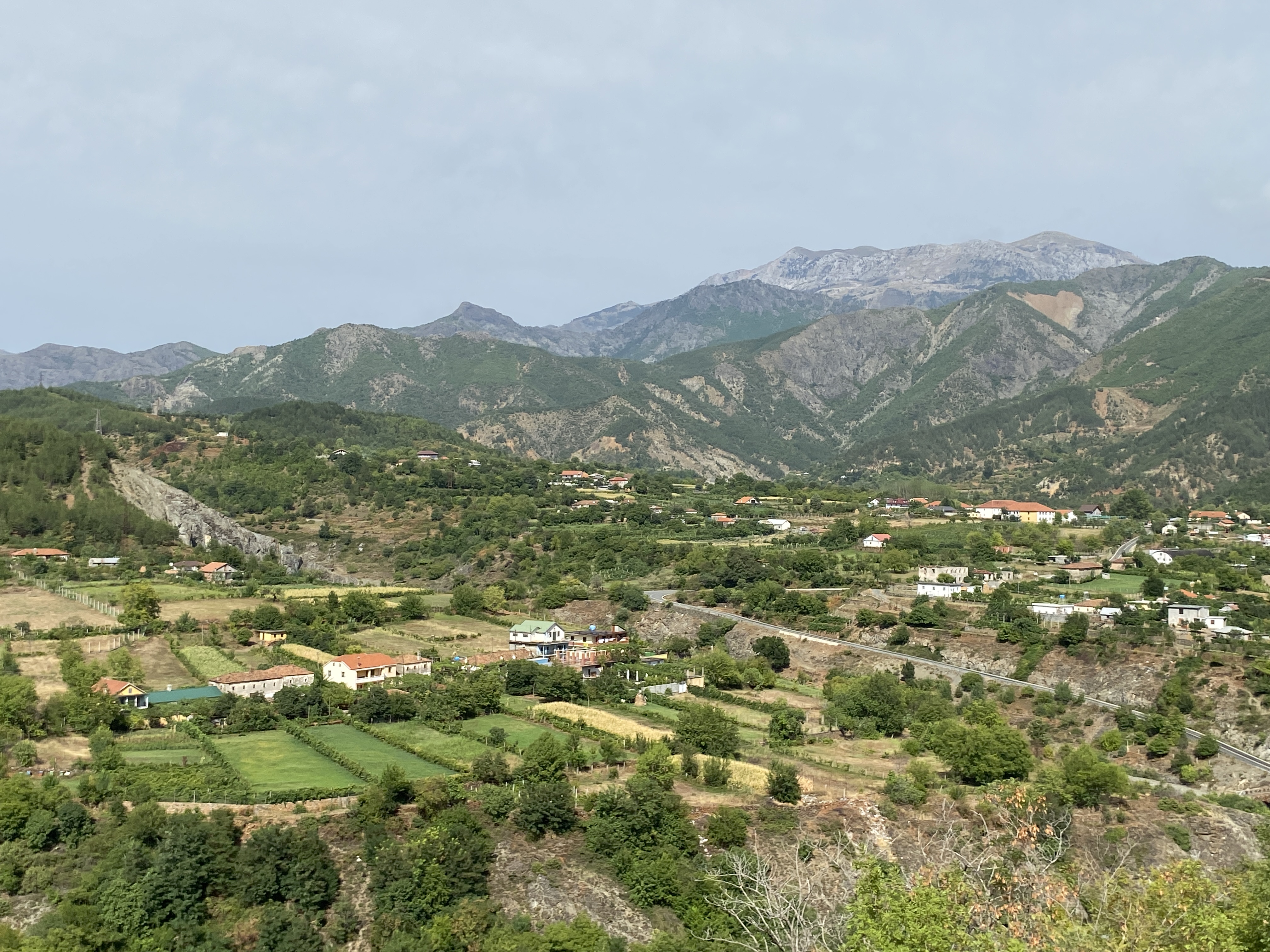
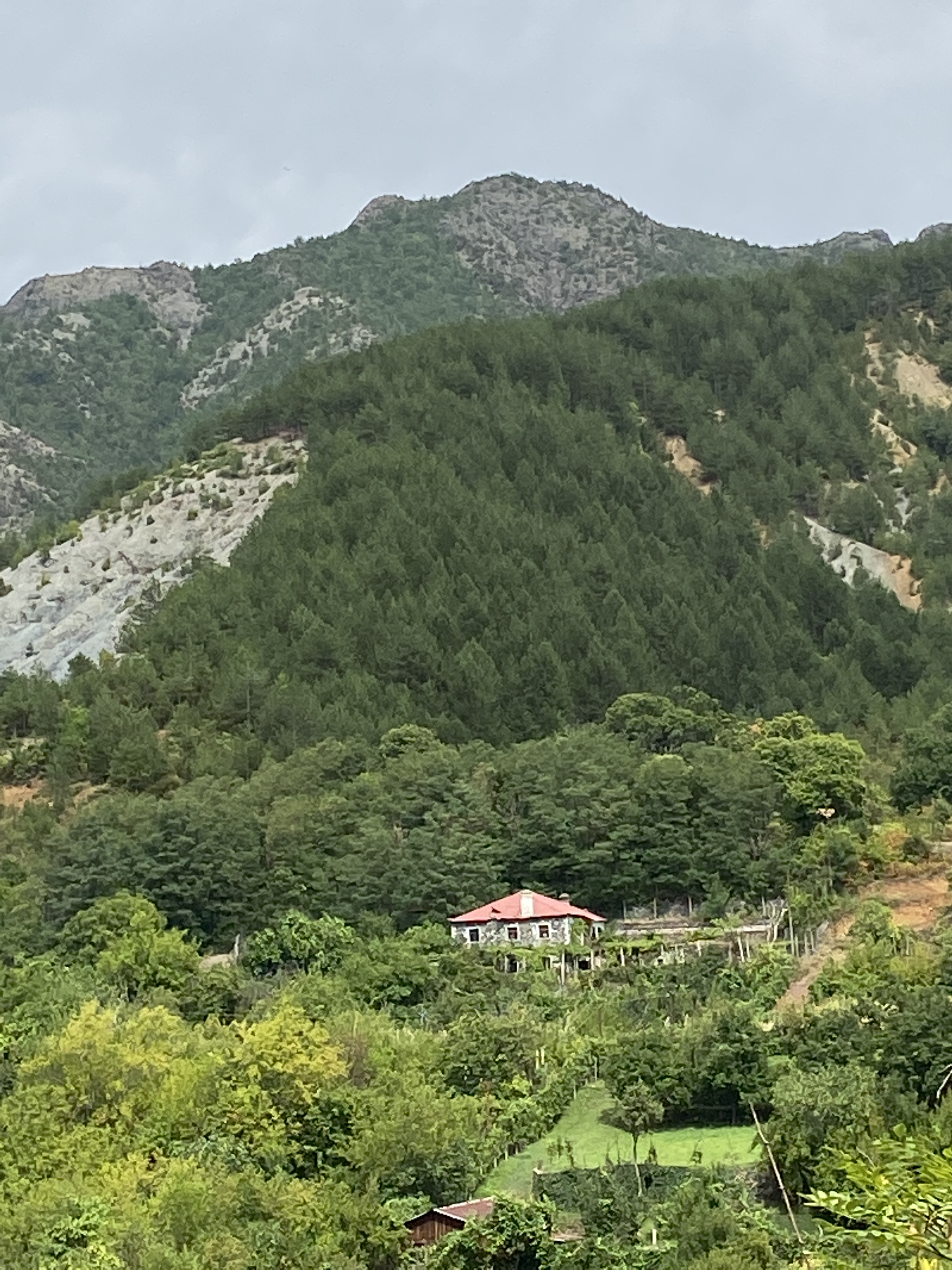
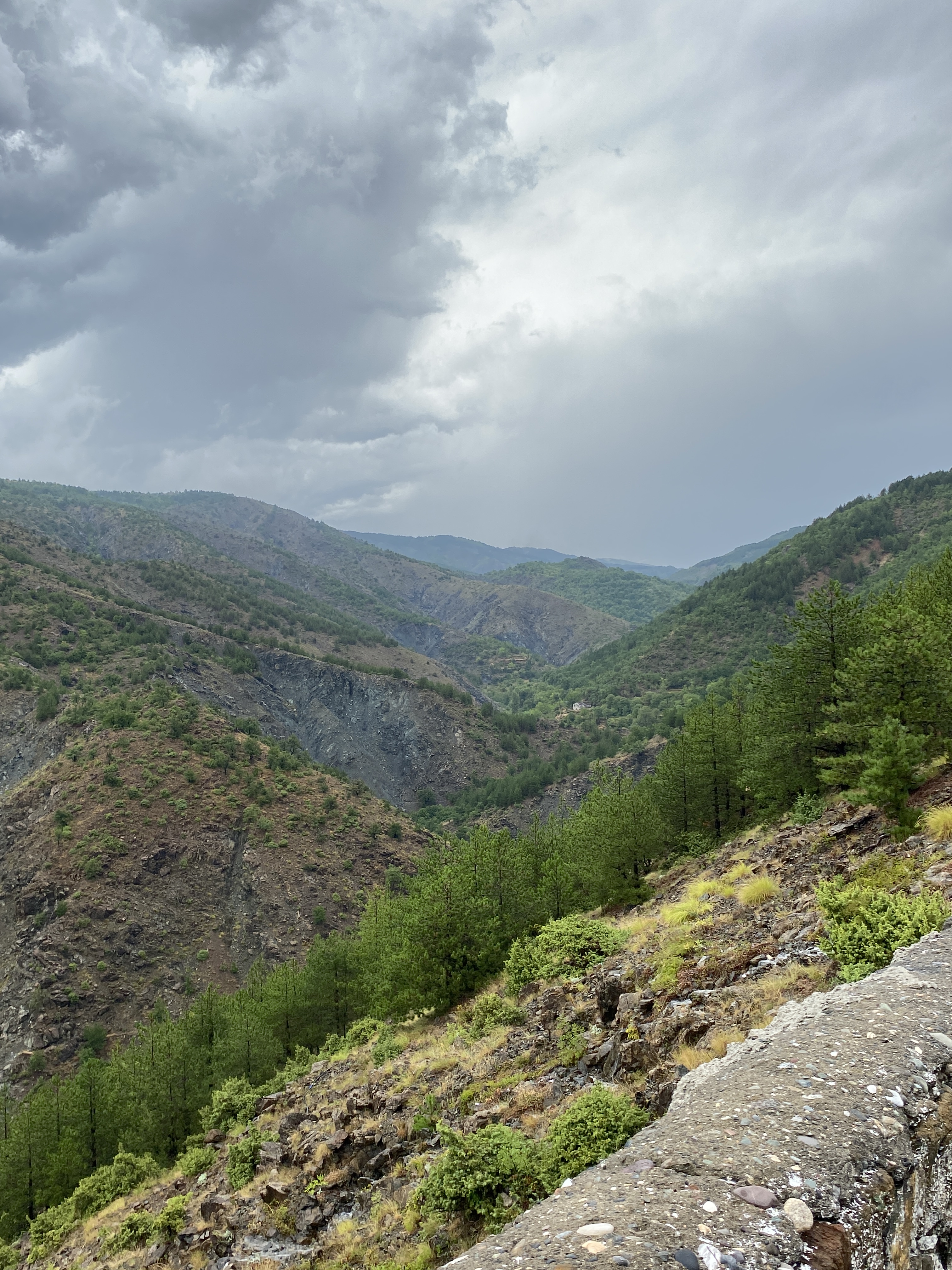
We headed back to Durres via a looped route that gave us more magnificent views of the valleys and mountains of Albania.

At one point during the afternoon, we had a call from our friend Denis, who was also in the Durres harbour on his boat Indinini, to tell us that something seemed to be amiss on Paseafique. It appeared that part of the mainsail was hanging down from the boom and draped on the deck. We couldn’t see how this could possibly have happened since the mainsail was tucked away in its bag which is attached all the way along the boom. We asked Denis to investigate and he discovered that one of the shackles holding the boom in place had broken, resulting in the boom swinging free and several of the slugs that hold the mainsail bag onto the boom had broken and so some of the mainsail had dropped down in between the bag and the boom onto the deck. He lashed everything down, and with Paseafique secure, we couldn’t see a reason to cut the return trip short so continued to enjoy the scenery. With dark approaching, we had a quick stop in the capital Tirana for a walk and some dinner, before completing our journey back to Durres.

Obviously, we spent the next day assessing and repairing the damage on Paseafique. We were able to replace the shackle but as we didn’t have any spare slugs for the mainsail bag, we had to do some makeshift repairs that hopefully would hold the sail in the bag until we could buy some new ones. We were very lucky that Denis was in Durres at the time and that he was observant enough to see that something was amiss, otherwise we could have been greeted by a much bigger problem on return to the boat. When we leave the boat at anchor like that for a short trip, we try to mitigate the obvious risks – we only do it in very settled weather, make sure that the anchor is well set, put out extra chain and make sure we have plenty of swing room, clear the cockpit of cushions etc, leave the anchor light on, and lock the boat up well. We often say to each other that the things that we worry about in life, are not always the things that happen, but rather some other unanticipated thing goes wrong.
After three absorbing weeks in Albania, and with little else to hold our interest north of Durres, we decided to check out and continue north to Montenegro – a destination with reputed excellent cruising grounds and spectacular scenery.
 paseafique
Hi cousins! I love your blog Lesley, always wonderful to hear your adventures and dream of having note of my own one day. Looking forward to reading about Montenegro!
LikeLike
Another wonderful adventure Lesley & Phil.
LikeLike
Another great adventure Lesley & Phil!
LikeLiked by 1 person