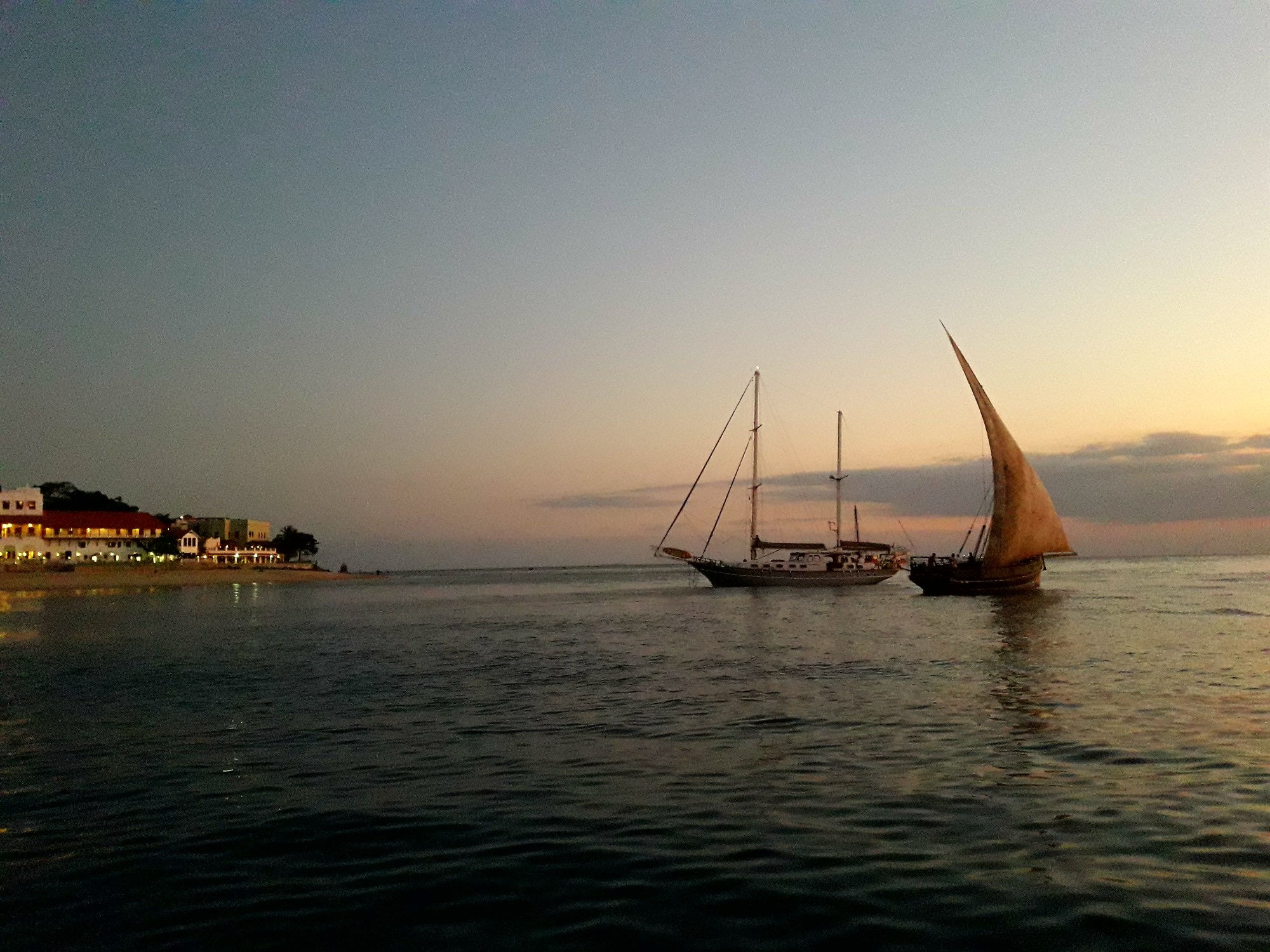
East Africa had never been on our radar as a potential cruising destination. It emerged as a northern detour to escape the cyclone season of the southern Indian Ocean, when we decided to delay moving on from Madagascar to South Africa until the end of 2019 so that Lesley could return to Australia for a few months. What an absolutely fascinating detour it turned out to be!
We left Honey River, Madagascar in early September 2018, and motored most of the 190nm to Mayotte which took us about 36 hours. After a convenient four day break there, we set sail for Tanzania. Our initial plan was to make landfall at Mtwara (350nm), but we kept going for an additional 75nm to Kilwa Kisiwani instead, as we wanted to avoid a night time arrival. It was a pleasant five day passage, and check in was relatively straight forward, although we did have to wait out the weekend before we could check in. Kilwa Kisiwani and the surrounding area was a medieval sultanate which at one time stretched over the length of the Swahili coast. It was sold by its Swahili owner to an Arabian prince and was populated in 10th Century by settlers from Arabia and Iran. This area eventually controlled all the gold trade from southern Africa and became the most powerful and important trading post in East Africa, controlling the Indian Ocean trade with Arabia, India and China. The Portuguese took control in early 16th Century after which the influence of the area weakened significantly. We took a day tour to the UNESCO World Heritage ruins of Kilwa Kisiwani. It was enthralling to be there imagining the bustling metropolis that it must have been. How thrilling to have been to living in an area where trade from such diverse regions converged, each ship bringing not only new and exotic things, but also new ideas in a time when communication across regions and between countries was very limited.


Portuguese fort, and the Great Mosque
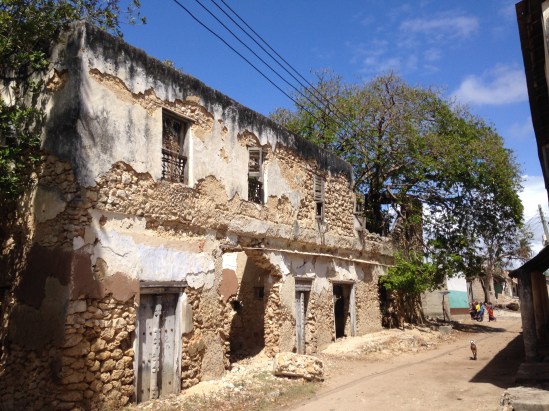
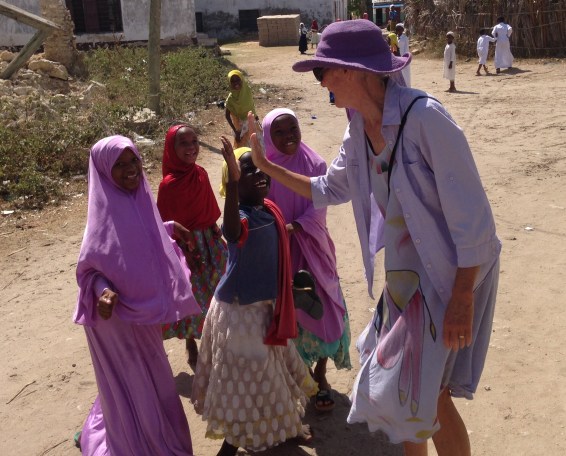
A short day sail north brought us to the town of Kilwa Kinjove about which we knew nothing. What a surprise when we went ashore! We found an ancient town full of old ruined houses in which people were still living. We wondered around and found that there was also a new residential area built on the outskirts of the old town. Fishing is clearly the main industry here – many many fishing boats were anchored in the harbour, and everywhere there was evidence of fish processing – rows and rows of racks for drying fish, and several different establishments for cooking fish. We were of as much interest to the locals as they were to us – there would not be many tourists who would find their way here, and not that many sailing boats coming this way.
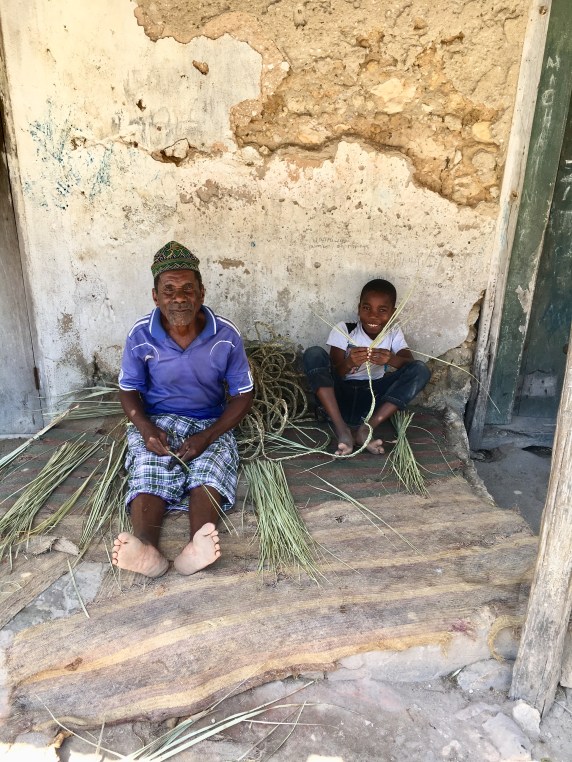


Fish processing: drying, boiling, frying
A start contrast to the Kilwa area was the resort island of South Fanjove, out next stop as we gradually made our way north. This was the stuff of tropical dreams- white fine sand, clear turquoise water, and a small number of guest huts scattered along the beach. This was one of the few resorts where we, as yachties, were made to feel extremely welcome and we enjoyed sundowners with the six guests on the island at the time, along with the manager and some staff.


South Fanjove: a tropical dream
After one or two nights anchored off islands which are base camps for those fishing the area, we arrived at Mafia Island. This was also part of the Kilwa Sultanate and historically a safe haven for ships. It now promotes itself as a tourist destination offering snorkelling, diving, ruins, and traditional ship building. There is a marine park on the south and south-east coast for which the charge is US$100 for 1 week plus $15-20/day/crew member so on the advice of others who know the area well, we gave this a miss on the promise of equally good reefs and snorkelling in other areas where there is no charge.
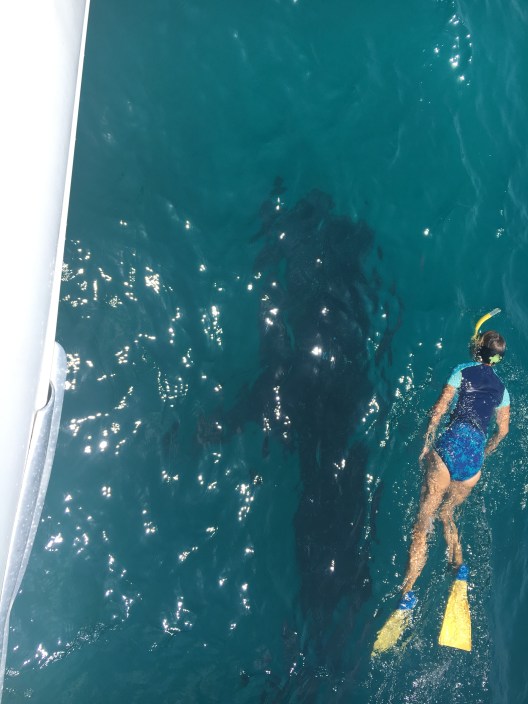
Mafia Island is also famous for whale shark spotting, and this was our main reason for stopping here. Our friends Ian and Melian on Indian Summer had come down from Dar Es Salaam to meet us and so we joined forces to find some whale sharks. We had identified the reef not far off shore which is a known favourite feeding ground, and headed off early one morning on Indian Summer (a catamaran) to try our luck. We certainly did spot a number of whale sharks but so did the couple of tourist boats out there, and as soon as everyone got in the water, the whale sharks tended to dive deeper making it impossible to find them, as we did not have diving gear. We ended the day in a bar back on Mafia, disappointed but buoyed by the fact that we indeed got a good look at several whale sharks from the boat. We thought it worth one more try so we headed out again the next morning. It was an absolutely perfect day – clear sky and not a breath of wind, but alas we didn’t see one whale shark the whole morning, despite patrolling up and down the reef edge. We decided to throw out the anchor and have lunch before heading back to the anchorage. As we finished lunch and Ian stood up to make preparations to weigh anchor, he looked over the side of the boat and there was a whale shark right next to us, just holding itself in position against the current! With a mad excited scramble, we hurriedly donned our snorkelling gear and slipped into the water. We spent a magical half hour or so swimming with this magnificent creature which was simply holding itself alongside the boat. The current was very strong and we were all grateful for the long floating rope that Ian had tied off the back of the boat which made it easier to get ourselves back against that current. Four very lucky and happy people headed back to harbour that afternoon.
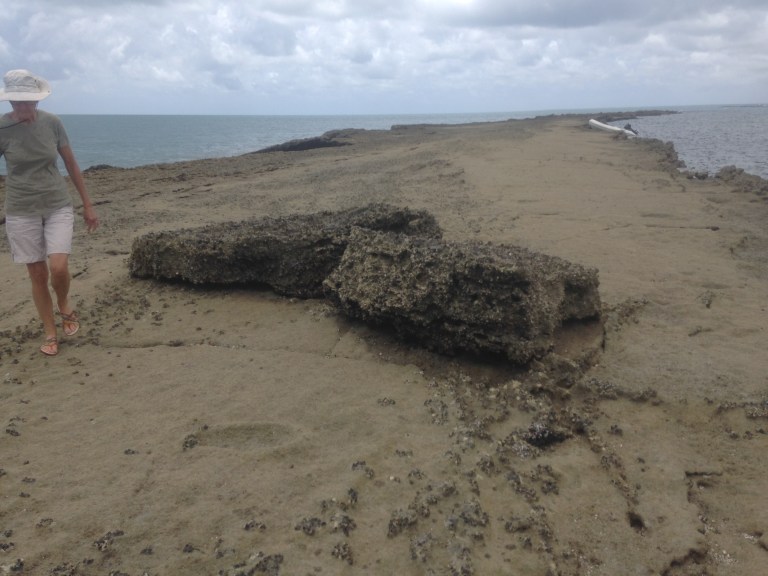
During our stop over in Mayotte, we had met a Dutch cruising couple who had lived in Tanzania for about 10 years. They gave us lots of good tips about cruising in Tanzania, including the general location near Mafia Island of some underwater ruins hypothesized to be those of Rhapta, a lost 2,000 year old Roman market town believed to be one of first metropolises of the African continent. The partly submerged formation was spotted from a helicopter a few years ago by a scuba diver. Lesley managed to find his report on the internet and got the co-ordinates and some pictures so we had some idea of where to look and what to look for. We found a suitable anchorage nearby and dinghied over when it was low tide. It was a bit of a rough afternoon so we didn’t snorkel around the ruins but rather clambered over the exposed sections, curious as to what they might have once been, and again feeling lucky to be able to experience such interesting history.
Over the previous six months or so, we had been receiving updates on the increasing ill-health of Lesley’s step-father, John, which had necessitated that he and her mother sell their home and move into aged care accommodation. The sale and move all happened very quickly so there was little time for them to adjust to the idea. Once settled into a suitable place, John’s condition stabilised a little and he and Iris had a few months of quiet company with each other. We were beginning to think that Lesley might just get to see him one more time on her planned trip back to Australia, but it was not to be and he finally succumbed to the lymphoma in September. It was very sad and distressing to get this news so far away from family, but at least Lesley knew she would be home in a few weeks. John had a saying – “it’s later than you think”, and always encouraged us to make the most of NOW. We often think of that and not too many days go by without us reminding ourselves how fortunate we are to be able to live the life we have, while we are still healthy and relatively fit.
And so on to Zanzibar – doesn’t the very name of the place conjure up exotic images of the traders, adventurers, plunderers, and explorers who converged on this island that was such an important trade centre? The traders from Persia arrived here in 8th century for slaves, ivory, spices. The Portuguese conquered Zanzibar and it became part of their empire when they realised its strategic location around the 15th century. Several hundred years later, the Omani Arabs expelled the Portuguese and for a period of time Zanzibar was the base of the Omani Arab Sultanate. By the mid 19th century, Omani rule weakened. Zanzibar continued as a British protectorate until 1963, and independence was gained the following year with a revolution and eventual union with Tanganyika to form Tanzania.
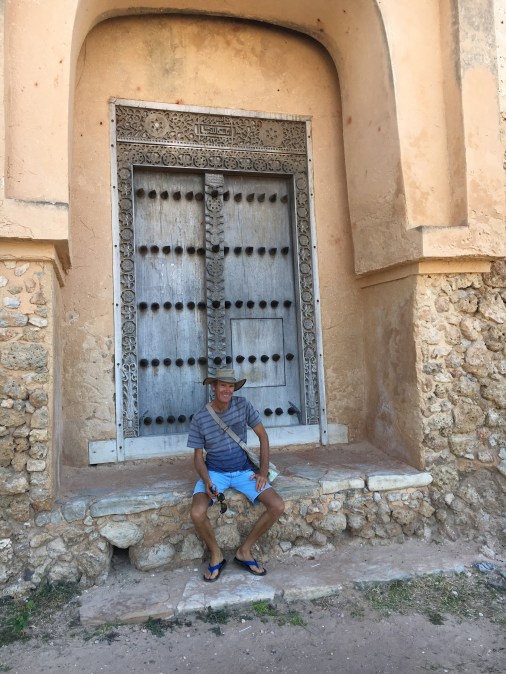
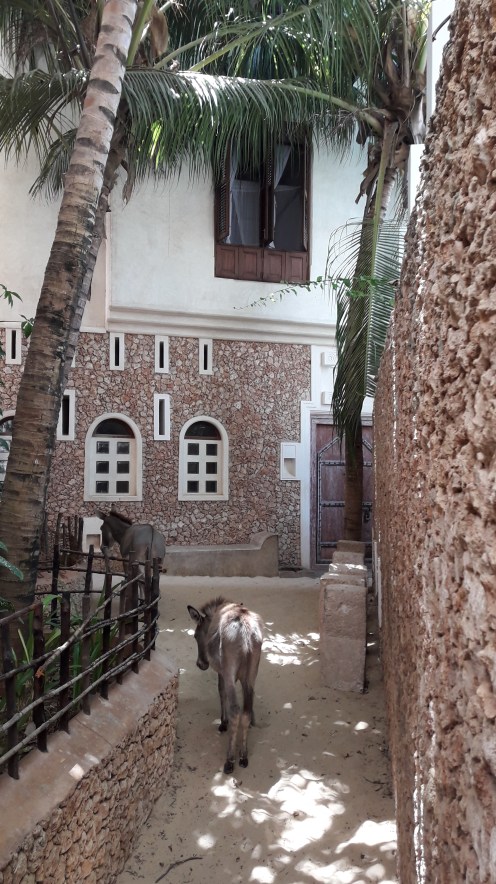
We had a wonderful time in Stonetown, Zanzibar, soaking up the historic atmosphere, losing ourselves wandering through the narrow winding laneways, and admiring the many ancient doors, imagining the lives of the many people who passed through them. In more recent times, one of those people was Freddie Mercury, the lead singer of Queen.
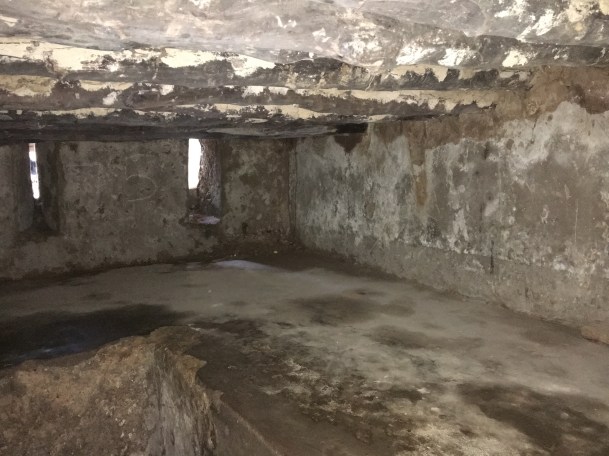
Stonetown was the centre of the world slave trade, and it has a very interesting slavery museum. The museum comprises mostly display boards of written factual information about the slave trade, but these are interspersed with stories of the lives of actual slaves underlining the very harsh reality of this practice. We were surprised to learn that the market for slaves included many countries, so slavery was at one time quite widespread throughout the world. Of course it still exists today in a different form. The exit to the museum takes visitors through the inevitable gift shop underneath which is two underground cells where the slaves were held on market day, waiting their turn to be brought up to the square where the trading took place.
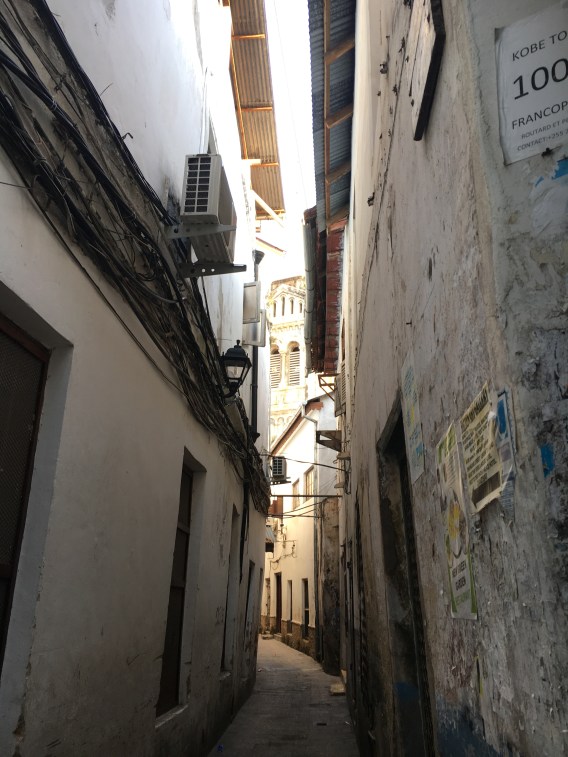


Doors of Stonetown: first one is the house of Freddie Mercury’s family
The waterfront area of Stonetown comes alive in the late afternoon with people coming to socialise and enjoy the cool of the afternoon and early evening. The adolescent boys, ever bursting with energy and seeking thrills, entertain themselves by diving off the wall into the water – but this is not just diving. It involves a run up and acrobatic leap into the air before the plunge into the water. Their athleticism, and sense of fun was a joy to watch. As the sun goes down, the local traders set up a bountiful night food market. Customers peruse the stalls, selecting kebabs of meat, seafood or vegetables which are then cooked and served with salad and drinks at the many tables available. Later there may be some form of street entertainment, depending on the night. It was a great way to mix with the locals and experience something of their life in Stonetown.


You had to be there to feel the buzz!


After the magic of Zanzibar, we returned to Slipway, an anchorage just north of the main port of Dar Es Salaam, where Lesley packed her bags for her trip back to Australia to visit friends and family.
Phil then ventured out on a trip to Ruaha National Park, travelling 500kms in a “delux” bus to Iringa, from where he organised a two day safari with a local company. As it turned out he was the only customer for this safari so he had his own guide and driver, and the 4WD to himself. He saw impalla, gazelle, buffalo, baboons, dik dik (the smallest deer), greater kudu, ostrich, serval cats, leopards, lions, elephants, giraffes, hippopotamus, python, crocodiles, mongoose, lots of birds, and a range of smaller wild life. He had to spend another night in Iringa to wait for the bus back to Dar Es Saleem. This time he stayed in the Neema Craft guesthouse, which had been recommended to us. This place was set up to employ less abled people, providing the opportunity of employment and consequently a better quality of life. It was a fabulous place to stay-clean, tidy, big rooms, good food, very reasonably priced, and in a great location.


Back in Slipway, Phil re-stocked and started to head north again, feeling a bit flat without Lesley’s company. Pemba Island, which had been highly recommended, was a disappointment. The locals were not friendly, and tried to charge anchoring fees when these were not legitimate. Although Phil was already checked into Tanzania, local authorities in another area insisted that he check in locally and pay the relevant fee. A trip to the capital Chake Chake, once again on an over-crowded bus, proved interesting with a visit to the museum.


Ruins on Pemba Island, said to be the oldest ruins in the east coast of Africa
The final stop in Tanzania was Tanga, a port on the east coast. There were several other boats moored at the yacht club and its always a party when there is more than one boat in port. Phil spent one month here exploring the local area and hanging out with his new, and not so new, friends. One of the highlights was doing a drift swim (more like a float really) with a group of others through the mangroves on the incoming tide. The day included a walk to an area where voodoo is practiced. Lunch and beers were provided back at the organiser’s house. When the kingfishers started to use Paseafique as their fishing base, Phil decided it was time to move on to Kenya.
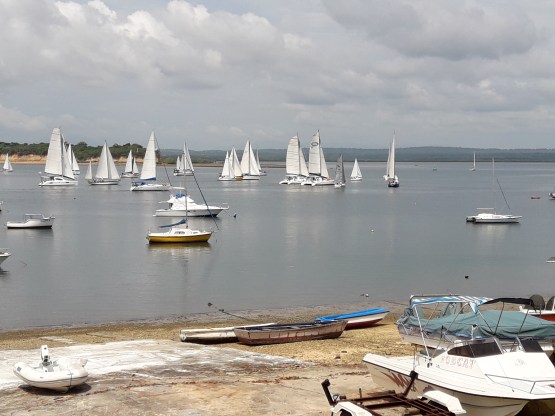
Kilifi Creek is a well known yachtie bolt hole in Kenya, and Phil based himself there for several months. It was busy social time, with Christmas, New Year and 60th birthday celebrations, as well as significant boat work needing to be done. Our friends, Brett and Mandy generously included Phil at their Christmas table with four other guests on Leventia, and they spent a happy afternoon together. The traditional Kilifi Yacht Club New Year’s Eve celebration consists of a short trip into the next bay in the creek, where all 30 or so boats rafted up together held by one anchor. There was much frivolity as everyone ate and drank their way into 2019 while hopping from boat to boat. Phil did not feel his usual perky self the next morning!
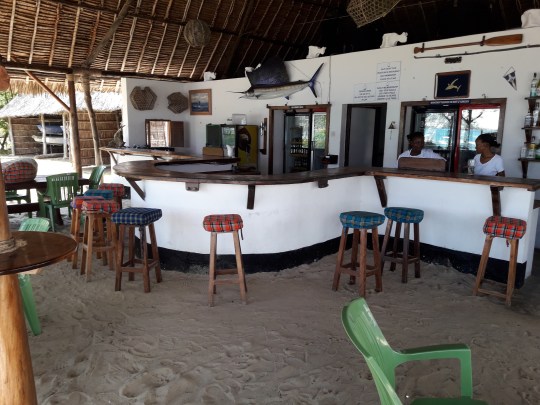


Christmas carols and Christmas lunch on board Leventia


New Years Eve raft up
Another key new year celebration in the Kilifi social calendar is the annual music festival– an extravaganza that lasts for three days. A group of yachties went to just the first day. It was awe inspiring with three stages, art work, multi-coloured lighting, and African culture. The festival culminates on New Year’s Day with the lighting of a huge effigy built in a dry creek bed.


There are important health issues to take care of at a music festival!


Spectacular stage settings and the effigy in the creek bed
Phil’s birthday is in early January and as this year was his 60th, Lesley felt a bit guilty leaving him to celebrate on his own. She needn’t have worried, as the Kilifi yard manager, Peter, and his wife, Esther, organised a surprise BBQ at the yacht club. All the yachties brought salads to share. It was a great night, with fabulous food and good friends.
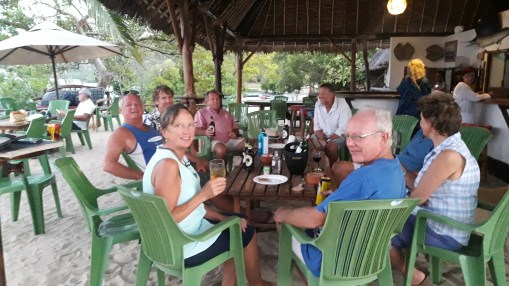
Happy 60th birthday Phil
A nearby backpacker’s hostel provided a focus for yet more partying – movie night on the beach, lounging around the swimming pool, and live bands.


Lounging around at the backpacker’s
But the time came for some serious boat work, starting with flag production for the next countries. The boat came out of the water, and several large boat projects were completed including repairing a bent rudder shaft, antifouling, roller furler repair, canvass repairs, and servicing all 11 winches. By early March, Paseafique was back in the water. Phil and Mike, and three other boats, sailed north to Lamu (still in Kenya) to wait for the right weather window for the next big adventure – sailing across the north Indian Ocean, through the Gulf of Aden and up the Red Sea.
On an ancient wall in China
Where a brooding Buddha blinks,
Deeply graven is the message
It is later than you think.
The clock of life is wound but once
And no man has the power
To tell just when the hands will stop,
At late or early hour.
Now is all the time you own,
The past a golden link,
Go cruising now my brother
It’s later than you think


A great read. What an adventure! x
LikeLiked by 2 people
What a lovely post! You’re really seeing the world and now the Med all opened up to you. You’ll never want to leave!
LikeLike
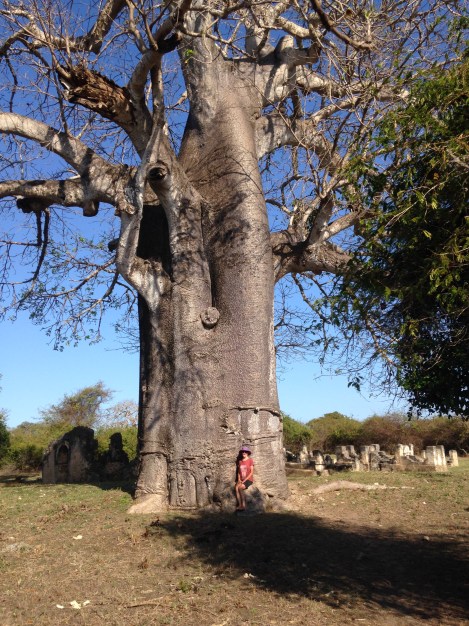
So wish we could have visited there with you but delighted to share the trip here virtually. I adore that picture of Lesley with the little girls and that whale shark photo is amazing. The leaping in Stonetown is totally cool. The baobab is the biggest I think I have ever seen
LikeLiked by 1 person
Hello Lesley & Phil
What a fabulous adventure, your blog transporting me – so I feel like I am
there with you (if only in spirit). Lots of fantastic pics, keep safe & catch up soon.
Love Andrea B.
LikeLiked by 1 person