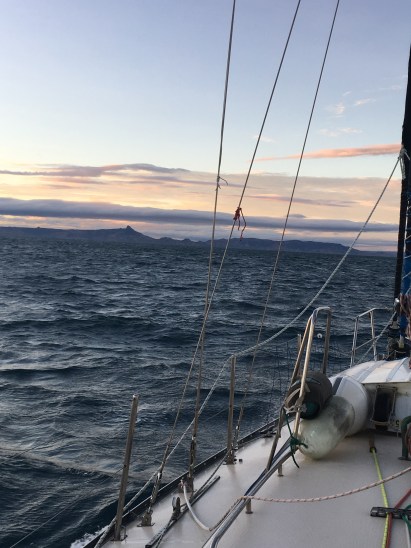
I find it amazing how quickly the memory of unpleasant patches of an ocean passage recedes once good conditions prevail. I’ve just come below after sitting out on deck watching the end of our seventh day at sea. After a fairly clear sunny day, a few grey clouds had gathered on the horizon and were backlit by the last blush of the sun’s rays. As the light faded, the sea once again showed its soft side, appearing like midnight blue satin rippling with the breeze. It is a calm evening on the Indian Ocean, so there are no white caps in sight. The waxing moon is sitting low in the sky like a glimmering silver ball in a bright white cup, shining its light on the ocean like a pathway. The stars of the southern skies are twinkling above like old friends. The breeze was gloriously fresh and rushed past my ears as I stood on the cockpit seats looking out over the dodger (clipped on I might add), feeling deeply grateful that I get to experience the awesomeness of being out here.
But the first four days of this passage were far from awesome. We departed from Chagos at 9am on Monday June 11th, and started out with fairly pleasant conditions. However, by that afternoon we found ourselves in a boisterous and splashy sea, and as we were sailing to windward, the ride was very uncomfortable and moving around the boat was becoming difficult. Phil started feeling sea sick but at this stage, was not too bothered by it as this often happens at the beginning of a passage and settles within the first two days. We had changed over to our second water tank, as the level in the primary tank was getting too low for the electric pump, given that the boat was on a lean. To our horror the first water that came out of the second tank was filthy! This was pure water that we had purchased in Sri Lanka (and the same water we had been drinking from the other tank), and our tanks had been as thoroughly cleaned as possible when we had the boat out of the water earlier this year. We had some bottled water that we had been carrying since 2015 so we dug that out of a locker, and were able to use that with a plan to see if we could get more water out of the primary tank the next day.
In continuing rough and now squally conditions, the next day, we gathered up a number of containers, flattened off the boat, and got as much water as possible out of the primary tank. Unfortunately, this was somewhat dirty too! Once all the containers were full, we changed back to the other tank with a plan to use that for washing and showering, and to filter the remaining water through cheesecloth for drinking, once the supply of bottled water ran out. By now the seas had become quite rough with lots of water splashing over the boat, so we had to close up the hatches, and zip our drop sheets onto the dodger to stop water from being splashed down the companionway.
By day three, we had found various small leaks in the boat, most of which were not new, but which had not been an issue for a while as we had not been in conditions where we had so much water being dumped over the boat. Consequently, we had almost every spare towel stuffed strategically in position to mop up the water. Things were getting pretty manky inside the cabin by this stage. We were getting a bit manky too as we could not be bothered having a shower in these conditions. To add to our woes, Phil discovered a water and oil leak in the engine bay when he checked the engine that morning. We were puzzled about the water leak, but really dismayed about the oil leak into our nice clean and recently painted engine bay. Our old engine had an oil leak and so we had suffered years of an oily engine bay and bilge, and a delightful by product of fitting the new engine was no more oil leaks! And here was another one. We were not sure where it was coming from, but at least it was clean oil. The water was salty so that had to be coming via a leak somewhere at the back of the boat.
In any case, we set about cleaning that up, with Phil doing the dirty work and me passing him oil absorbent pads, rags and buckets – and ginger to help keep the persistent sea sickness under some sort of control. After the clean up, we each managed a shower. I had mine sitting on the floor – nowhere to fall that way. By that afternoon, conditions had improved marginally, but we opted for an easy meal that evening – cold baked beans out of a can. We were quite exhausted from the effort of moving around in the rough conditions, and when not trouble shooting problems with the drinking water, leaks and the engine bay problem, we were spending most of our time lying down on our bunks as this was the easiest thing to do.
The 4th day was a bit of a turning point as we started to head west and thereby our angle to the wind was more conducive to comfortable conditions. Over that day and the next three days, we were able to settle into a comfortable routine as Phil’s sea sickness disappeared, and Paseafique powered along in the steady south-east trade winds. After breakfast, I would usually be checking the communications, connecting up through the HF radio to send and receive e-mails, checking in on the sat phone for messages, and writing e-mails. Then showers for both of us, and Phil would head off to bed, leaving me on watch. After lunch and a general tidy-up, we would have an hour or so together before I would have an afternoon sleep. Late afternoon was nibbles time, dinner preparation, and then the net on the HF radio during which we got to check in with other boats doing the crossing and see how they were going. When the net was finished, we would have dinner, and then Phil would once again head off to bed until about 11pm or midnight, when it would be my turn in the bunk until early morning. The weather was very consistent, and there was virtually no shipping or other traffic, so the night watches were fairly easy going. We were also able to track the source of the oil leak which at first we thought might have been coming from a large drum of oil we had stored in the back of the boat. We were holding our breath as Phil climbed in the back to investigate, but were very relieved to be able to eliminate that as the issue. However, this left us worrying that it was coming from the autopilot, although Phil was fairly sure that as it is purely mechanical, it does not have an oil reservoir in it. But wait, there is also a store of 5 litre oil bottles in a locker under the bunk in the aft cabin, but as far as we knew there was no connection between that and the engine bay. However, it was worth a check and one of these bottles proved to indeed be the source of the leak. There is a drain hole from that locker to the engine bay. Fortunately, the whole 5 litres had not leaked out and so it was not too difficult to clean up. It is still a bit of a mystery though, as the offending container was still sealed and we could not see a hole or split in it. Phil had also worked out that the source of the salt water leak into the engine bay is likely to be from the bolts holding the back platform to the stern. Replacing and sealing off those bolts is another job to be added to the list.

But all this was significantly disrupted on the morning of the 8th day when we were about 150 nm from the west coast of Madagascar and the winds increased, squalls appeared, the seas increased, and the rain came down. The closer we got to Madagascar the rougher the conditions became. This section of the passage became a bit more complicated as we needed to slow the boat down to try to avoid rounding Cap d’Ambre (Madagascar’s northern point) in the dark. Conditions became even more uncomfortable when we did slow the boat down, so we gave up on that and just sailed as per the conditions. At this stage we were about 95 nm from the Cape and we had three reefs in the main and only a small area of headsail out, and were back to lying on our bunks, hoping that conditions would certainly not be worse for rounding the Cape. We had the waypoints from our friends on Amandla who had been around the Cape a couple of days previously, so this made the prospect of going around at night a bit more reasonable. It was somewhat of a relief when conditions started to improve when we were around 25-30 nm from the coast. Although the wind did not decrease (20-25 knots), the seas seemed to settle down and so it was not as rough. We knew we would be rounding the Cape in the wee small hours of the morning, so we decided to abandon our usual watch keeping schedule and have short sleeps of 1-2 hours. In fact it was very hard to actually sleep, as the wind and waves were quite noisy and the boat movement was anything but a gentle rocking. The actual rounding of the Cape went well, even though the wind was up to 30 knots. I had gone for a sleep/rest about midnight, and woke around 4am to discover that I had actually slept through this event, while Phil kept the good ship Paseafique on course.
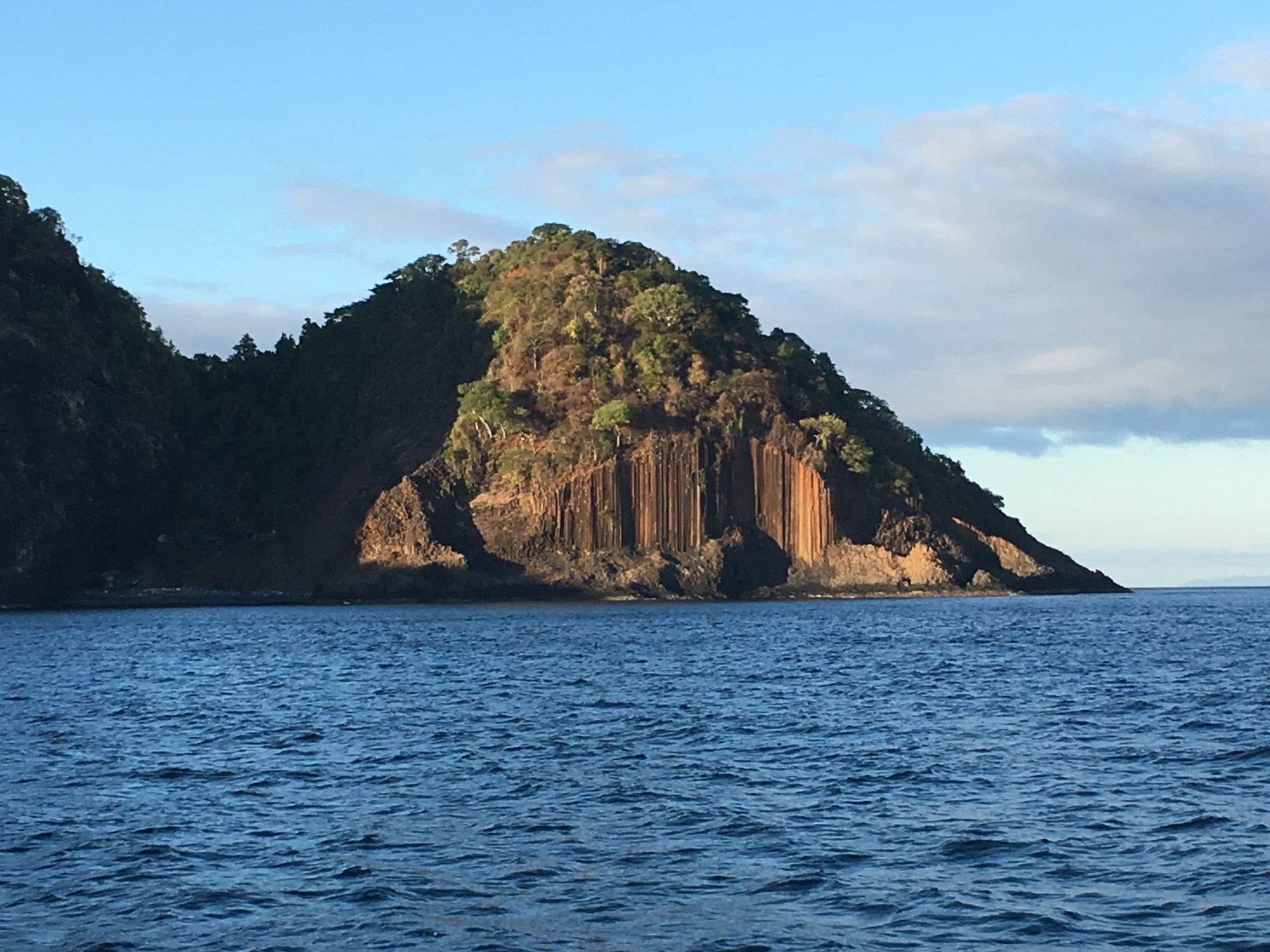
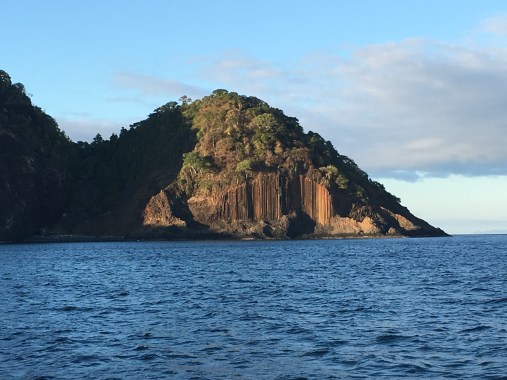
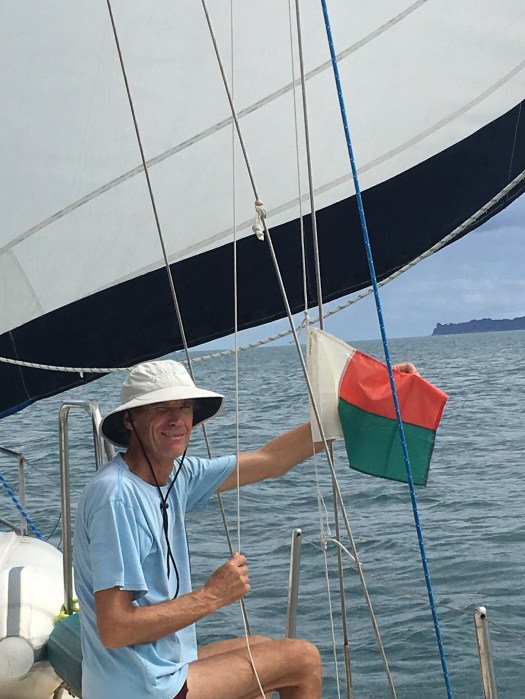
By 10am, Tuesday June 19th we had anchored in a bay on the west side of Madagascar, and were basking in the accomplishment of having arrived! We were very pleased with the performance of the boat on this passage. We had sailed 1538 nm, with our 24 hour runs ranging between 186 and 199 nm, and an average boat speed of 8 kts per hour, despite the fact that we were sailing conservatively to protect the main sail which is nearing the end of its life and becoming quite brittle. The boat handled the rough conditions very well, and we are certain that a slower boat would have provided a much more uncomfortable ride.

We had left Thailand in late February and crossed the Indian Ocean, sailing 3950 nm and visiting Sri Lanka, the Maldives (briefly), and Chagos along the way. I think that it will take some time for that accomplishment to sink in.
 paseafique
Love reading your news! Others have said WOW, but I’ll say it as well…… WOW!
Alison xxx
LikeLike
Hi, we are from sri Lanka greetings from as mohamed.👍👍👍
LikeLike
I’ve never given birth, but I wonder if fading memories of the pains of childbirth are like those experienced on a passage. I remember periods of sheer hell underway to Madagascar that now seem like ‘no big deal’ 😁
I love your vivid description of the good days on passage and can feel your pain from a rough ride filled with leaks and unexplainable phenomena added to that growing list of boat repairs.
Your picture from Nosy Mitsio has me super psyched to get back up there.
Hugs from the calm seas on the west coast of Mada
LikeLike
Great read guys, very challenging passage indeed!
LikeLike