
March 2025
The San Blas Islands, or Guna Yala as the indigenous tribes prefer, are a large archipelago of some 340 islands lying off the Caribbean coast of Panama, to the east of Colon. Legendary for their beauty and the gentle nature of the indigenous Kuna people, it’s a must visit area for many cruisers.
While Guna Yala is officially part of Panama, it is ruled autonomously by the Guna general elected congresso. Coconuts, fish and some tourism (and the associated handcrafts) are the main source of income, although we got the impression that some Kuna may work outside the community at times. No Guna is allowed to marry a non-Guna, which is not particularly good for genetic robustness as there are only about 55,000 of them. Apparently, theirs is one of the best preserved cultures in the Americas. There are lots of other interesting features of their society and culture but I’ll leave it to Google or AI if you want to know more.
We had heard that the further east in the San Blas you travel, the more interesting it becomes as the people are more isolated and traditional. However, we did not have the time so we had to be content with exploring the western end of the archipelago and a couple of anchorages along the way.
One of these anchorages was Portobello-which comes from the Spanish Peurto Bello meaning beautiful port and it certainly is. There is quite a bit of history associated with this harbour which was discovered by Christopher Columbus. It became a significant trade centre, hosting large international trade fairs, and was also the port through which the riches plundered from South and Central America flowed to Spain. It attracted the interest of the infamous pirate Henry Morgan who captured it at one point. Today it’s a sleepy little town with a small tourism industry, and a beautiful harbour.
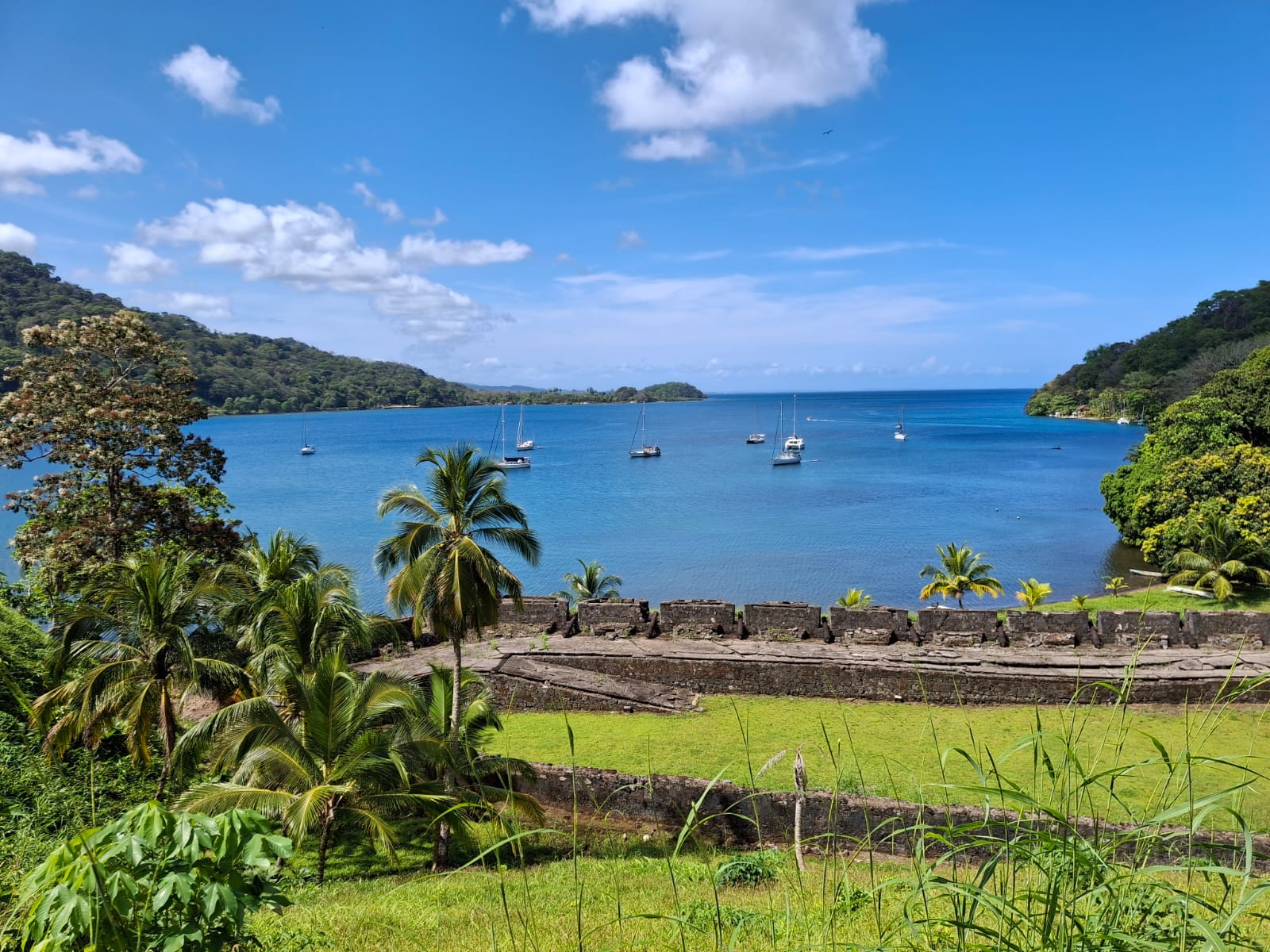
The beautiful harbour of Portobello, Panama
One of the tourist attractions is the “black Jesus” enshrined in the church, Iglesia de San Felipe.
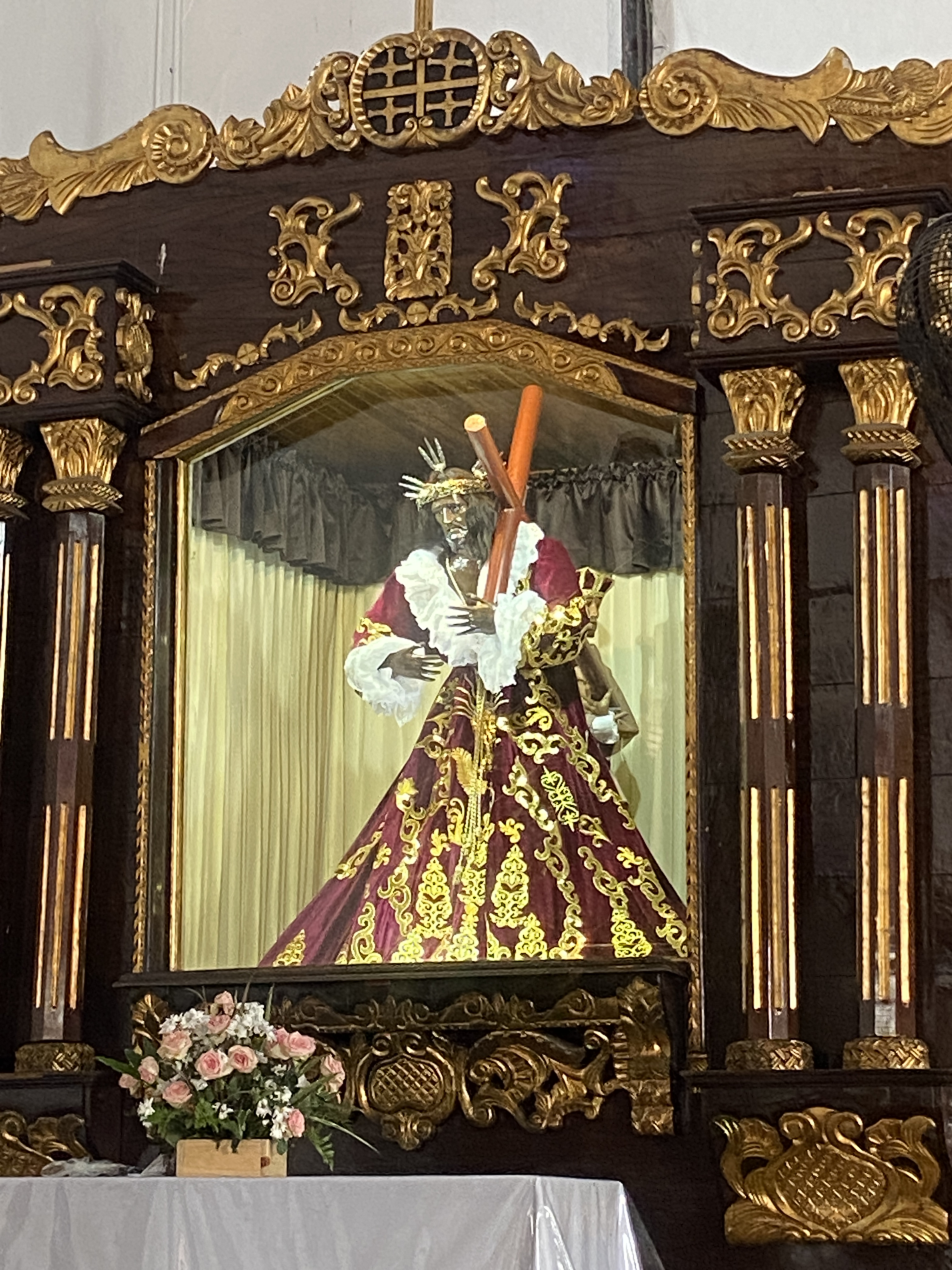
Black Jesus, dressed here in his Easter robes
There are a number of different legends about how this wooden statue of a black Jesus ended up in this church. Several miracles have been attributed to the black Jesus and it has become an icon of Catholicism in the region. The Festival of the Black Jesus is held each October, and as many as 60,000 people flock to the church for the celebrations. For many believers the trip to Portbello is a pilgrimage, some walking the 53 miles from Panama and crawling the last mile to the church. We explored the town’s small museum, walked to some of the ruins, snorkelled, and ate pizza at a small restaurant run by Francesco, an Italian ex-pat.
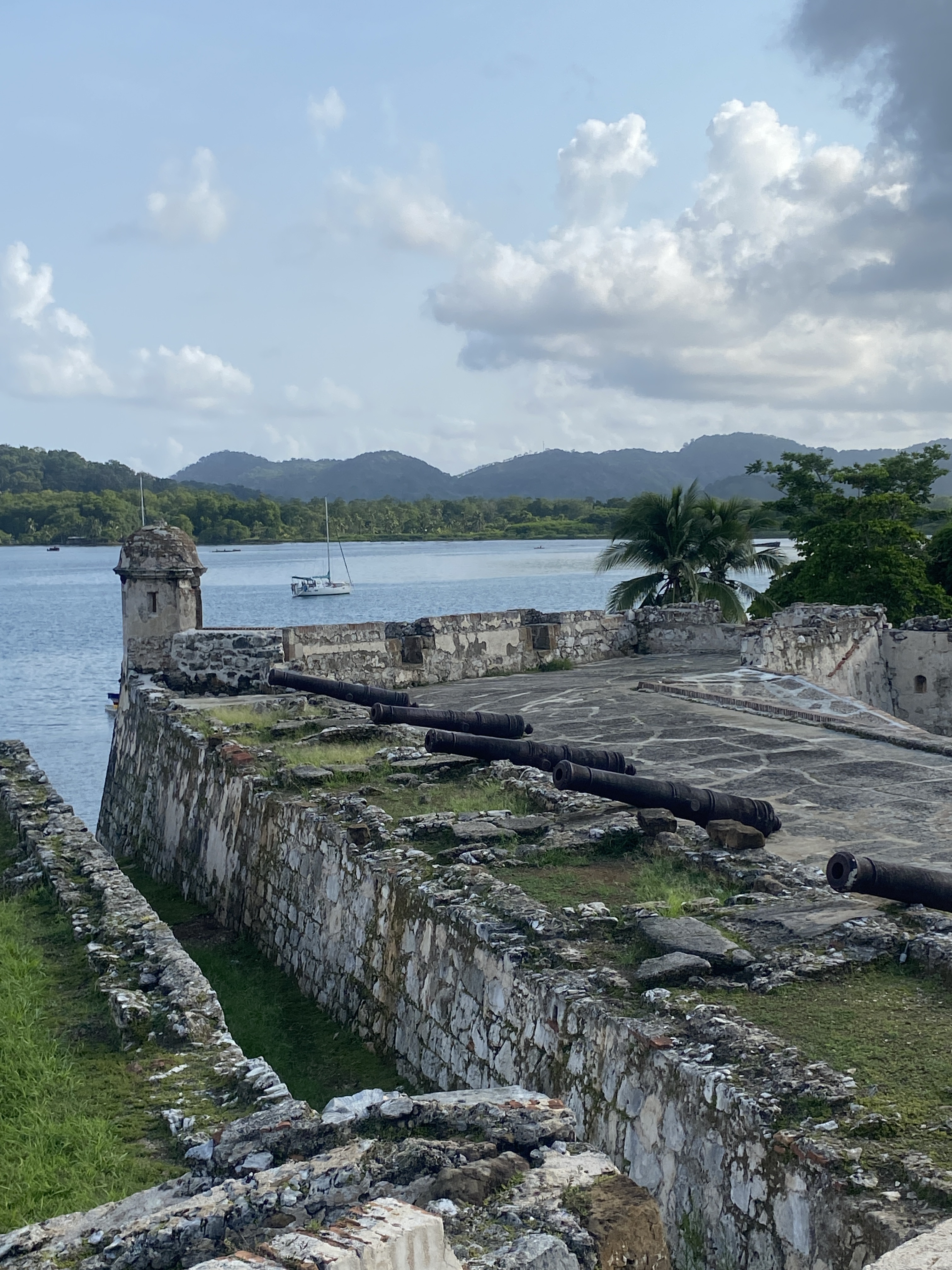
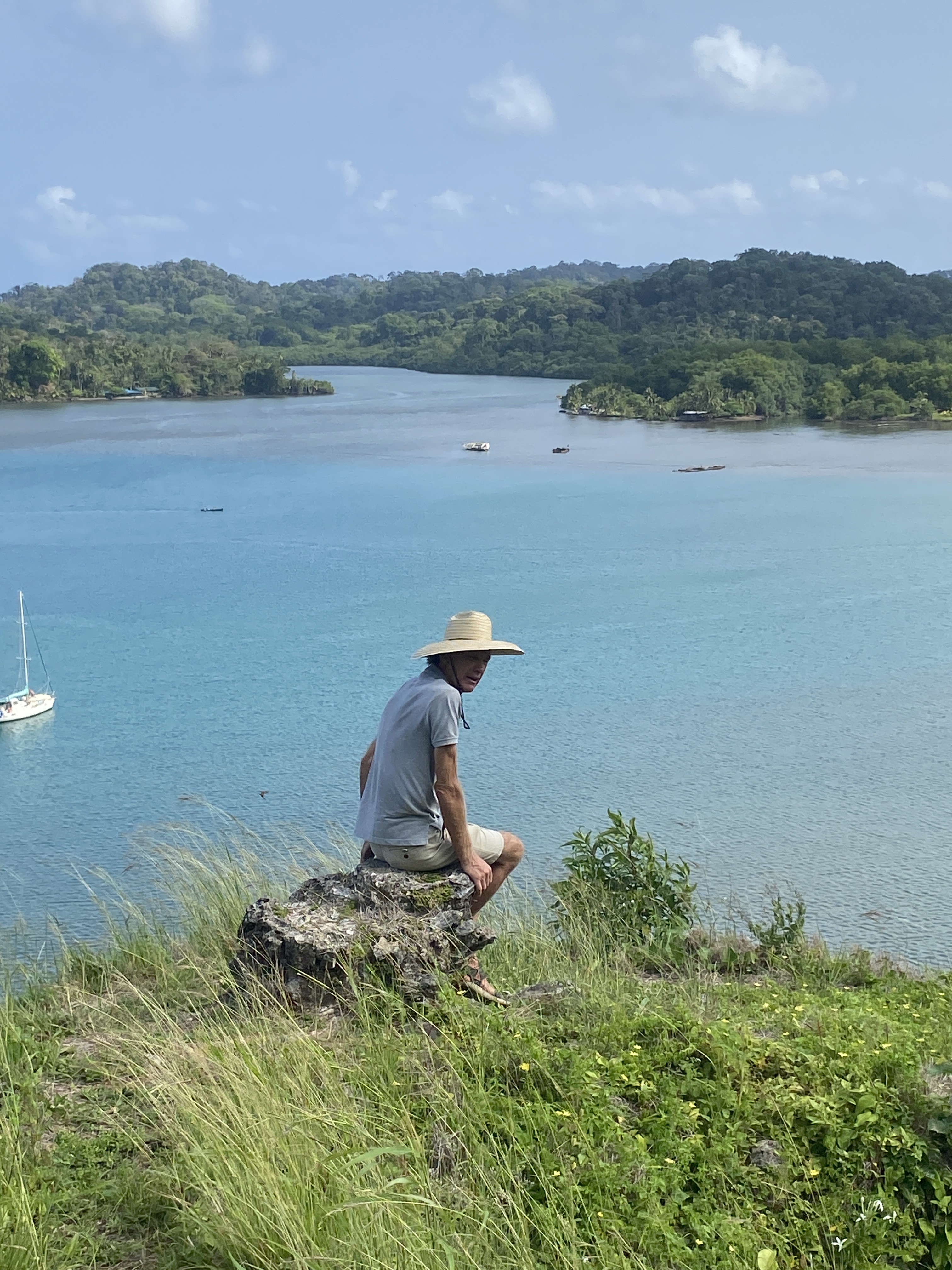
Spanish fort ruins in Portobello, and Phil enjoying the view over the harbour
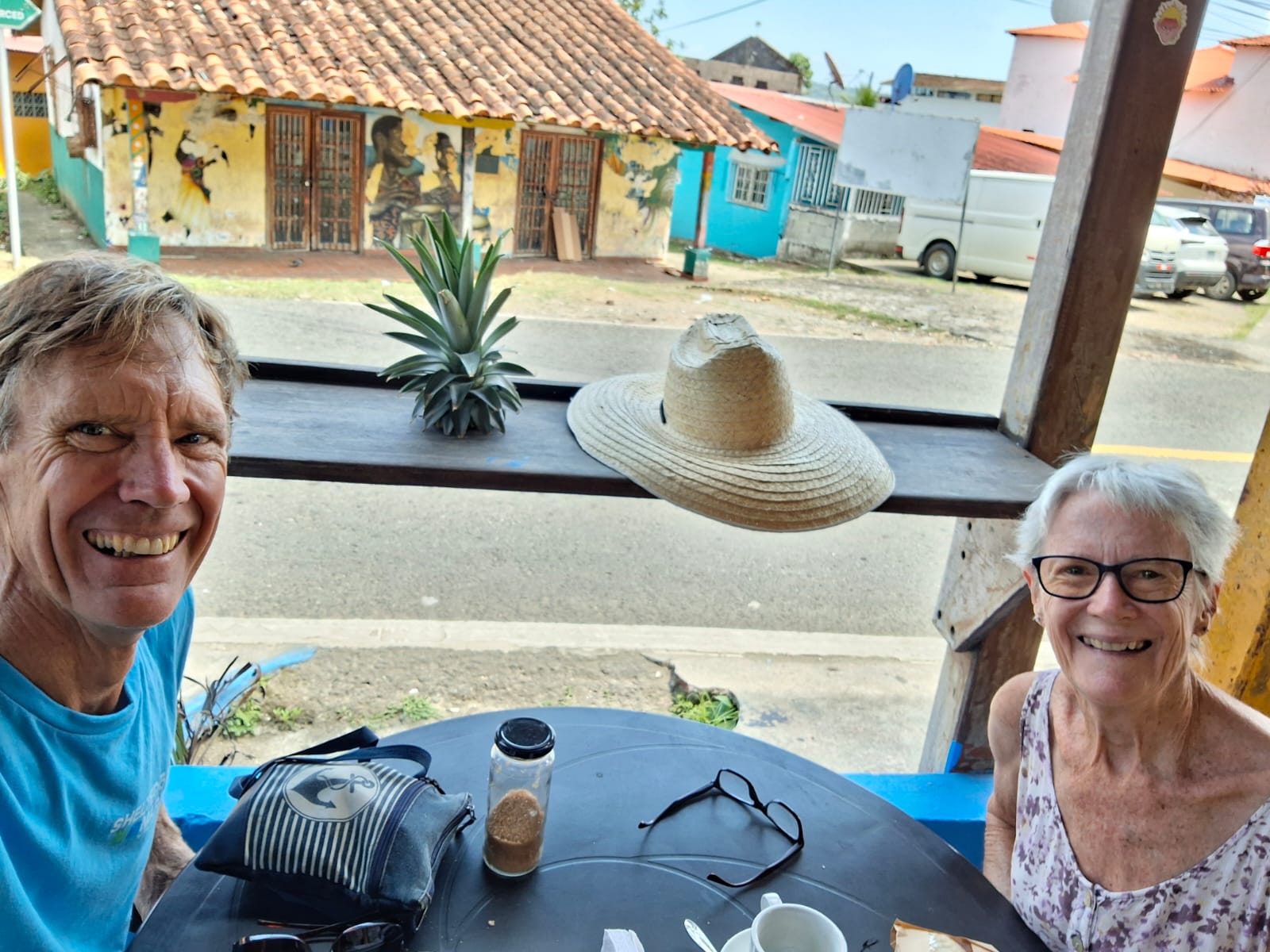
Time for coffee in Portobello
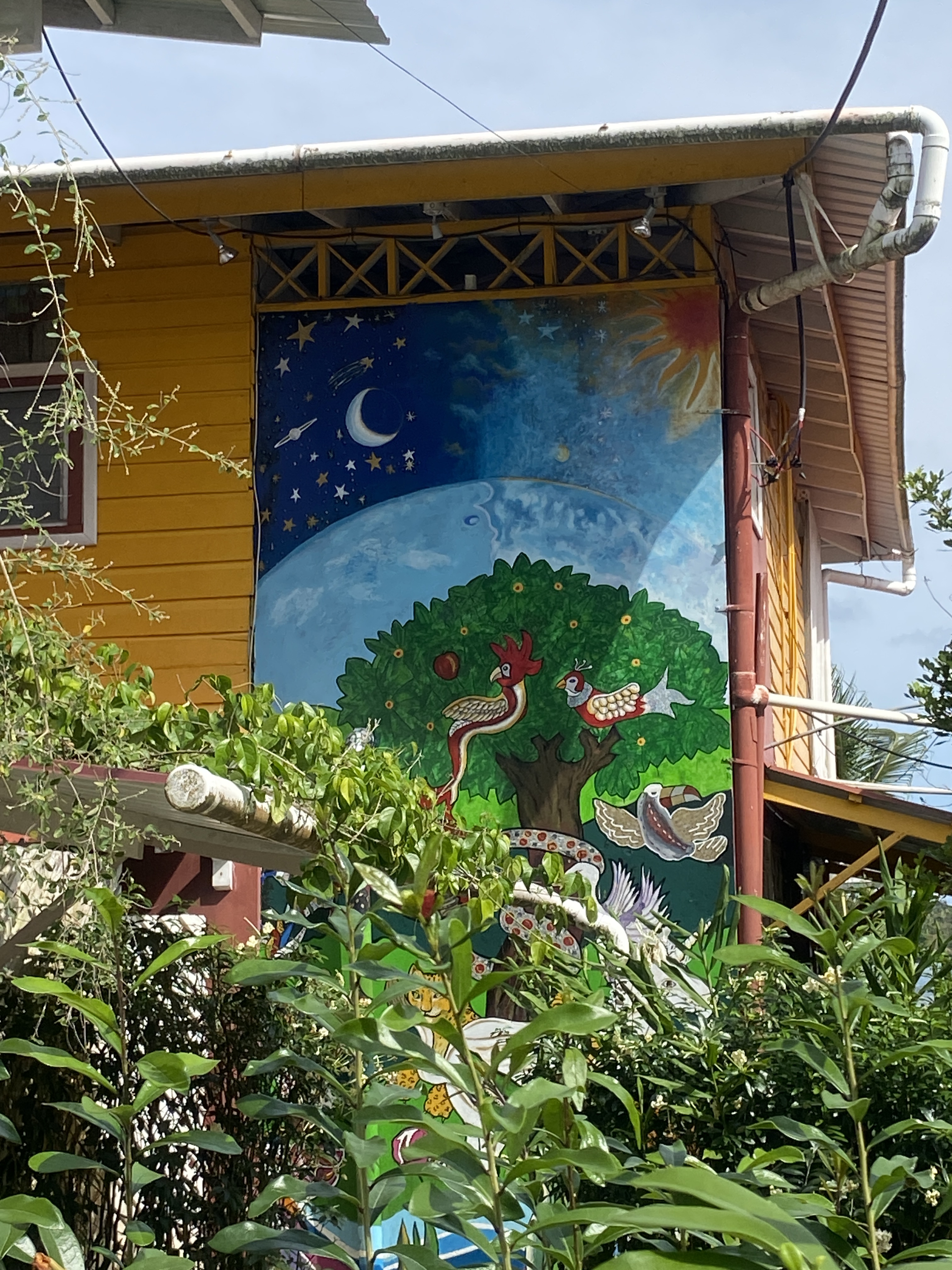
There was lots of colourful artwork around Portobello

A Montezuma Oropendola outside its amazing hanging nest in Portobello
The next, and more popular anchorage, along the way was Linton Bay, which to our mind is nowhere near as nice a Portobello. However, it does have a very good chandlery where we bought the anti-foul paint we will need when we haul the boat out in the Marquesas. Nothing like planning ahead with your purchases. While we were in the chandlery, we walked past another customer, saying hello in the process and there was that moment each party recognizes the other. We started chatting trying to work out the connection. Eventually when he mentioned that his boat was registered in Zanzibar, Tanzania, I put the pieces together. This was Jason, the manager of a small boat yard at the Slipway anchorage, near Dar Es Salaam, where we were anchored for a while in 2018! Seven years ago. There was great excitement in seeing each other again, and so of course we immediately retired to the bar upstairs and caught up with each other’s news over a few ales. Covid had caused the closure of the Slipway yard and so Jason decided to sail away in his tiny 25-foot boat. He had it shipped into the Med, crossed the Atlantic and spent time in the eastern Caribbean where he had the frightening experience of being caught in Carriacou when Hurricane Beryl hit. We had a great time hanging out together and reminiscing.
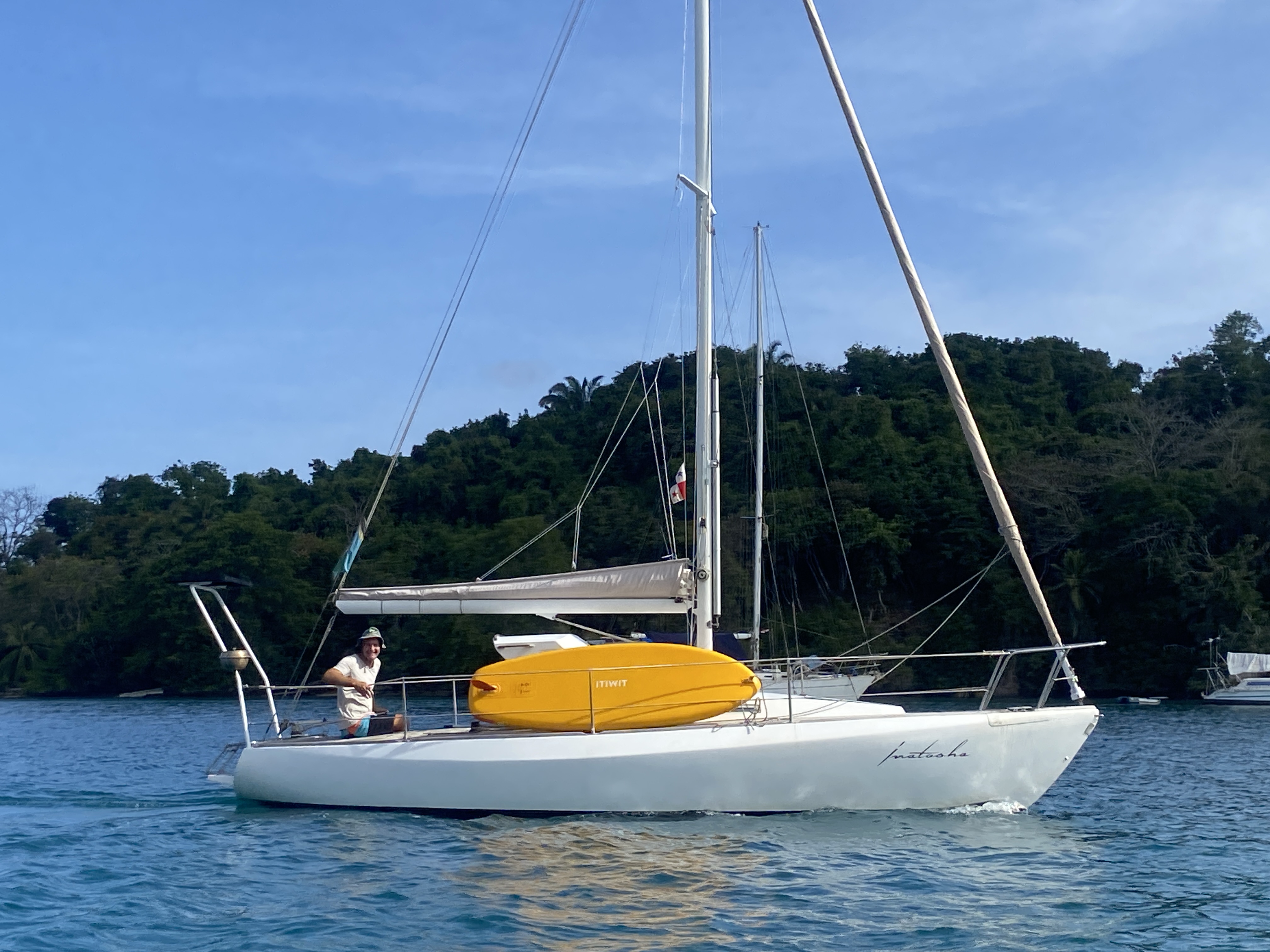
Jason on board “Inastosha”
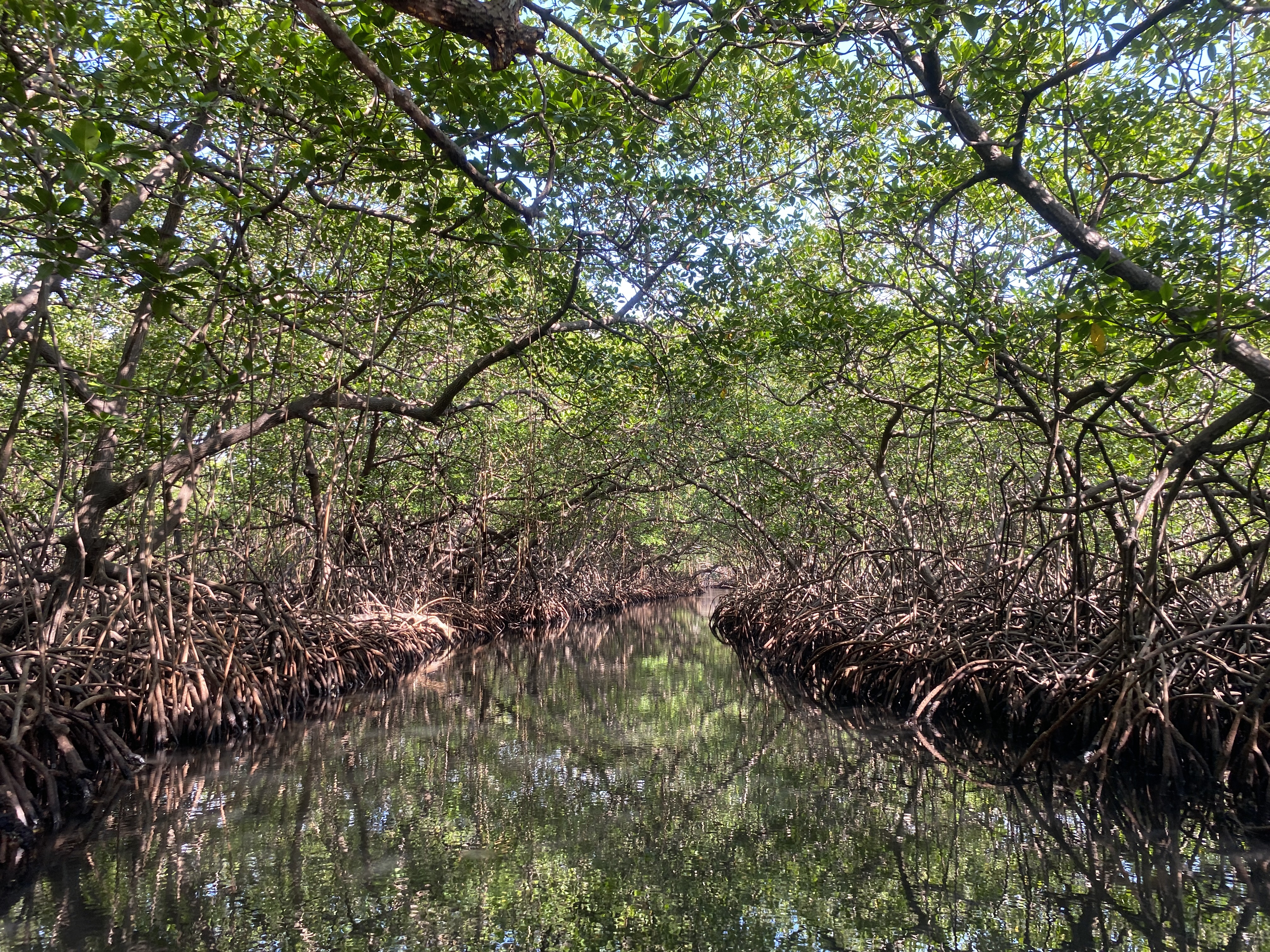
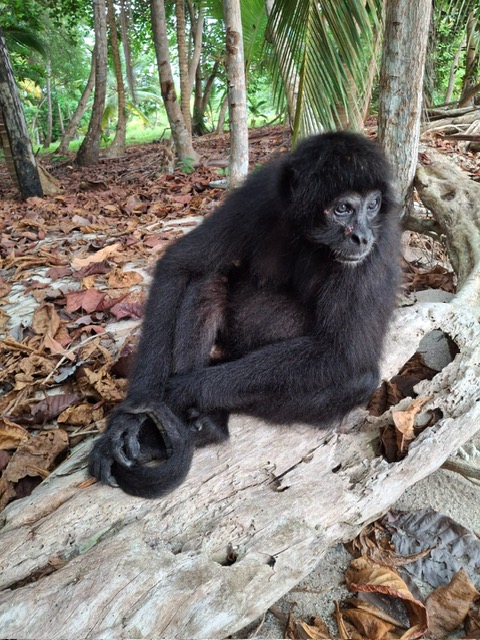
A gorgeous ride through the mangroves at Linton Bay, and one of the two resident monkeys on Linton Island, Linton Bay
Then it was onto the San Blas where the islands are picture perfect -white sandy beaches, loads of coconut palms and gorgeous clear blue water. We relaxed, walked on the beaches, and swam. What more can I say!
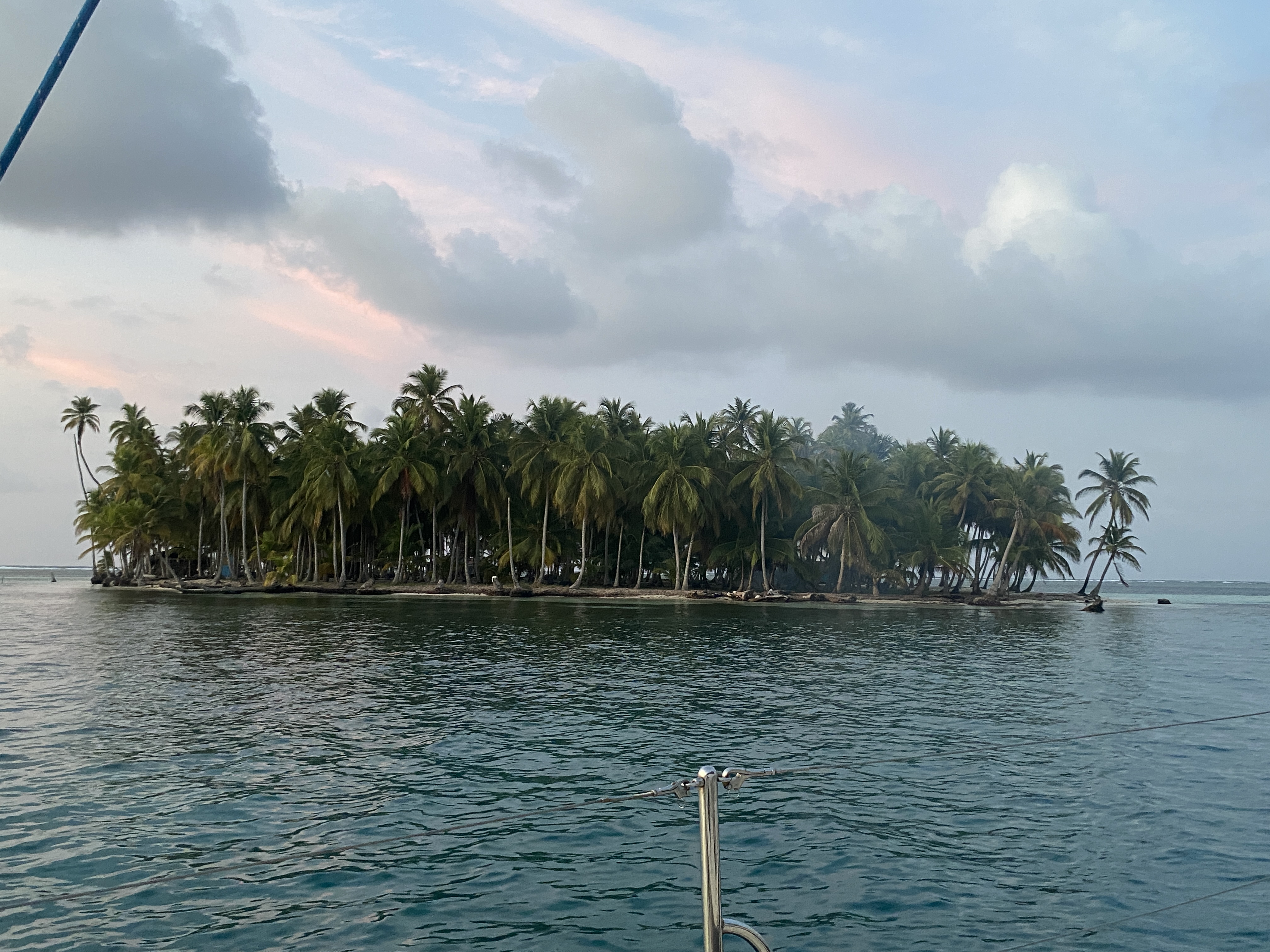
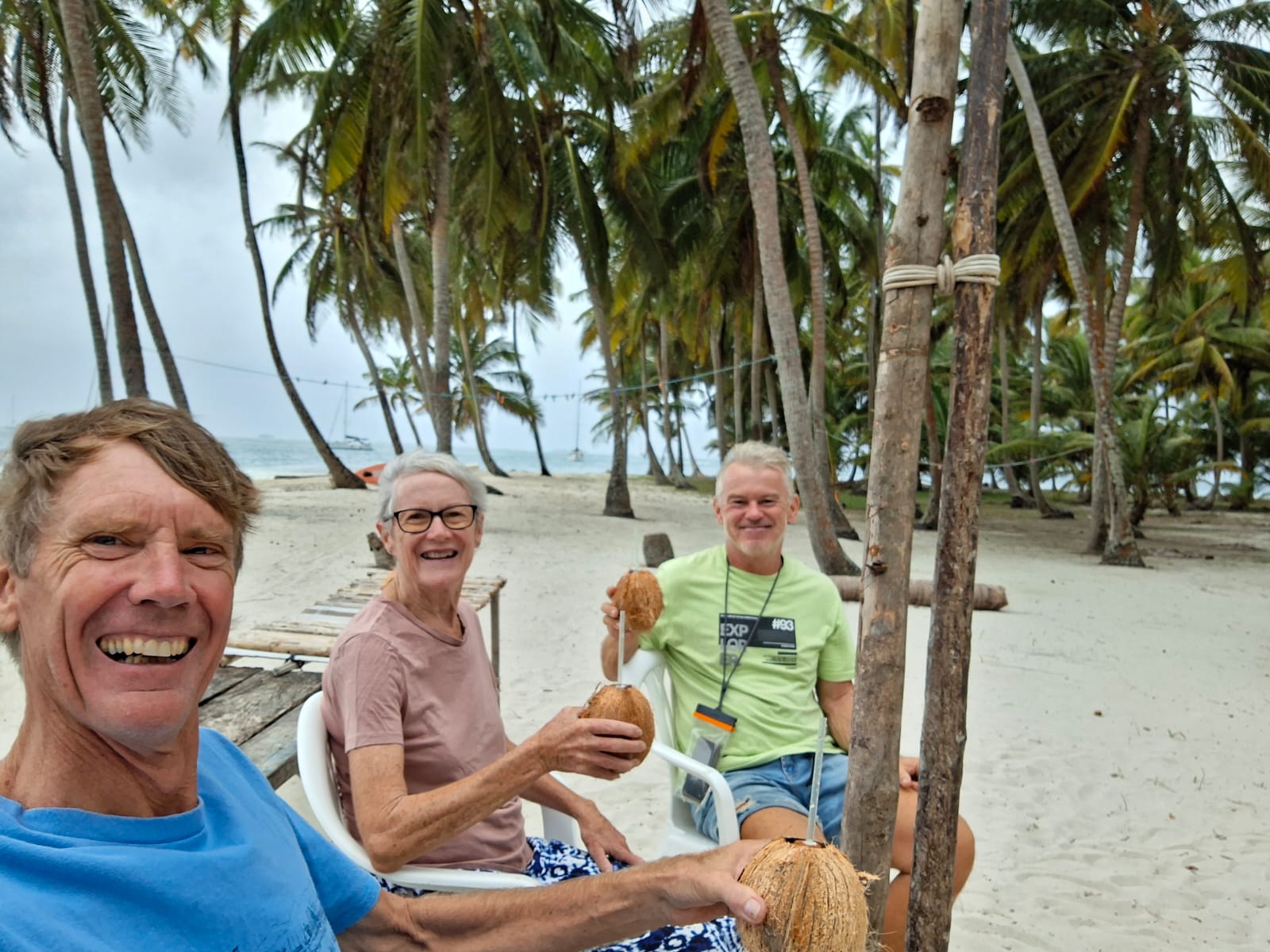
Welcome to San Blas – rum and coconut cocktails with our friend Sven at Chichime
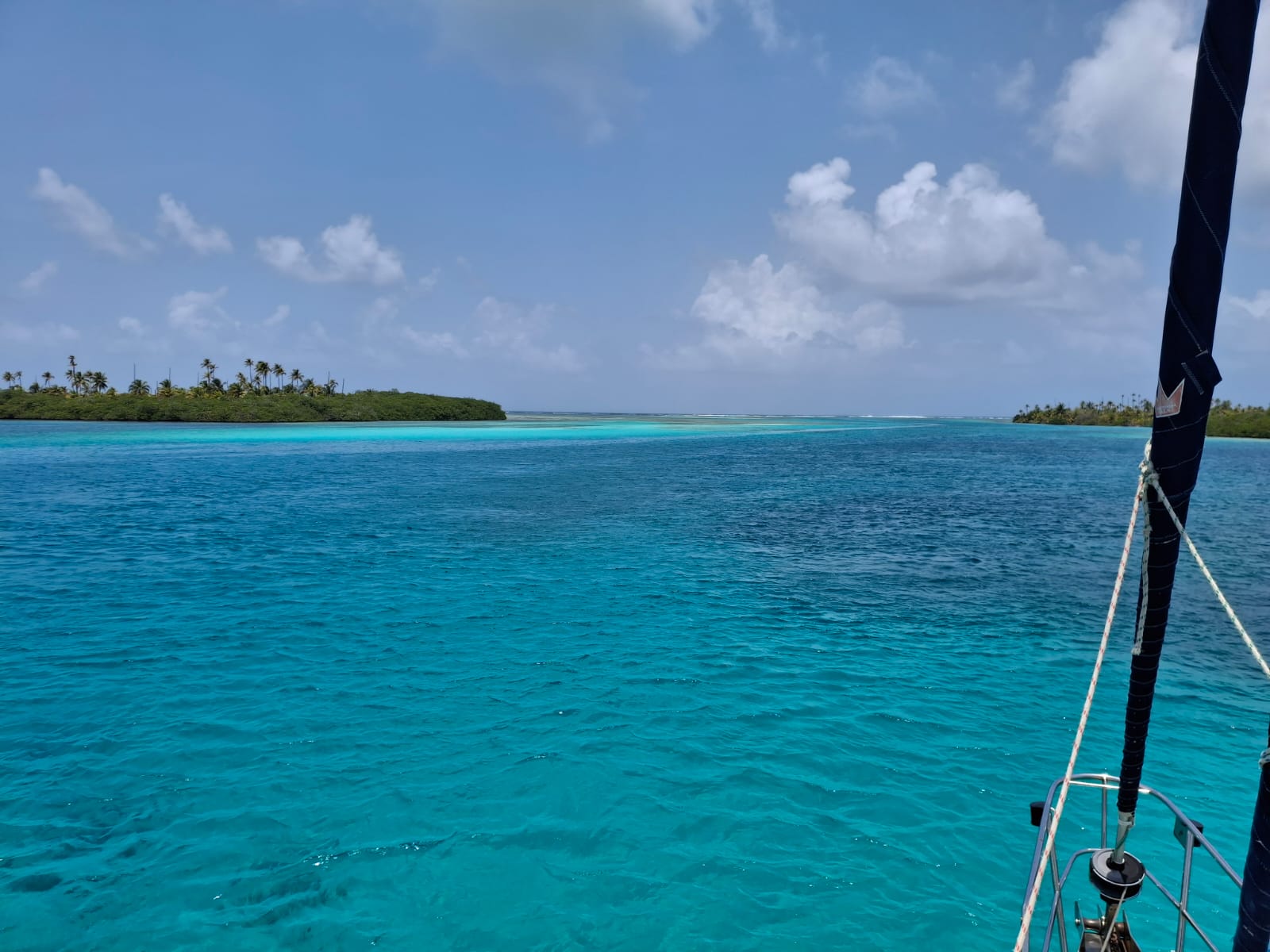
Crystal clear water in the west Holandes, San Blas
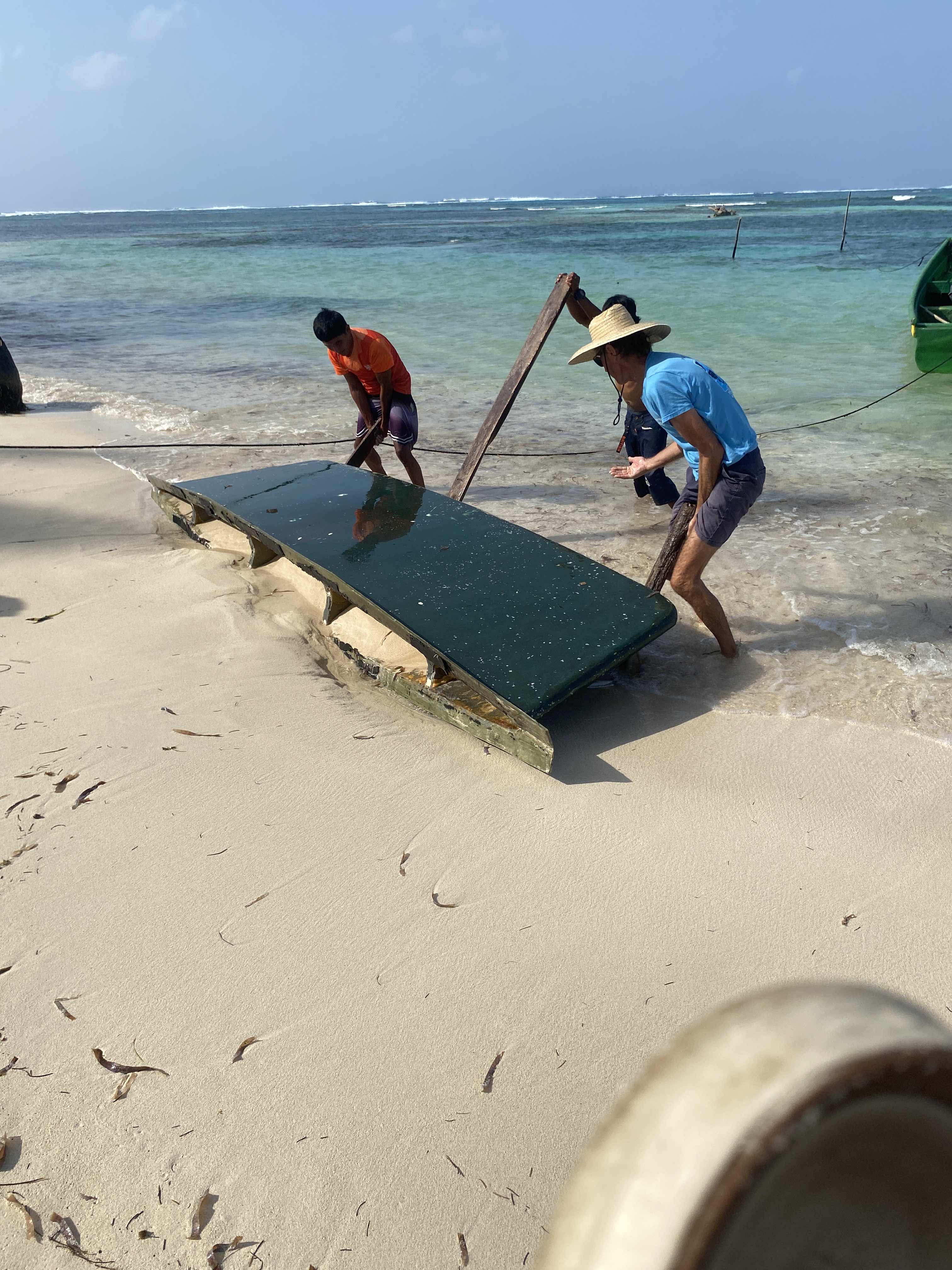
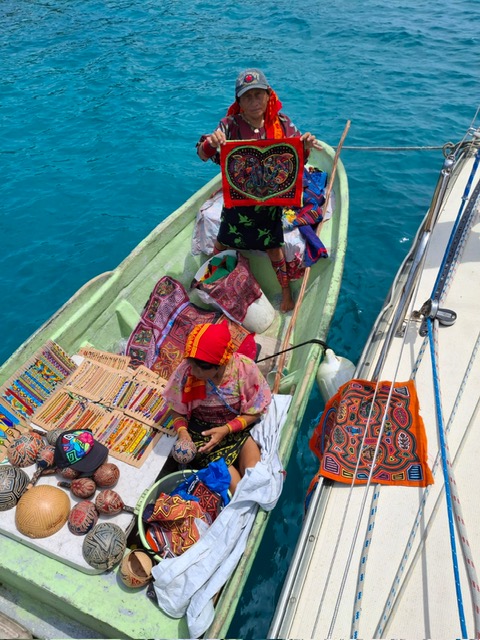
Getting involved with the locals in San Blas – Phil helping move a piece of debris and the Guna women showing us their crafts
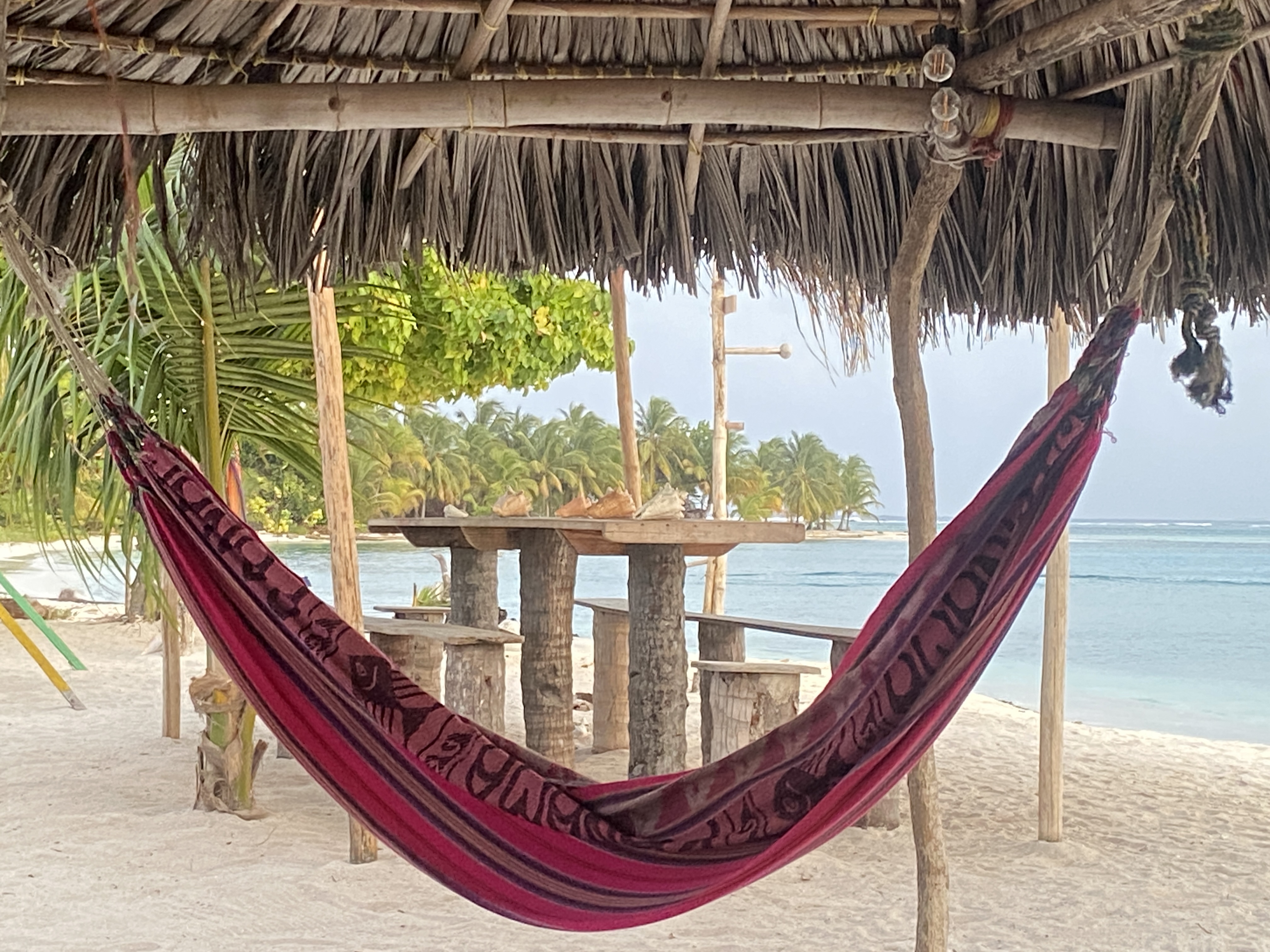
Perfect spot for afternoon nap
We stopped at both Linton Bay and Portobello on the way back. Just as we arrived in Portobello, I received a message from Bill on Island Bound saying he was coming our way and wanting to arrange a catch up. We had first met Bill in Indonesia in 2015, and Phil had last seen him in Turkey in 2020. So more excitement as we shared the anchorage in Portobello, met Bill’s new partner, Suzanne, and swapped news, stories and plans over a meal at Francesco’s -and I have to say that the pasta we had that night is THE best pasta we have ever had. It was simply divine.
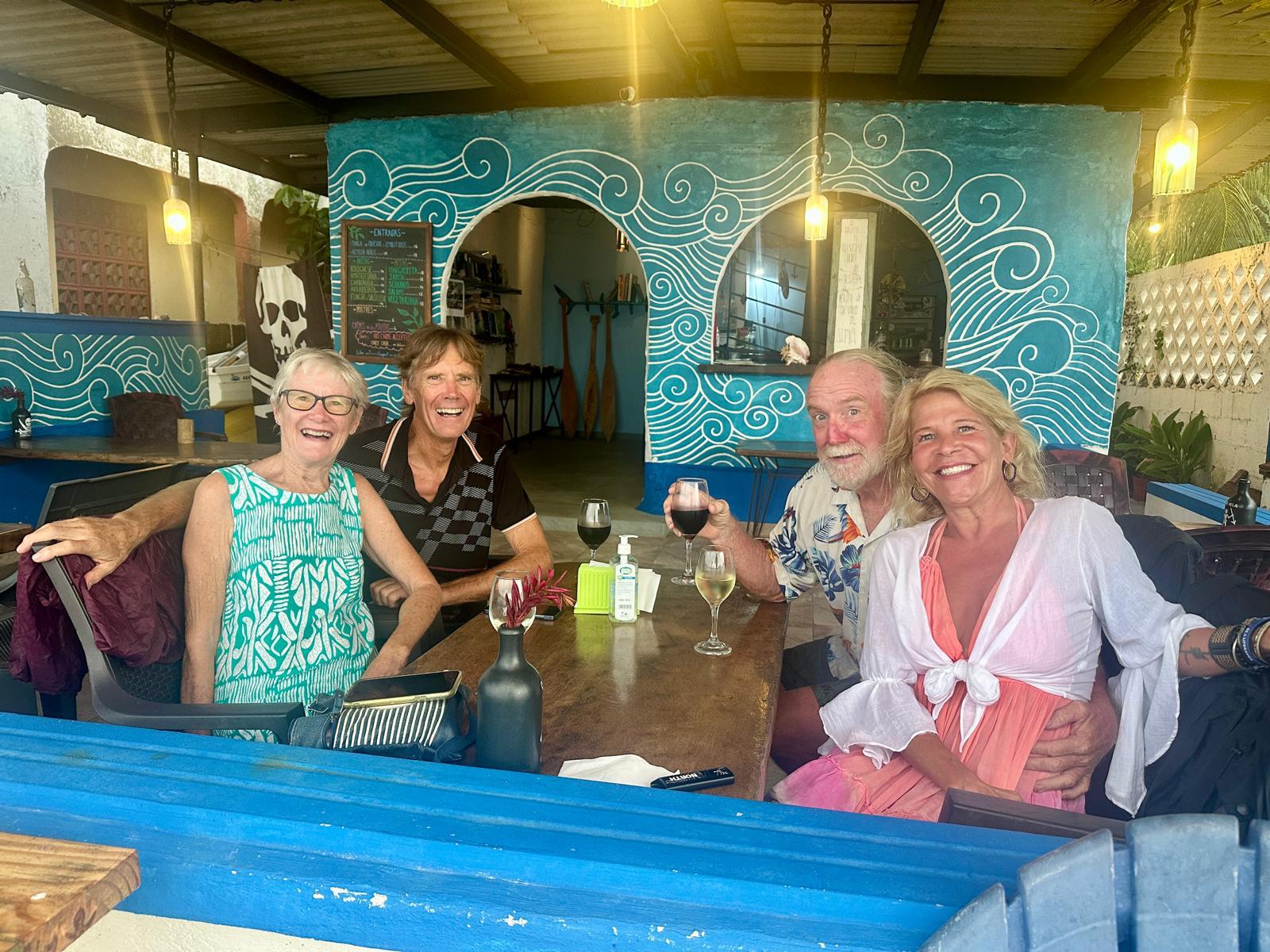
Enjoying a night out at Casa Vela, Portobello, with Bill and Suzanne
San Blas was a perfect break between the intensity of weeks in Shelter Bay provisioning, getting jobs done, and farewelling people, and our return there for the final canal transit preparations.
 paseafique