January 2025
This tale of three cities starts off with a tale of woe. I had almost finished writing the text for this blog but I must have somehow deleted it from my phone before I had transferred it to the blog itself. By the time I discovered it was missing it was too late to retrieve it from either the trash on my phone or the cloud. It has taken me a while to work up the motivation to start again and meanwhile I’m getting further behind real time with my subsequent blog updates. So here we go…..
We arrived into Cienfuegos harbour and did the requisite visit to the authorities, then set about exploring. It must have been a beautiful town in its heyday -the main street is wide and lined with period street lights adorned with pretty lace fretwork.
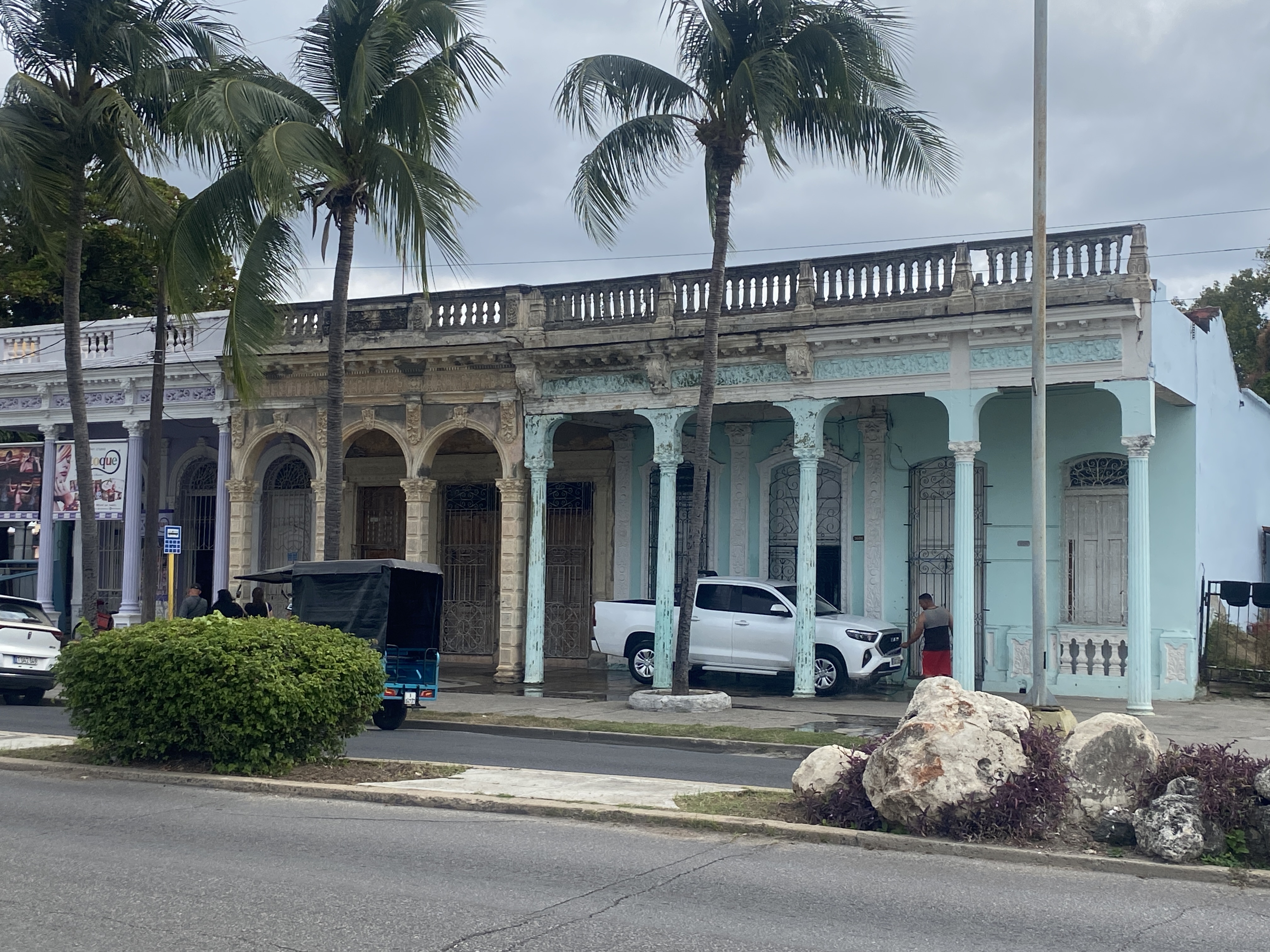
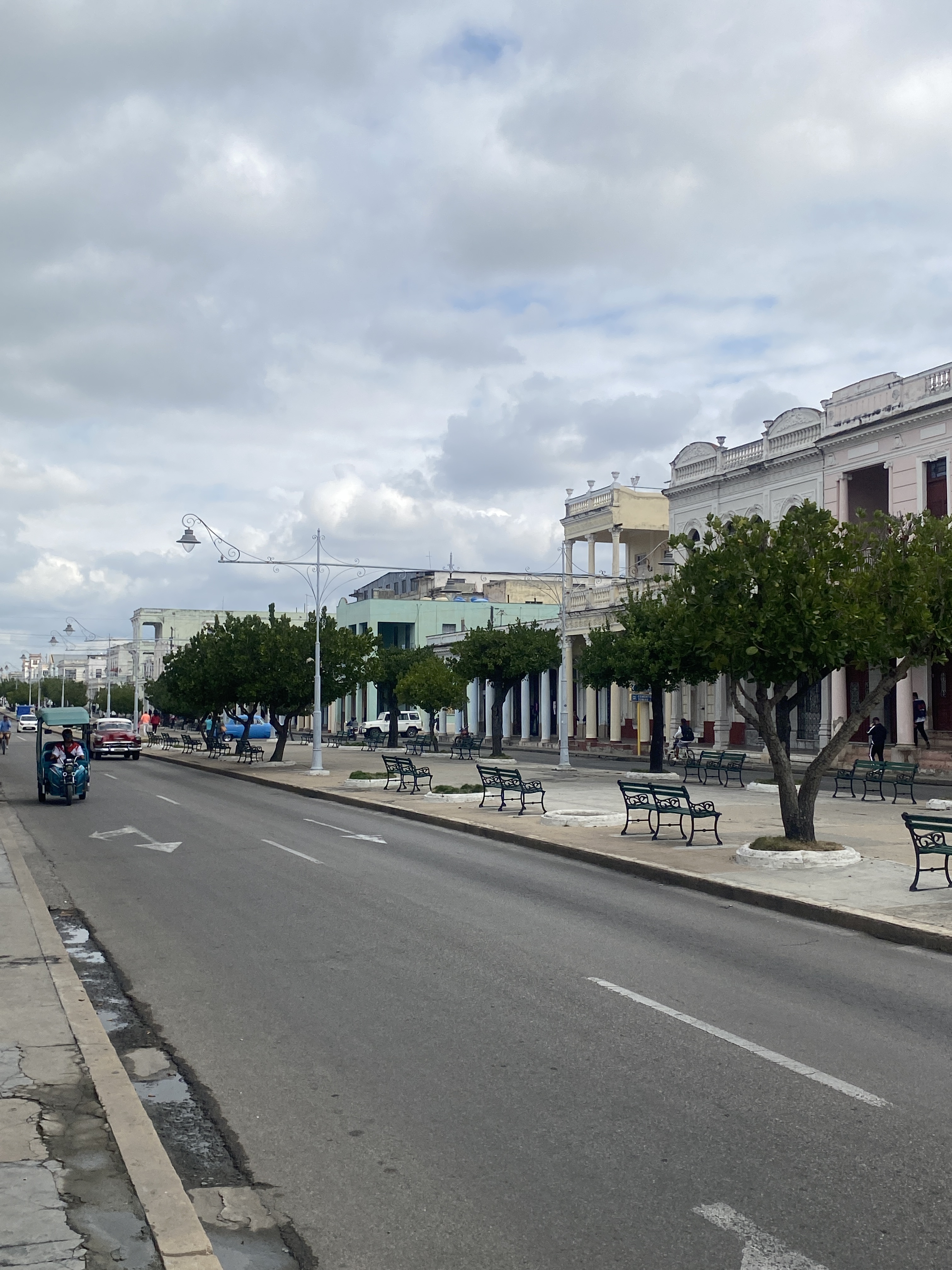
Cienfuegos main street: These little terrace houses must have been very pretty. Note the wide street, and the period lights
We noticed that there were little shops set up in the front rooms of many houses. All of them only carried a narrow selection of goods. I read later that there is a limit to the size of private enterprise. There are some restaurants, some of which are government-run, but very few coffee shops as we know them. Power was a bit of a problem while we were there with a blackout one night we were in town. Some establishments have generators so things keep operating to some extent. Actually quite a few of those little shops had small portable generators for sale.


Cienfuegos has a rather attractive pedestrian mall featuring some beautiful old buildings
An important feature for us was the bustling farmers market held each Saturday. This would have to be the most genuine farmers market we have visited. In many instances the produce was being sold straight out of the truck which would have been used for harvesting. The smell of the fresh earth still clinging to the root vegetables filled the air. The range of fruit and vegetables was limited but it was plentiful and very fresh. Prices were displayed on cardboard signs or written in chalk on the road next to the tarp on which the produce was displayed. Pork was readily available -and it too was very fresh, obviously having been slaughtered earlier that morning. No refrigeration was available. We did try the pork and can report it was very good.


Saturday farmer’s market, Cienfuegos

Queuing for bread – obviously not as plentiful as the fresh vegetables

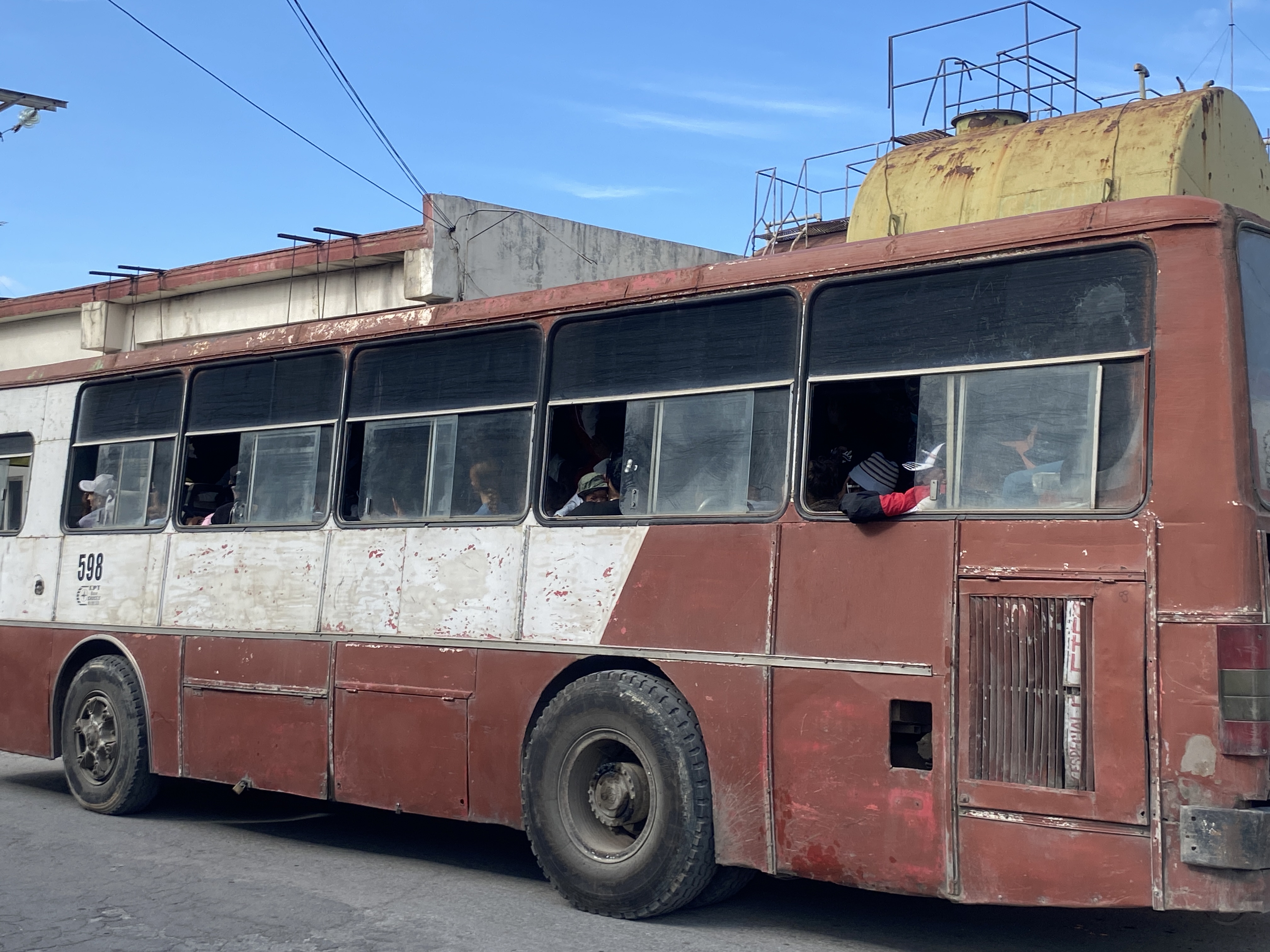
Two quite different forms of transport
The next order of business was to get organized for some land travel. First thing was to arrange our transport to Havana. Spurning the general advice that a taxi is the best option, we went up to the bus station to get our tickets. We batted away (politely) the many taxi drivers hanging around the station. Once inside we found the waiting room with the board showing the various departure times. The ticket counter was not at all obvious but the locals in the waiting room directed us into another office where we were able to speak to someone about the timetable and ticket prices. It became clear though that this was the bus service for tourists which was not what we were looking for.
Back out to the waiting room, we found the ticket office for the public bus but despite his lack of English, the ticket officer made it clear in no uncertain terms that we would NOT be using the public bus. Soooo we ran the gauntlet of the taxi drivers outside and found a young enthusiastic guy, Jason I think his name was, with whom we arranged a taxi ride to Havana -and guess what? The fare was the same as the bus for tourists.
Adrian was still not well enough for traveling so it was the three amigos, Phil, myself and Marianna who set off for Havana. We were disappointed to find that the enthusiastic and entertaining Jason was not our driver -but rather his “brother” who didn’t speak much English at all.
We arrived at our “casa particular”, a private home licensed by the government to rent out two rooms to foreigners, and were met by Judith who made us feel very welcome. The accommodation was economical but we realised that we probably could have upgraded and still got good value for money.


Our room in the casa particular, Havana: you have to love the decor! The bathroom was behind the brown concertina door, and this was the view from the small balcony that ran along outside our room. You could have a conversation with the neighbour across the courtyard. The door at the end of balcony opened into the kitchen.
In any case the room had all we needed for a short stay and the place was within walking distance of the major attractions while being in a regular Havana suburb – for an authentic experience. So authentic in fact that there were piles and piles of rubbish on our street corner, while the beautiful but touristic old town of Havana was spic and span. Judith told us that there were insufficient rubbish trucks and so the rubbish often piles up. At least people mostly put it in piles rather than strew it all around the place. Navigating to our street by recognising our rubbish pile became a bit of a joke between us, until the day the front end loader came to remove it.
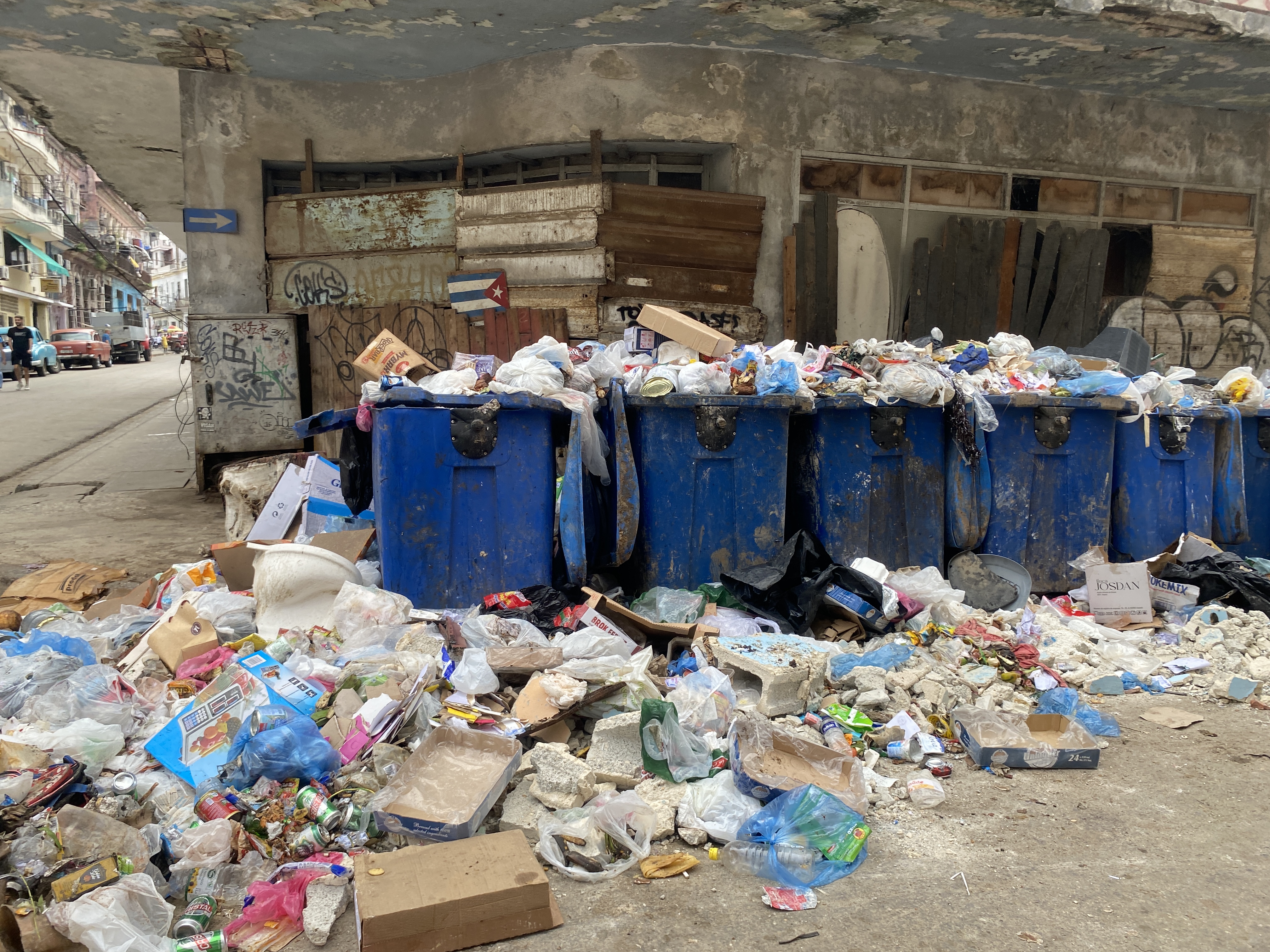
Very depressing for the residents to have to live among mounds of rubbish
On our first day in Havana we met up with Sebastian, a French solo sailor who Marianna had met somewhere along the way. As he had already been in Havana for a while, he showed us around the neighborhood he had explored. Sebastian is a budget traveller and likes to keep clear of the areas frequented by tourists and spend more of his time meeting regular people in their normal everyday environments. Consequently, we got to see a more gritty side of Havana than we otherwise might have. Sebastian had found the local bar where the bar tender recognised him and gave us a big welcome, and also a local supplier of Cuban cigars supposedly made from the same tobacco as the expensive well known brands -but from the off cuts of the leaves.

An essential purchase when in Cuba
We noticed many buildings in serious states of disrepair, some with people still living in them. Apparently when Fidel Castro was first in power, a decision was made that the budget available for buildings and housing would be prioritized for regional areas, acknowledging that neglect of buildings in Havana would be the price to be paid. And it certainly shows now. The next day we went into the old town, and what a contrast! Beautiful grand old buildings restored and maintained lined the clean streets.
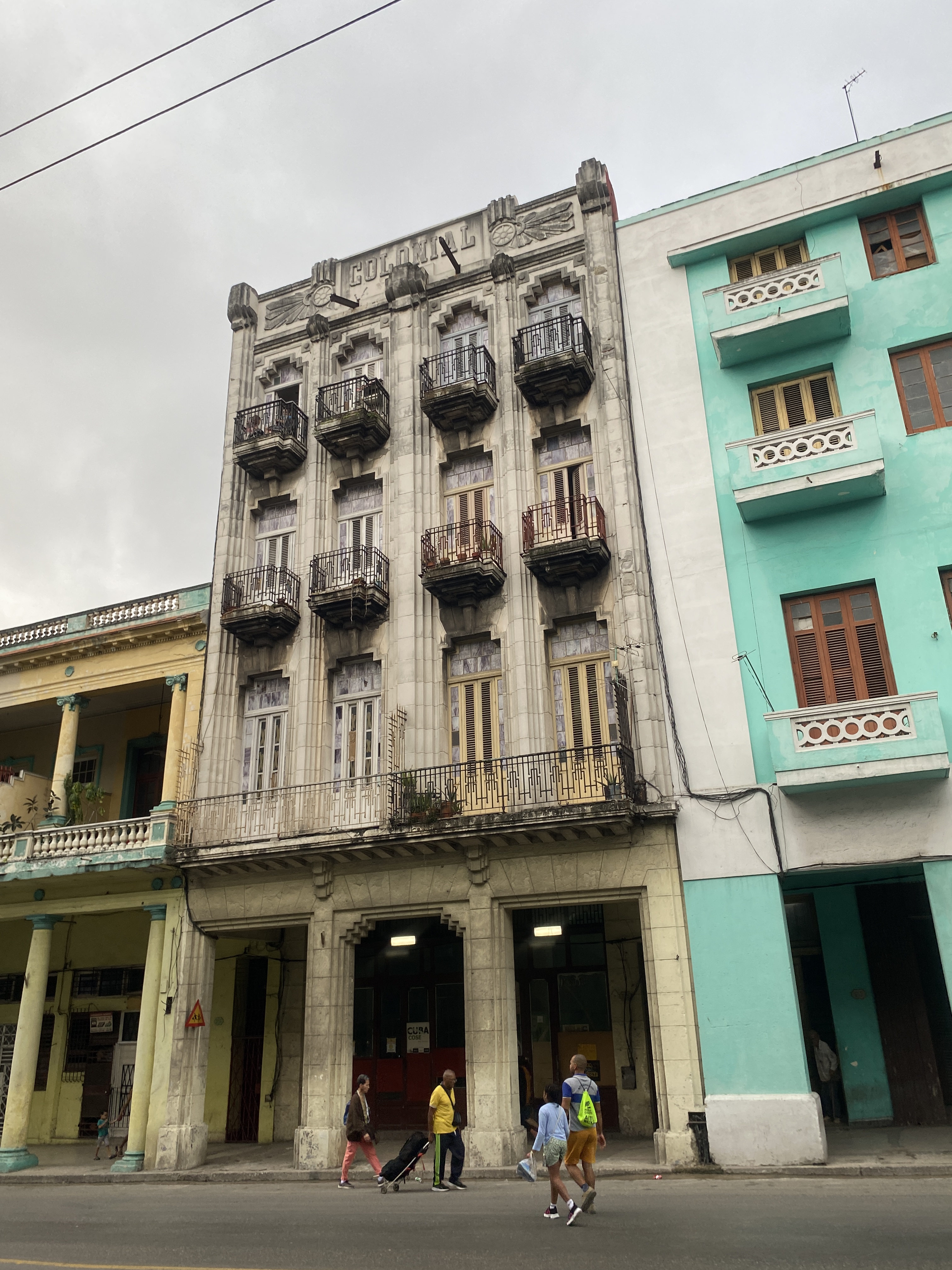

Just a couple of many buildings Havana in a terrible state of disrepair
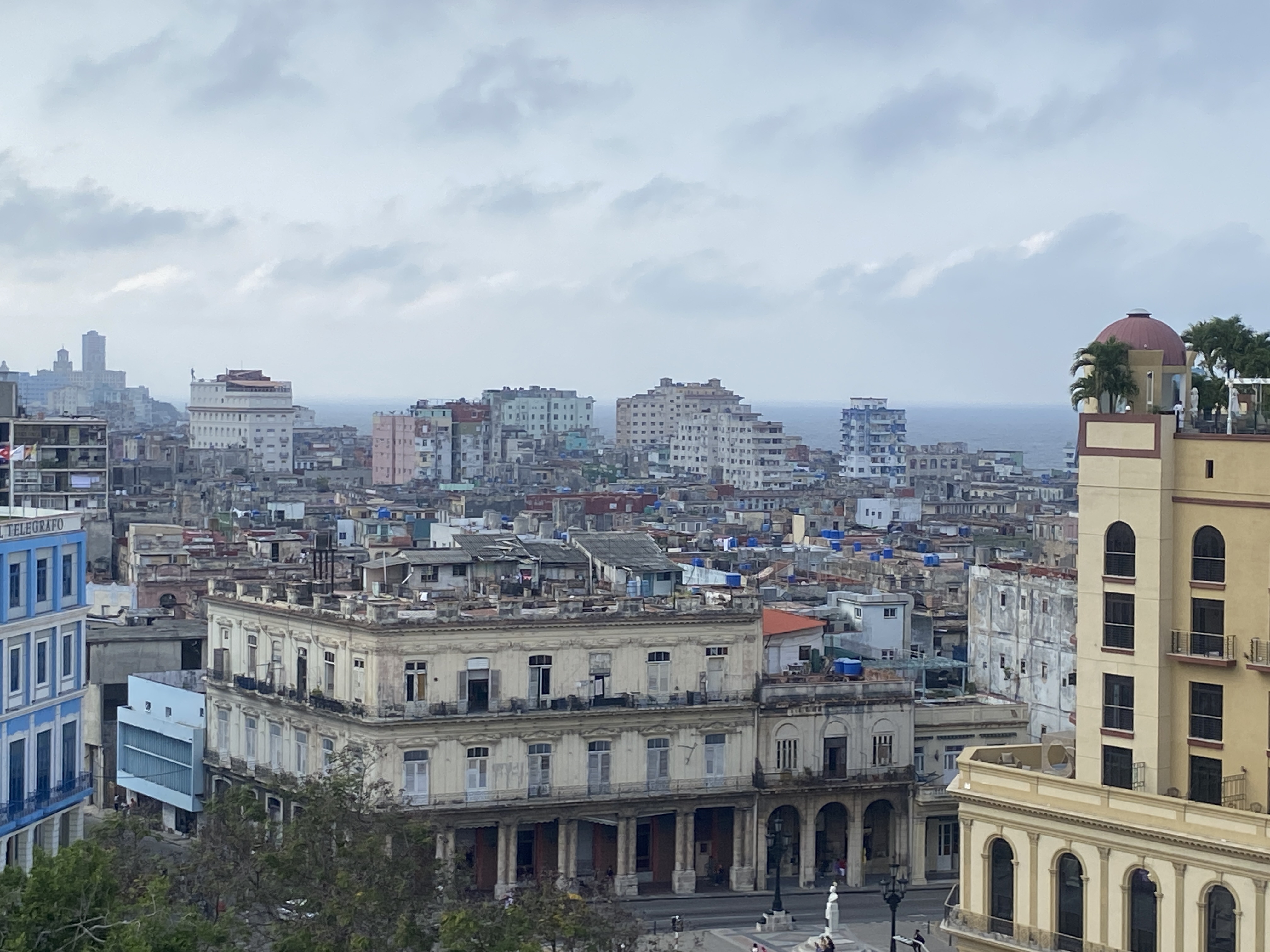
Overlooking Havana
We did a walking tour of the old town led by a local woman who had previously been an academic and spoke very good English. We had an interesting discussion with her about the US embargo. Getting on with things despite the embargo seems to be a matter of pride for the Cubans.

The magnificant Gran Teatro de la Habana, home to the Cuban National Ballet

A beautiful quiet corner in the old part of Havana

This is what happens when you drink daiquiri at Hemmingway’s favourite bar, Bar Floridita, during the day
We took a trip out to the Centro Fidel Castro Ruz, a relatively new centre dedicated to the memory of Castro, his life and the achievements of the revolution. It is also a library ans research centre. Castro was adamant that he didn’t want any memorials, statues etc in his honour. In fact we didn’t see a single statue of him or even T shirts with his image imprinted. When he died though, those that came after him thought it was important to have a place dedicated to recording and showing the role he played in Cuban history. The Castro Ruz is an impressive centre which makes use of various multimedia to tell the story of Castro’s life and showcase the achievements of the revolution. The Centre is staffed by volunteer guides who are clearly very dedicated to Castro’s memory and obviously idolize him.

Castro donated every one of the gifts and medals bestowed on him by other countries to the people of Cuba, to whom he believed they belonged
One of our goals while in Havana was to see salsa dancing in its “natural habitat” ie., not a show put on for the tourists. Unfortunately, the places where the locals go to dance don’t open until 9 or 10pm, and were some distance from our casa particular. Further the reviews of these places didn’t really inspire us. As a compromise we decided to visit the rooftop bar of the Hotel Inglaterra where we understood there was salsa most evenings at what we considered a reasonable time. It would be a somewhat “sanitized” version of the local club experience but we decided to settle for that. We were thwarted! The first time we went there it wasn’t on that night. But we did end up having a good look around this rather famous elegant hotel.

Inside the gorgeous Hotel Ingleterra
As we wandered outside we discovered that there was live singing in the street level outdoor seating area of Hotel Ingleterra. The man performing had a magnificent voice and he drew quite the crowd standing around in the street to listen to him. We struck up a conversation with a local woman standing next to us and she told us (well she told Marianna who then translated for us) that she goes there every Tuesday night to listen to this guy sing. Phil decided that he would take her into the seated area and buy her a drink so she could actually sit down and enjoy the performance. So off they went, and he led her to a table where they took their seats. The singer recognised his regular fan, and came over to serenade her. She was absolutely delighted. Phil however was disappointed and a little embarrassed when he discovered he couldn’t buy a drink because this hotel (like many others) does not accept cash and our credit card didn’t work in Cuba. So that was the end of his good deed but our Cuban friend was very happy nonetheless.

The smiles say it all – our new Cuban friend being serenaded by her favourite singer
So did we get to experience the salsa? No the next time we went to roof top it was washed out by rain and that was our last opportunity in Havana.
Art is clearly an important part of Cuban culture and we got a taste of it when we visited Fusterlandia, a kind of outdoor art museum in Jaimanitas which is a fishing village on the outskirts of Havana. Fusterlandia was created by the Cuban artist Jose Fuster who decided he wanted to beautify his community using murals and mosaics. He started with his own house and the work gradually spread to other houses and buildings.
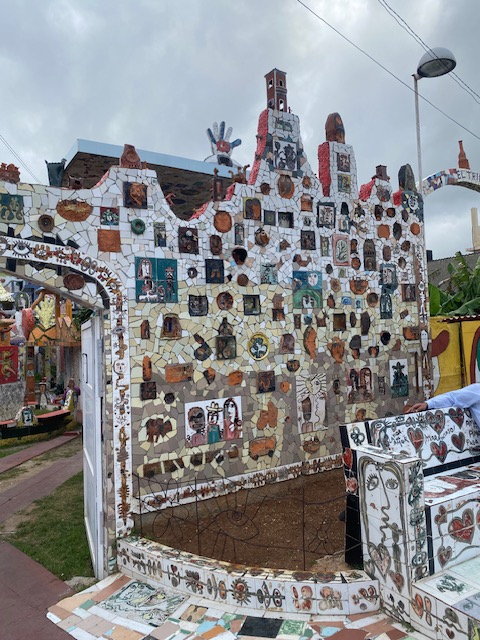
The entrance to Jose Fuster’s house in Fusterlandia, and below, one of the pieces inside. Fuster greatly admired Gaudi’s work, and his own art clearly shows that influence.


Fuster’s mosaics on some of the neighbouring houses
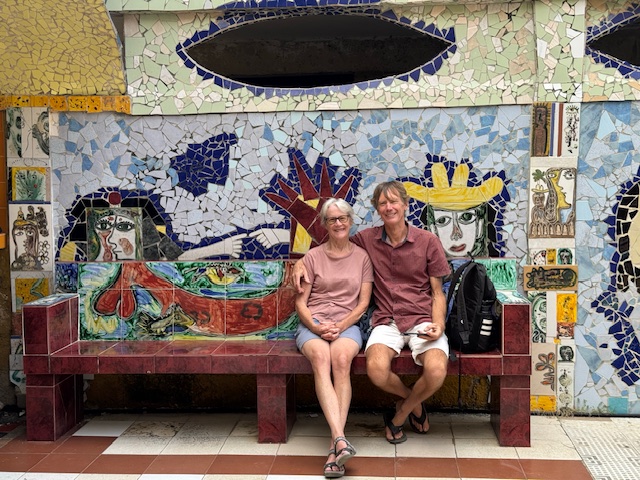
Phil and I taking a break to admire the artwork
Our third city in this tale is Trinidad, listed as a UNESCO world heritage town because of its historical importance as a centre of the Cuban sugar trade.
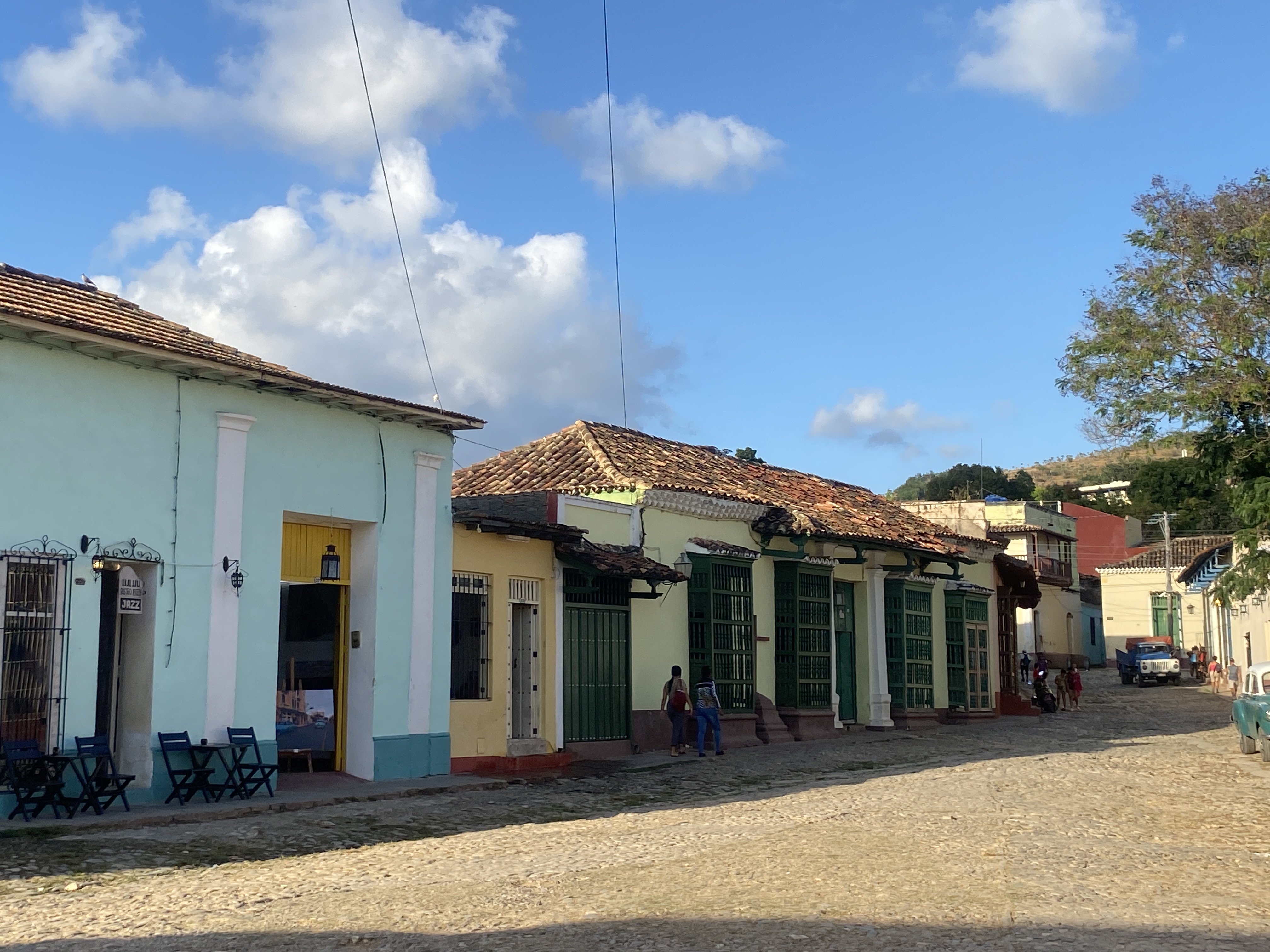
Modest housing in Trinidad, likely worker’s cottages from the sugar trade days
We spent a couple of days here enjoying the atmosphere and charm. There were a lot of stalls and shops selling souvenirs but many of them were creative, beautiful and well made handcraft and art work, unlike other touristy destinations. While we were wondering around, we met an older local woman who told us about the food rationing. She was clearly dependent on the government, as she had no other source of income. She showed us her ration book which listed the food available and the amounts she was allocated on various dates. She told us that last December there was no food available from the government. Her son had just moved to the US so her position might improve if he is able to send goods and money back to her.
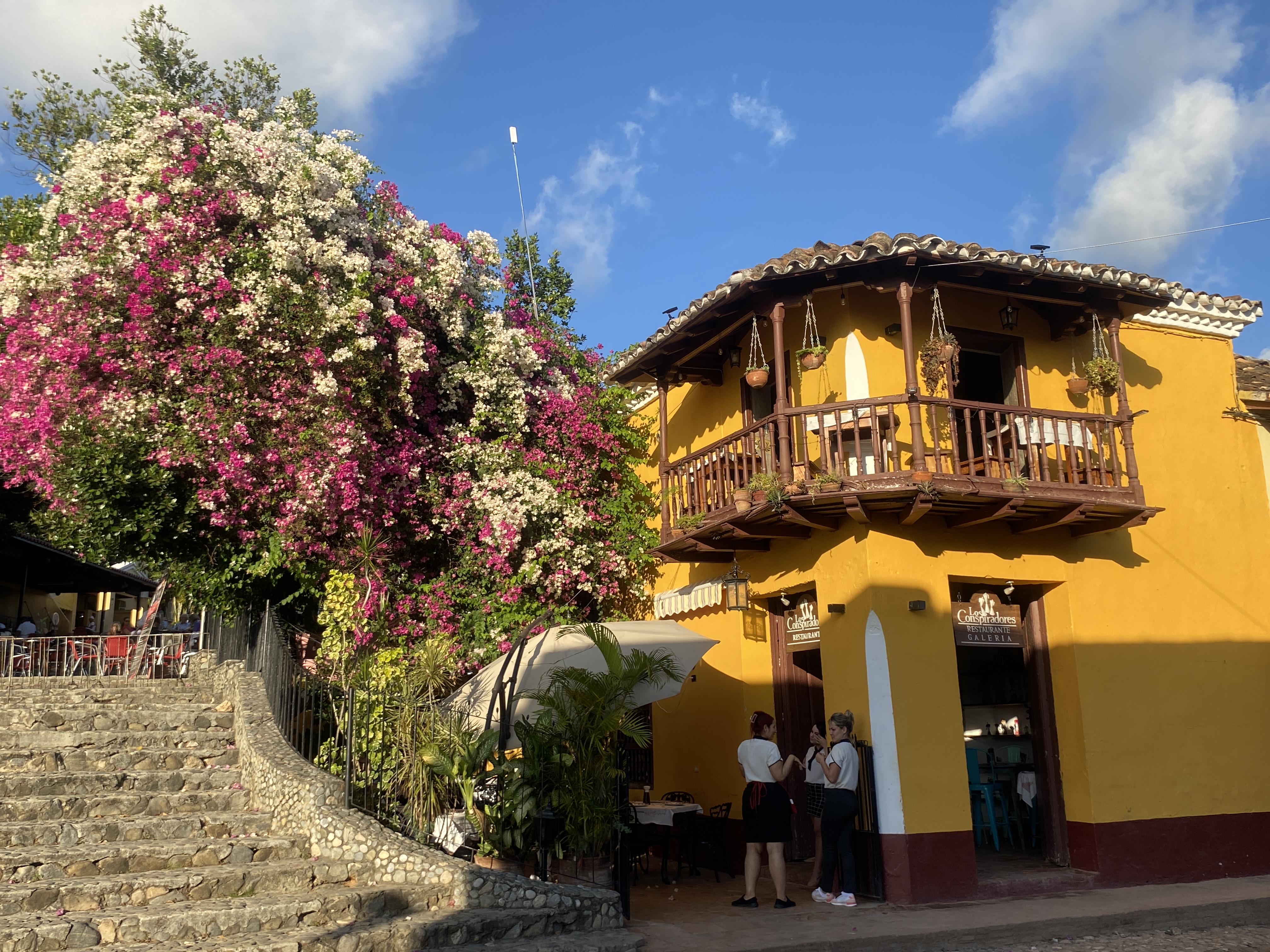
A rather gorgeous corner in Trinidad

The plaza in Trinidad
The surrounding countryside was beautiful and we had a lovely walk and picnic lunch by a small river.
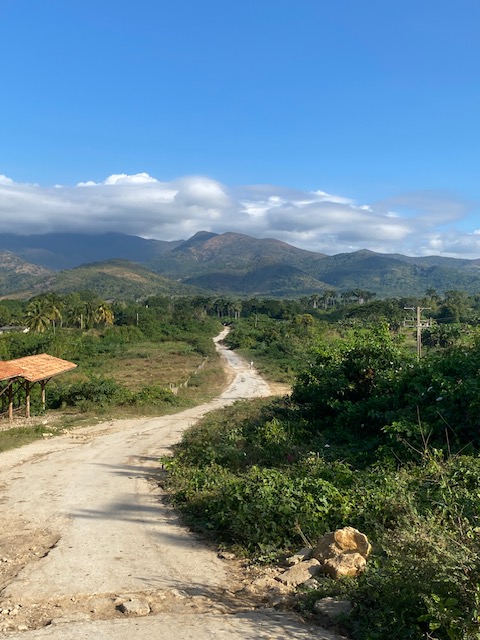

The road out to the countryside, and horse and buggy crossing the stream where we had lunch
And here in Trinidad we found the salsa! We spent an evening at Casa de la Trova which is basically a bar with live music and a small area for dancing. It was fascinating watching the band change of the course of the evening. There was the core 2-3 members of the band that started up. Then other musicians with their various instruments arrived at different points and joined in for a while then either left or went and sat in the audience when they were finished. This all seemed very organic rather than according to some pre-arranged program. The audience was a mix of locals, expats, and tourists. And there was salsa-Cuban style. We had a very enjoyable evening before heading back to Cienfuegos the next day.

A lovely sunset over the marina in Cienfuegos
Cuba was a fascinating country to visit. We could certainly see the effects of US embargo/sanctions. Cars, trucks and machinery were old and in many cases looked like they were only just operational. We did not see any evidence of fuel shortages but there was clearly an issue with electricity generation. Some establishments and homes have small generators to deal with that issue, but obviously not everyone can afford that luxury. The people we saw, including those in small towns in the poorer eastern part, did not appear to be starving although it’s quite possible that some segments of the population could be malnourished. But like many countries, there are the haves and the have nots. Those people who had a source of income, or family overseas, could access extras. The Cuban population is a real mix of ethnic groups and yet racism does not seem to exist.

 paseafique
Very interesting thanks Lesley! Will read the next one to catch up! Take care! Lyn Sent from my iPad
>
LikeLike