
September 2024
Scraaaaape scraaaape kerthunk! There goes Paseafique running over another lobster pot buoy. We are in Maine, USA from where 90% of the lobsters eaten in the US are harvested. The coastline and surrounding islands are a minefield of buoys marking the position of the pots on the sea floor below. When sailing we try to weave around them as much as possible but every now and then we don’t see one. It’s not too much of a disaster going over them as the shape of our keel and rudder make it unlikely to catch the rope. However running over them does scrape off the anti-foul paint so best to avoid that. Now running over or going too close to them when motoring is another matter. The rotating prop shaft or the prop itself could easily snag a pot rope. And in these waters that would be a disaster as it would require Phil to go over the side in 14 degree C water to cut the rope free. Of course the density of the pots increases closer to shore making motoring into an anchorage an anxiety ridden proposition. It certainly does not make for relaxing coastal day sailing at all. We were astounded at the number of pots and even more astounded at how this industry can possibly be sustainable when you consider that they catch somewhere around 50 million lobster each year. The females are spared but even so. The lobster pots quickly got the better of us and after two nights in Maine we decided to make haste out of this state and head to Boston Massachusetts on an overnight sail. Besides the quicker we move south, the closer we get to some warmer weather, or at least we keep ahead of the deepening winter.
Let me back track a bit and tell you about our entry into the USA as it was quite the process. Unlike most other countries we have visited, the US requires all persons arriving on a sailing yacht to have a valid visa before entry. There are basically two ways to meet this requirement. The first is to submit an application for a B1/B2 visa to a US embassy/consulate somewhere, pay around US$200 per person and then attend in person for an interview. This pathway requires considerable planning as the waiting time for an interview can be many months in some locations. We opted for the second way – find a place close to the US-Canada border where we could leave the boat and then take ourselves across the border and get our visas. Then return to the boat and sail across the border, check the boat in and obtain our cruising permit.
Initially we had thought that we would accomplish this by taking the 3-hour ferry ride from Yarmouth in Nova Scotia to Bar in Maine. Then we discovered that the ferry ticket was around US$200 per person return. So we went back to drawing board and the charts and came up with a plan to take the boat much closer to the border on Campobello Island (New Brunswick, Canada) so we could actually walk across to a town called Lubec and get our visas. The catch to this plan was that it would have us sailing across and into the Bay of Fundy, notorious for having the highest tides, and hence strong currents, in the world-up to 10 metres at times! Always up for a sailing challenge, Phil carefully studied the wind, tide and current forecast and identified the perfect window for us to get from Shelburne to Campobello with one overnight stop along the way.

and then to an anchorage near Eastport
We executed the plan which worked pretty much exactly as he had predicted and we were soon walking across the bridge to Lubec, USA. The US border official couldn’t have been more helpful – he would have also checked the boat in and issued our cruising permit but a call to another office ruled that out. Lubec is a very small town so it didn’t take long to check it out and then we headed back across the border.

and then walked across the border to Lubec, USA


Goodbye Canada, temporarily. On the right, you can get a sense of the amount of water flowing out into the Bay of Fundy, and the strong current it generates


Some interesting and colourful “junk” art in Lubec, and all smiles once the visas were issued
We had to wait a couple of days before we got the right weather to sail to Maine so we took advantage of the time to visit the Roosevelt Cottage, President Roosevelt’s summer house, preserved as a museum within the grounds of the Roosevelt Campobello International Park. The park is run jointly by Canada and the US. An interesting first taste of US history along with some marketing of the cooperative relationship between the two countries.
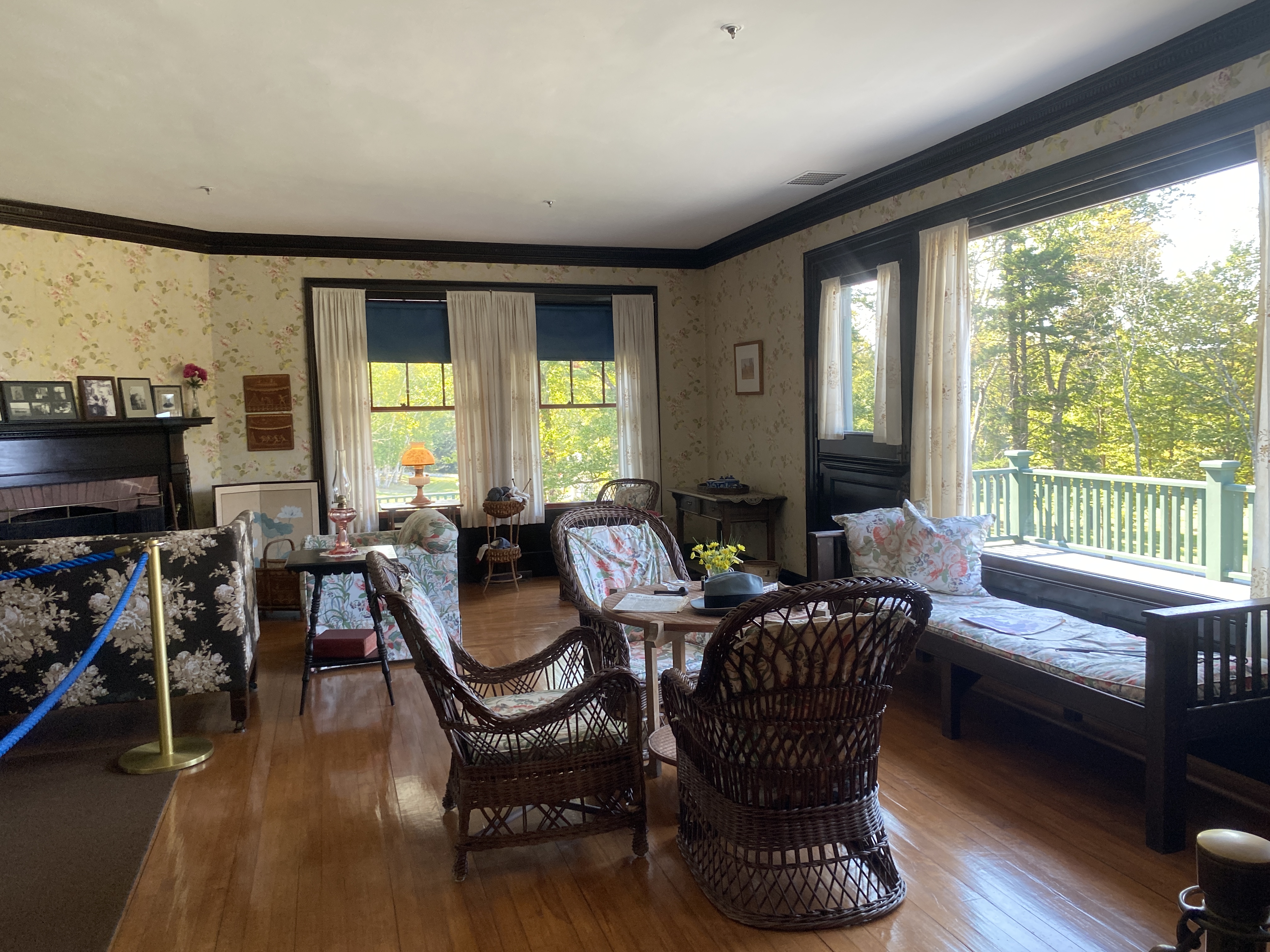

The living room on the Roosevelt summer house, and the rather impressive view from the dining area of their neighbour’s house
The next day we positioned ourselves in another anchorage at the north of Campobello ready for a quick departure to the US the next morning. What a contrast this anchorage was to all the beautiful ones we had relished in Nova Scotia. We were in a large and well protected cove that served as a base for the local lobster fishing boats. There was a lot of decaying infrastructure, floating pontoons piled high with lobster pots (all out of the water until next season), floating sheds, and lots of debris in the water.
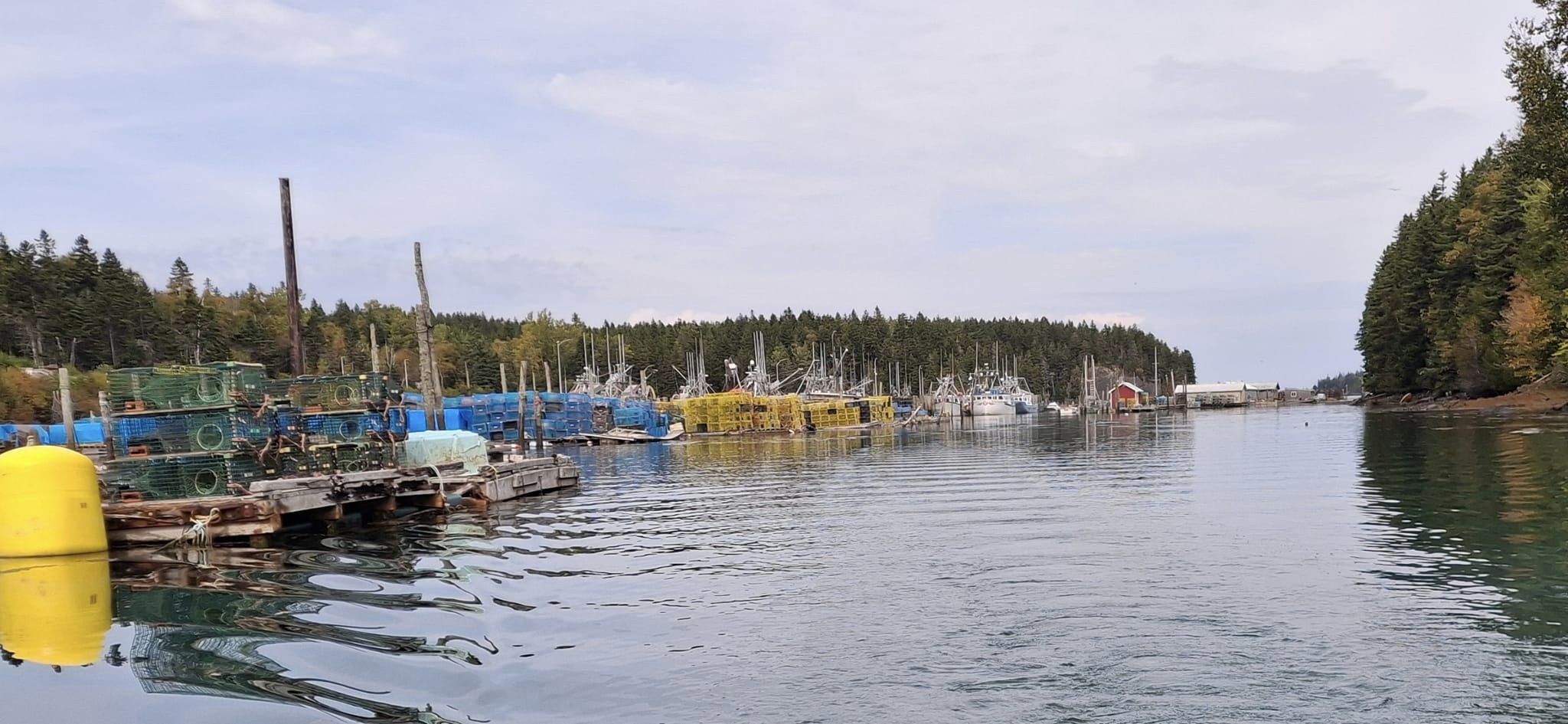
Adding to the “scenery” when exposed at low time were extensive muddy banks and seaweed forests growing on pontoon posts.

We tied up to one of the floating pontoons, as there is little room for anchoring, and went in search of someone to ask if we would be ok there for the night. In a fitting tribute to Canadian generosity, the very first fisherman to whom we spoke offered us his car to go to the shop, and another one allowed us to hotspot to his phone so we could buy some more data.
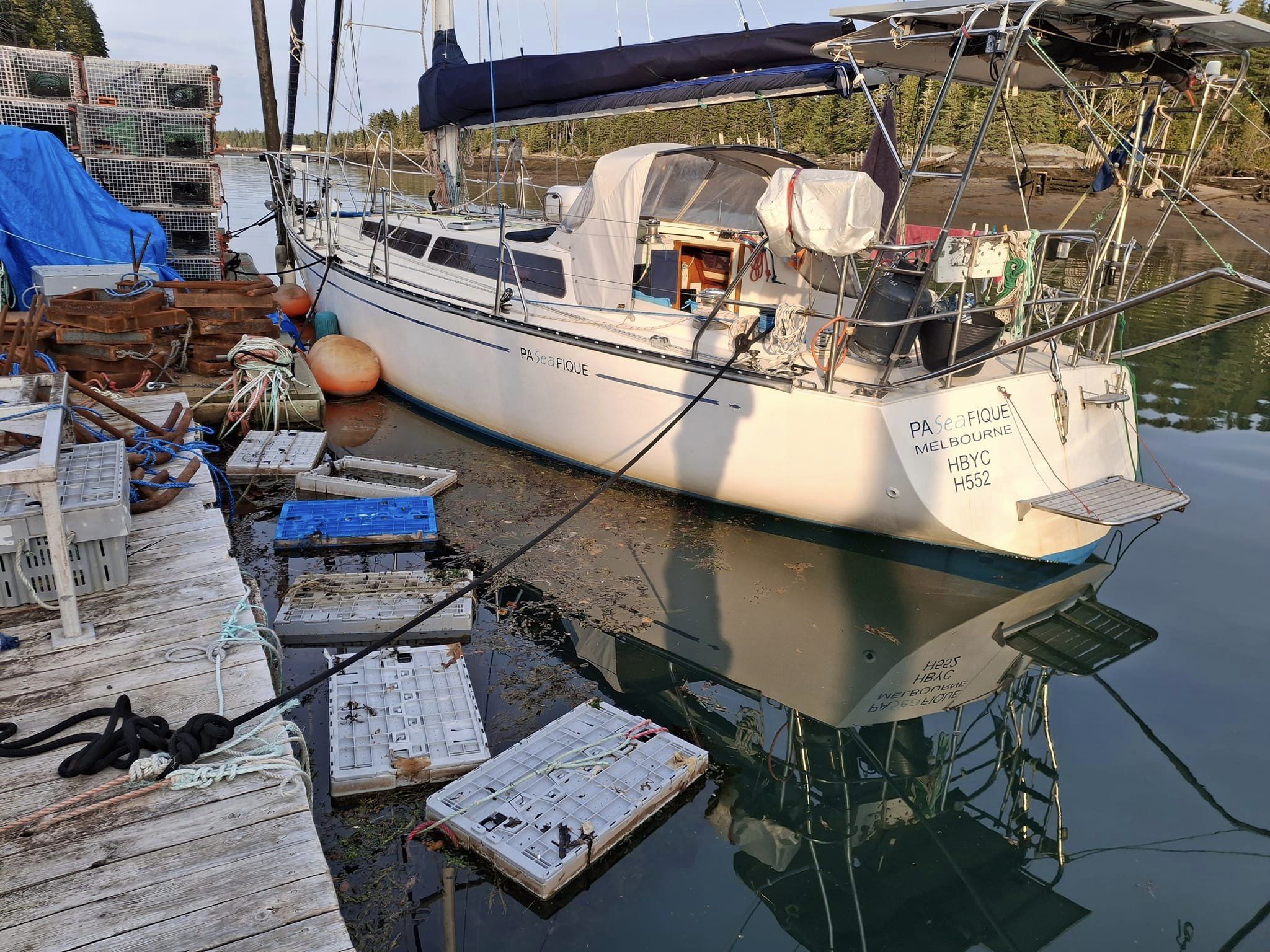
We sailed across the maritime border the next day and were officially in the USA. All we had to do then was report in via their border patrol app. Shortly after we did that, we had a video interview, answered some routine questions and showed the officer around the boat, all via the app. Our cruising permit was issued shortly after and sent to us by email. Welcome to the USA and have a nice day ye’all!
Follow our boat on NOFOREIGNLAND: https://www.noforeignland.com/boat/4748245372764160
 paseafique
Port Antonio looks like a beautiful place to spend Christmas. Congratulations on your wonderful adventure back down the East Coast. Have a great Christmas and New Year. Looking forward to reading more on your magnificent blog. Best Wishes … Ralph
LikeLike