
Capo Verde, a group of 10 islands off the west coast of Africa, was discovered by the Genoese and Portuguese around 1455 and settled by the Portuguese in 1462. The islands were uninhabited and so the Portuguese brought slaves here from Africa to work in agriculture. It eventually became the centre of the slave trade to the US, and was also a stop over for shipping. However with the end of slavery here in 1854 and the advent of steam ships, there was an economic downturn and many people left. There was a further exodus in the 20th century when a severe drought caused the deaths of some 200,000 people. Independence was gained in 1975. Today, the economy is reliant on tourism. Poverty and child health were improving before Covid but things have slipped a bit since then. However Capo Verde remains one of the best governed and most stable countries in Africa.
After our eventful passage from the Canaries we were pleased to make landfall in the fishing village of Palmeria on Sal. It was dark by the time we got into the harbour and so we were happy that our friends Jack and Jan were there to guide us in. Actually if they hadn’t been there we probably would have anchored in a nearby bay for the night and waited until daylight.

Next morning we went ashore to check in. We were definitely not in Europe anymore. Island time prevailed and the 5-minute wait for the police to open became 30 mins. Still everyone was friendly and the village had a very relaxed feeling. We stayed a few days here to recover but with our friends Adrian and Marianna at the next island telling us it was more beautiful there with good walking to be had, we moved on.
And boy were they right. Sao Nicolau is very beautiful-tall mountains, green valleys, and spectacular northern coast. We anchored at Tarafal, another fishing port but seemingly a bit more wealthy than Palmeria on Sal.
We had a wonderful day trip with Adrian and Marianna using the local buses, mostly 12 seater vans (and relatively new too) to get around. We piled into a van with the locals in the morning to get to the top of a hill from where we walked downhill for a couple of hours through a beautiful valley to the capital Riberia Brava. We had lunch there electing to try a local dish -cachupa. It’s a dish made from maize, onions, green bananas, sweet potatoes, and I think whatever other vegetables that might be available It was very tasty.

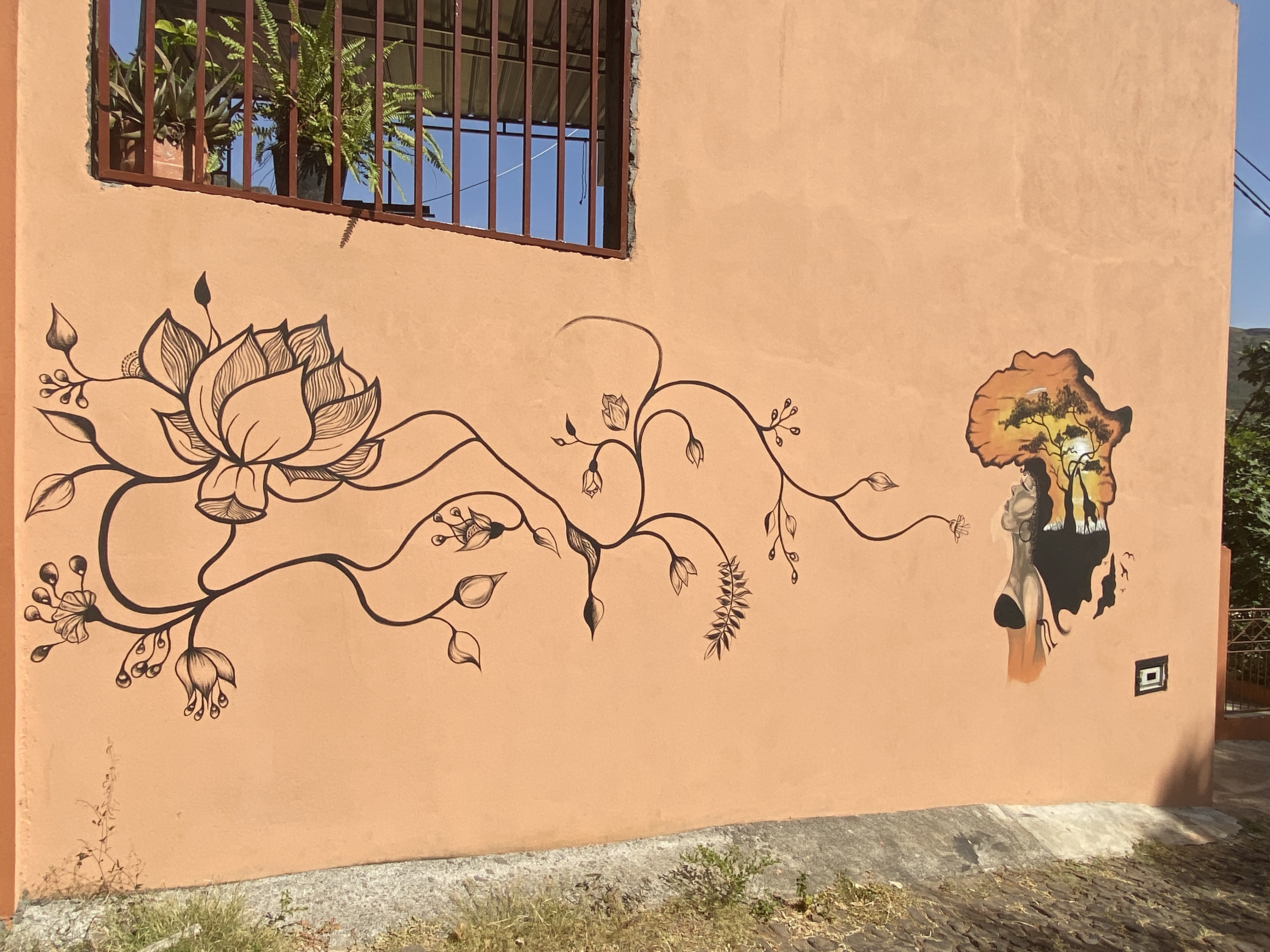
After lunch it was another bus ride along the north coast towards the eastern tip of the island. Wonderful views of rolling waves crashing on rocky headlands. The little village at the end of the bus route provided a great view point. We had a nervous moment when it looked like we might not be able to get a return bus but luckily, a mini-van heading in the right direction turned up.

There was of course a volcano to climb so Phil went off to conquer it, while I took another trip to Riberia Brava for a bit more exploration. It’s nice drive to the capital and Chico the driver was playing some beautiful local music that perfectly matched the scenery, which made the drive one of those unexpected beautiful experiences. The capital needed less exploration than I thought so I headed back a bit earlier than planned. It was good timing though as Phil and I both arrived back at the Tarafal harbour within about 10 minutes of each other.

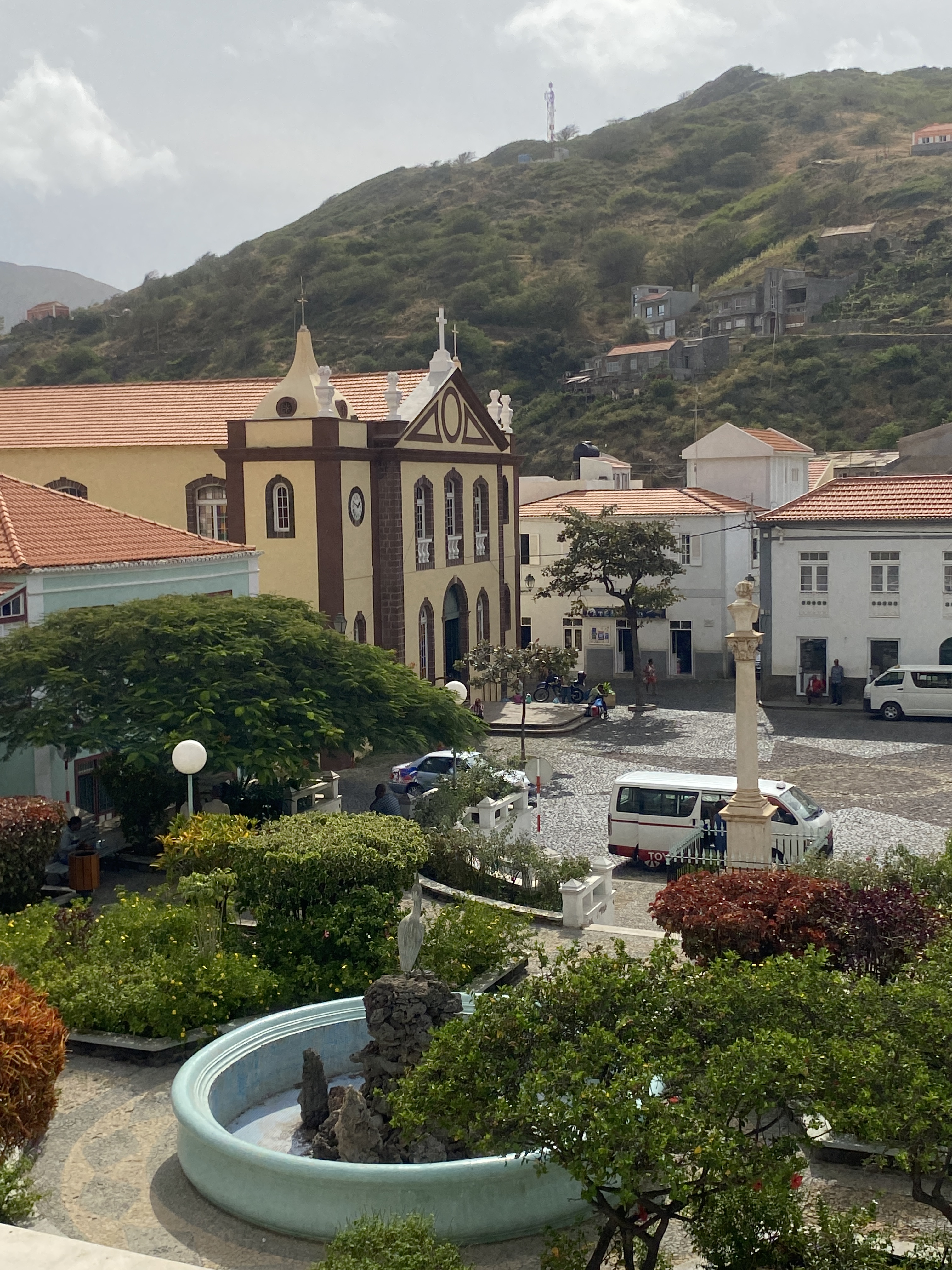
One of our boat jobs was to create a better arrangement for fixing the autopilot to the boat and to that end Phil had a piece of sheet metal that he wanted cut down to size. During our wanderings around town with Adrian and Marianna, we happened upon a hardware/tool/workshop and went in to investigate. Neither of the two staff spoke much English so with the help of google translate and sign language, we established that they could indeed cut it for us, so we arranged to return another day with the item. When we returned, the young man there obviously had some pride in his work as after cutting the piece down and drilling some holes, he filed off all the rough edges. When the job was done, they wouldn’t accept any payment so Phil bought some drill bits.
While we were waiting, I had asked the young woman there if she knew where we could get drinking water. She did know but google translate made a hash of the translation. So then the young man kindly took us to the filtered water shop to get our water. Such kindness offered generously and expecting nothing in return.
Having enjoyed beautiful Sao Nicolau, we moved on to the port of Mindelo on Sao Vincente, the port from which we would depart for our Atlantic crossing. We arrived just in time for dinner with our friends on Aussie Anthem (Adrian and Marianna), US Anthem (Jack and Jan), and Antares II (Ken and Eiloo), all of whom were leaving he next day for their crossing. We didn’t want to go with them as we felt the wind was a bit too light for us so we elected to wait until the trade winds strengthened. It was sad to watch them all leave the anchorage though.
There is not much to commend about Sao Vincente -it’s quite a barren island and poverty is much more obvious here than elsewhere we have been in the Cape Verdes. Mindelo is a bustling town and was a good place for us to top up fresh food and water. The anchorage there is quite busy with boats coming and going frequently.


We did have a pleasant day doing a coastal walk on the western side of the island. We stopped in a small village for our picnic lunch and ended up catching the local school bus back to Mindelo which was a fun experience.


With all our boat jobs done, the waiting game was getting to us a bit so we decided to take a short trip to Sao Antao, just across from Sao Vincente. It’s reputed to be very scenic and a hiking paradise and it definitely deserves that reputation.

The transport from Port Novo where we anchored on Sao Antao is structured around the ferry timetable which explained the complete lack of minibuses when we got ashore on our first morning there. A taxi driver tried to convince us to go with him but even his lowest price was a bit much we thought so we elected to wait. Then we were approached by another guy -“not taxi” he said. He was going to Riberia Grande (seems this is the common name for the capital of each island in these parts) and said he would take us for half the lowest price offered by the taxi, so off we went. He was a very careful driver and stopped a few times for us to take photos which was kind of him. It was a very scenic drive along a very good road that mostly followed the coast line. Again we marvelled at the stark beauty of the layers of volcanic rock. We passed through a couple of colourful villages perched along the rocky shoreline.


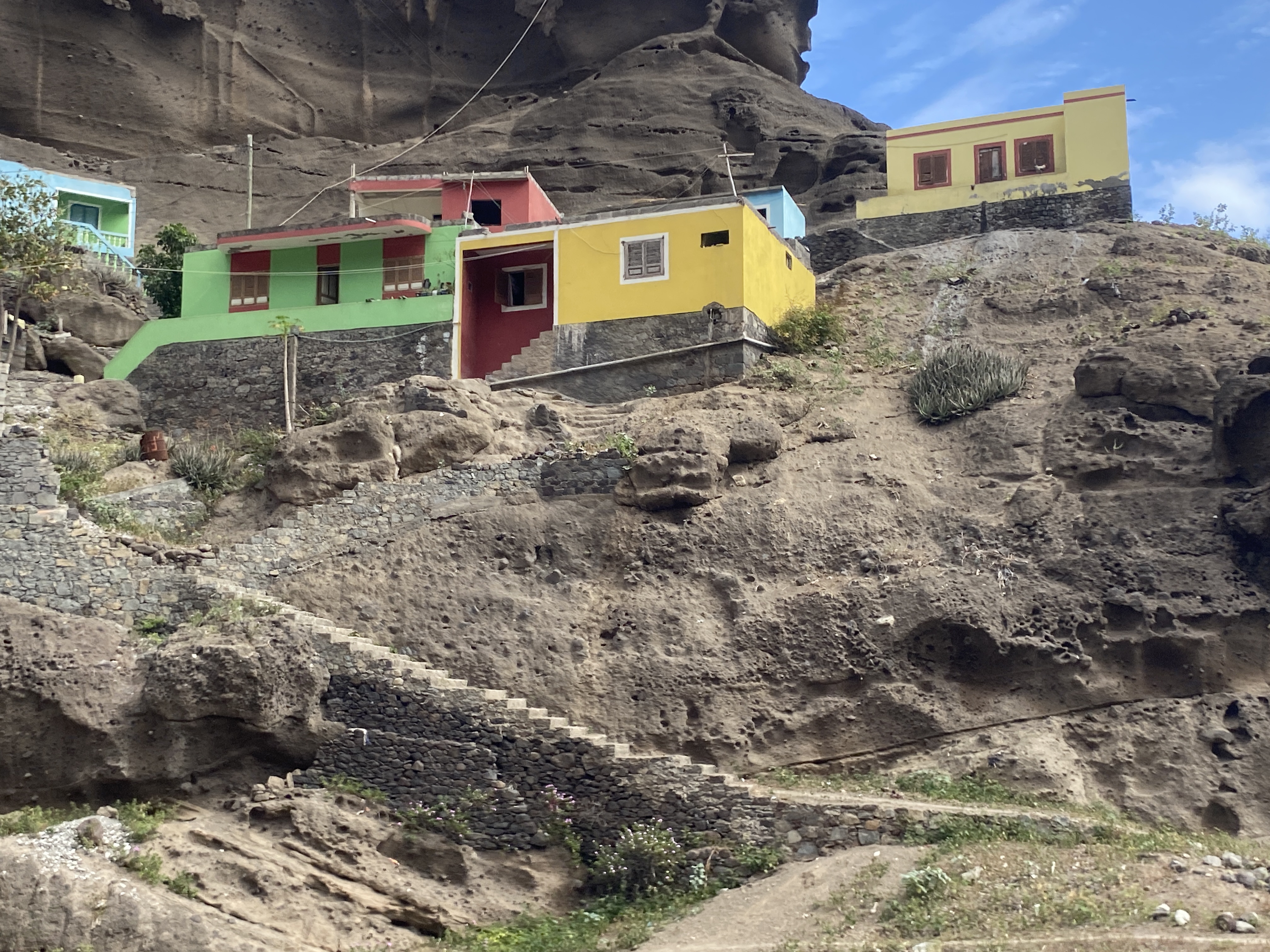
We did our own walking tour of Riberia Grande, the capital, and found a good spot for our picnic lunch.

We wanted to go back to Porto Novo by the inland road so after lunch we found the local bus stop and asked around. We were told by one guy that this was “difficile” and just when we were about to give up, he found a driver who would take us part of the way to Corda, and then told us we could get another “collective” as they call the mini buses from there to Porto Novo.
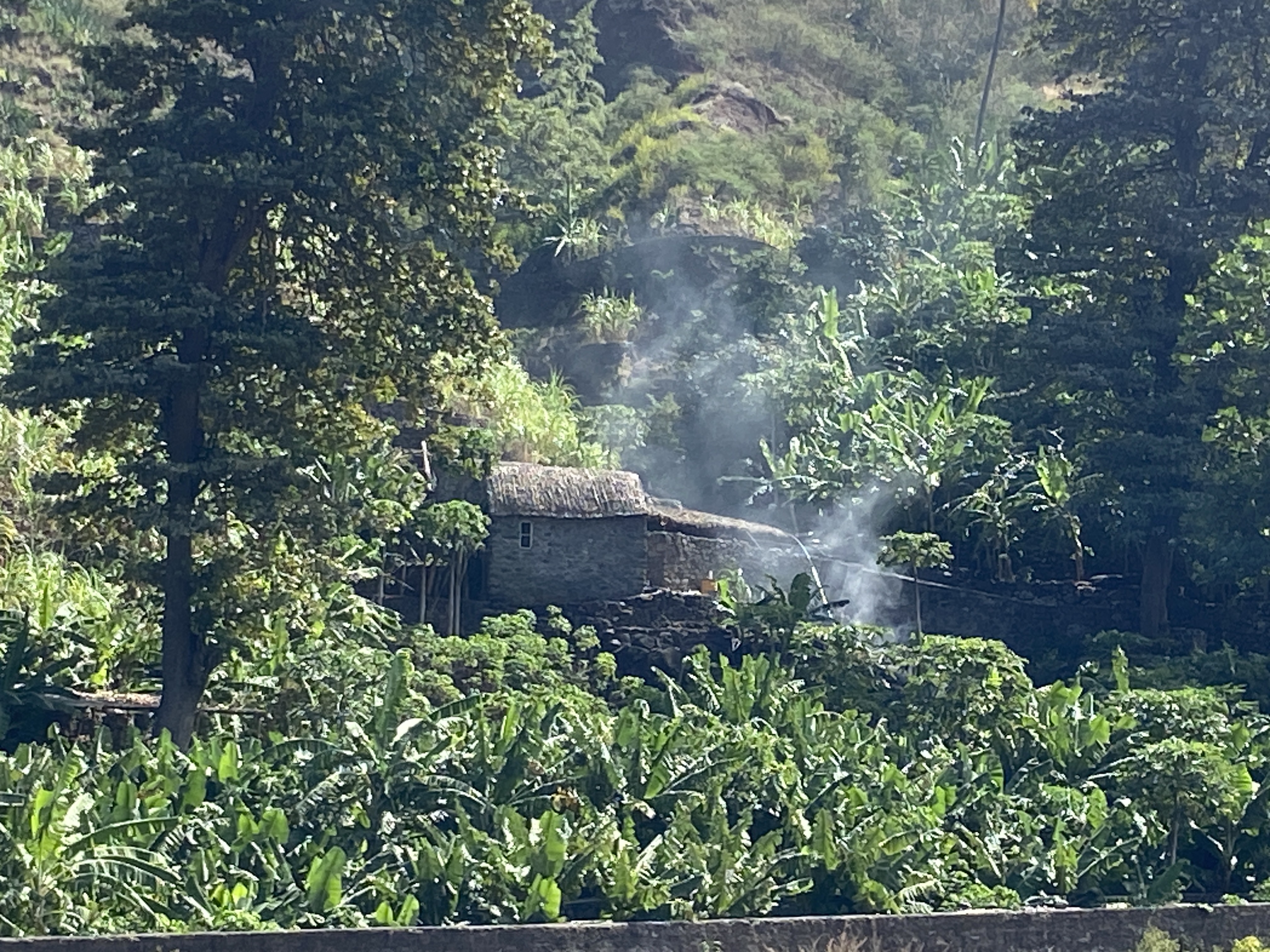
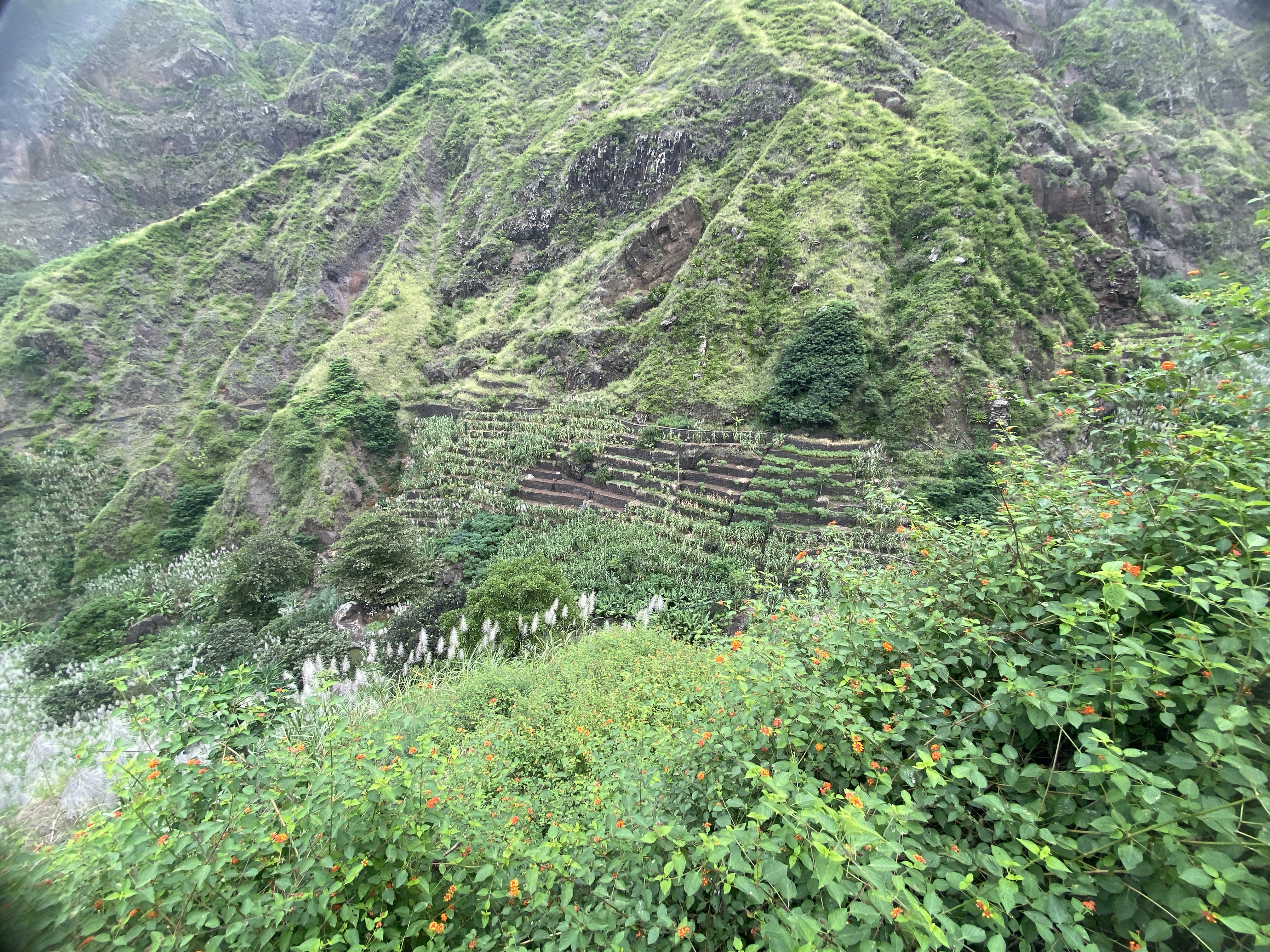
The road from Riberia Grande to Corda followed a spur, with steep valleys on either side. It was simply a magnificent drive through stunning scenery. It looked like the mountains were covered with green carpet. I tried to describe this a bit better but decided to let the photos do the talking.

We arrived at Corda, a very small village, and on the other side of it, the driver stopped at a nondescript spot and told us that this was where we would catch the next minibus in 30 mins. Really? I think he saw the confused look on our faces and so showed us a driveway and walked up there with us to a house with a minibus parked outside -we were at the driver’s house! He chatted to the driver about taking us and then headed off.
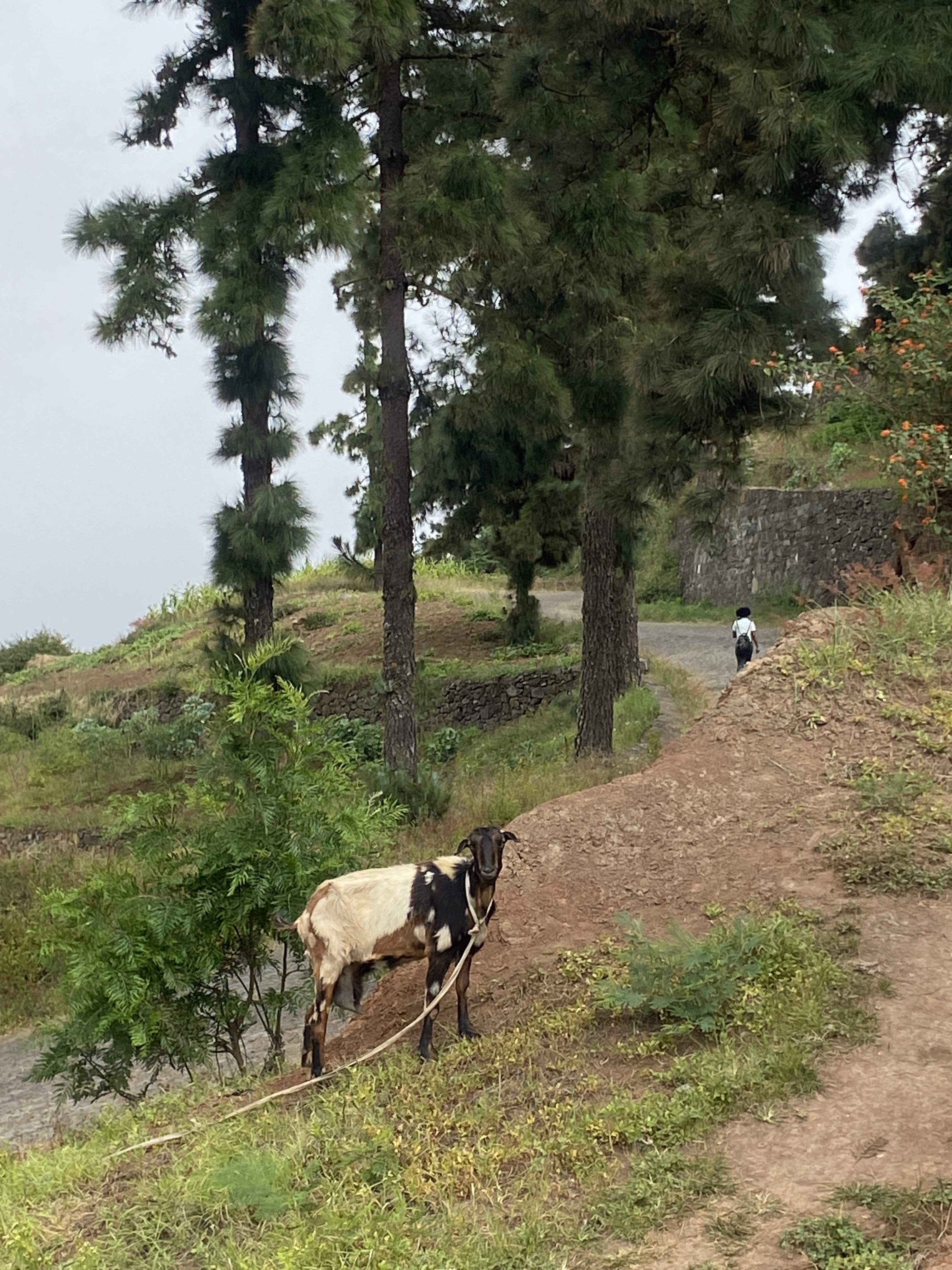
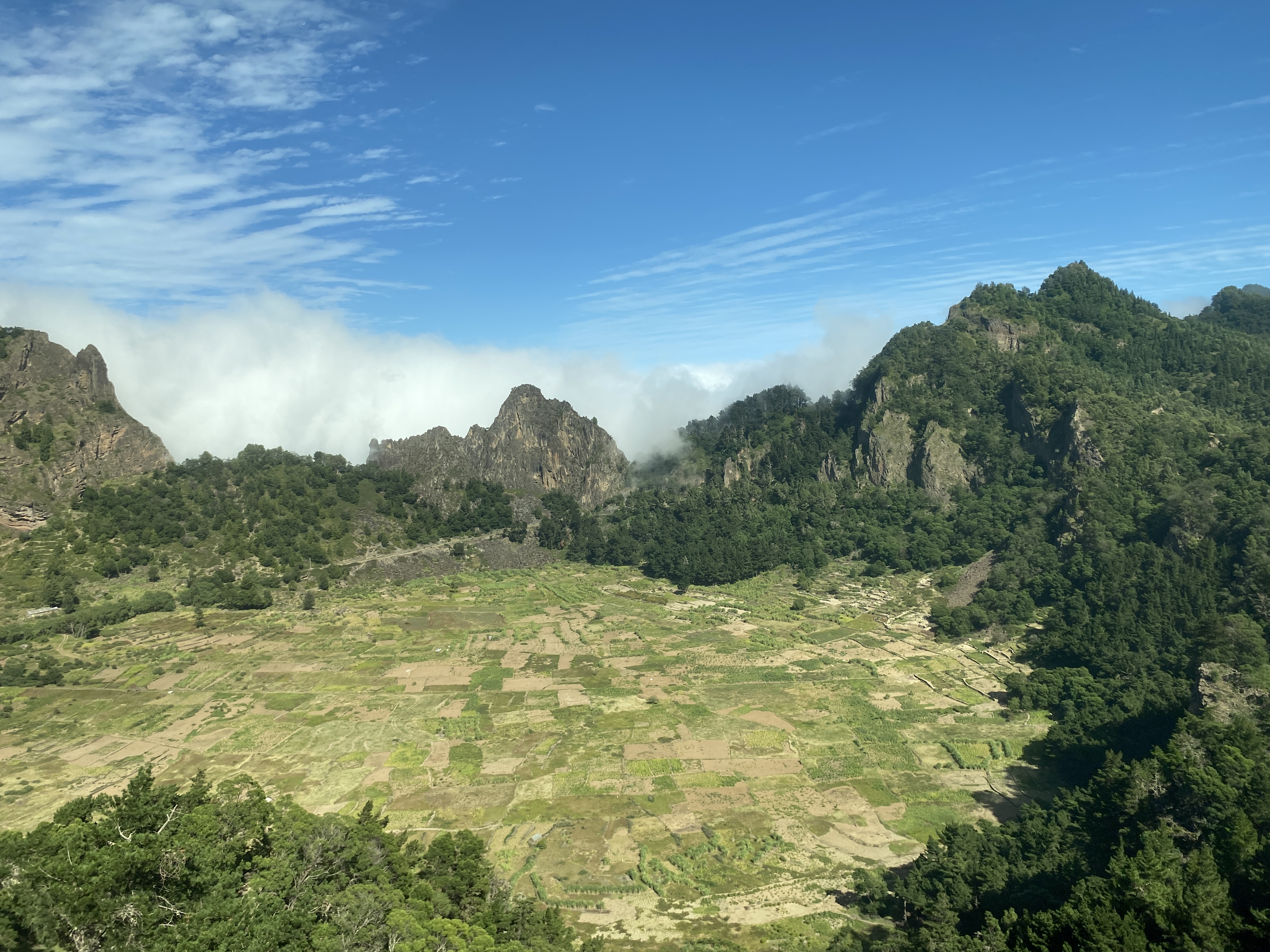
The drive from here back to Riberia Grande was not quite as scenic however we did see the old caldera of a volcano which is now used for agriculture.
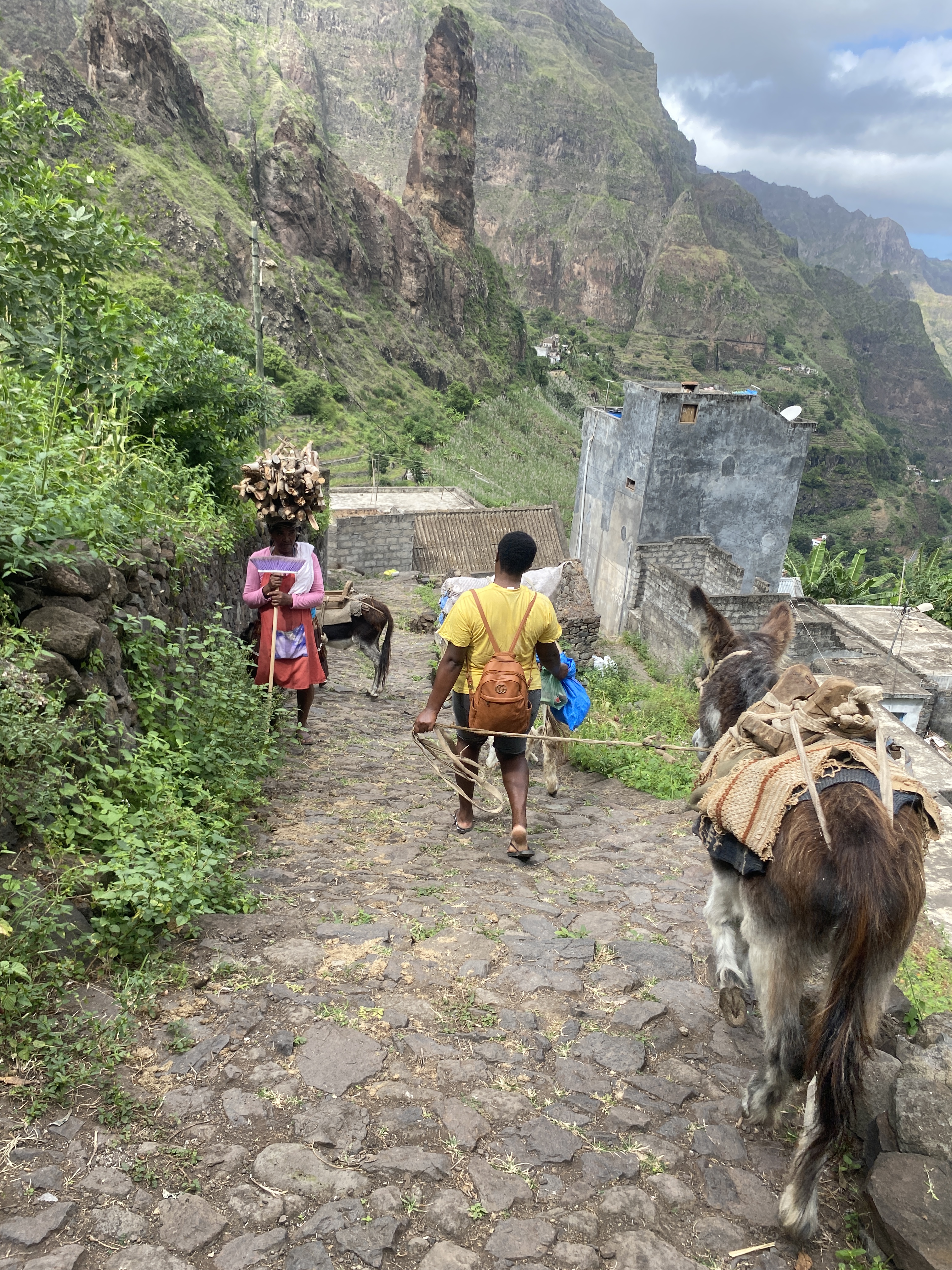
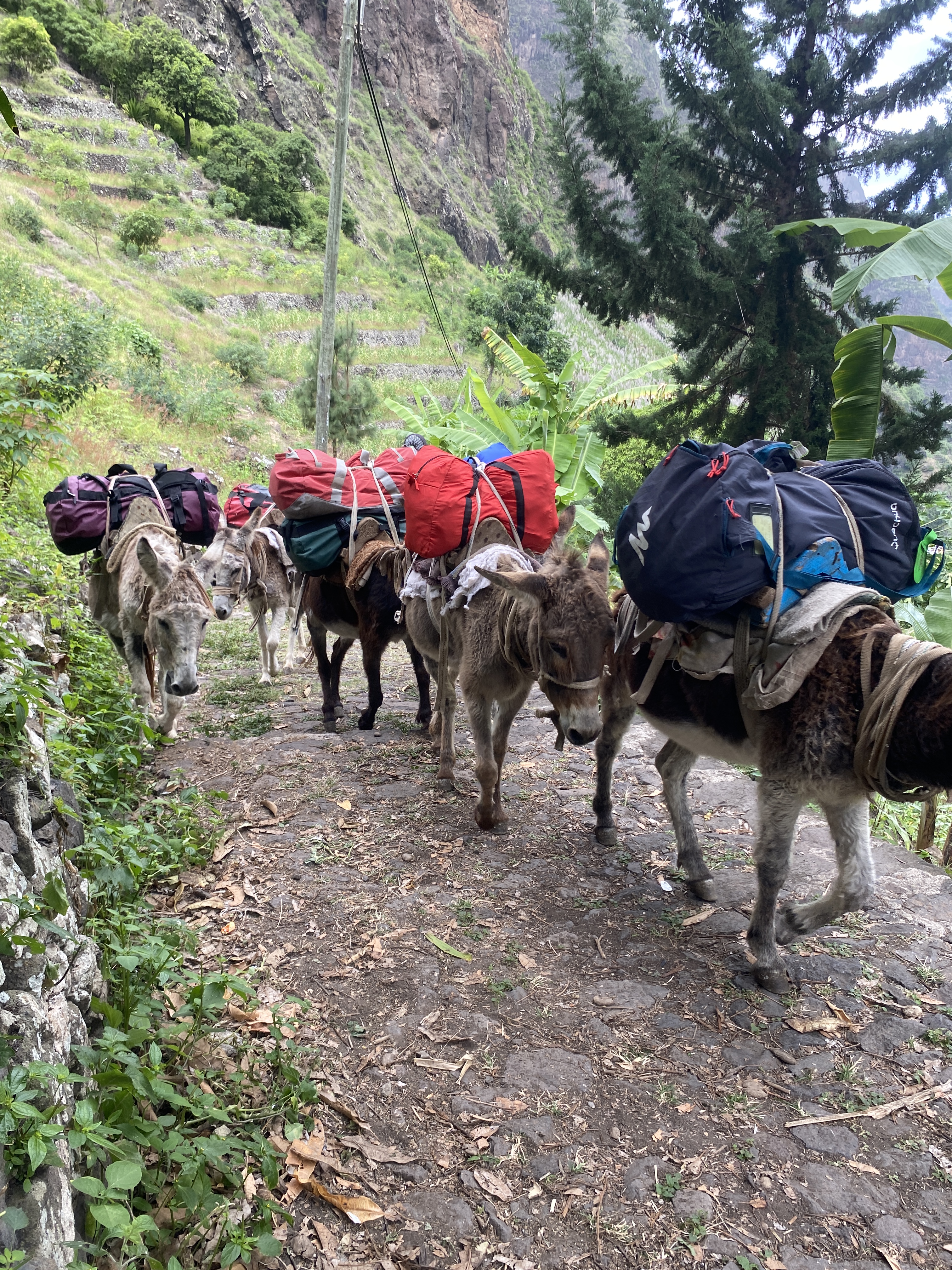
Some Aussies that met in a previous anchorage told us that Xoxo (yes that’s a place name) on Sao Antao is another stunning place so we decided to head there on our second day, even though it meant covering some of the same ground again to get there. We got the “collective” from Riberia Grande to Xoxo where the traffic cobblestone road ends and a pedestrian path continues up the mountain. We walked up for a bit enjoying stunning views and found a shady spot for lunch before walking down through the gorgeous valley. It was certainly a good recommendation.


Having very much enjoyed the diversion of Sao Antao, it was time to go back over the pass to Mindelo and get on with the business of last minute shopping and checking out. We had sundowners on our last night in Capo Verde with some Scottish friends we had met there, and who were also leaving for their crossing the next day. We dinghied back to Paseafique and turned in for our last good night sleep together for a while.
Follow our boat on NOFOREIGNLAND: https://www.noforeignland.com/boat/-1
 paseafique