
October 2023
There is something to be said for starting with a low-level experience in a new country – it all has to be up from that low base.
Our first landfall in the Canary Islands, a volcanic archipelago of seven main islands, was at Playa Francesca on La Graciosa. This is one of the smaller islands lying in the east of the Canary group not far off the west coast of Africa. And therein was our problem. The Calima, a hot strong easterly wind was blowing red Sahara sand across to us and covering everything with a layer of gritty dust. It was very hot as well. Talk about uncomfortable conditions!
We garnered our determination and went ashore for a walk into town. As we made our way along the dusty track, groups of tourists passed us going to the beach on the bay where we were anchored. I’m sure that by the time they would have walked back into town they would have needed another swim to cool off and remove the dust. I couldn’t imagine why on earth anyone would come here for a holiday. Not my definition of a beach holiday that’s for sure.


On our last night in the anchorage at La Graciosa, we had 30-35 knots with stronger gusts accompanied by waves over the bow -unheard of for us at anchor. We couldn’t wait to get out of there even if it meant a very gusty day sail to Rubicon on Lanzarote, the second island we visited in the Canaries, where it’s all about volcanoes. It’s sometimes called the island of 1000 volcanoes but there aren’t quite that many- there are at least 25 apparently. The volcanoes and their eruptions have created an incredibly unique and fascinating landscape, which we explored during an excellent day trip with Adrian and Marianna.
It rarely rains on Lanzarote. The average annual precipitation is less than 150mm, and it’s hot and also very windy. Despite these harsh conditions, a range of crops are grown there including onions, fruit, potatoes, green vegetables and grapes. As we drove across the island, the requisite ingenious farming methods were on display. Protection from the wind is provided by straight or semi-circular walls of lava rock, or sometimes by growing each plant in a large depression in the soil. Good use is also made of the protection afforded by the leeward side of hills. Then black volcanic crushed rock called picon is layered on top of the soil. Picon is porous enough to allow penetration by rain but almost eliminates evaporation. Good spacing between the plants allows the foliage to directly absorb moisture from dew and mist. The combined effect creates a micro-climate which allows cultivation in this arid country, where irrigation is not always available or affordable.


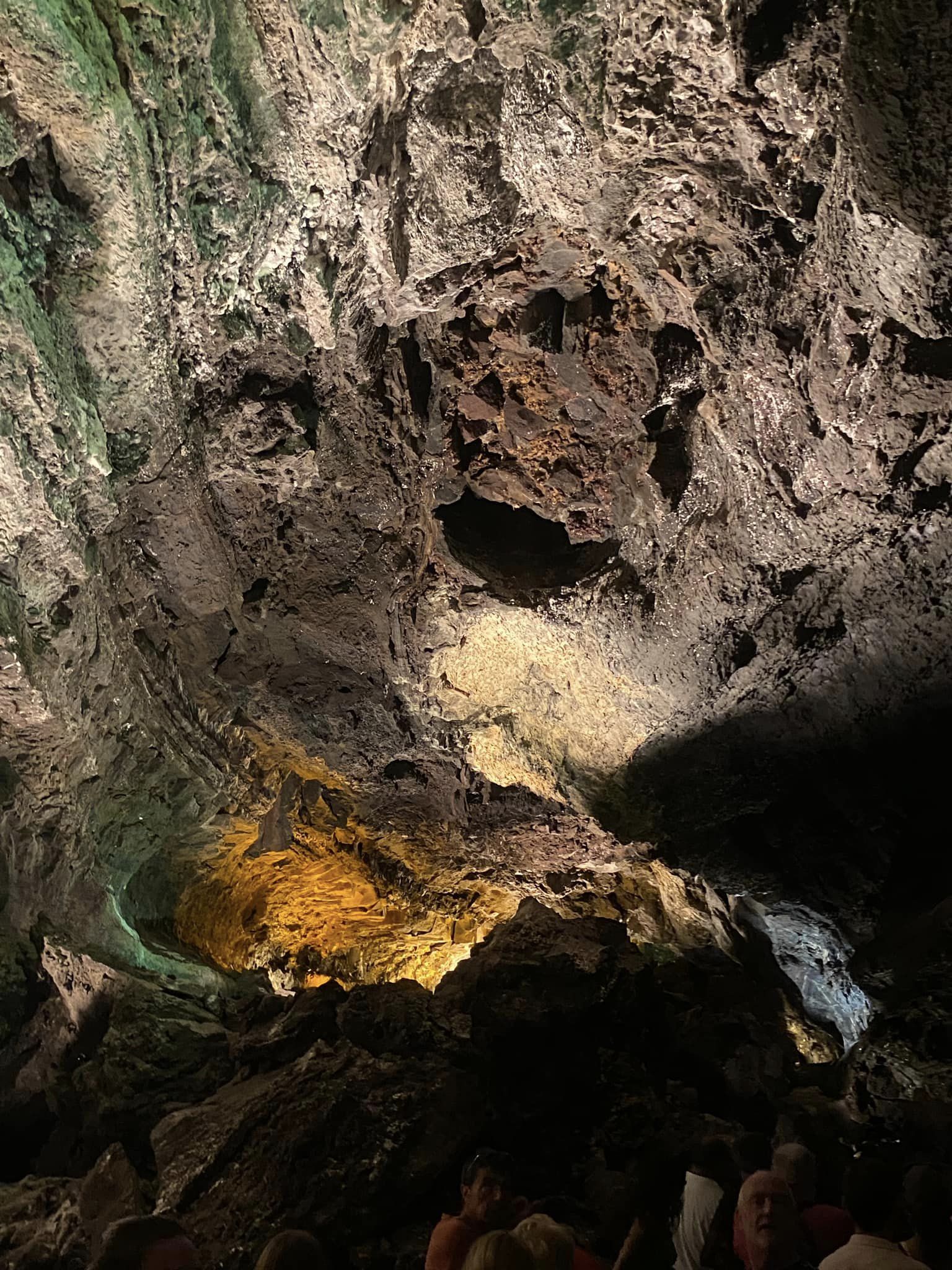
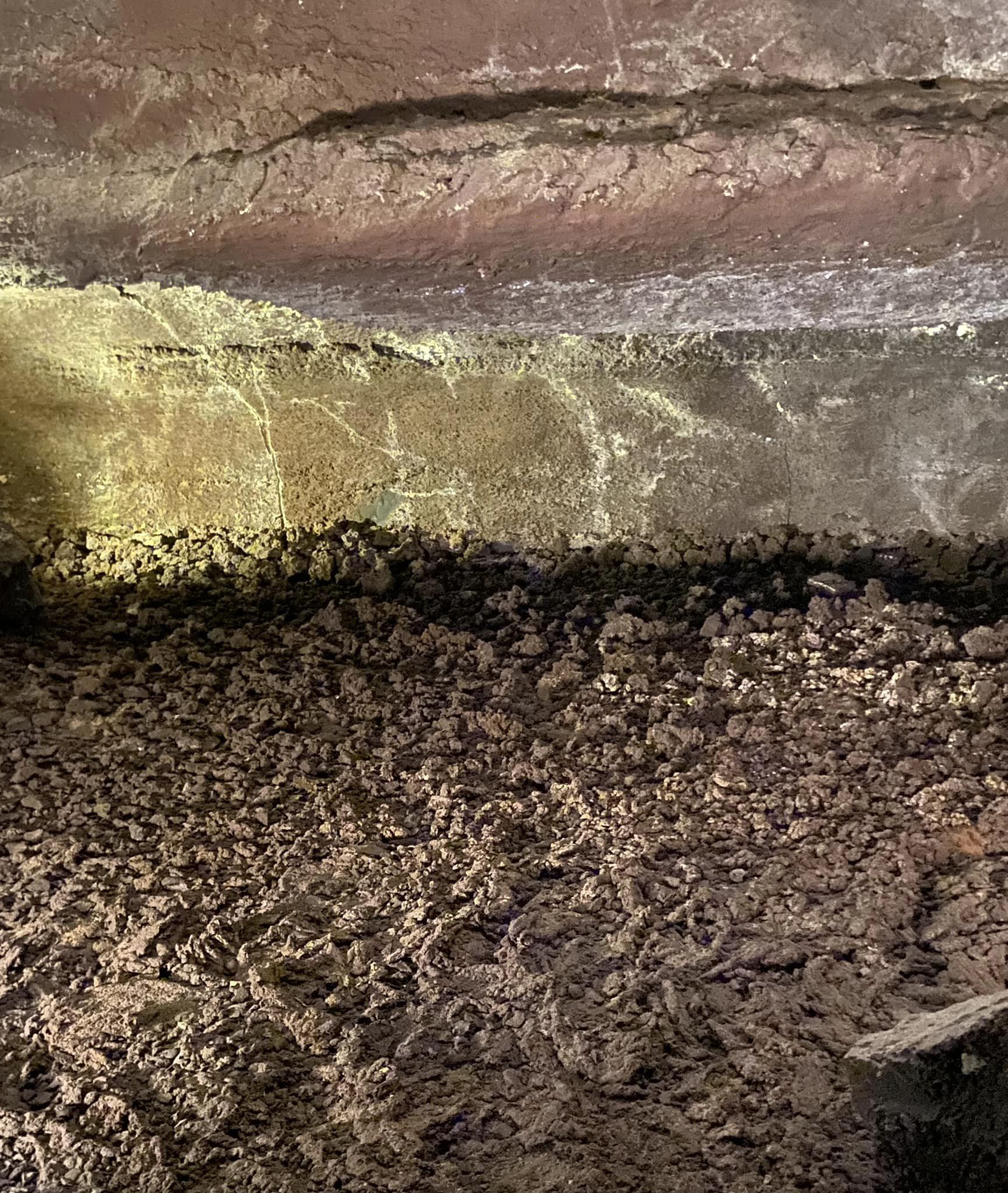
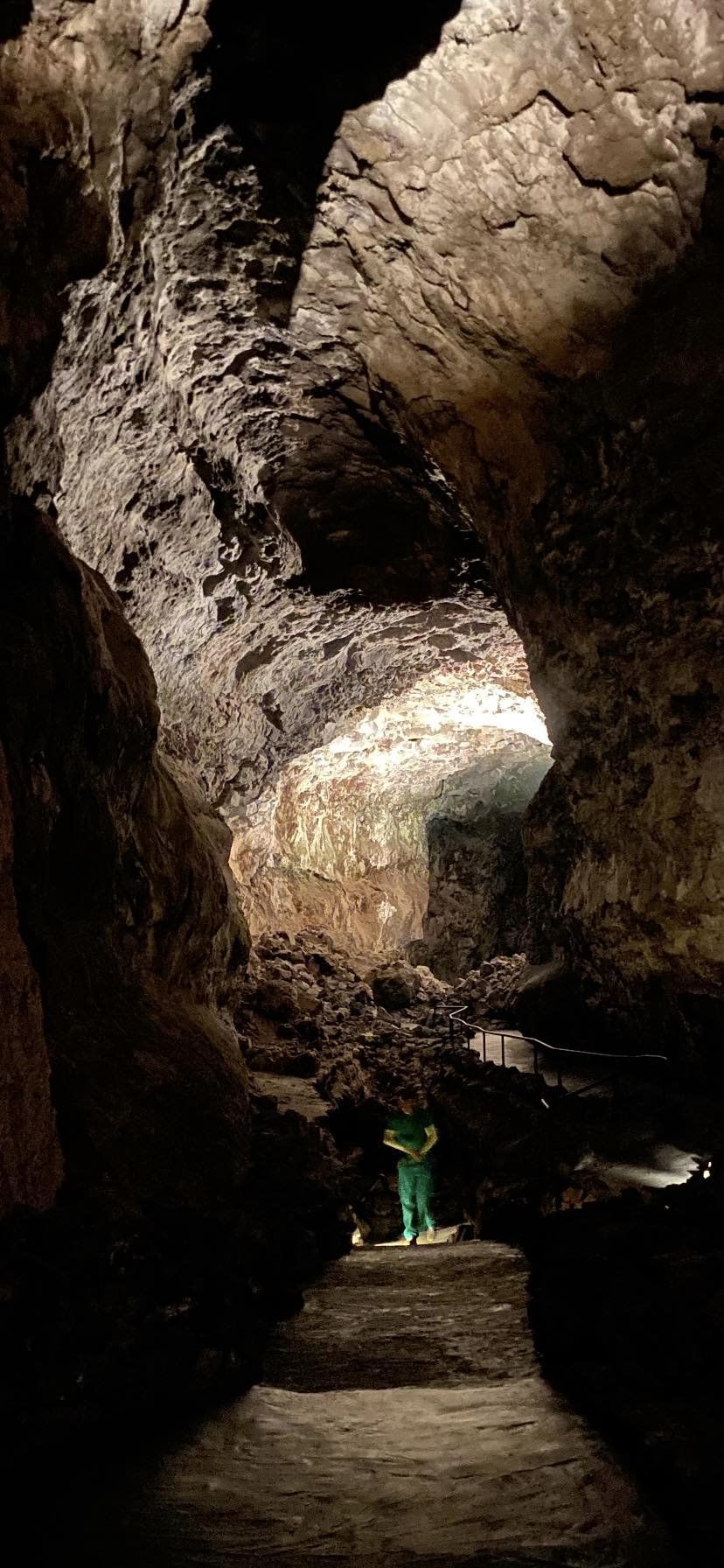
A highlight of our day trip was a visit to Cueva de los Verdes, a cave in the Tunel de Atlantida. This tunnel is a lava tube that was created by the eruption of the Corona Volcano 20,000 years ago, on the north of Lanzarote. It runs 7 kms underground from the volcano to the east coast and out under the sea. The Cueva de los Verdes is an opening into the lava tube and the cave and a section of the tunnel have been set up to allow tourists to experience the lava tube. Various parts of the tunnel are lit with coloured lights which, while artificial, creates a form of art from nature. The only way to see the tunnel is with a guided tour included in the entrance fee. We spent a wonderful hour or so immersed in this amazing tunnel created by a volcanic eruption.
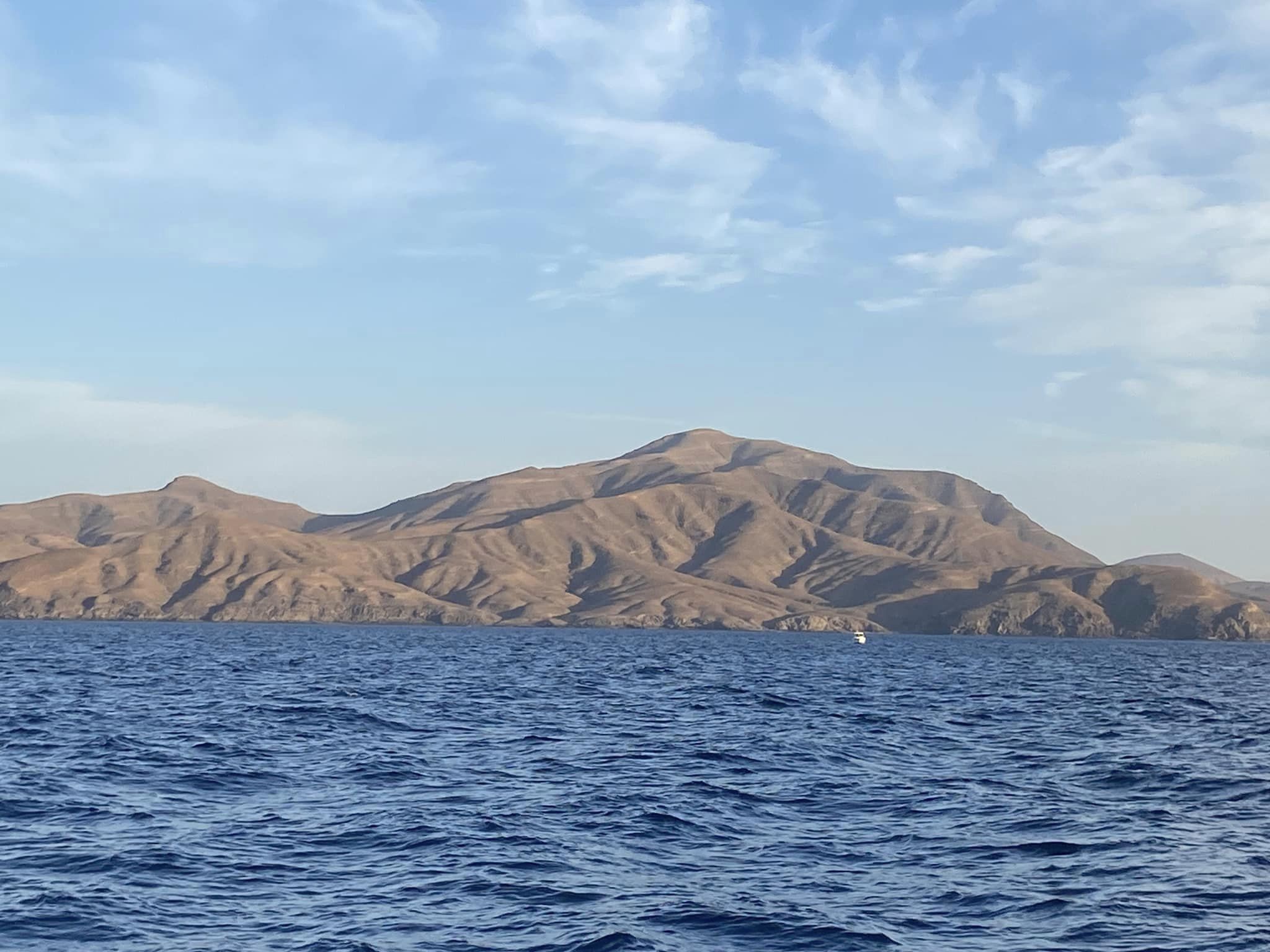
It was time to head to the big smoke – Las Palmas de Gran Canaria, the largest city in the Canaries, and as it turns out, one of the ten largest cities on Spanish soil. We enjoyed a short stop along the way at Morro Jable on the south of Fuerteventura, where we saw the most magnificent beach that we have seen for quite a while, and a place that I could well understand is a popular holiday destination for the Europeans.

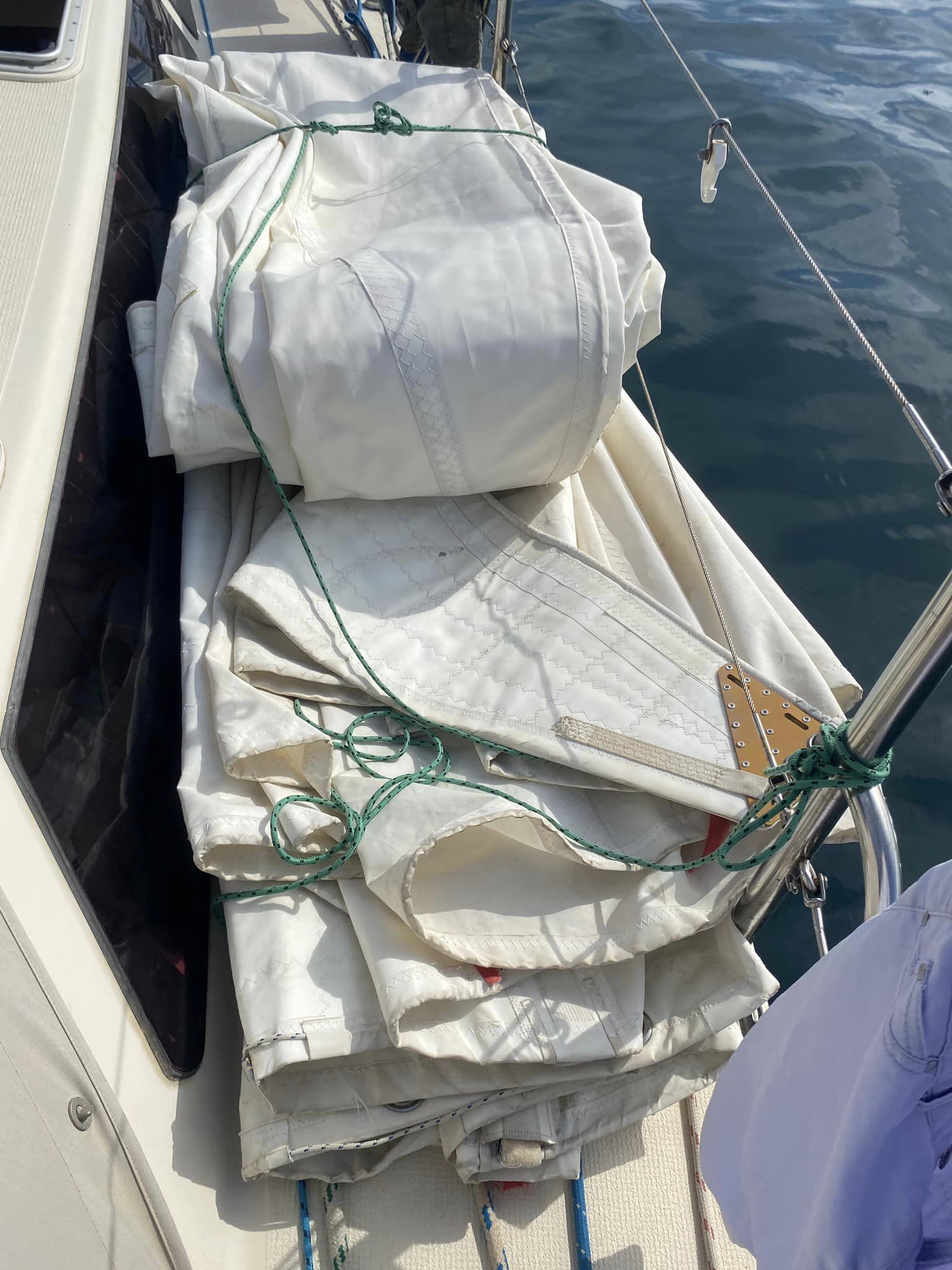
We had a bit of kerfuffle aboard on the leg to Gran Canaria when a bolt holding the end of the boom to the mast came loose allowing that end of the boom to fall onto the cabin top. This in turn put strain on the slides holding the mainsail to the mast and broke several of them. Fortunately this occurred during daylight hours which made it much easier to drop the main, take it off the boom, secure it to the deck, and then re-attach the boom to the mast. It did mean though that for the rest of the passage, we could only use the headsail.
Las Palmas de Gran Canaria was established in 1478 by the Spanish, and it soon became a major supply port for ships bound for the Americas. It lies on the routes to and from Spain, England, West Africa, South America, and the Caribbean. Christopher Colombus used this port as a landing post on his various voyages across the Atlantic. We were surprised that it remains an extremely important port with apparently excellent facilities providing services to cruise ships, bunkering, fishing, containers, naval repairs, freight and passengers. The port has the advantage of a special tax status within the EU. The Red Cross, Red Crescent and the UN World Food Programme have warehouses located here for rapid dispatch to African counties when required.


Fittingly Las Palmas hosts a museum called Casa de Colon or Christopher Columbus’ house. It was not his house but the house of the Governors of the Canaries. Apparently Columbus visited the house at some point. Colombus you will recall pioneered the sailing routes from Europe across the Atlantic, and was the first known European contact with the Caribbean, and Central and South America. As we will be following one of his trans-Atlantic routes, we were so looking forward to this museum but it had almost nothing original relating to Columbus in it. There is a recreation of one of his ships, and some models of the three ships he took on the first voyage, and lots of documents but these are all copies.

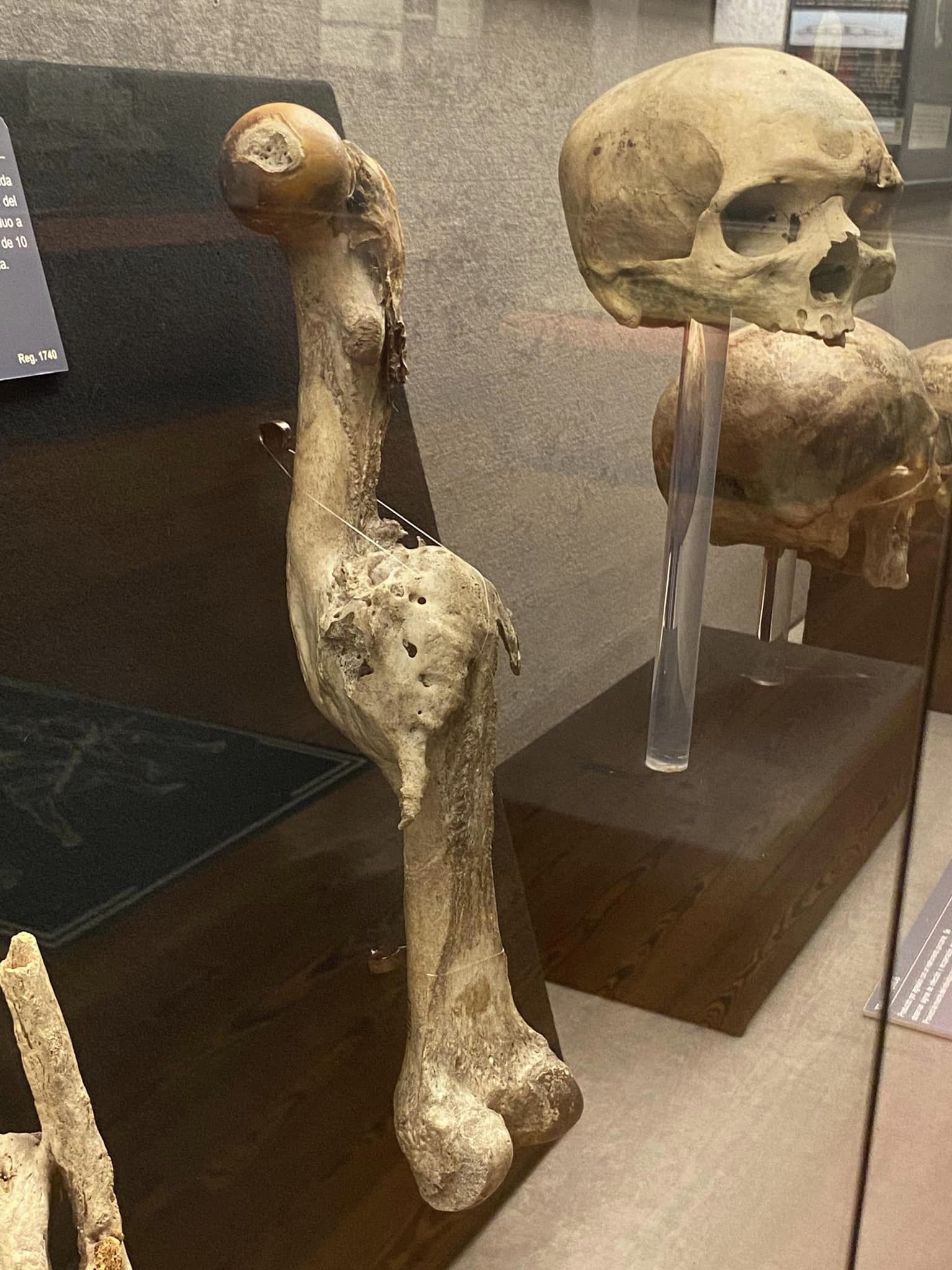
A much more interesting museum in Las Palmas is the Museo Canario, established by one Dr Gregorio Chil y Naranjo in 1879 as a point for scientific and cultural study of the Canaries. The museum is now housed in his former home and his library -an amazing precious collection of very old books mostly in Spanish, some in Latin, on topics like medicine, law, anthropology- is actively used for research. The display of about 700 skulls and 5-6 complete skeletons still in their funereal wrapping was absolutely intriguing. These belong to the now extinct Guanches, the indigenous population who were genetically related to the Berber people from north Africa.


We arrived back at the boat after having been ashore for a few hours one day to find a “care package of goodies” in our cockpit. We were delighted to read in the accompanying note that it had been left by the brother (Truls) of a young Norwegian man, Knut, who we had met along with his girlfriend Kristin in Chagos in the Indian Ocean some years ago. We had seen Kristin and Knut recently when they visited Melbourne. Truls is sailing his small yacht from Norway across the Atlantic and hence he was also anchored in Las Palmas. How amazing that we should both be there at the same time! We were very touched by their gift and thrilled to be able to meet Truls and wish him well for his voyage.

We wanted to do an inland road trip on Gran Canaria so we took a local bus and rather than visiting the recommended town, we decided to go onto the final destination on the route higher up in the mountains seeking the “wow” factor. We stumbled upon a village called Artenara which has 17% of the 2,192 caves on Gran Canaria -yep they actually count the caves! This place though is the only one that still uses the caves for houses. The scenery was truly magnificent and definitely had the “wow” factor.


The day became a bit “interesting” when we discovered around lunch time that the next bus, and only, back wouldn’t be leaving until 6.45 pm! How on earth were we going to entertain ourselves for all that time in a small village which we had pretty much already explored? Well these things have a way of working out. We wondered around town a bit more and ended up chatting to some other tourists. Being the explorer that he is, Phil found a door to a tunnel through some rock and decided to go through for a look, and discovered a restaurant built into the rock with the most wonderful views of the mountains and valleys. We booked a table for 4pm and had a pleasant early dinner there enjoying some tapas and local wine.


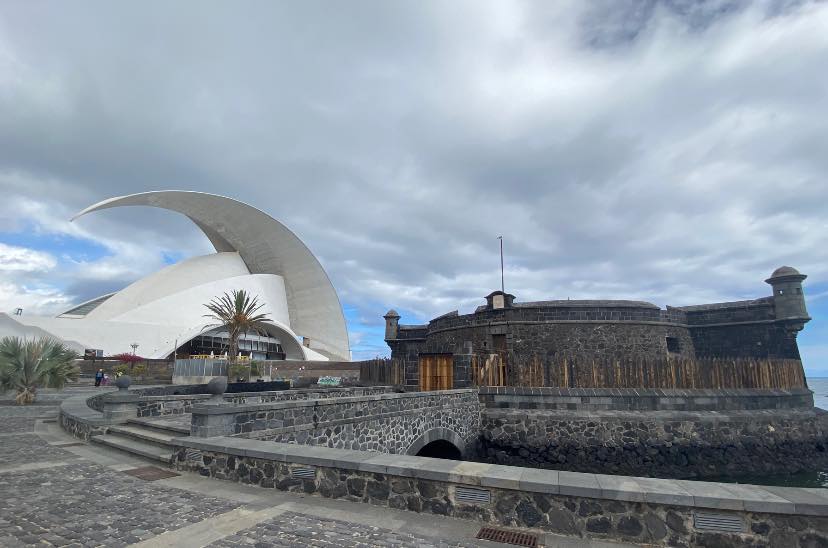
Our last stop in the Canaries was at Santa Cruz Marina on Teneriffe, the most populous island in the Canaries. As usual for us, two weeks in a marina is a pit stop -an opportunity to tick off a bunch of boat jobs where we have easy access to parts and materials, lots of fresh water, and the boat is secured in the marina. It was no different this time, especially as this is where we made our final preparations for crossing the Atlantic in a few weeks time. We checked and tested equipment, consulted technicians, adjusted halyards, sealed leaks, attended to toilet plumbing, cleaned, and polished. We worked pretty solidly with the exception of a few days off for excursions.
There was plenty of company for us as Adrian and Marianna were there too, along with Jack and Jan (another of the Moroccan gang), and Ken and Ei Loo who we had met briefly in Turkey. Here we all were on what felt like a far-flung bit of Europe getting our boats ready, sharing sundowners and day trips.
The group, minus me as I was being protective of my hip, went for a long and at times challenging hike in the mountains the day after we arrived. Part of the walk was along a now disused water channel that had been built by slaves. Much to their delight, Adrian and Phil discovered a winery in a cave where two locals were making wine from their own grapes. They were made very welcome and a tasting ensued. I met the weary but satisfied troop for an early delicious dinner at an Indian restaurant near the marina.

We spent another day driving around the island with Adrian, Marianna and Jan. Tenerife is a volcanic island as are the others in the Canary group. Again we were treated to wonderful scenery.




We were excited to discover a museum dedicated to the Santa Cruz Carnvial, the second largest carnival outside that of Rio de Janerio, which happens to be the sister city to Santa Cruz. The small museum mainly displays the Carnival Queen winning costumes from the previous year’s carnival, in addition to some of the earlier costumes. The costumes are anything but small! And must take hours and hours to conceive and make.


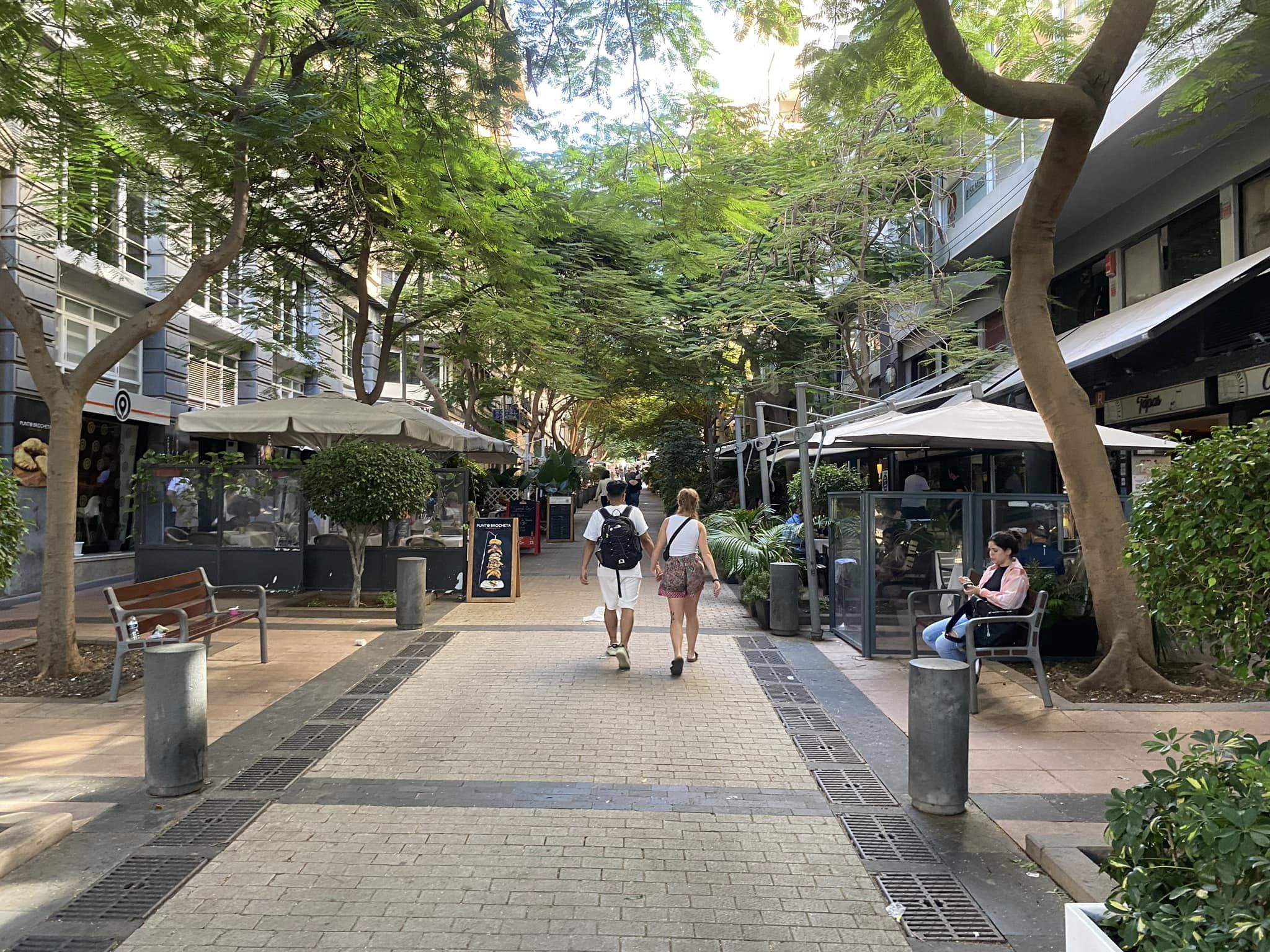
We loved the atmosphere in Santa Cruz- there are lots of pedestrian streets crowded with tables and chairs for outdoor eating and drinking, lots of trees, some nice sculpture, and happy vibrant people.
We had some unexpected entertainment on one of our last evenings there when we heard music nearby and went to explore. We found an incredibly energetic drum group holding their weekly practice session in an outdoor area near the marina. They were simply fabulous – the drumming was great and they were all very lively, particularly the conductor. Things had certainly improved since the first few hot and windy days on La Graciosa, our first stop. As is often the case, we were sorry to leave here – our last taste of Spain.

Follow our boat on NOFOREIGNLAND: https://www.noforeignland.com/boat/-1
 paseafique