July 2022
The Greek gods seemed to always be involved in intrigue, deceit and sometimes revenge. The father of the gods Zeus and Hera (remember the Alter of Hera in ancient Olympia) had a thing going at one stage. The situation got tense when Hera discovered that Zeus had taken one of Hera’s priestesses, Io, as a mistress. Zeus changed Io into a white cow to try to hide her from Hera and thereby protect her from Hera’s rage. But Hera caught onto this and sent a horse fly to pester Io, who ended up jumping into the sea to escape the stings of the fly, and so the sea became the Ionian Sea.
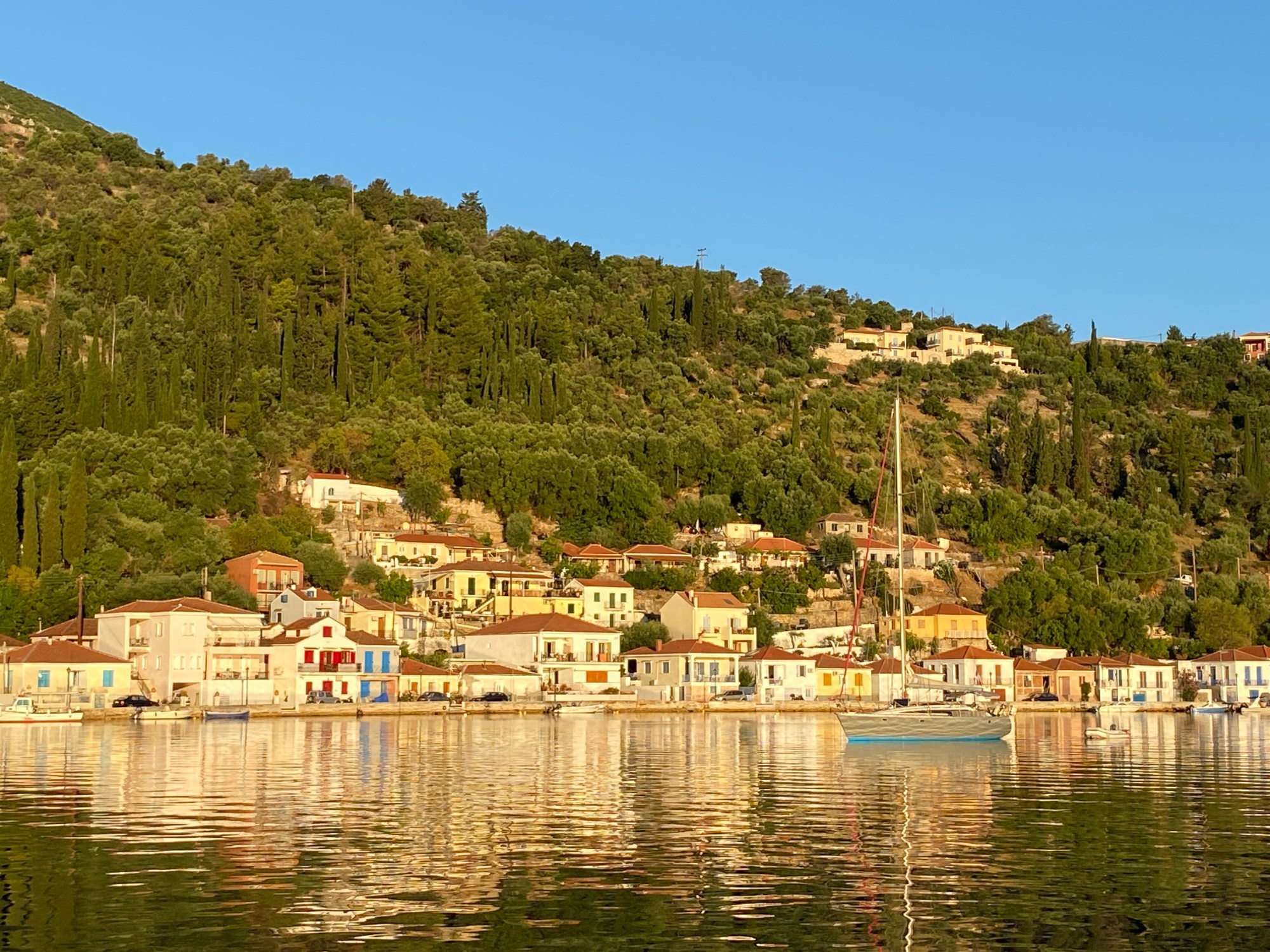
In ancient times the mere mortals were interested in the Ionian Sea as a pathway and trade route from the Aegean on the east side of Greece, to Italy and Sicily to the west of Greece. The Normans and Genoese had control of the area at one point, and the seven main islands of the north Ionian Sea (Zakinthos, Cephalonia, Ithaca, Levkas, Andipaxoi, Paxoi, and Corfu) banded together and sought help from Venice in the 14th century. A long occupation by Venice ensued, and the Venetian influence is still apparent in the architecture. The French and English came later and eventually in 1864 the islands became part of Greece. Consequently, the Ionian Islands are quite different from the stereotypical Greek not only in their luxuriant green topography but also in architecture and to some extent culture. The scenery is very pretty and the water is extraordinarily clear so the Ionians are a popular holiday destination especially for the Italians. The name of the game here is revelling in the scenery and sunshine, swimming, and other water activities, all of which calls for ice cream and appeasing one’s appetite in the many restaurants dotted throughout cute villages.
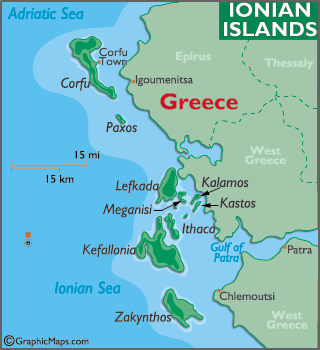
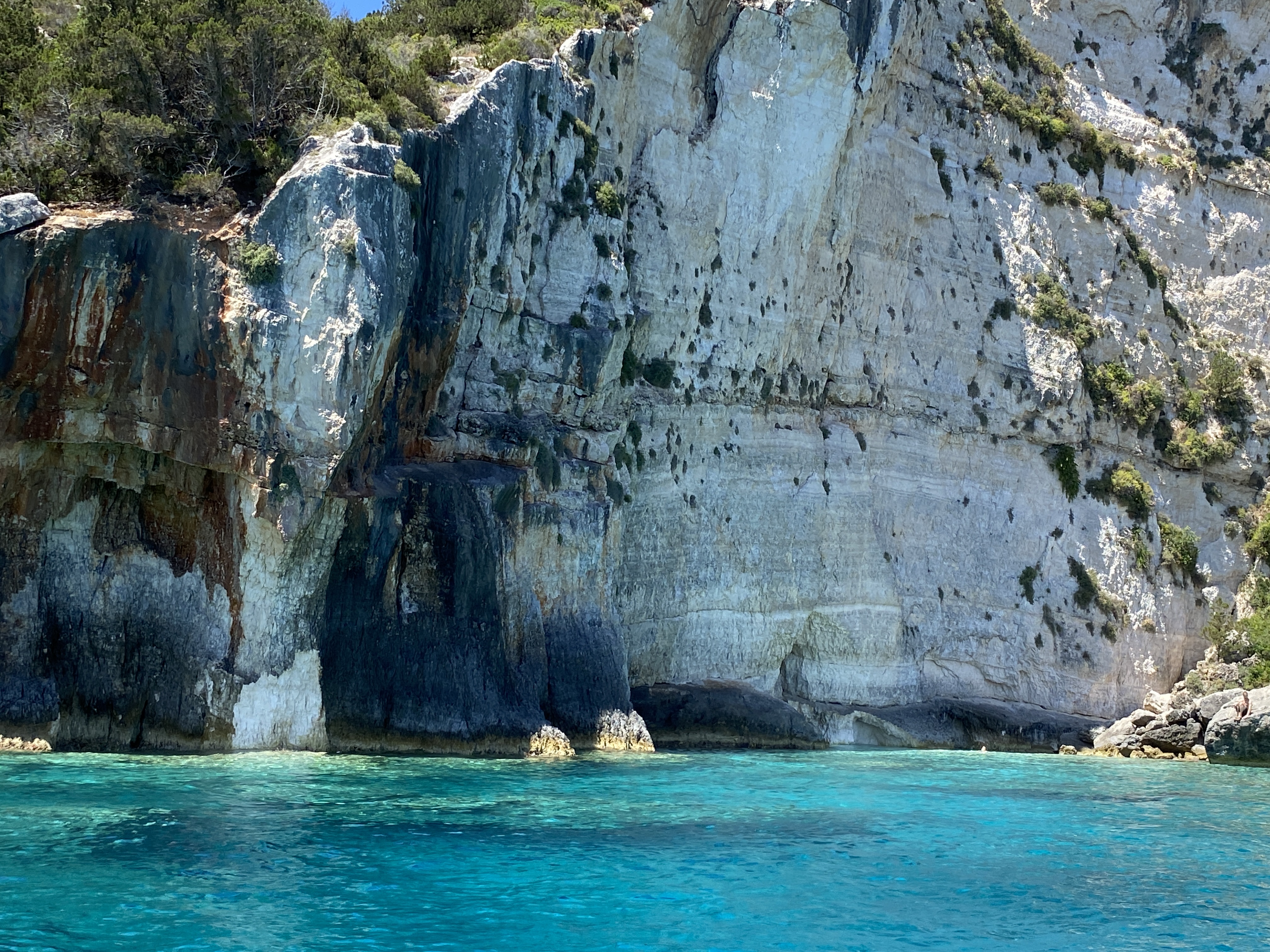
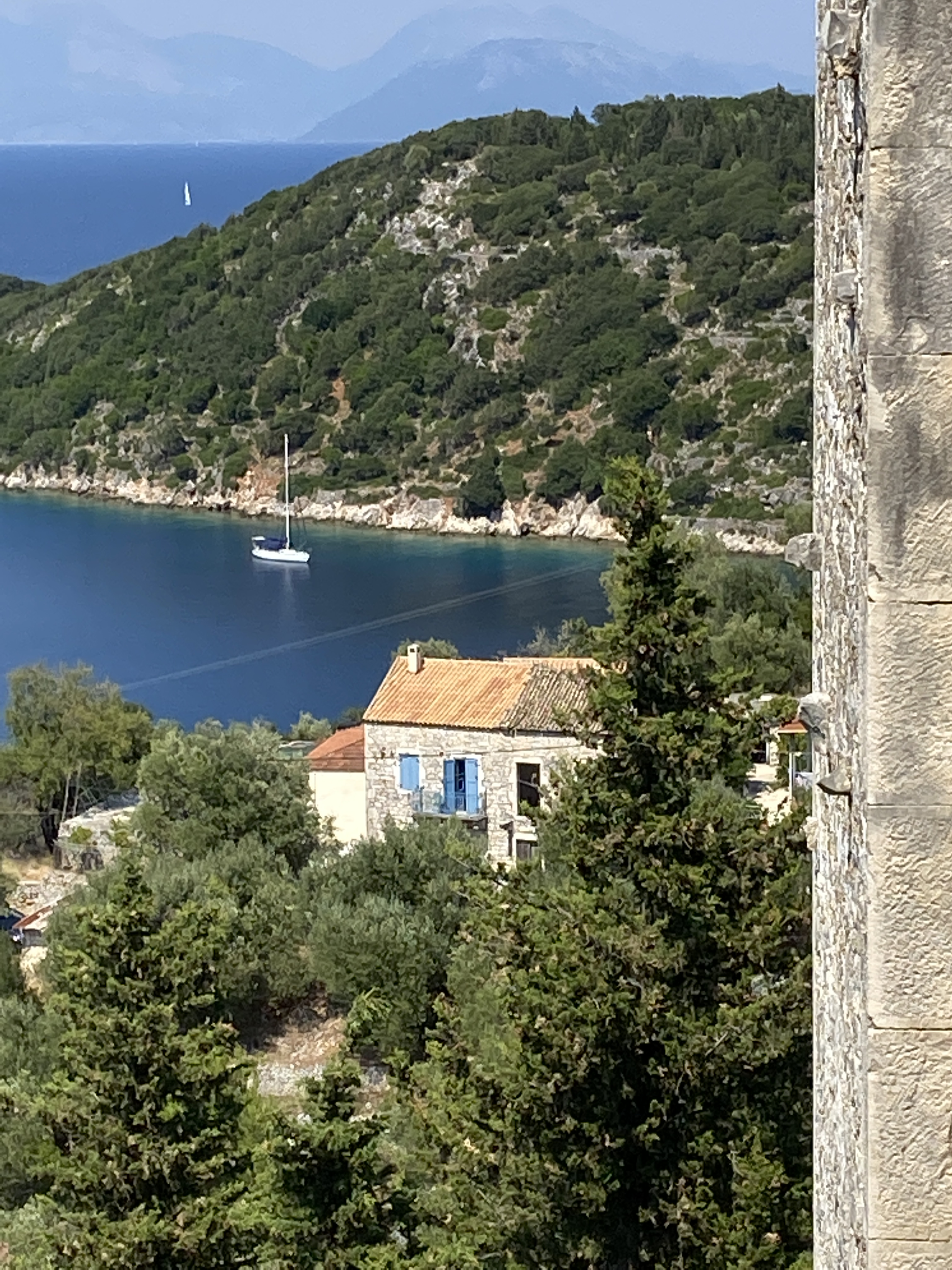
We visited six of the seven main Ionian islands, with the most southern island Zakinthos being the first port of call – and what a magnificent start it was! I’ll let the pictures do the talking.


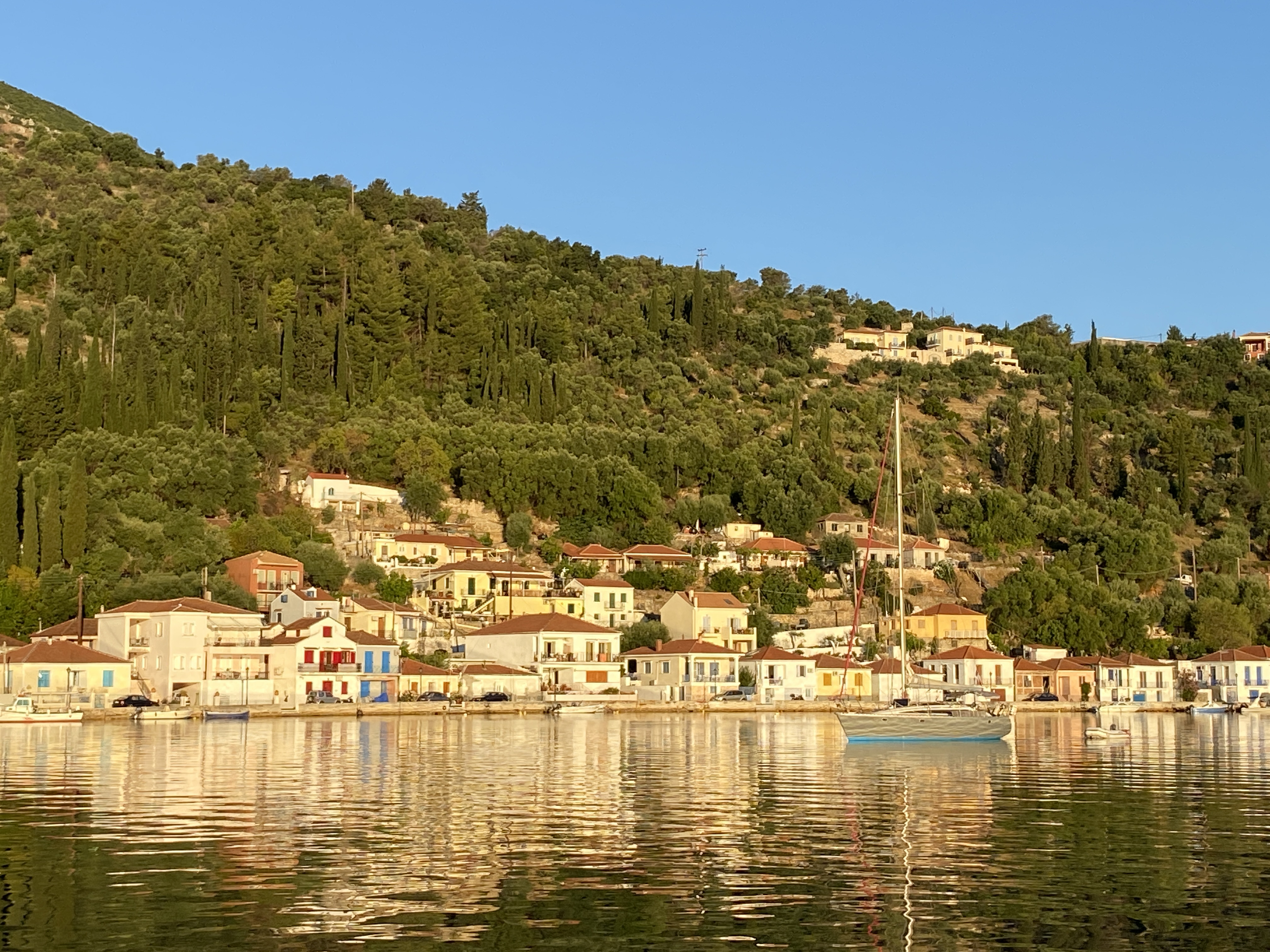
Early in our Ionian journey, our pal Adrian on our buddy boat (Anthem) became unwell with bad headache, sore throat, and a fever. The covid RAT kits that we had brought from Australia came in very handy, and sure enough Adrian had Covid. He was pretty crook over the next few days and so we stayed put in Cephalonia until he was well enough to be on the move again. Phil and I, and Adrian’s partner Marianna, were on tenterhooks waiting to see if any of us would also contract it, but amazingly we all remained asymptomatic. And so we continued on ambling our way from one beautiful anchorage to the next, joining the locals in swimming and eating ice cream.


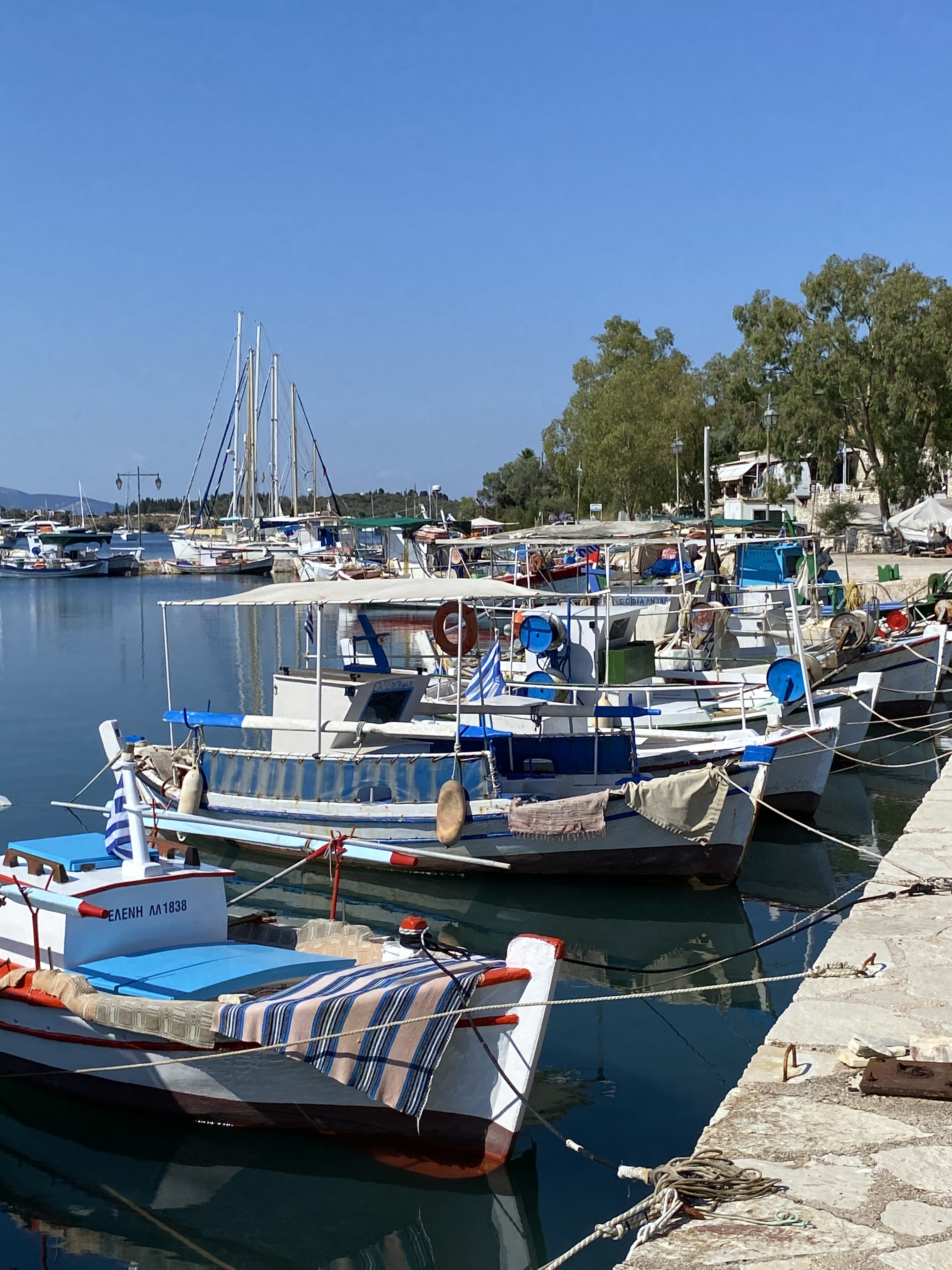
We had a business stop in Lefkada where we tied up to the town quay so we could have a visit from a rigger to discuss re-rigging the boat while it is in the yard for the winter. We replaced the rig (the wiring that holds up the mast) over seven years ago when we first bought Paseafique, and we want to replace it before we cross the Atlantic Ocean at the end of next year. In addition, our insurance company will either want a new rig, or they will exclude damage caused by rig failure from our cover.

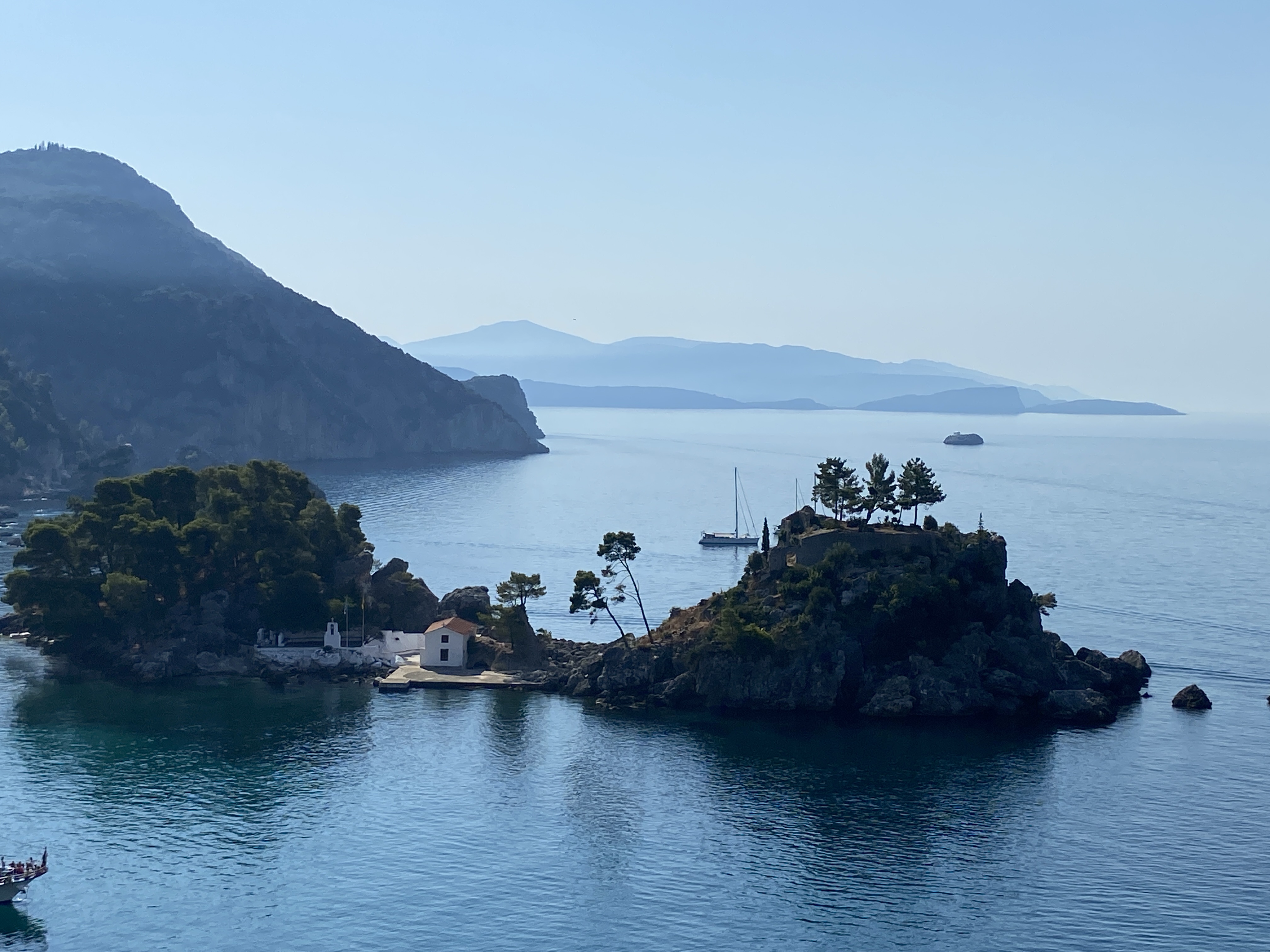
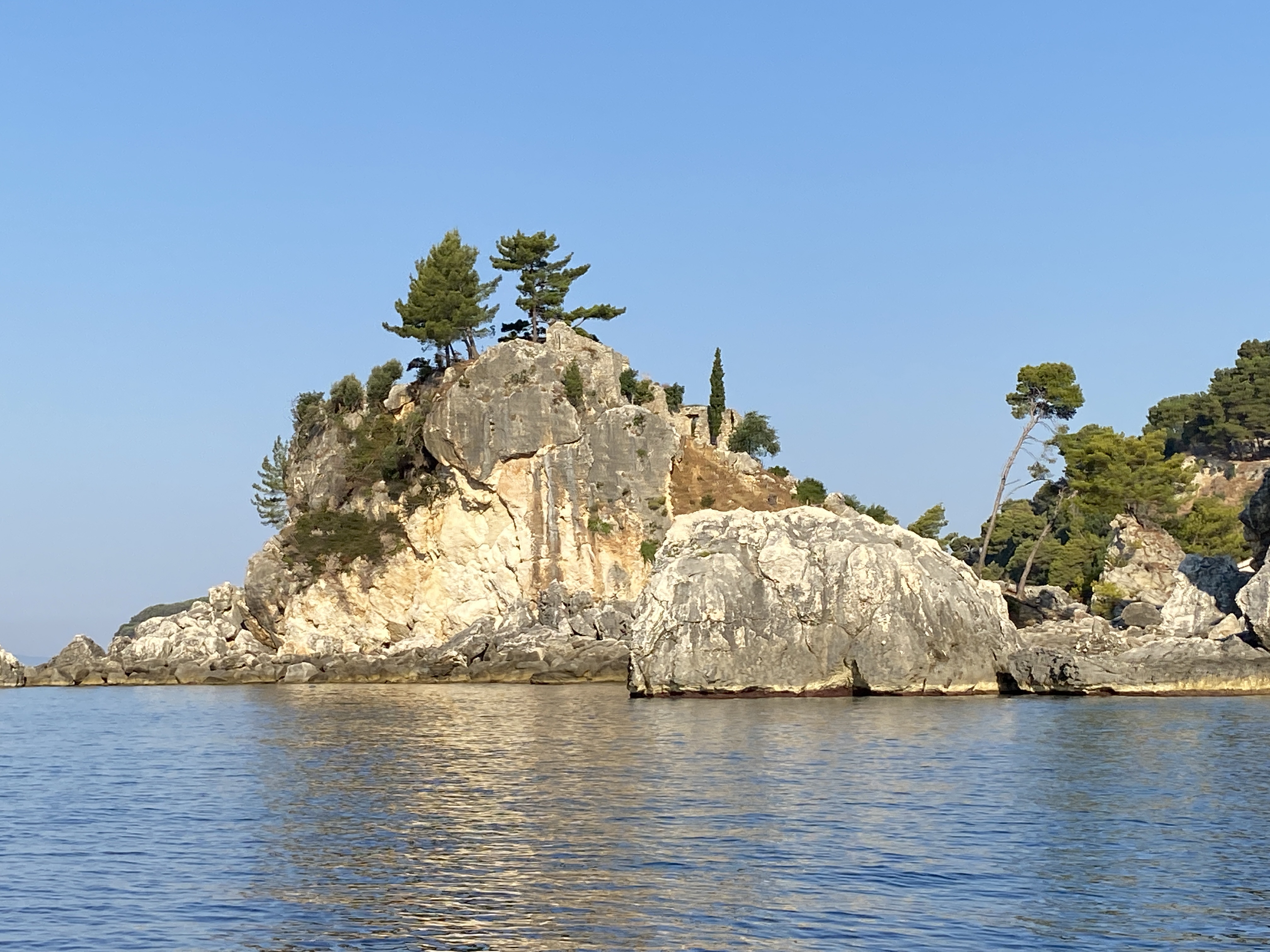
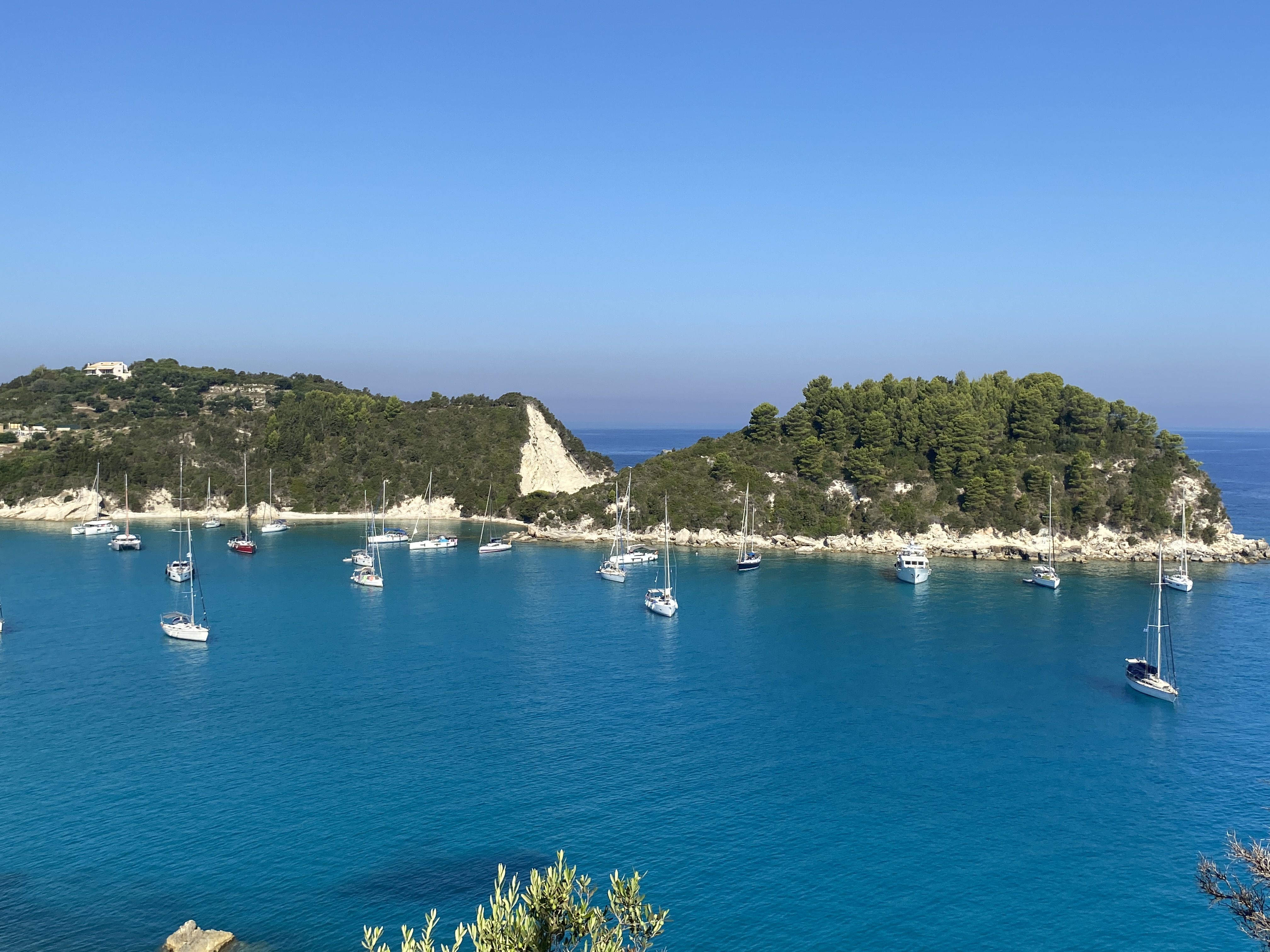


Our final stop in the Ionians was Corfu – that somewhat romantic island made famous in modern times by Gerald Durrell, as the setting for his book “My family and other animals”. But Corfu is very much part of the history of Greece, being included in Greek mythology. It has lots of castles fortifying strategic positions around the island, two of which enclose the capital. It apparently was one of the most fortified places in Europe at one time. The fortifications served Corfu well as it managed to resist several attempts at capture by the Ottomans, especially when it was under Venetian control.
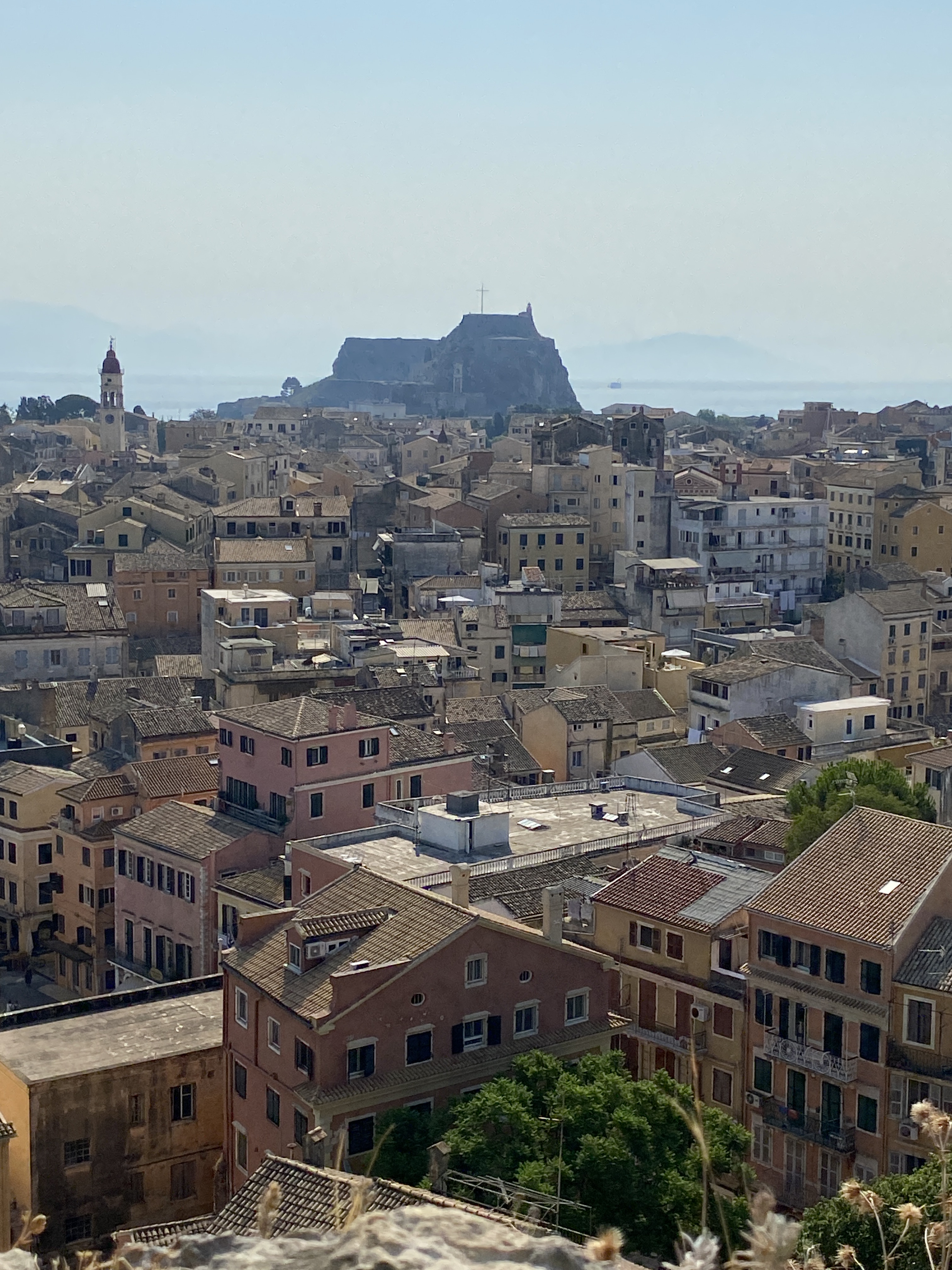
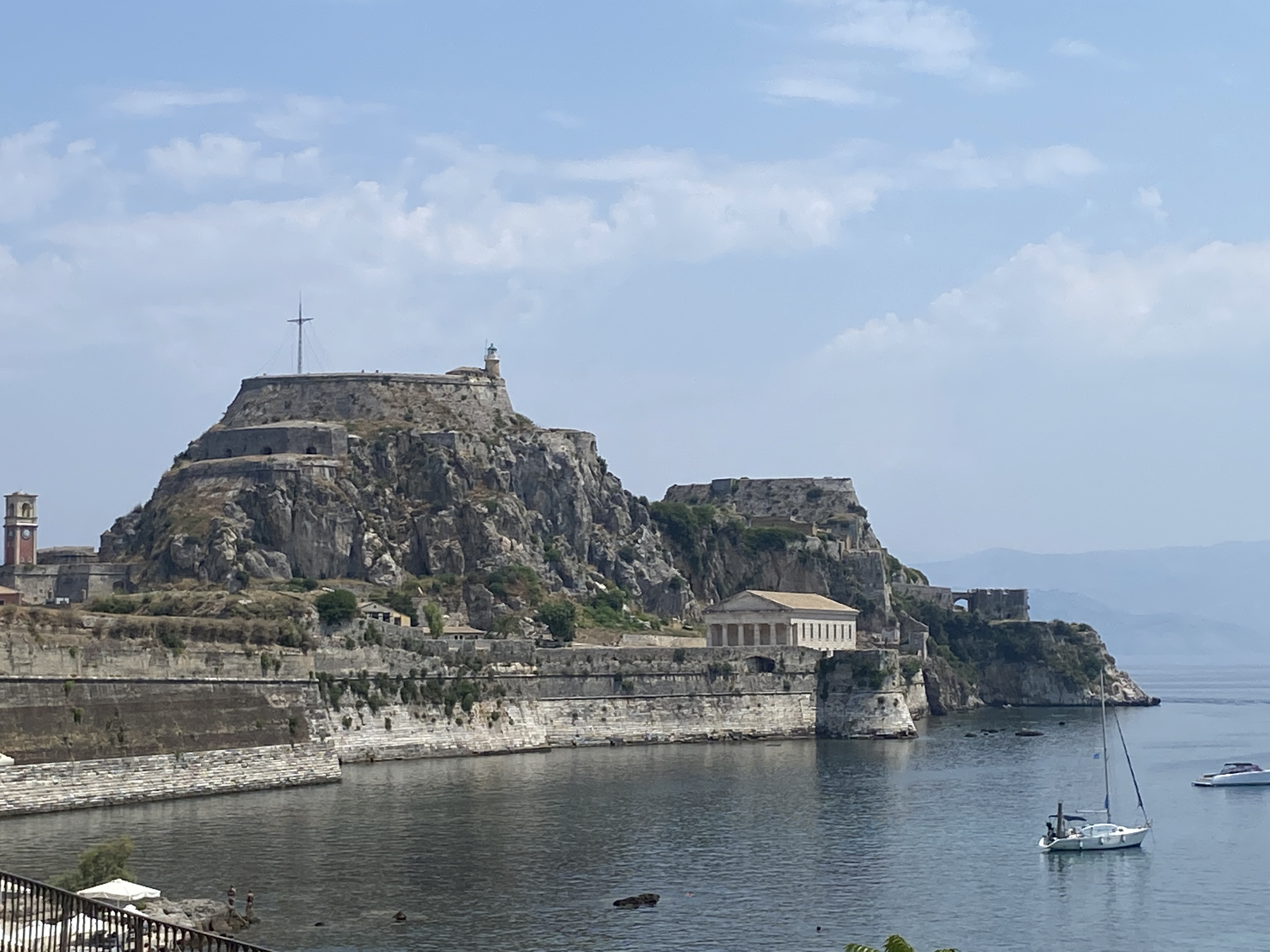
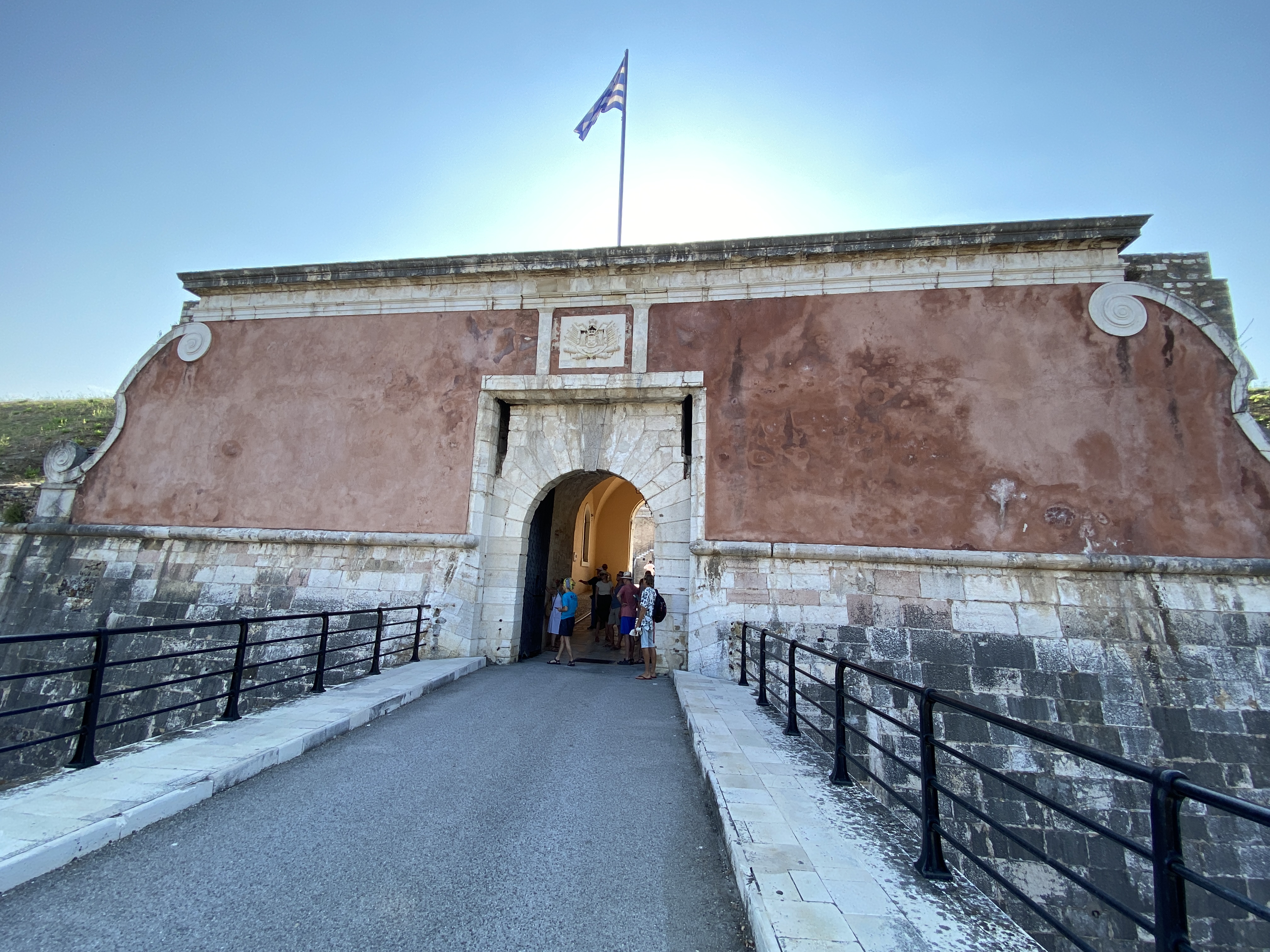
Although the main town, also called Corfu, is rather faded these days, it is possible to sense just how magnificent it must have been. We were surprised to find a cricket pitch near the old town, which must be one of the many British legacies.


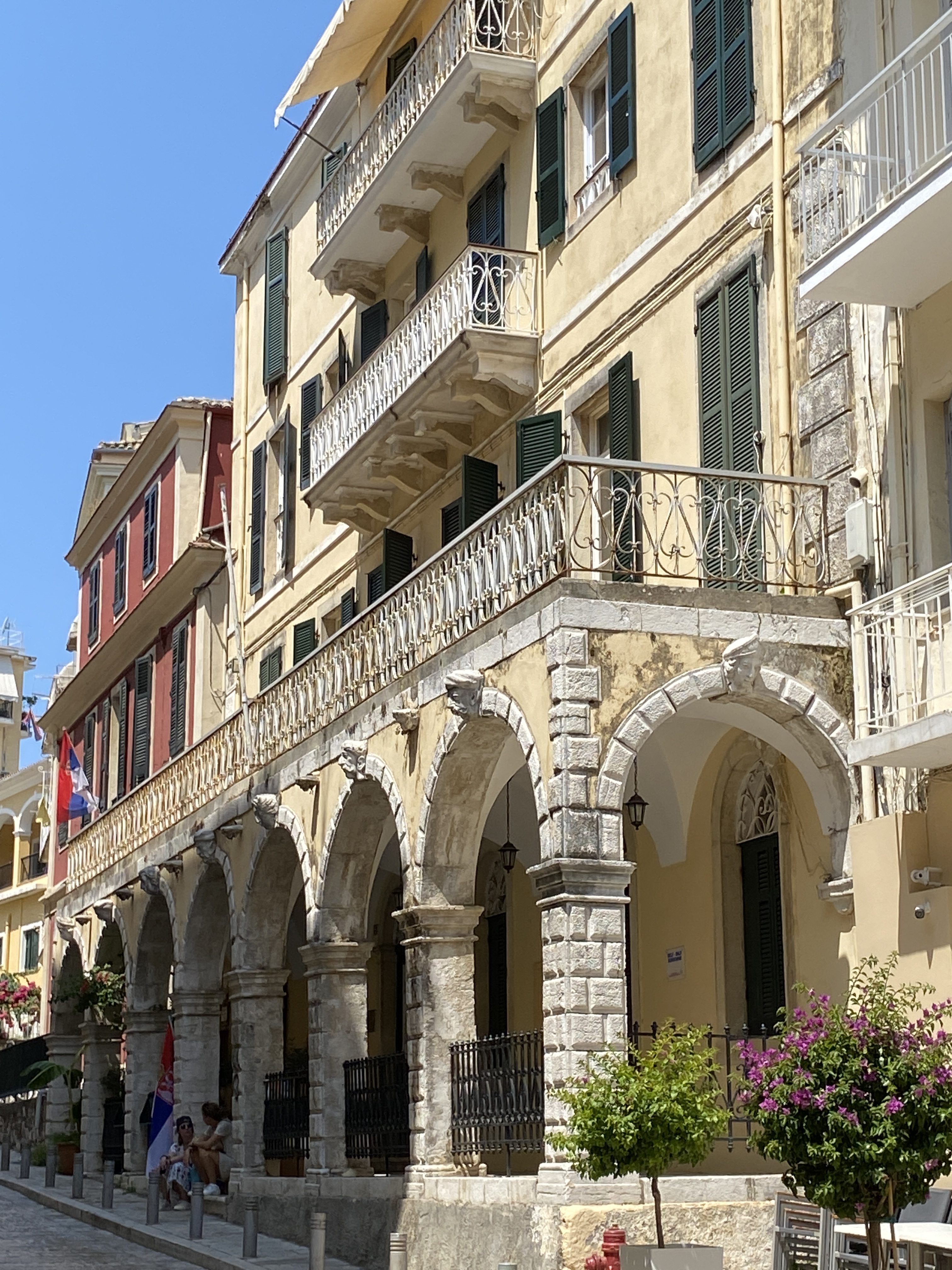
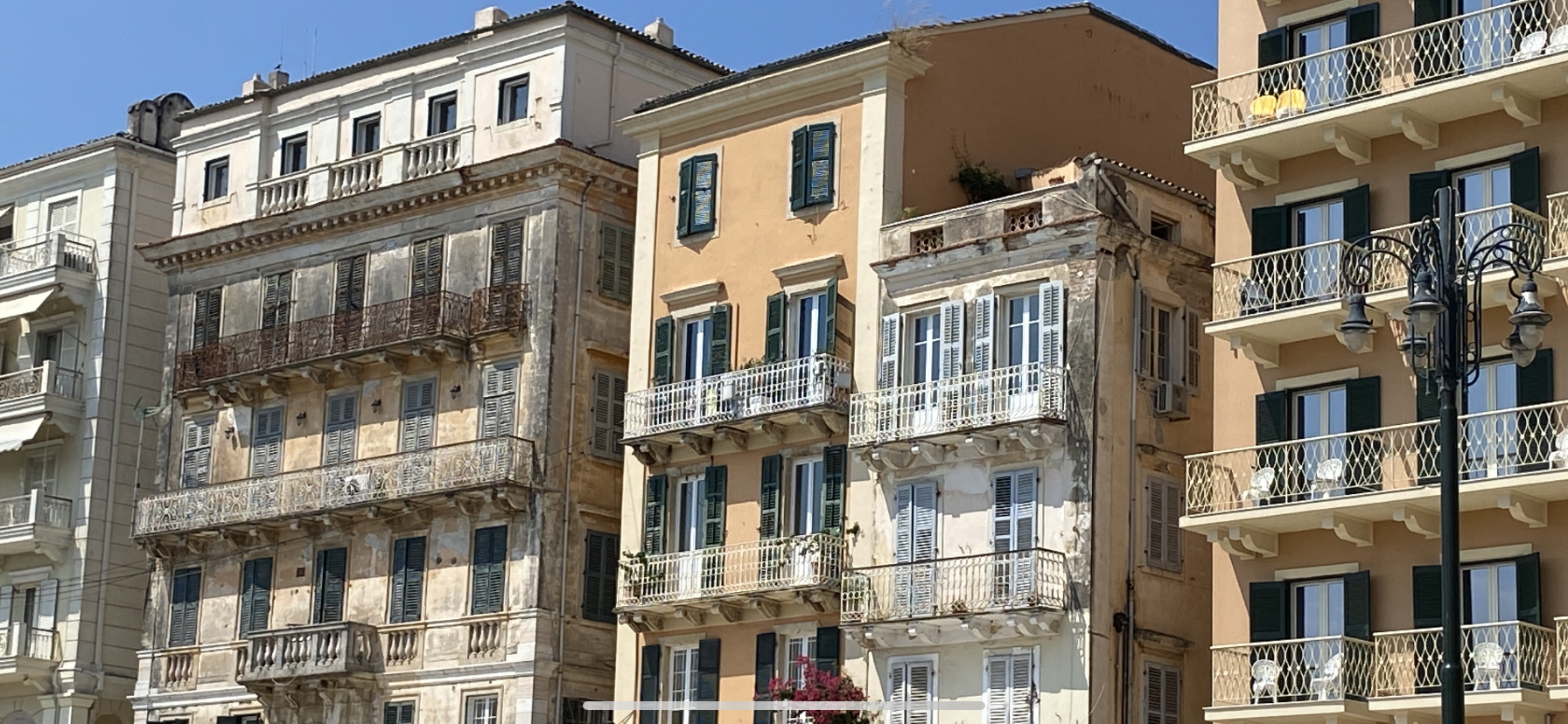
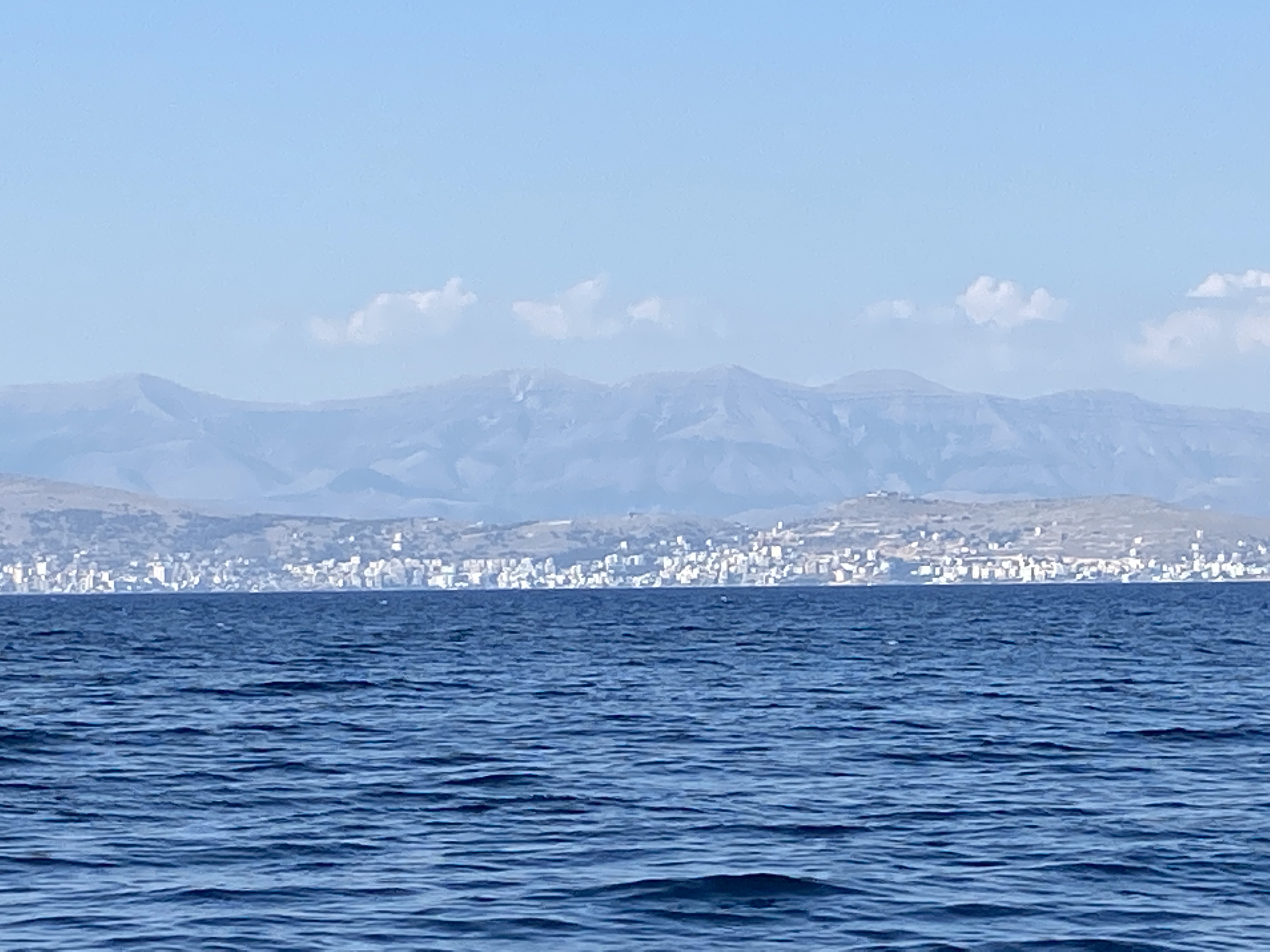
Corfu was also our last port in Greece, so we made the customary trip to the port police, immigration and customs to clear out of the country. This turned out to be somewhat of an ordeal as we had to wait for several hours in the ferry terminal to get our passports stamped. Immigration was short staffed and priority was given to the seemingly never-ending stream of ferry passengers. We were glad to be done with it, and it was with a real sense of anticipation that we weighed anchor and set sail for Albania, where we were sure many adventures were awaiting.
 paseafique
Again a very interesting account of your obviously wonderful experiences in the Ionian Islands. Stunning scenery, glorious colours! The Parthenon came to mind for sure, on seeing the old fortress of Corfu.
Pity your friend suffered covid and a blessing you all escaped it.
The muted colours photo reminded me of a photo of Nick’s that he took with gondolas in the foreground in Venice. I printed and framed it as the colours were so harmonious!
Enjoy Lesley & Phil.
LikeLike
Thanks Lyn.
LikeLike
Just to let you Shands know the world is watching you and Paseafique, perhaps, with a measure of jealousy. So grateful for your posts they truly are wonderful and allow us to escape from our routine lives for a while to join you and marvel at the worlds beauty. spent most of my life wanting to get to Corfu after reading My life and other animals as a teenager. Our prayers with you for safety and health as you continue your lifes wonderful adventure
LikeLike
Thanks very much for your lovely message. Glad you are enjoying the blog.
LikeLike