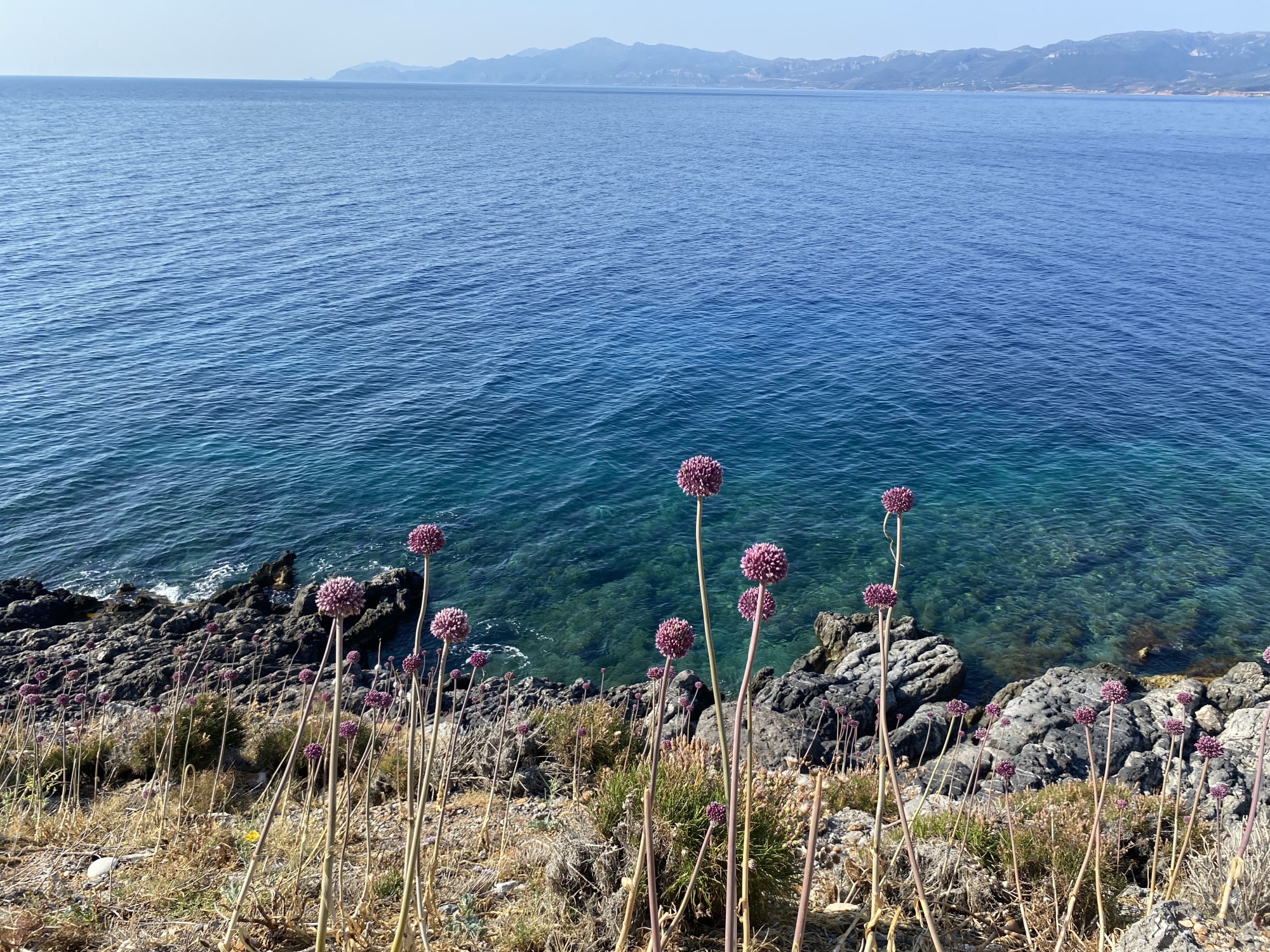
June 2022
Kalimnos – what a delightful place to celebrate our return to Greece and my 64th birthday! After the usual check-in procedure, we sought recommendations for a restaurant favoured by the locals (rather than the tourists) for a celebratory dinner that evening.

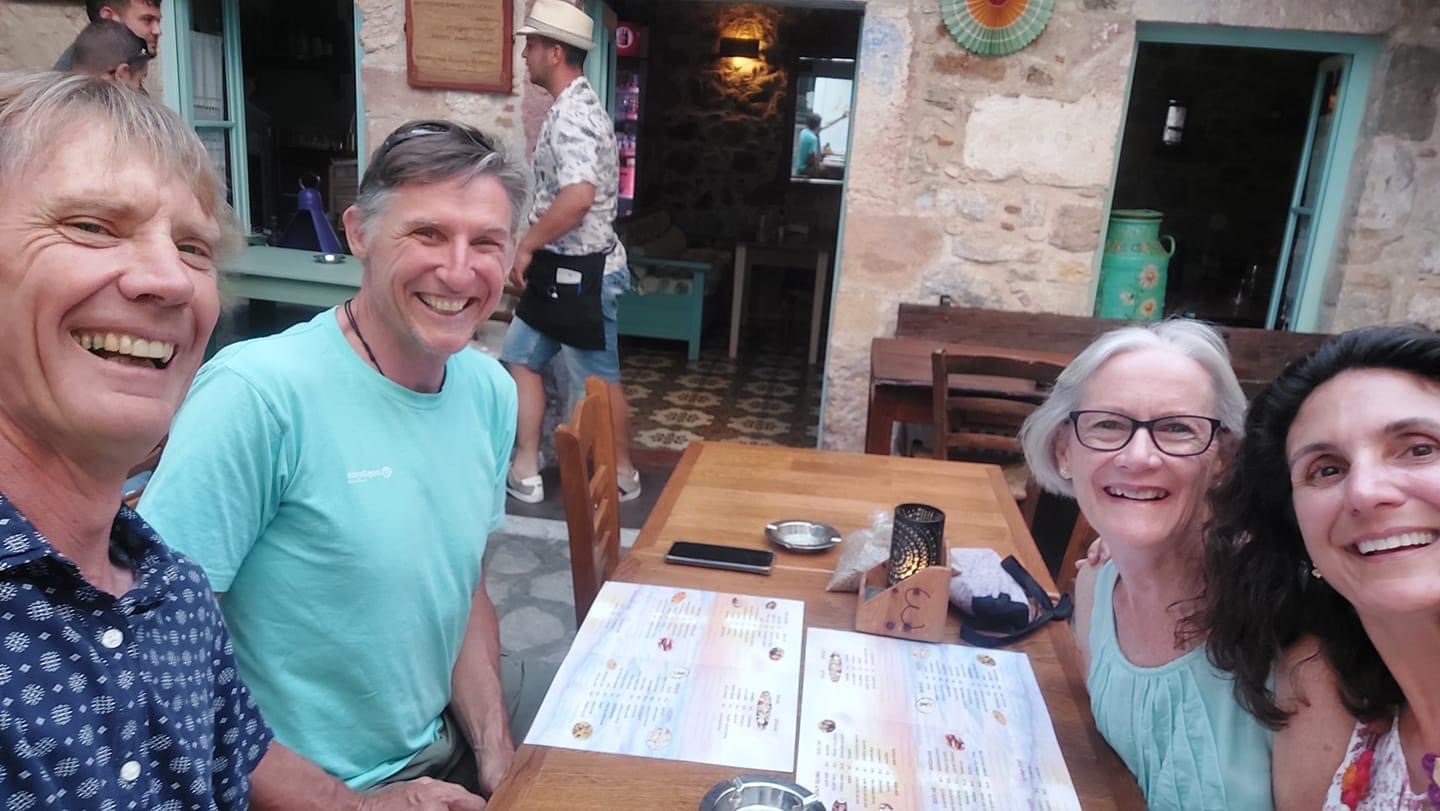
excited to be together at the start of our cruising together and celebrating my birthday
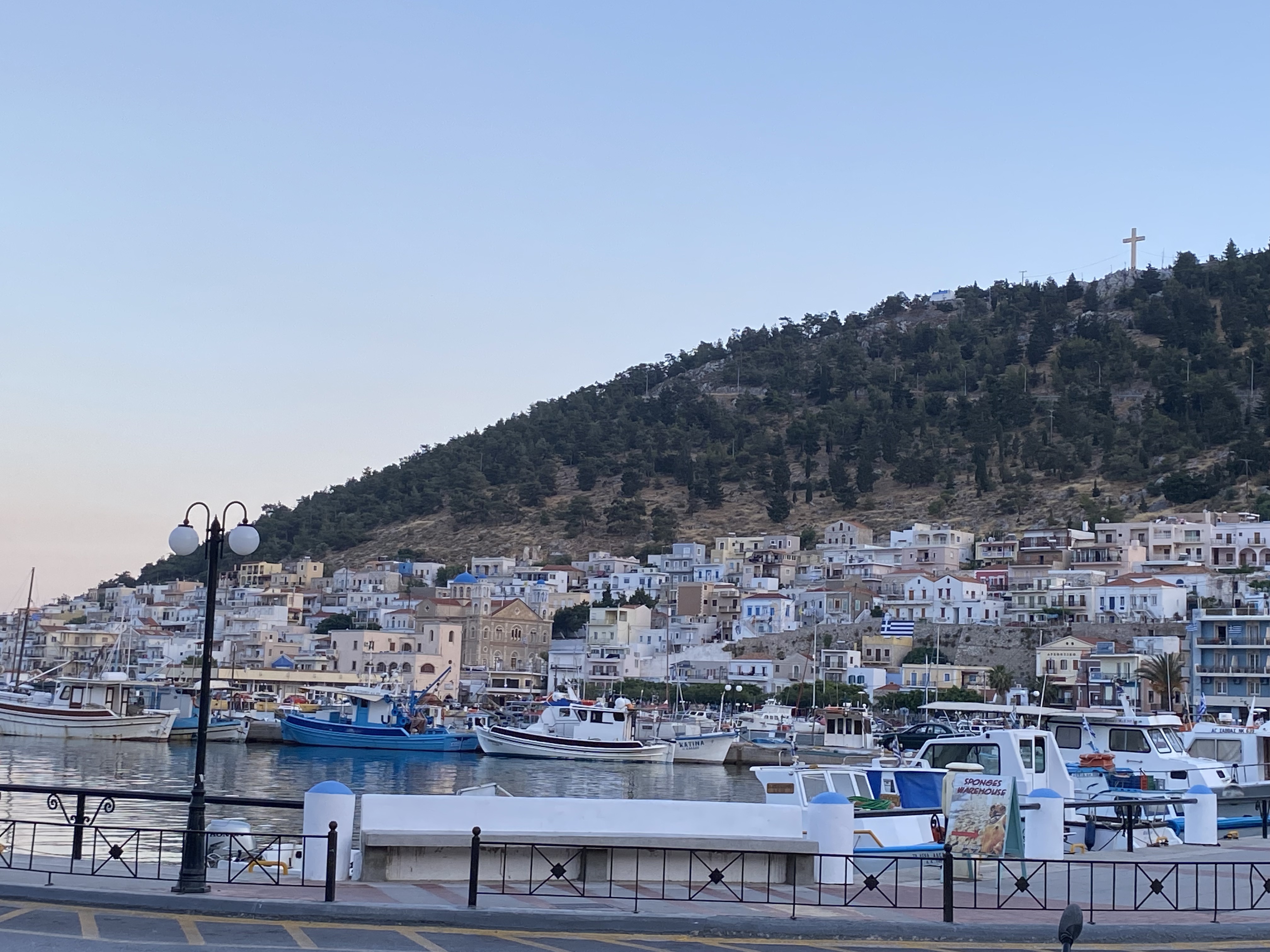
Port Kalimnos, where we anchored, is the centre of sponge fishing in Greece. The industry used to harvest 50 tons of sponge a year but that has decreased to 15 tons per year. As we explored this island, whenever our nationality was revealed, the locals immediately asked if we were from Darwin, not Sydney or Melbourne like they ask everywhere else in Greece. Eventually we discovered that a large percentage of the local population had relatives in Darwin. Migration from Kalimnos to Darwin boomed in the 1950s with Australia’s mass migration program and a strategy to recruit Kalimnian sponge divers to work in the local pearling industry. Today Darwin and Kalimnos are sister cities. Port Kalimnos has a relaxed and friendly atmosphere, and, although tourism is a major source of income, it is still a place where the locals also live and shop.

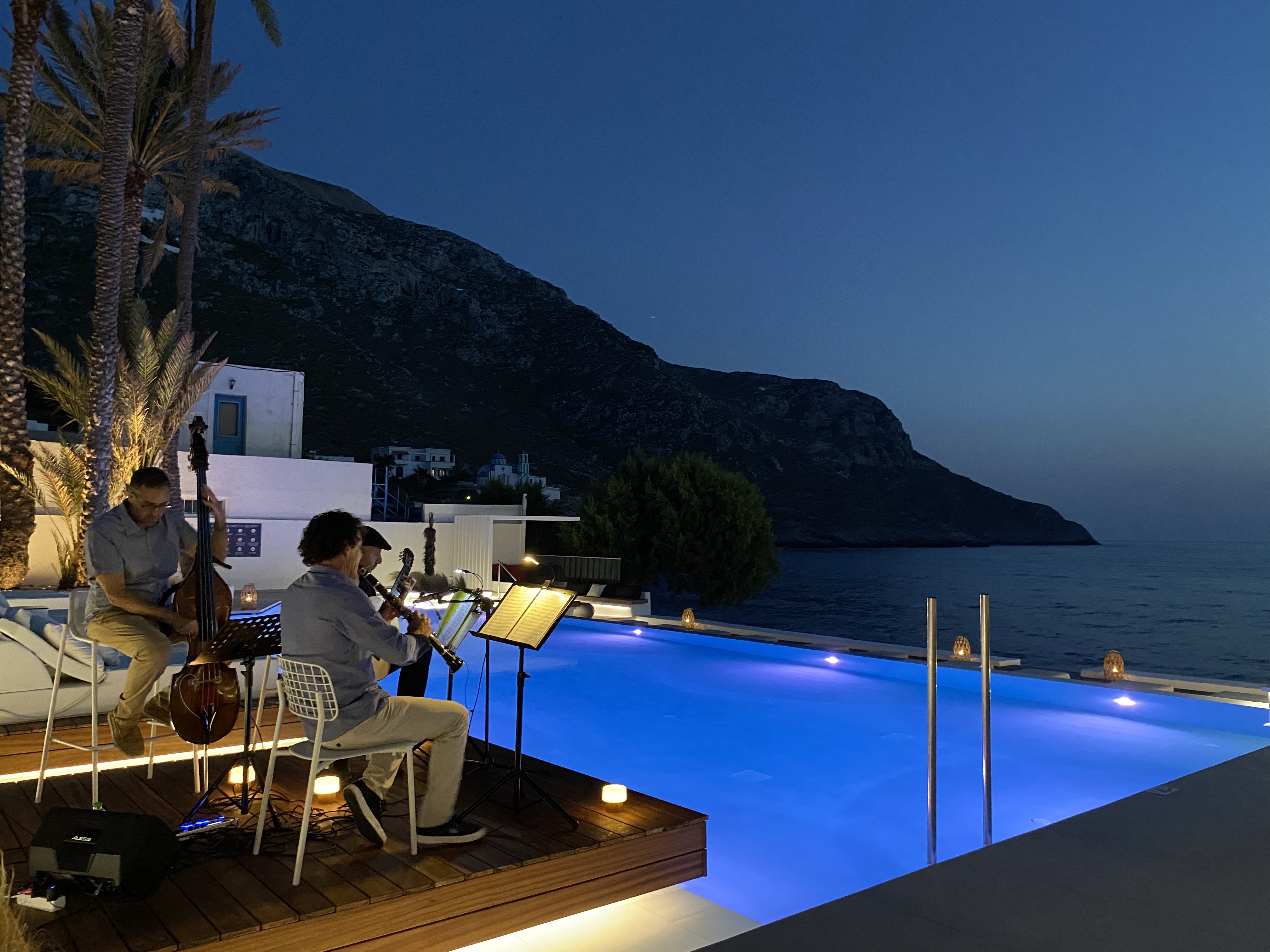
Apart from being a very convenient port of entry, there was another reason for coming to Kalimnos. Adrian, from our buddy boat Anthem, has a very close friend from Australia whose mother is a Kalimnian. Adrian and his friend Steve had a long standing plan that Steve would visit Kalimnos when Adrian made it there. Unfortunately when the time came family illness kept Steve in Australia so his cousin George became our local contact. Now George is a school teacher by day but his passion is music and he plays a double bass in a jazz band. It so happened that the band had a gig one night while we were there. Jazz is not our favourite music, but we went along to the performance with Adrian and Marianna. It turned out to be just magical. The setting for the gig was not a crowded smoky jazz club as I had imagined but a stunning outdoor setting around a beautiful swimming pool overlooking the Aegean. The jazz band was a trio of double bass, guitar, and, my favourite, saxophone. The music was “soft” jazz and their set included some beautiful numbers like “What a wonderful world”. It was a lovely evening and very enjoyable to meet George and his parents who had come along to meet Adrian and Marianna.
Due to his friend’s connection with Kalimnos, Adrian decided to spend more time there and really explore the island, so we moved on with a plan to meet up a bit further west across the Aegean. We chose the islands we visited based on the wind direction and so it was that we spent an amazing couple of days on Santorini. I had previously researched options for going there and we had ruled it out as too difficult, mainly due to problems finding a suitable place to anchor. As you can imagine the depths in the volcano caldera are prohibitive and there are very few mooring buoys available to cruising boats. The alternative anchorage around the south side of the island can suffer from swell which can make for very uncomfortable conditions, especially for sleeping. But a chance meeting with a very friendly French couple on Amorgos, who told us about a mooring buoy option in the caldera and expressed just how stunning Santorini is, made us re-think our plan. We are sooooo glad that we did as it was definitely one of the highlights of this season.
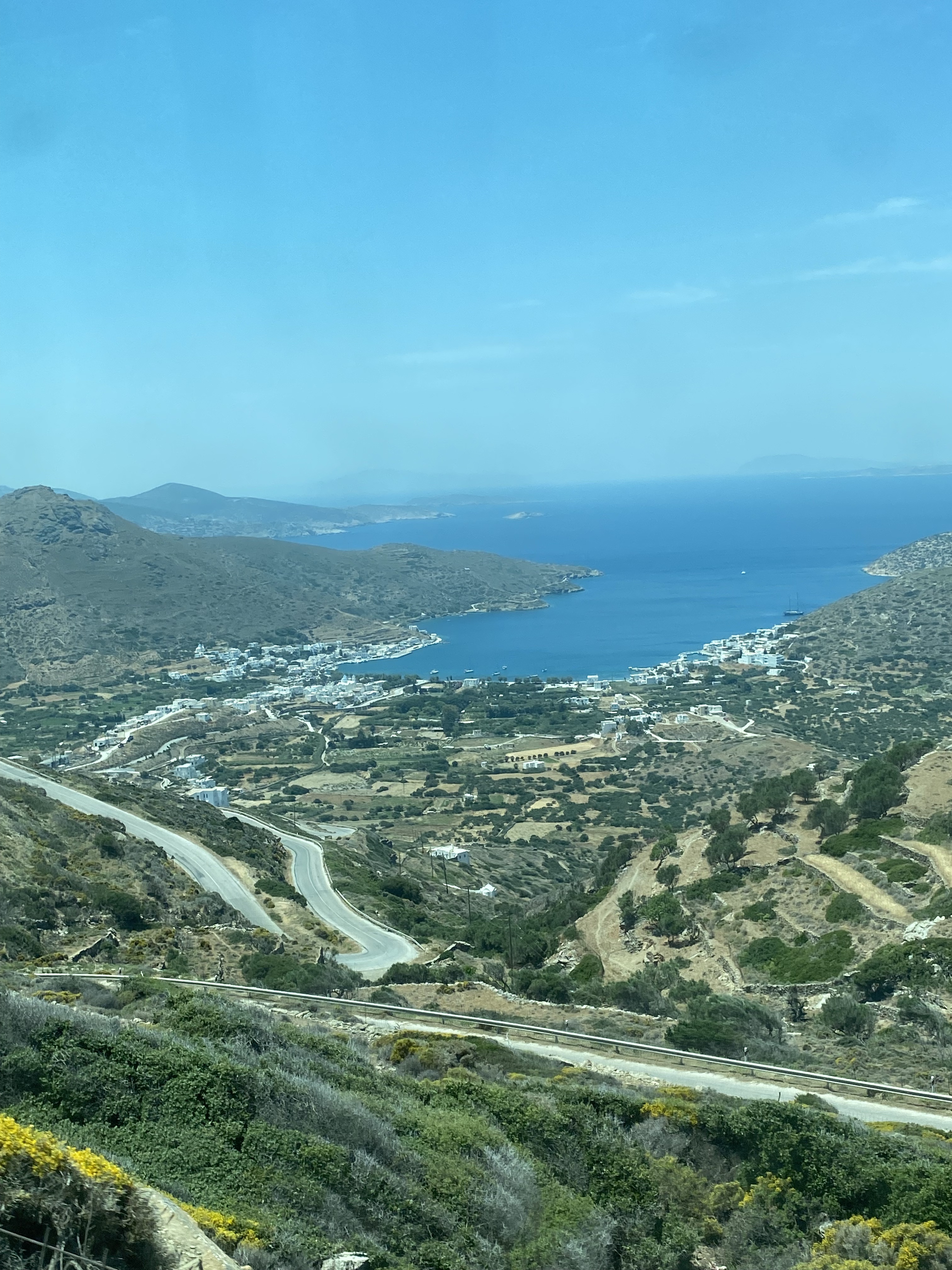


We had a lovely downwind sail from Amorgos to Santorini, averaging 6 knots per hour. We had decided to try for the potentially swelly (not smelly) anchorage on the south side, and if we found it to be untenable we planned to move around to the mooring buoy in the caldera. The anchorage turned out to be satisfactory so we settled in there and went to explore the nearby Akrotiri ruins. This was the site of the earliest settlement on the island, and it eventually became an important maritime city. It was struck by an earthquake in mid 1700 BC and re-built. There was another earthquake at the end of the 17th century BC and then BOOM, the volcano exploded and covered the city with ash, and created Santorini as we know it today. The excavated city has been covered by a building for protection, and we were initially underwhelmed by the ruins. However, as we progressed further through the area, it became more interesting and we were able to actually follow a path through the buildings for a closer view.

Excavated Akrotiri ruins covered with pale ash

An excavated store room

An almost completely excavated house. The city was quite well developed as there is evidence of a drainage-sewage system, and rich decoration of the houses
The next day we caught the bus to the village of Fira located on the rim of the caldera and walked from there along the rim to the village of Oia on the northern tip of the main island. Of course the island was full of tourists (like us), restaurants, fancy accommodation, and souvenir shops. Even though it was early June, it was very busy indeed and we were glad that it was not peak season as it would have been very difficult to walk around. The scenery was absolutely breathtaking and we found it hard to take our eyes off the magnificent sight.

The magnificent caldera which was created when the eruption of the magma in the volcano caused the cone to collapse instantly -that’s a big bang (not the Big Bang though)

The village of Fira on the rim with the old Fira port down below
By mid June we were half way across the southern Aegean, so we kept heading west to the Peloponnisos – the southern part of mainland Greece, via a short stop on Milos where we were joined again by our friends on Anthem. The first port of call was the stunning old town of Monemvasia – another historic port of strategic significance due to its location, forceful rulers and a powerful local church. Like much of the eastern Mediterranean, it has had a chequered history under the rule of the Romans, Franks, Venetians and Ottomans. It eventually became part of the new Greek state in 1828. The lower part of the city has been restored and is still inhabited by locals, with some tourist accommodation and restaurants, while the upper part is an archeological site. It was just enchanting wondering through the old winding streets, and for us the archeological site was another absorbing window to the past.
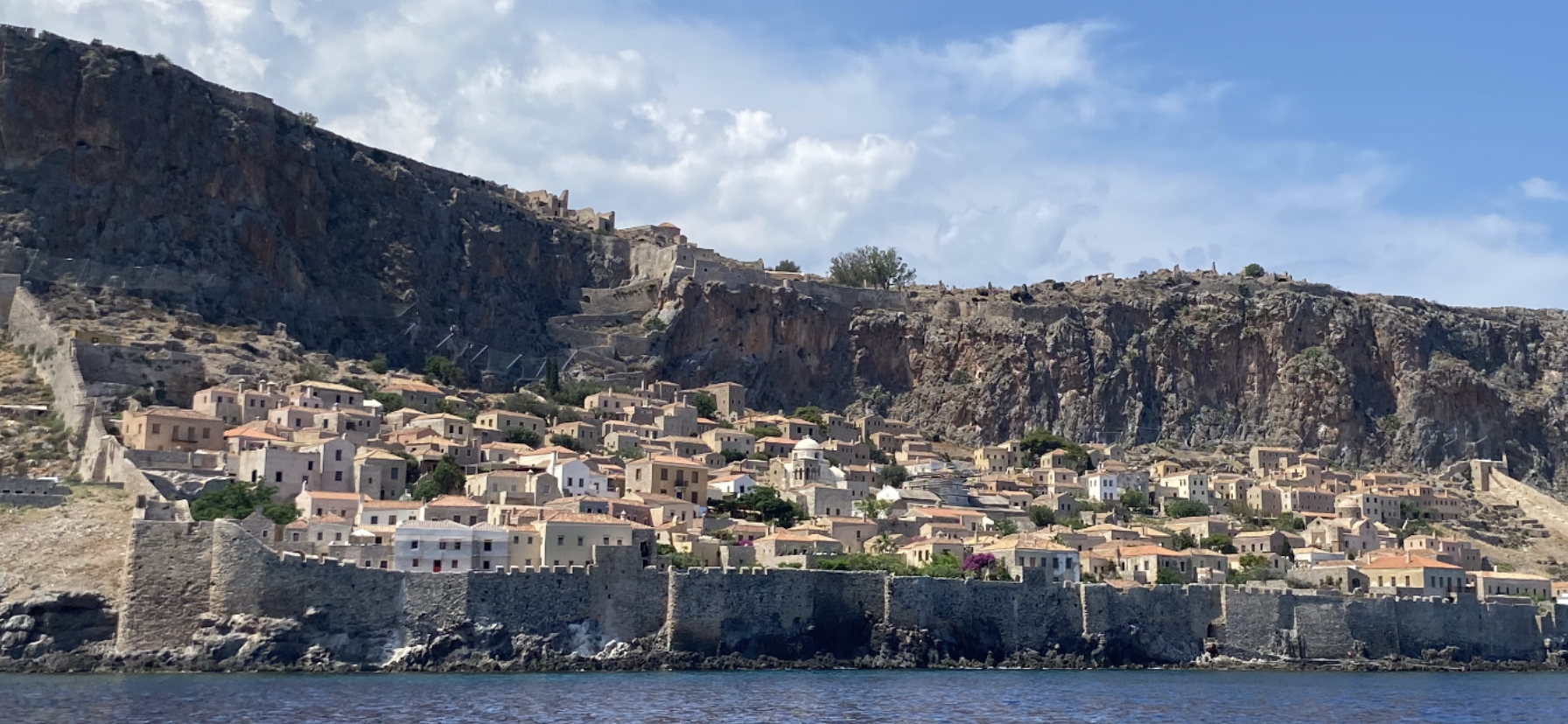
The view as we sailed into the anchorage. You can see the well restored lower part of the city and then part of the ruins of the upper city at the top.

The city wall
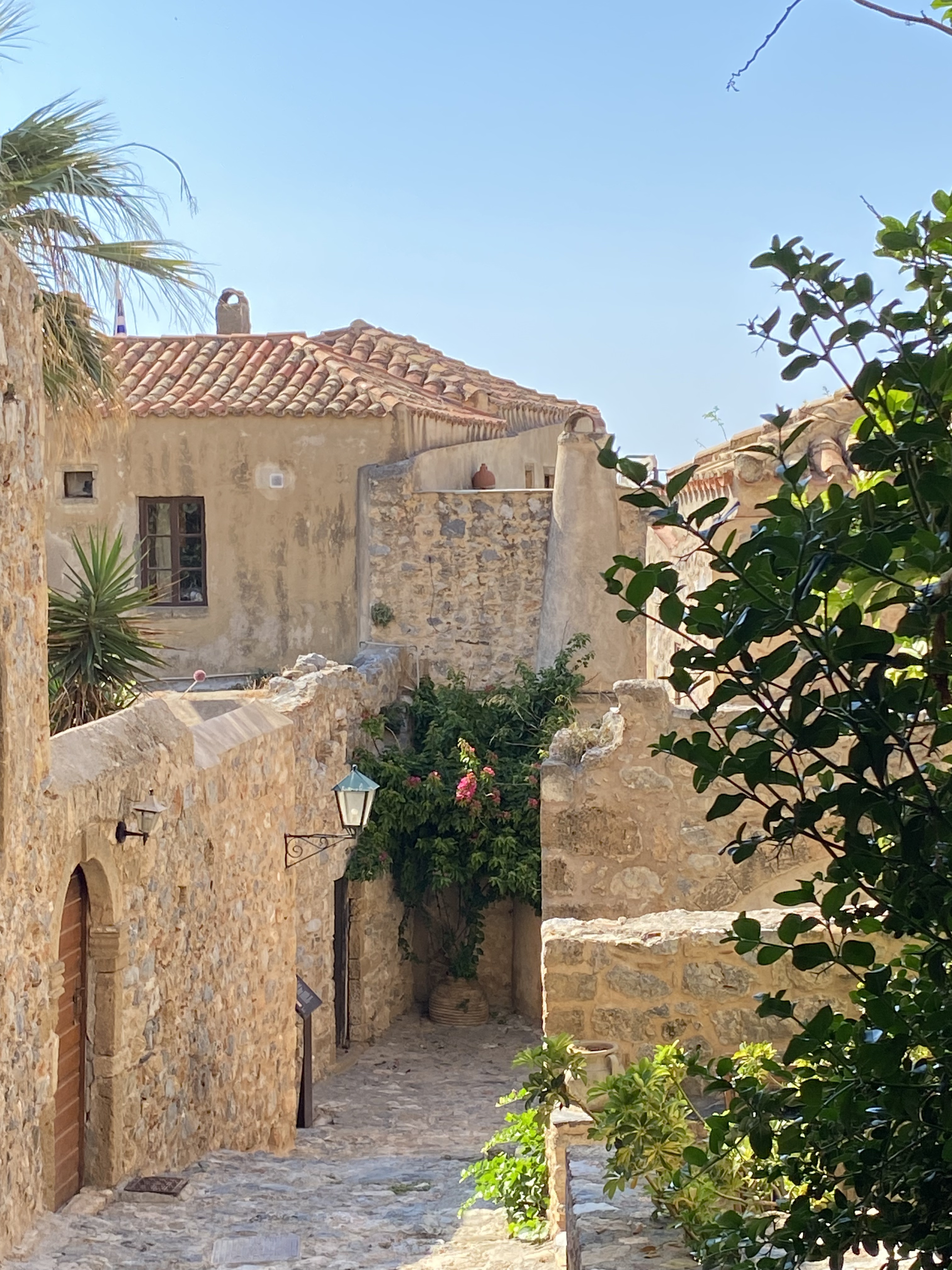
Street scene – the old city has been sympathetically restored

We steeled ourselves for the passage around Cape Maleas, the southern most point of mainland Greece with a somewhat fearsome reputation for dishing up bad conditions with bullets of fierce wind, swell and current. Some yachties have reported shredded sails and all sorts of other catastrophic outcomes. As if often the case, the anticipation was far worse than the experience. We had benign conditions with just had some lumpy swell. Having rounded the Cape, we bade farewell to the notorious and difficult summer Meltemi winds of the central Aegean Sea.

Cape Maleas
 paseafique