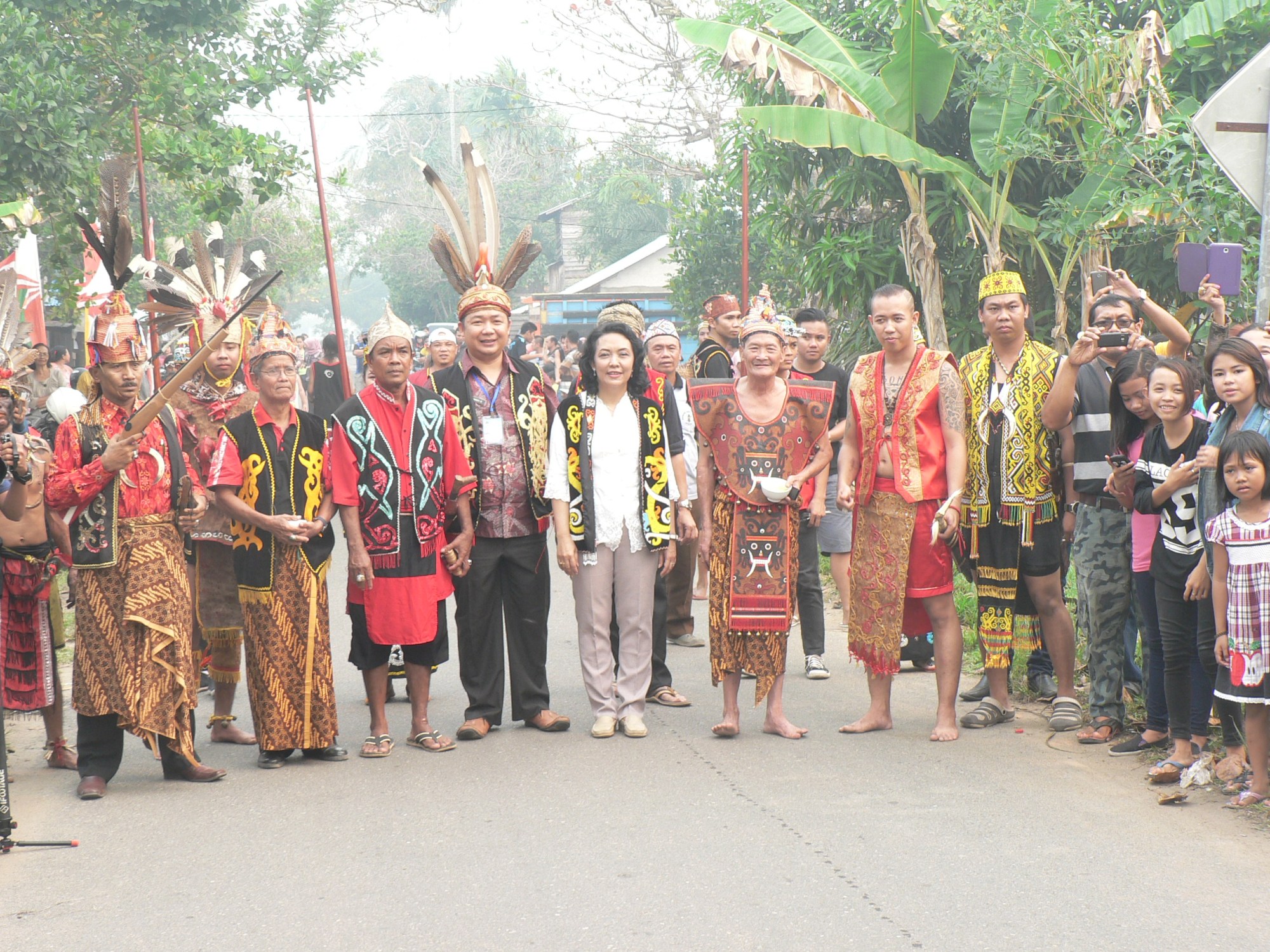
We reluctantly left Bali and made our way to Karimun Jawa which was a nice spot for a short stop but absolutely pales into insignificance in comparison to Ketapang. I’m not sure that I will be able to do justice to our experience in there, but I’ll give it a shot anyway. To set the scene, Ketapang is situated a few miles up a river on the coast of West Kalimantan (the island that some of you may know as Borneo). Neither of the two Indonesian yacht rallies had ever visited there before, and although they do have tourists, it is not a particularly popular destination. There had been a lot of chat amongst the fleet about the potential for smoke haze in Ketapang, as this area has been affected this year by the fires that occur annually in Indonesia (notably Kalimantan and Sumatera) and about which some of you may have seen reports in the Australian press. One of the other planned rally stops in West Kalimantan, Kumai, had been cancelled due to the haze. However, we were keen to get to Ketapang as the program promised exposure to the Dayak culture. The Dayak’s are the indigenous people of Kalimantan and their culture is pretty full on and quite different to other parts of Indonesia. So we decided to give it a go, promising ourselves that we could always move on quickly if the smoke haze proved too much.
After sailing for just over 40 hours (some of which was pretty uncomfortable), we arrived to a most unusual scene of several ships aground in the channel and which we could just make out through the smoke haze.
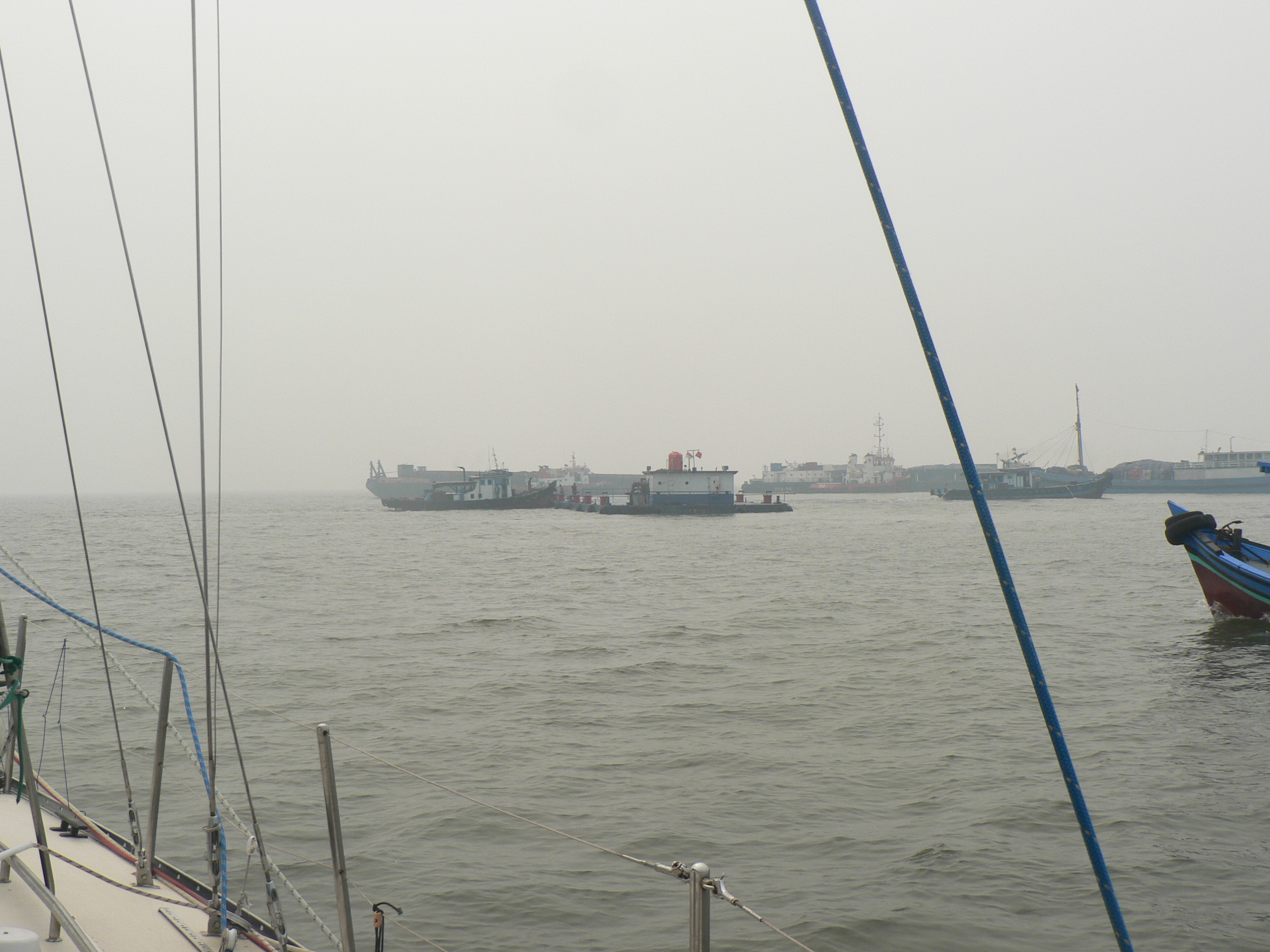
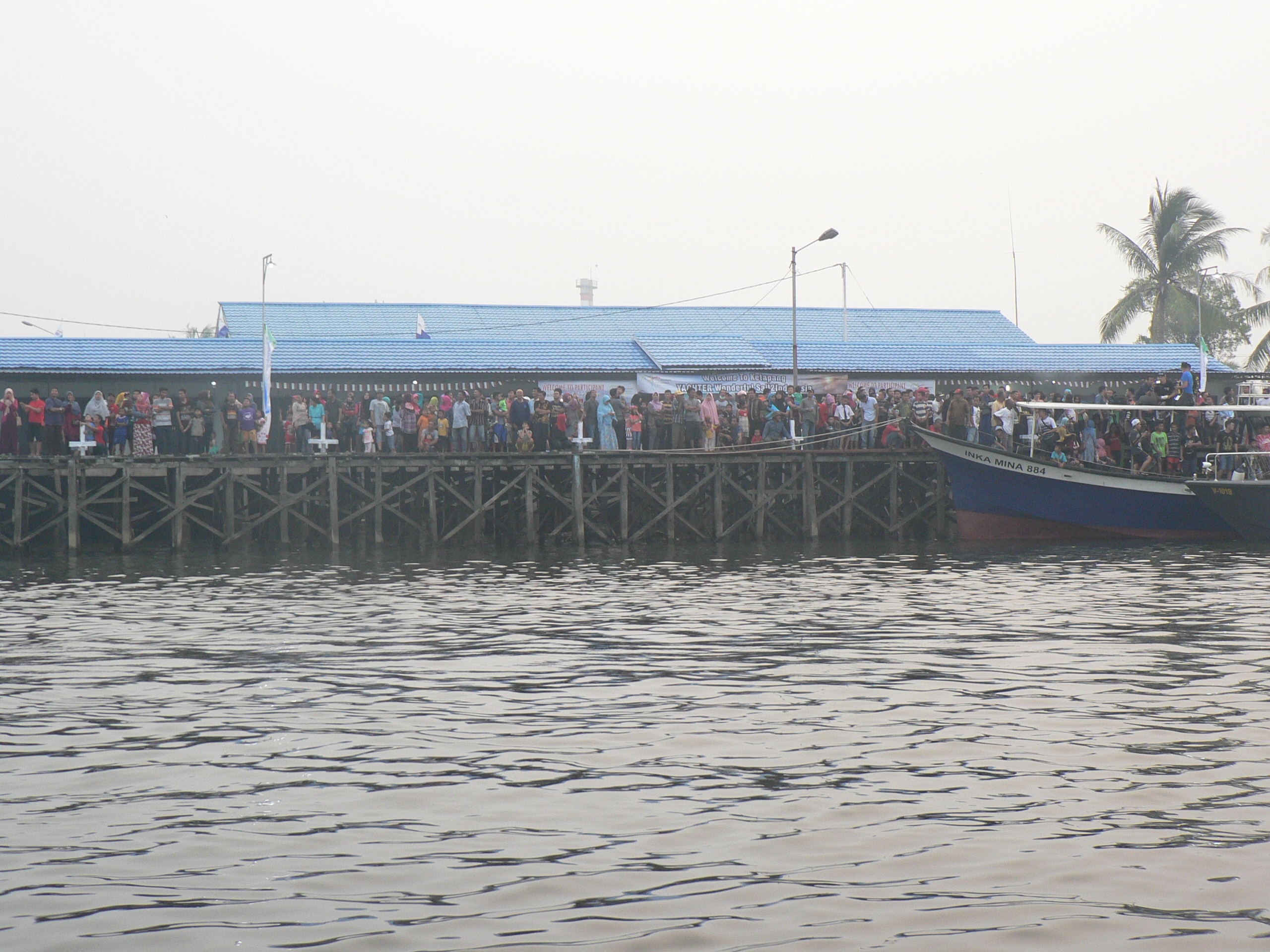
As you might expect it was very very shallow here and navigating to the channel and through the first part of it was going to be a challenge, particularly as visibility was very poor (we could not even see the shore line). We were very glad that the organisers had arranged for a local boat to meet us and guide us in. We motored up the river to the designated anchorage and got ourselves settled. At the urging of the only other boat there (Evan on Amity), we quickly got tidied up and went ashore as there was a very large contingent eagerly awaiting our arrival. We three (Evan and us) were greeted at the dinghy dock and accompanied along the pier to applause, smiling and waving.
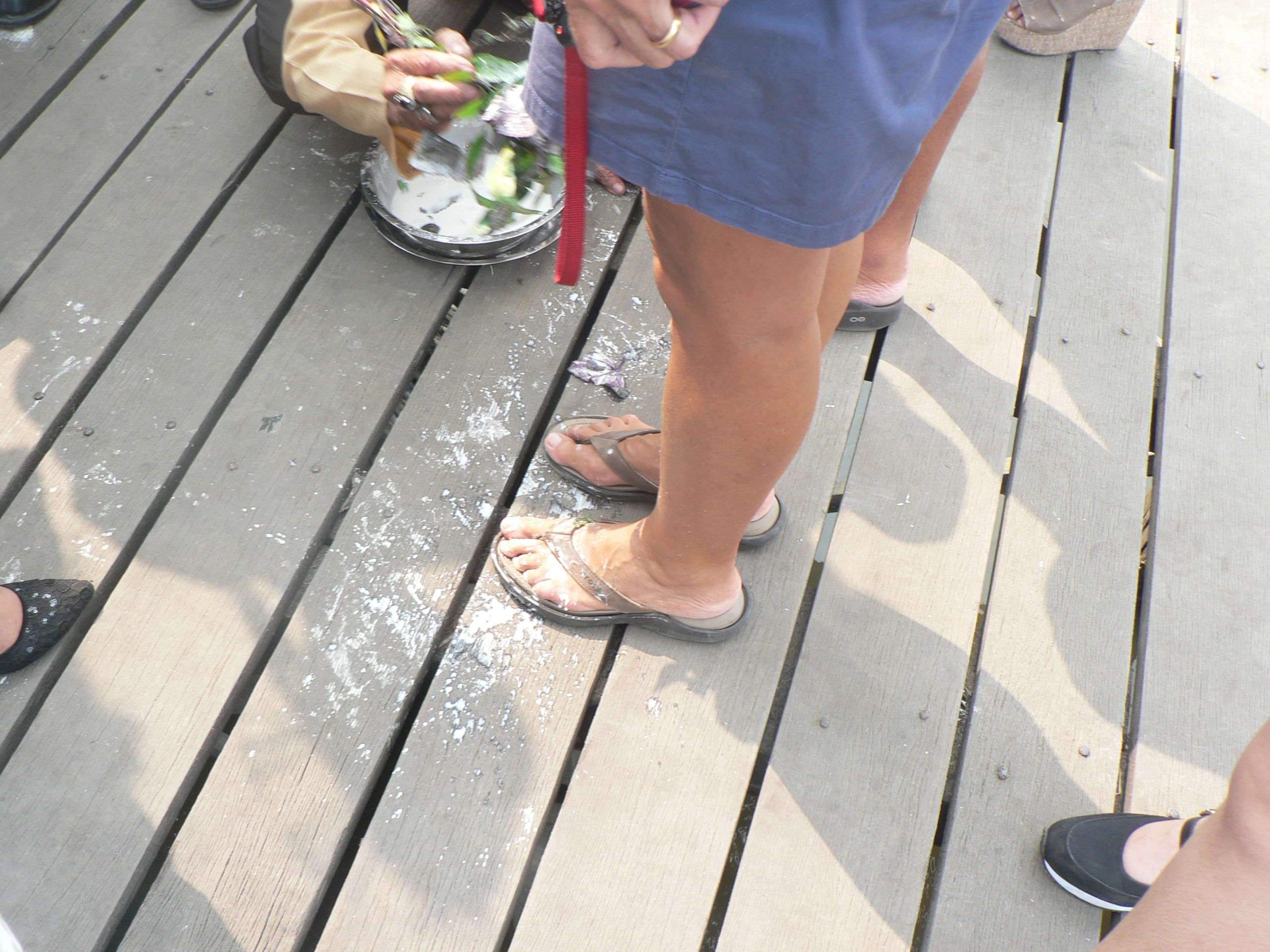
We were stopped at the end of the pier, adorned with traditional scarves, and an old man splashed some white goo on our feet (and shoes) using a bunch of leaves as a kind of paint brush. This was to keep us safe while in Ketapang. I was wondering what on earth the white goo was but it turned out to be some kind of floury paste which actually washed off the shoes ok.
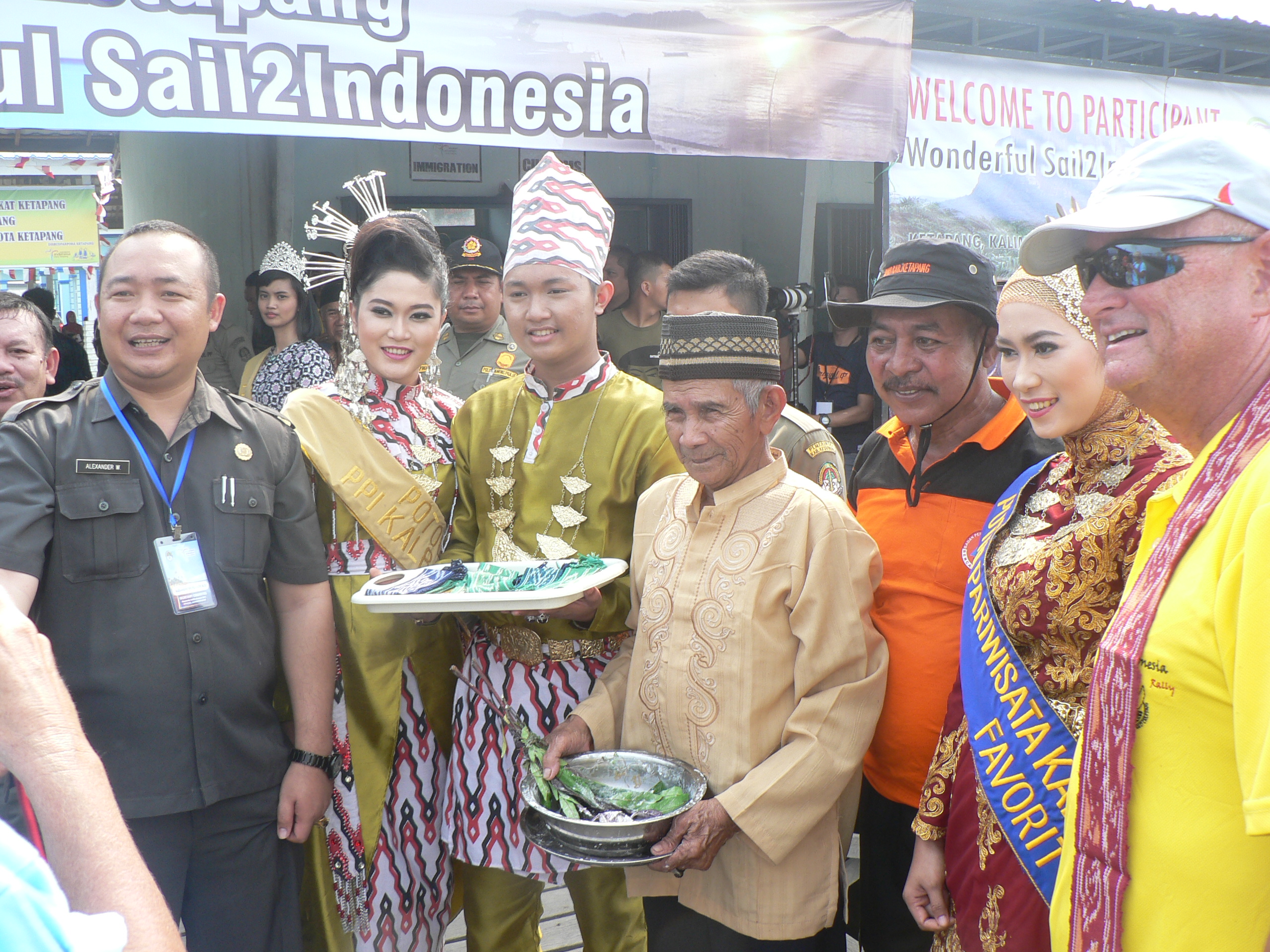
Traditional dancing followed and we were seated and then provided with some very delicious snacks. This was repeated for each group of boats that arrived, although I think we probably had the biggest crowd as we were the first ones. One of the people in the crowd was a Scottish woman, Gail, who turned out to be from the International Animal Rescue (IAR) Centre, which runs an orangutan rescue and rehabilitation centre just outside Ketapang. She invited us to visit the centre the next day and we eagerly accepted her invitation.
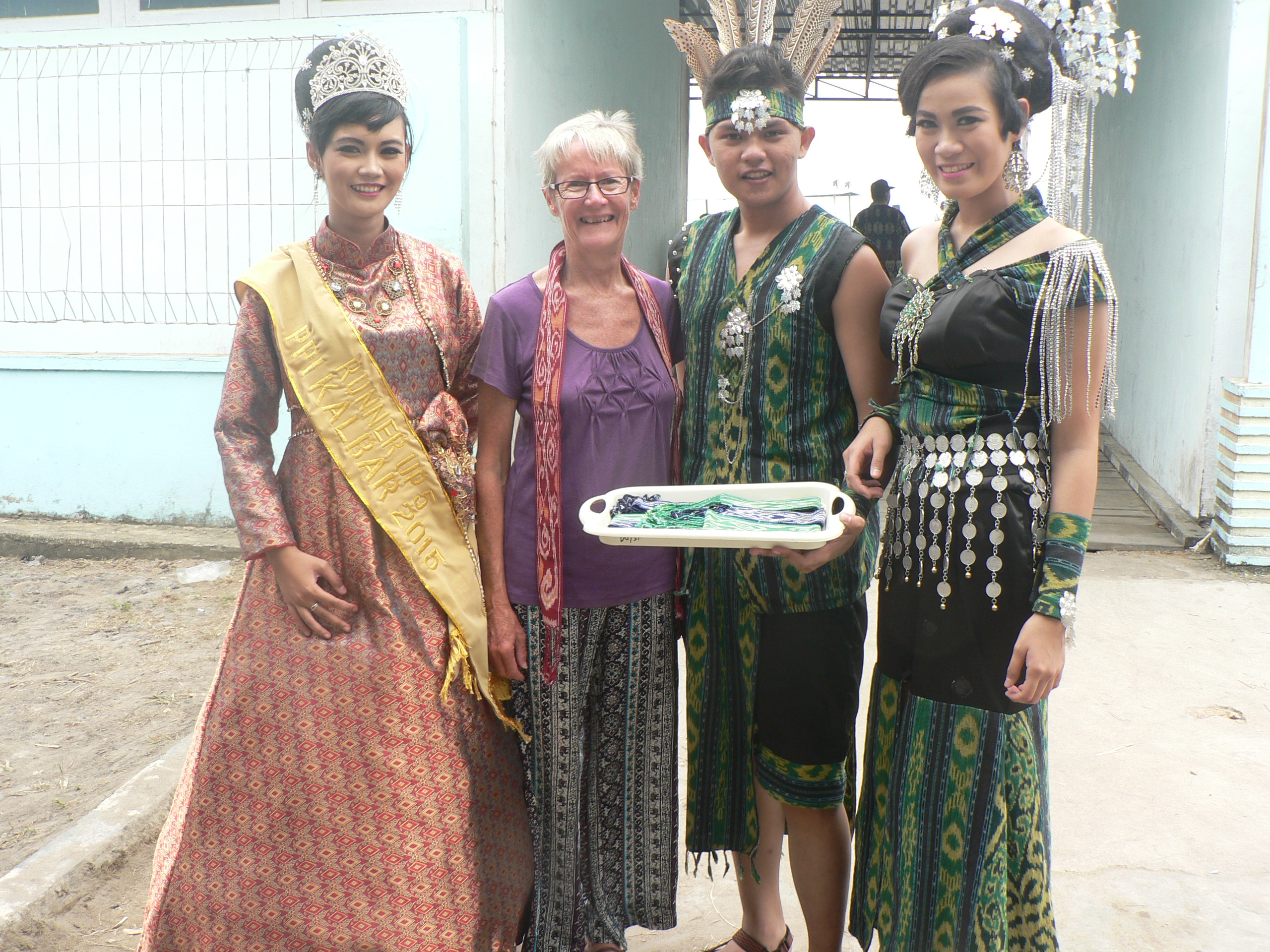
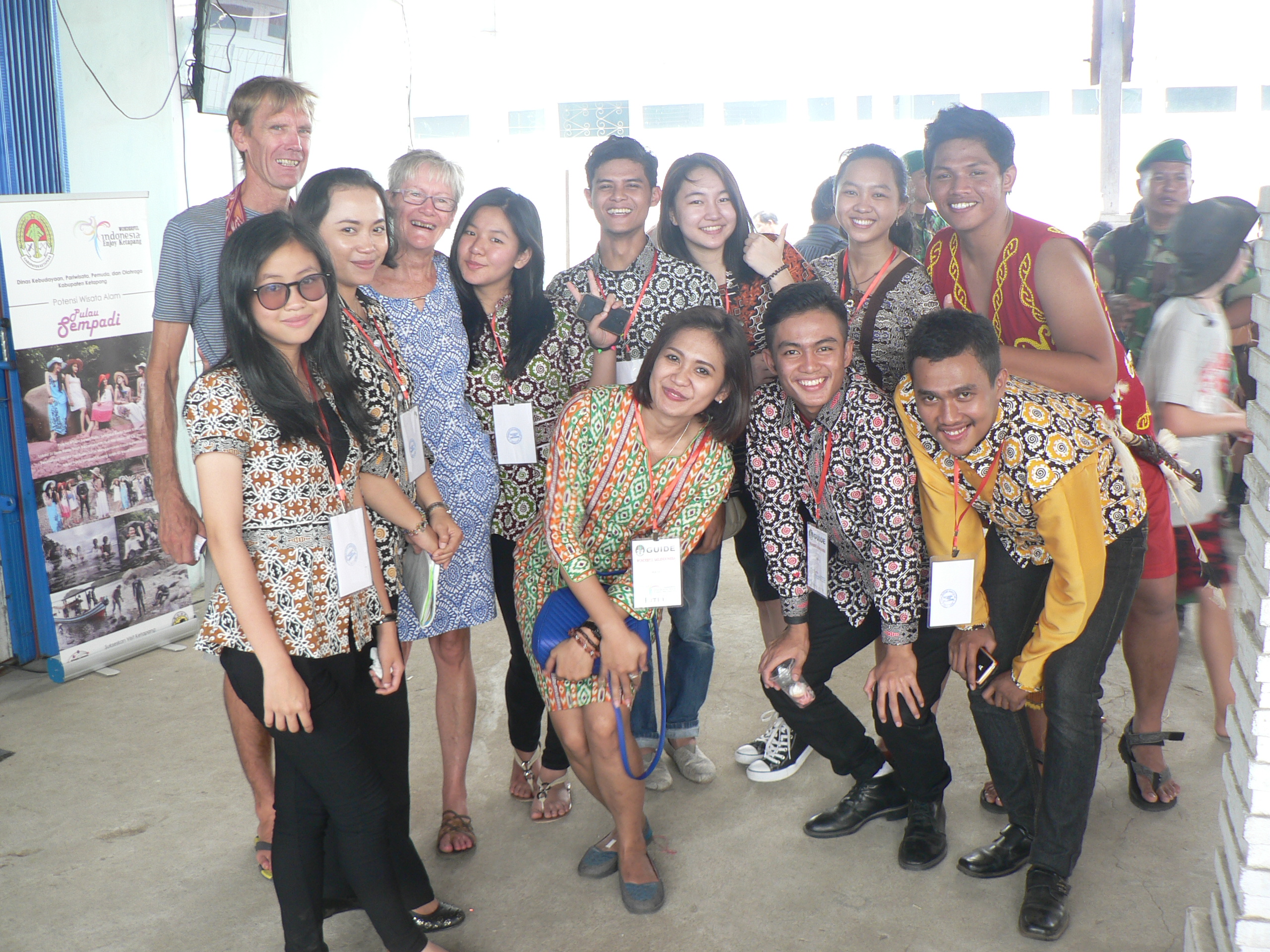
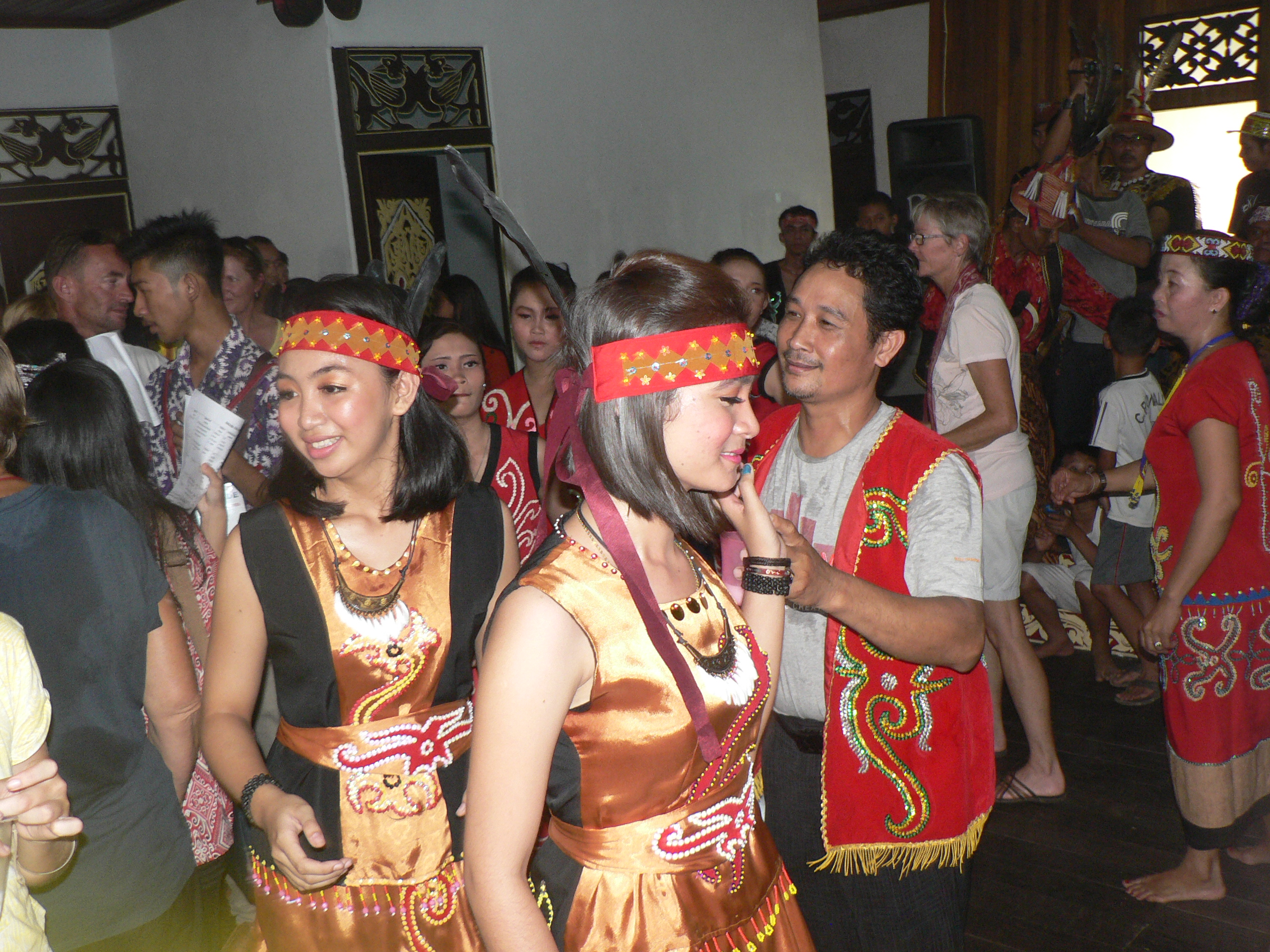
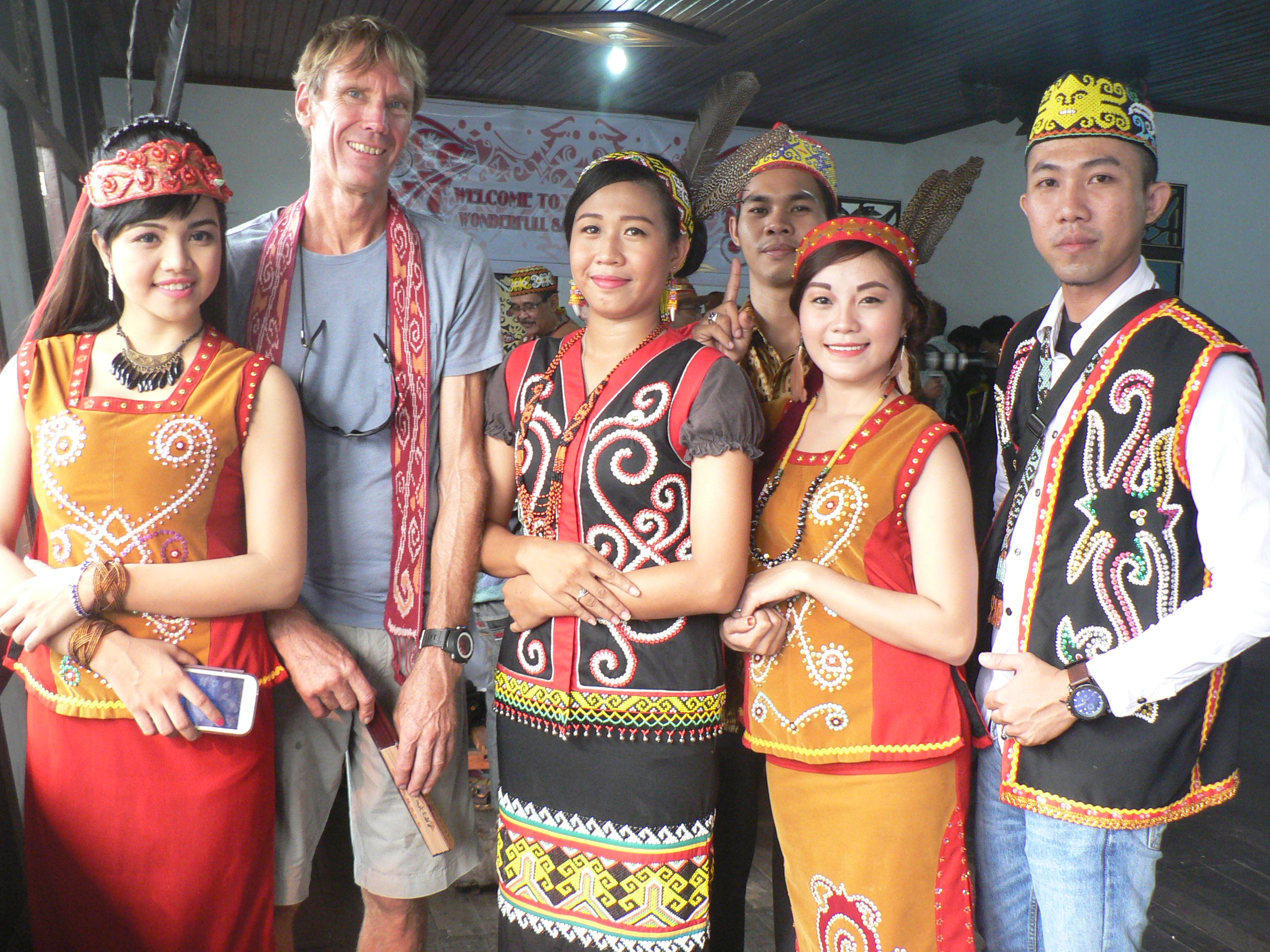
The local organisers had recruited 50 local high school and university students to act as hosts and guides for the visiting yachts. This was a stroke of genius as these kids made our stay in Ketapang delightful. They were so warm, friendly, enthusiastic, knowledgeable, extremely polite and spoke good English. Every time we went ashore, one of them would greet us at the dinghy dock and walk with us to the office and waiting area, and again on our return a couple of them would always be there to help us carry any shopping etc and get back into the dinghy. They also quickly learned our names and so would always greet us personally. Some of them were actually crying when the boats finally left.
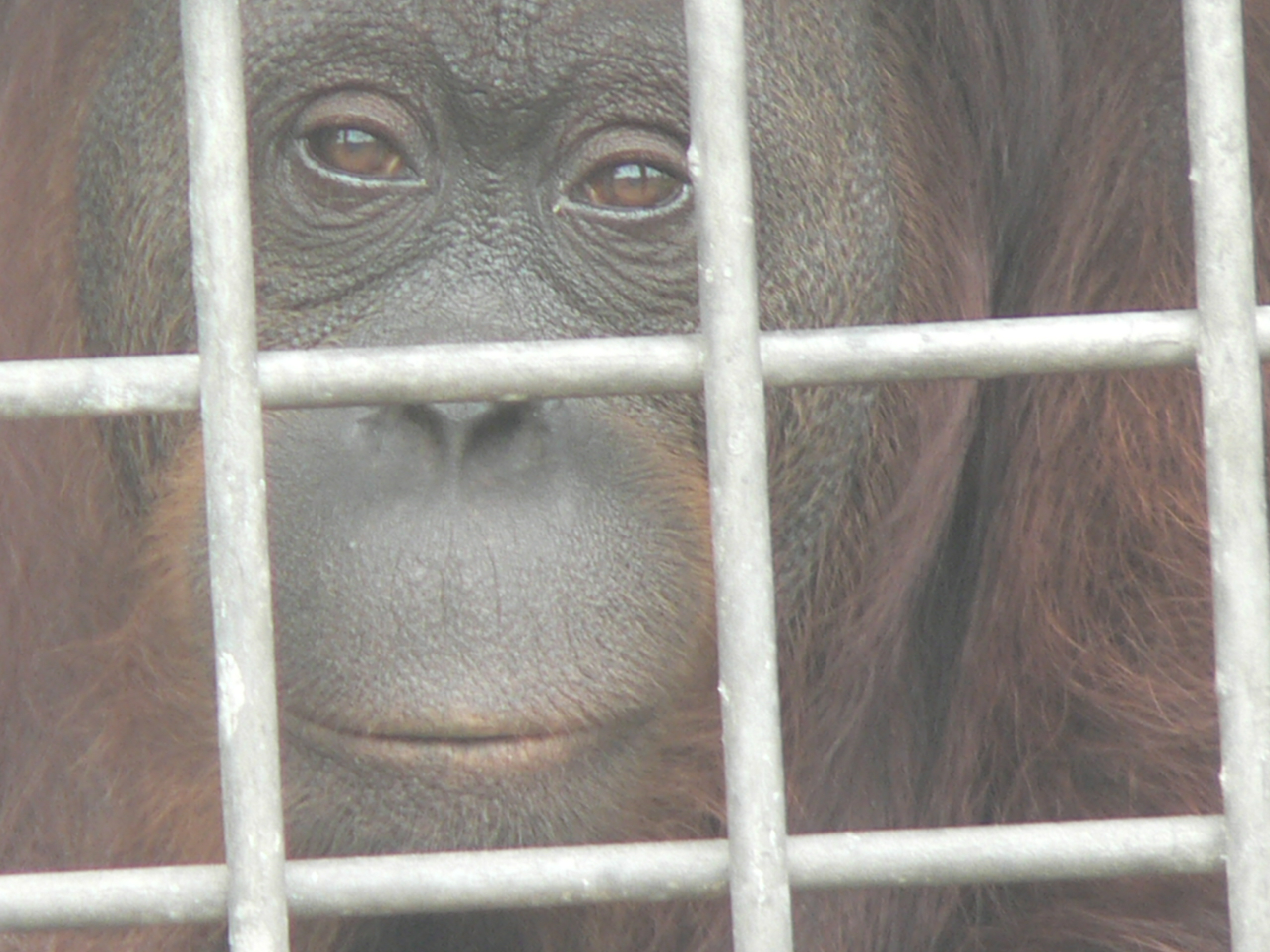
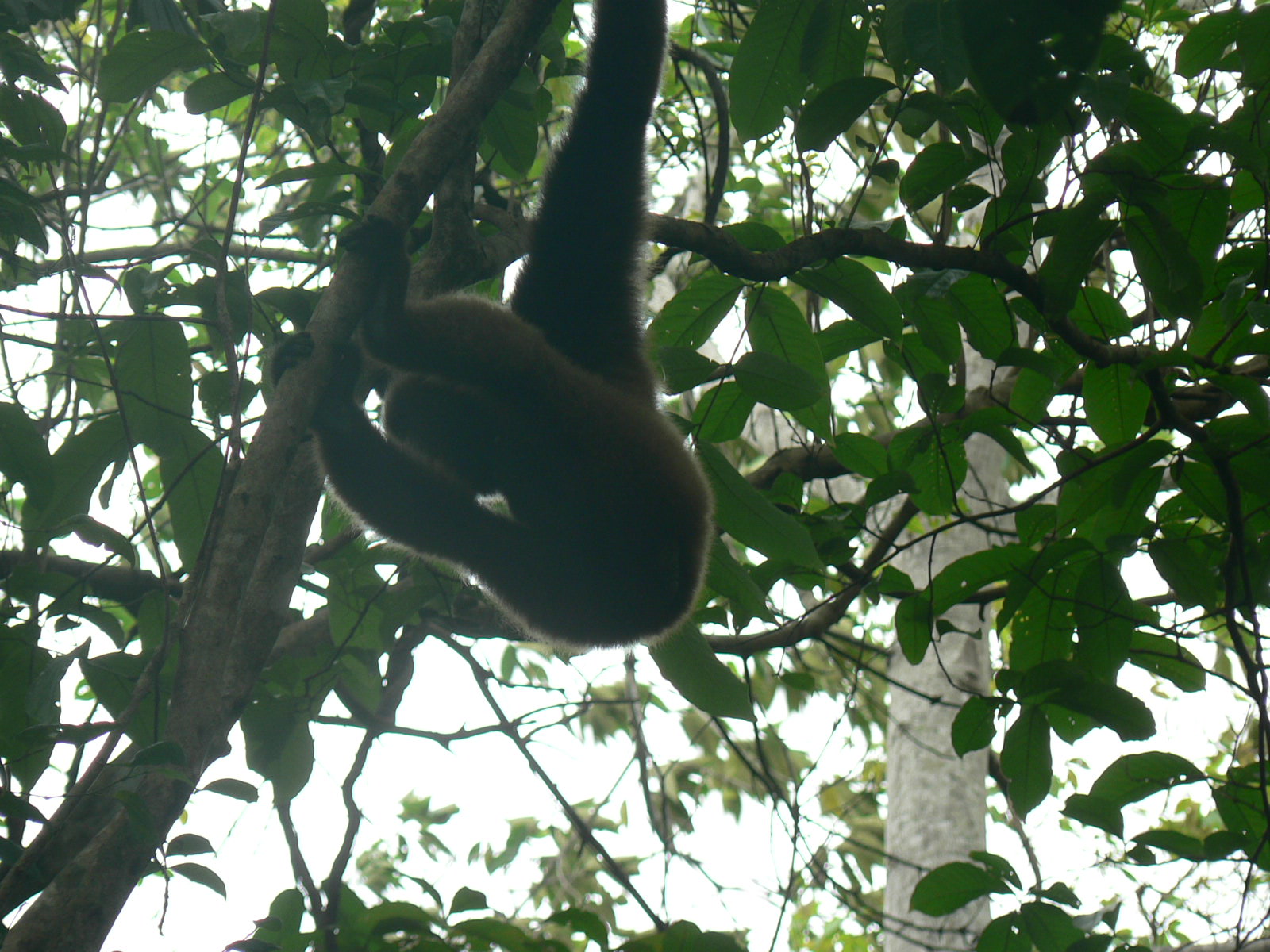
The next day, the organisers had magically arranged a car to take us to the IAR. This proved to be a very interesting visit. We learned a lot about the centre and its work from a presentation given by Gail that was followed by a video. The main focus is on rehabilitating orangutan displaced by forest clearing for palm oil plantations. They have a lot of very young orangutan who spend their days in school, learning how to live independently. The staff have some very creative ways to teach them to forage for food up in the tree tops and also to make a nest for sleeping each night. We were not able to see any of the orangutan in the rehab program as contact with humans is strictly limited to the staff. We did see the orangutan who would not make it back out to the forest and who will spend the rest of their lives in enclosures at the IAR. On the way back from the IAR, we visited a conservation area/park where we were able to see monkeys and a gibbon in the forest.
We fitted in a day of shopping for groceries and clothes – again accompanied by a couple of guides, and would you believe an escort of two police motorcycles, one in front and one behind, to clear the way through the traffic.


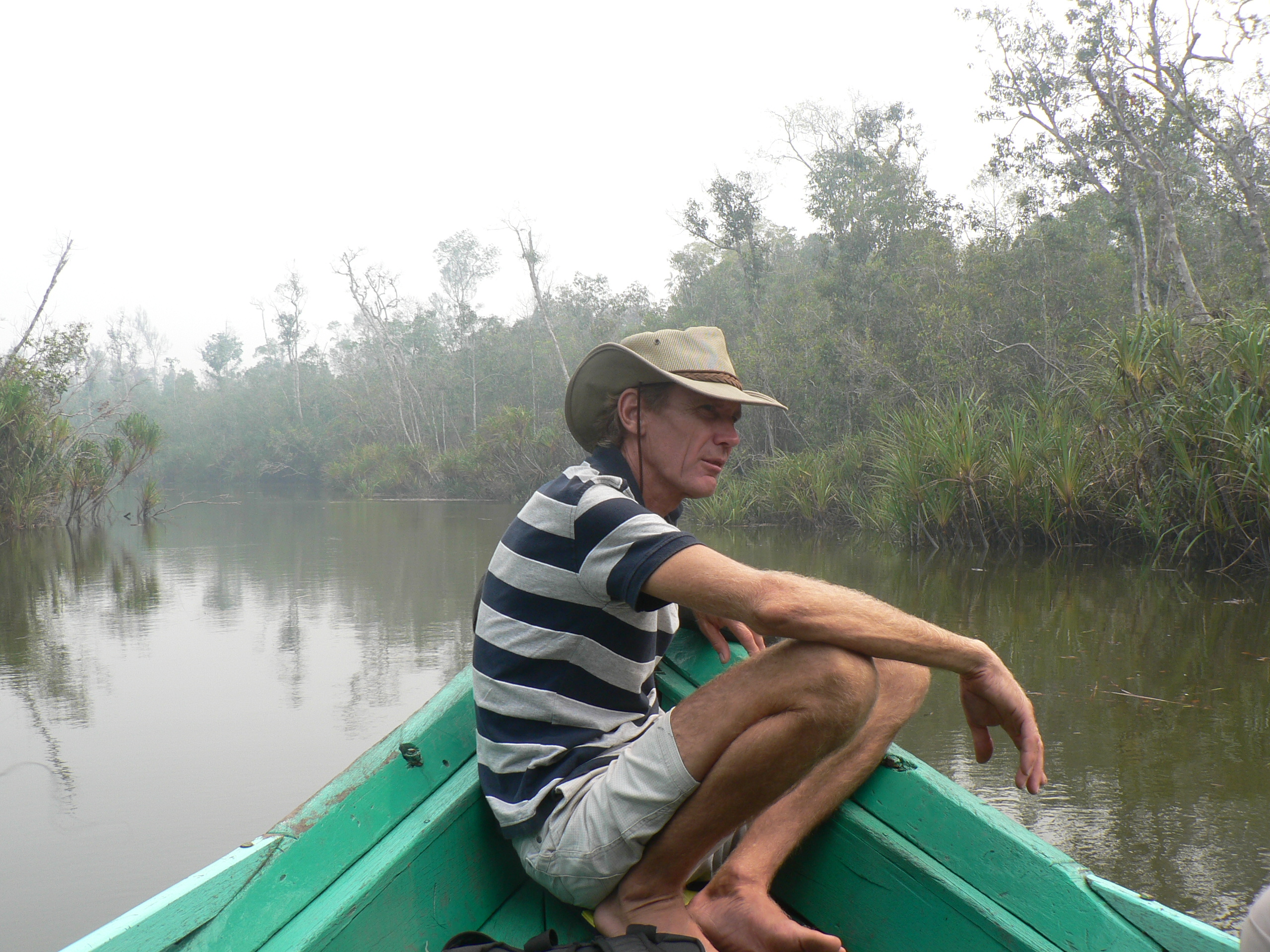
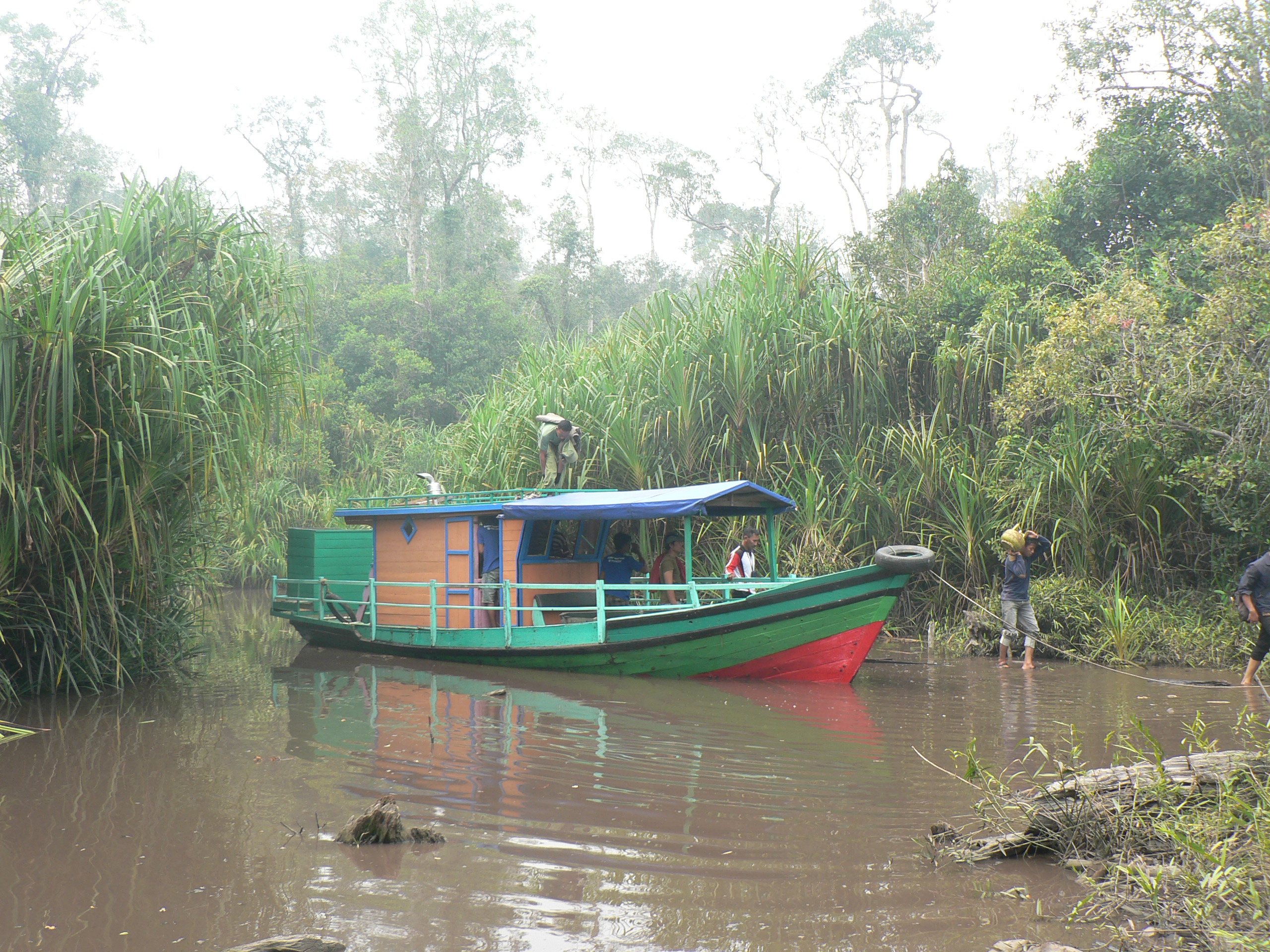
Eventually enough other boats had arrived, and we were able to fill the 10 places on an all day trip into the forest. We were picked up at 7am in a mini-bus and travelled for an hour or so, mostly on some of the roughest road we have ever been on, out of the city and to a small village further along the river, where we boarded a local boat. From here we travelled up the river for a couple of hours, during which time the forest became thicker and thicker and the river narrower.
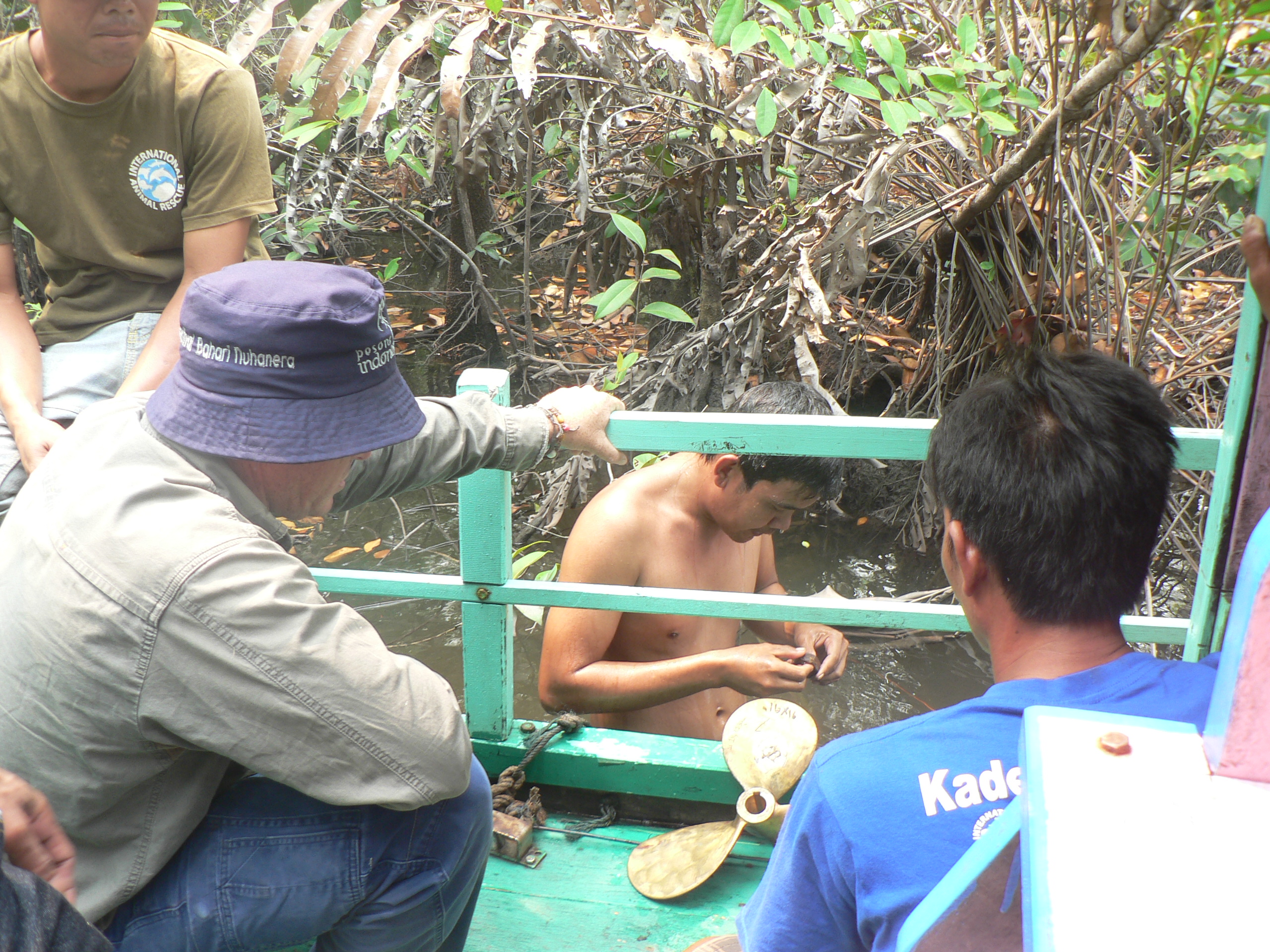
There was a moment of excitement when we heard and saw some significant rustling in the trees, potentially signalling an orangutan nearby. Alas nothing was seen though. Shortly after this, the boat seemed to be in some trouble and it transpired that the prop had fallen off the bottom of the boat due to some logs that we had gone over. No problem though, because there was a spare one on board and one of the crew quickly had his shirt off and was over the side, making the necessary repairs in very muddy water. It would seem that this is a regular occurrence.
While all this was happening, the tantalising prospect of seeing that orangutan had tempted Phil to wade ashore with one of the guides and walk into the forest on a mission to find her. After fighting with the overgrowth for a bit, he was rewarded by a very good look at her moving about in the tree tops. I had not even been aware that he was off the boat as I was engrossed in a conversation with one of the other yachties. Imagine my surprise when Phil got back and told me what he had been up to! By the way, in case you are wondering why he did not think to take me along, there is no way that I would have gone. Phil knows me well enough to know that I would not want to wade thigh deep in muddy water, then tramp through mud and through uncleared forest, even if it did bring an orangutan sighting.

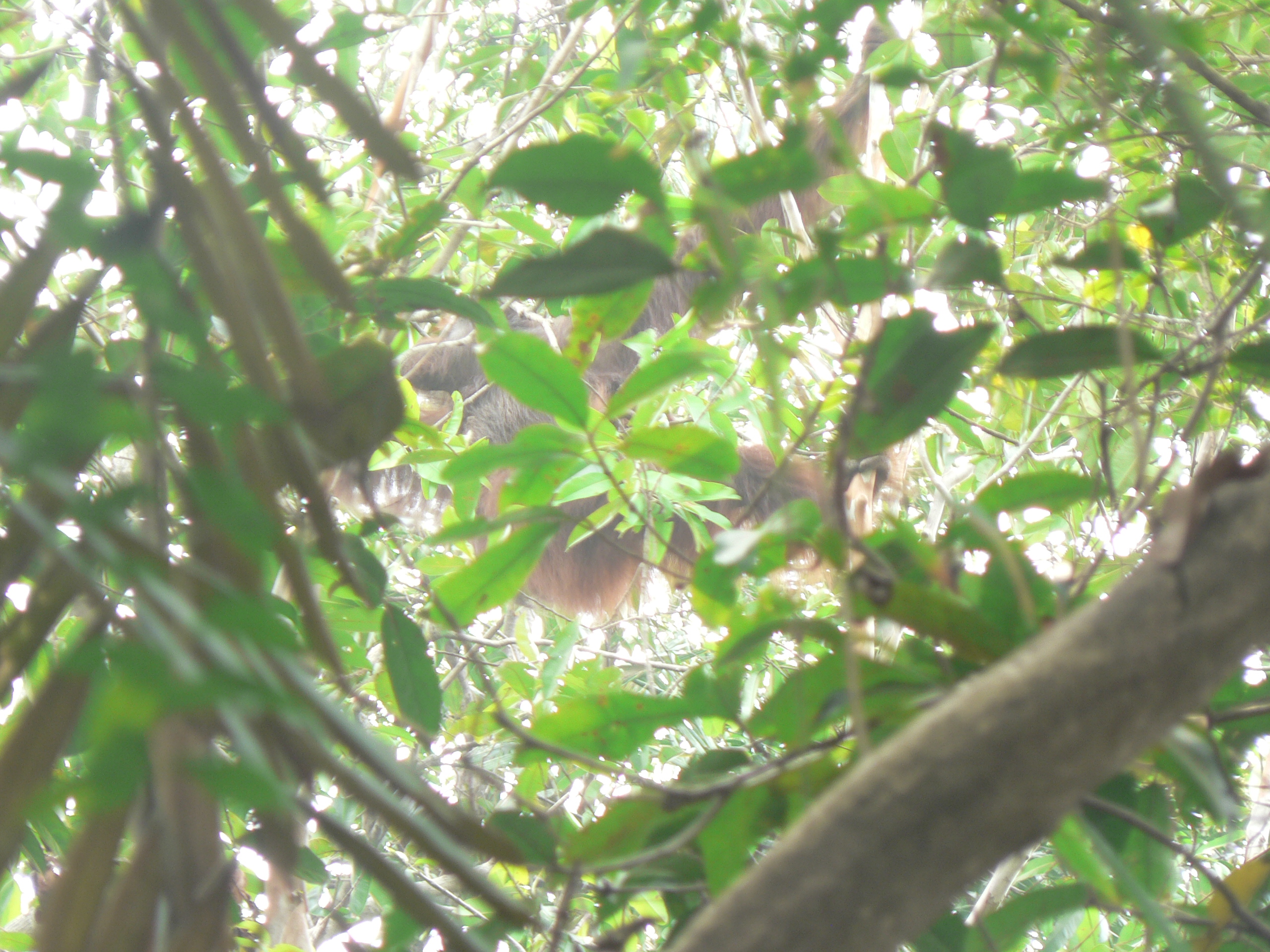
With the prop fixed, we were soon on our way again and a little further up the river, we were all rewarded with an orangutan sighting, but this was obviously at more of a distance away. Eventually we came to a clearing in the forest where there was a base camp of sorts.

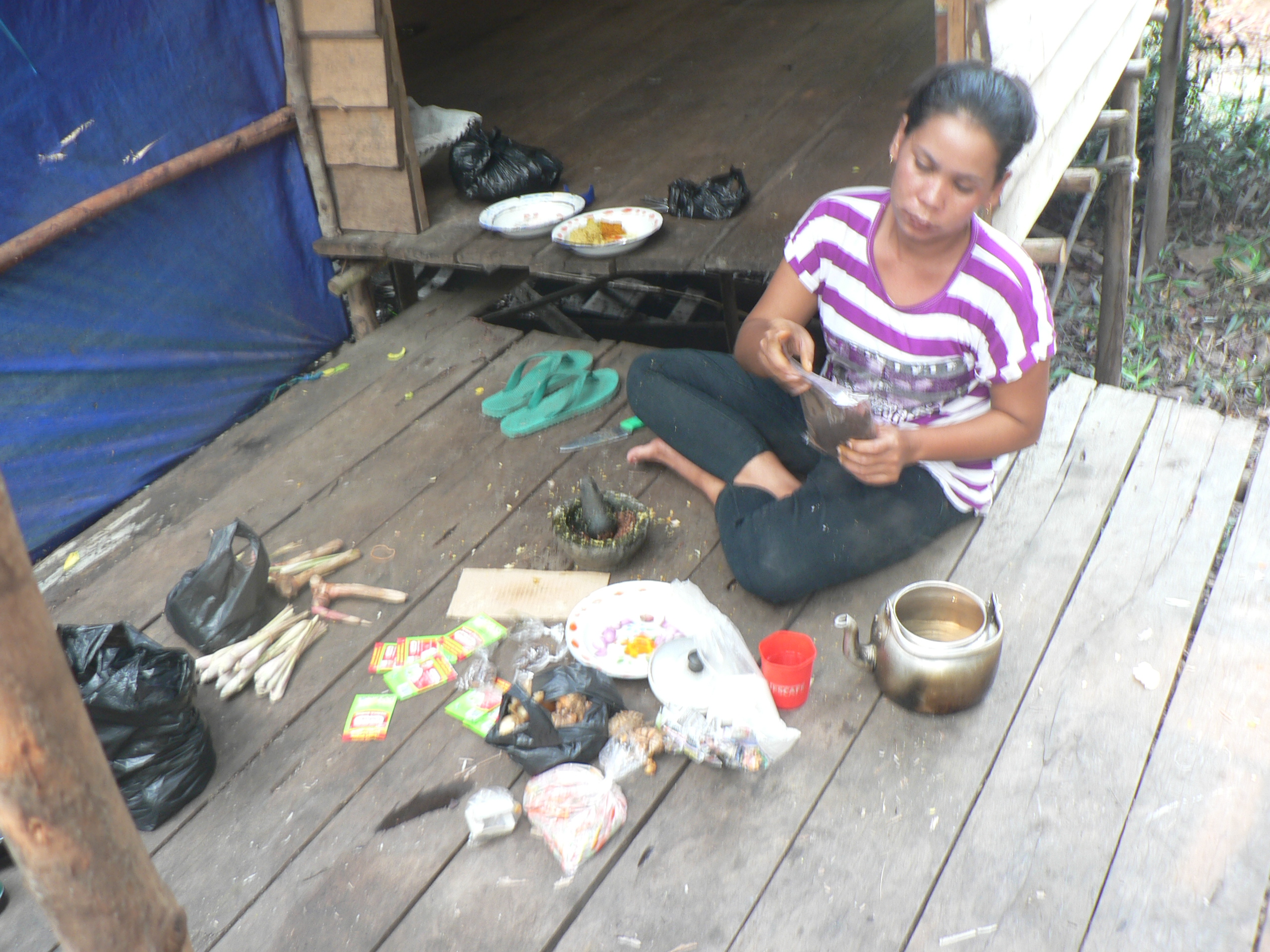
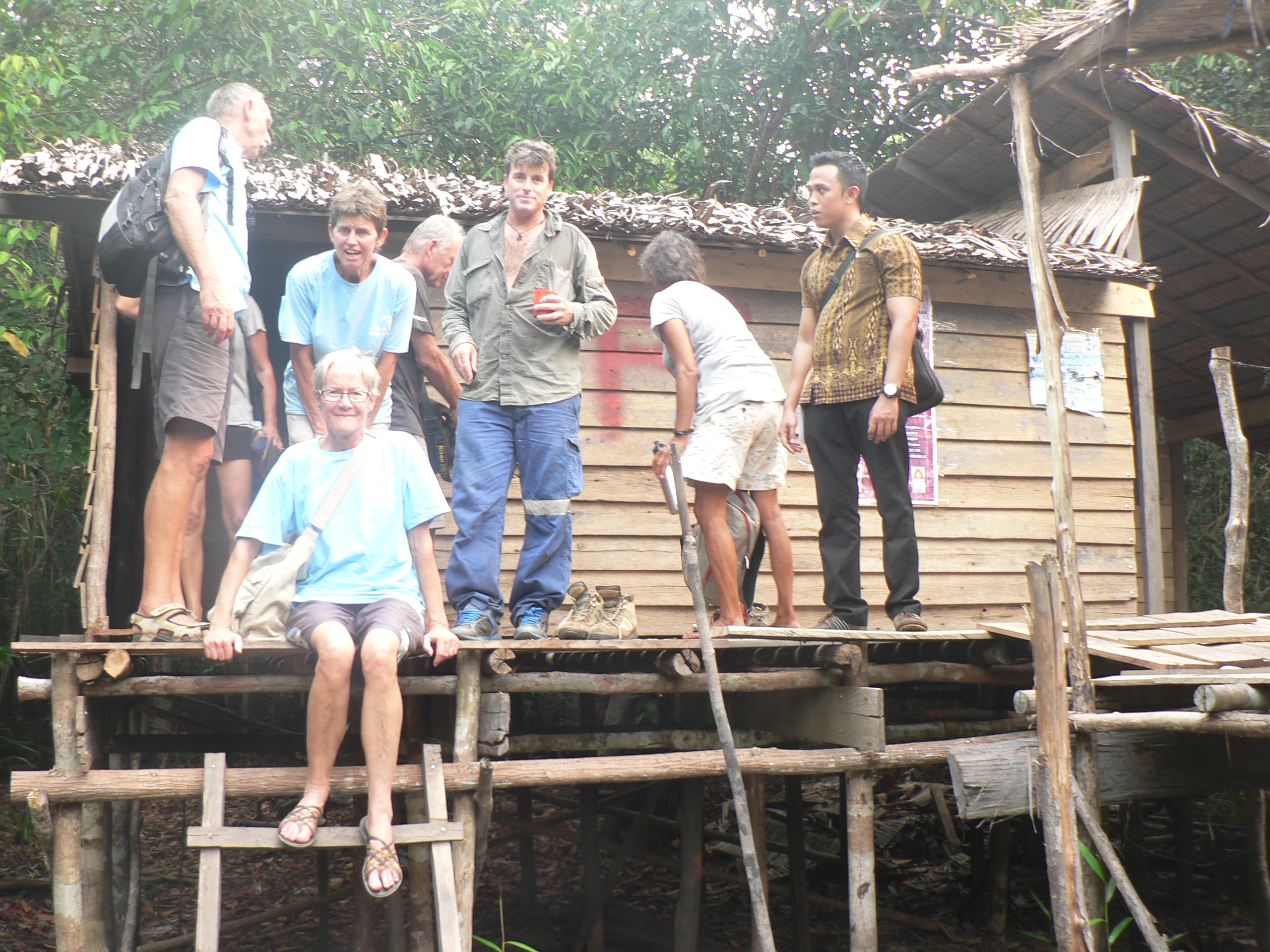
Here we took a short rest and changed our footwear for a guided trek into the forest. This really was a trek, as the path was like an obstacle course with lots of logs to scramble over or under, vines to push aside, many roots and rocks underfoot to challenge our balance, and creeks to cross. It was slow hot work as it was close to the hottest part of the day and no breeze of course. Unfortunately, all the wildlife must have sensibly been having a siesta as we did not see anything at all. Still the experience of trekking through the Kalimantan forest was fantastic. Meanwhile, back at the base camp some of the crew had been cooking lunch for us which we eagerly devoured on return from the walk.
Then it was back on the boat for the return journey.

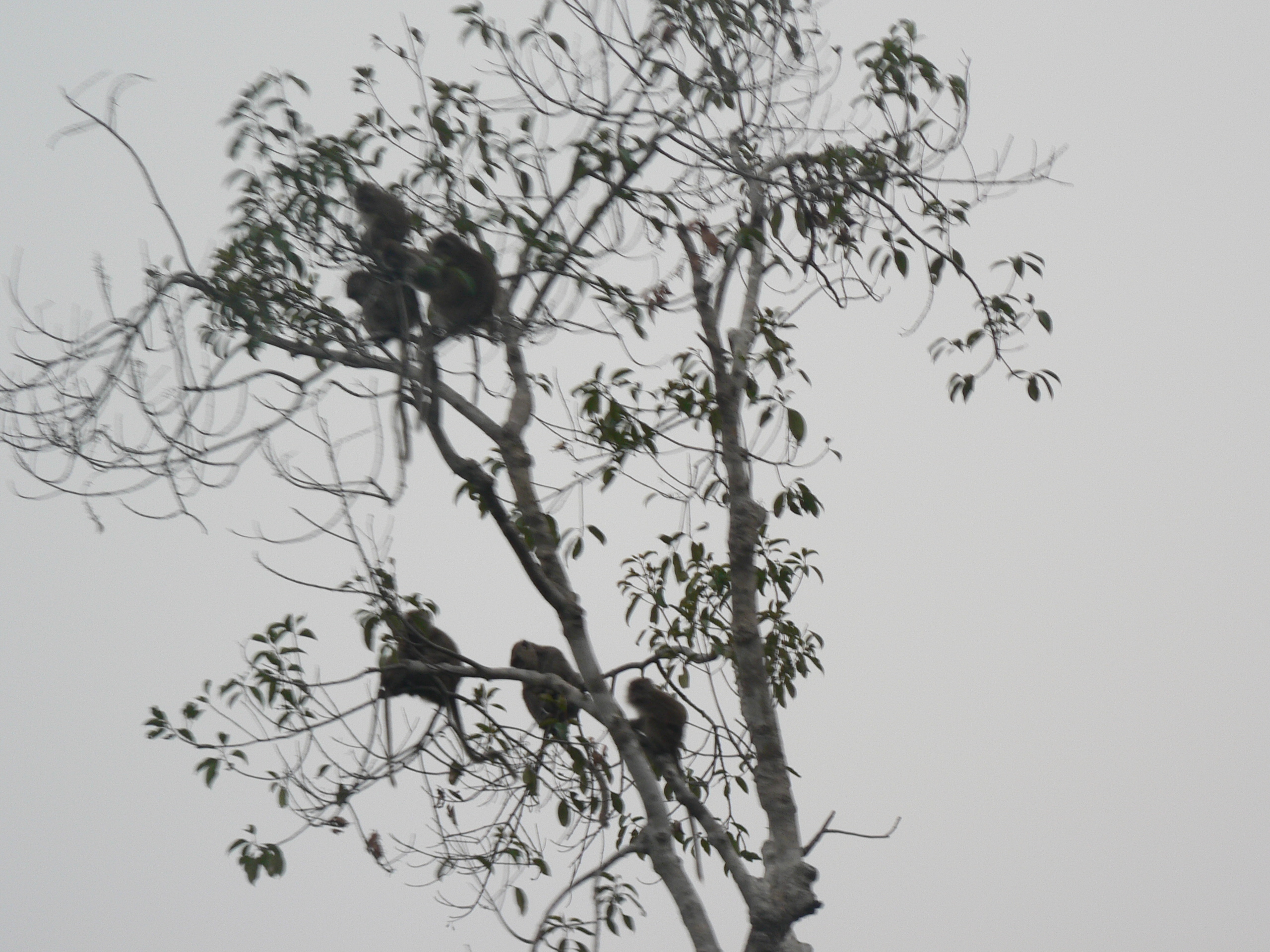
As it was now late afternoon, many of the creatures were gravitating to the river so we saw lots of monkeys in the trees (including the proboscis monkey which has a funny long nose) and some actually in the water. Some of us got a brief glimpse of another orangutan in the trees. There were also several groups of gibbons, and a few very pretty colourful birds flitting about. Once it became dark, we could see many fireflies in the trees, bringing a magical feel to the end of the day.
All had not been magical back at the anchorage though. There was a mix of wind and tide, and currents and eddies in different spots, which had the boats all swinging every which way instead of the usual orderly dance with every boat in step when there is just the influence of wind. This affected quite a number of boats, including ours and our neighbours (who were also on the trip with us) which had apparently “kissed” a couple of times. We all owed a big thanks to Chris on Tulu and Brian on Persephone, who were kept busy for the best part of the day buzzing around the anchorage in their dinghies, boarding various boats, putting out fenders and even re-anchoring some. We were blissfully unaware of all of this until we got back on the boat later that evening and realised that someone had been on board.
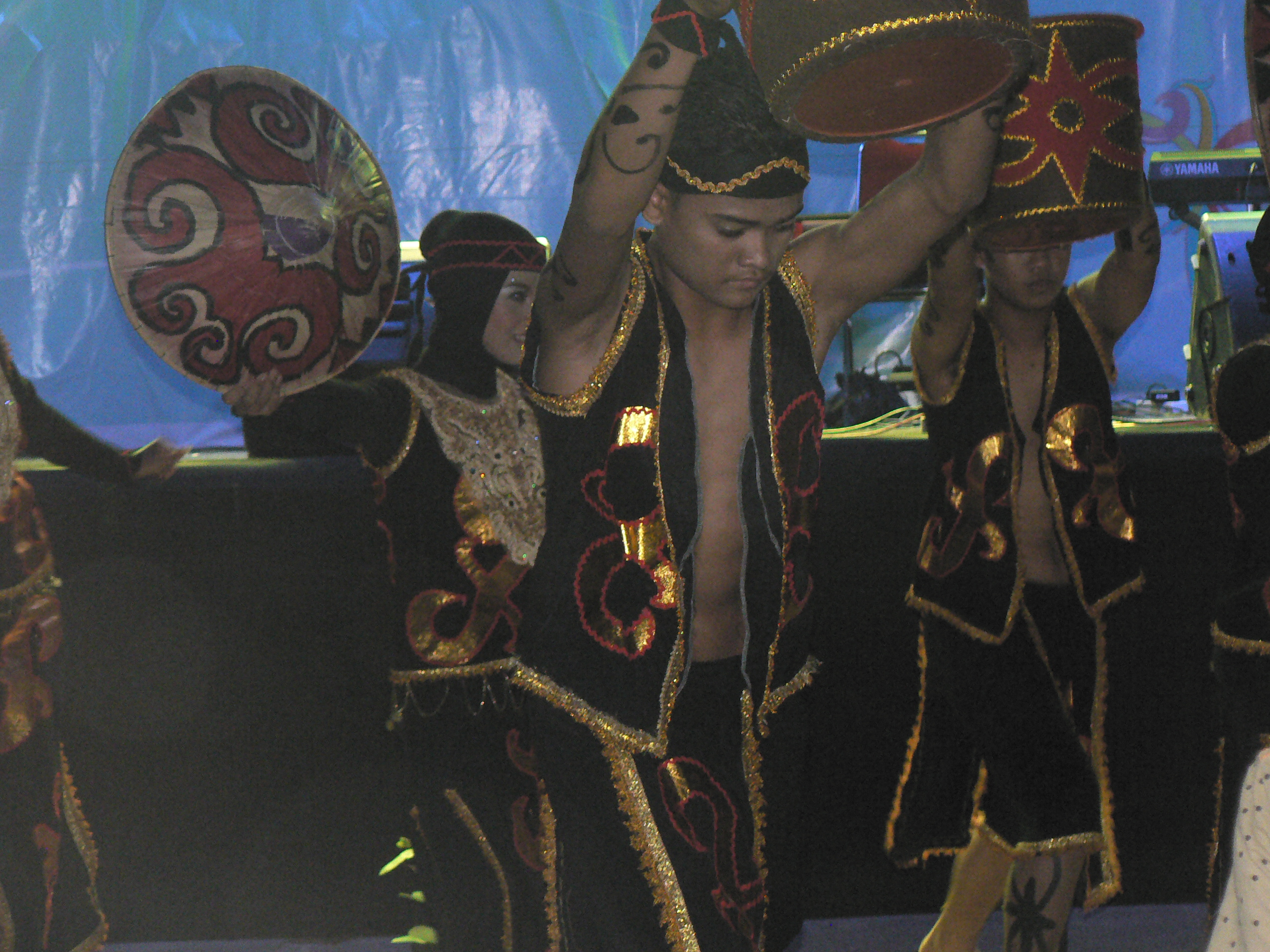
The forest trip called for lazing around the next morning which is exactly what we did. Just as well because that afternoon and evening we attended a function at the house of the Dayak Chief that turned out to be the wildest house party I have been to for a long time. Again we were welcomed at the gate by the senior Dayak men, with various ceremonial chants, and sips of a milky coloured alcoholic drink. The “ribbon” across the gate (which was actually a bamboo pole) was cut by one of us, and we all trooped inside to the yard where a traditionally dressed group of young people were dancing. There was much merriment, more music and dancing inside the house – I don’t think anyone actually lives there – again facilitated by frequent offering of the milky alcohol.
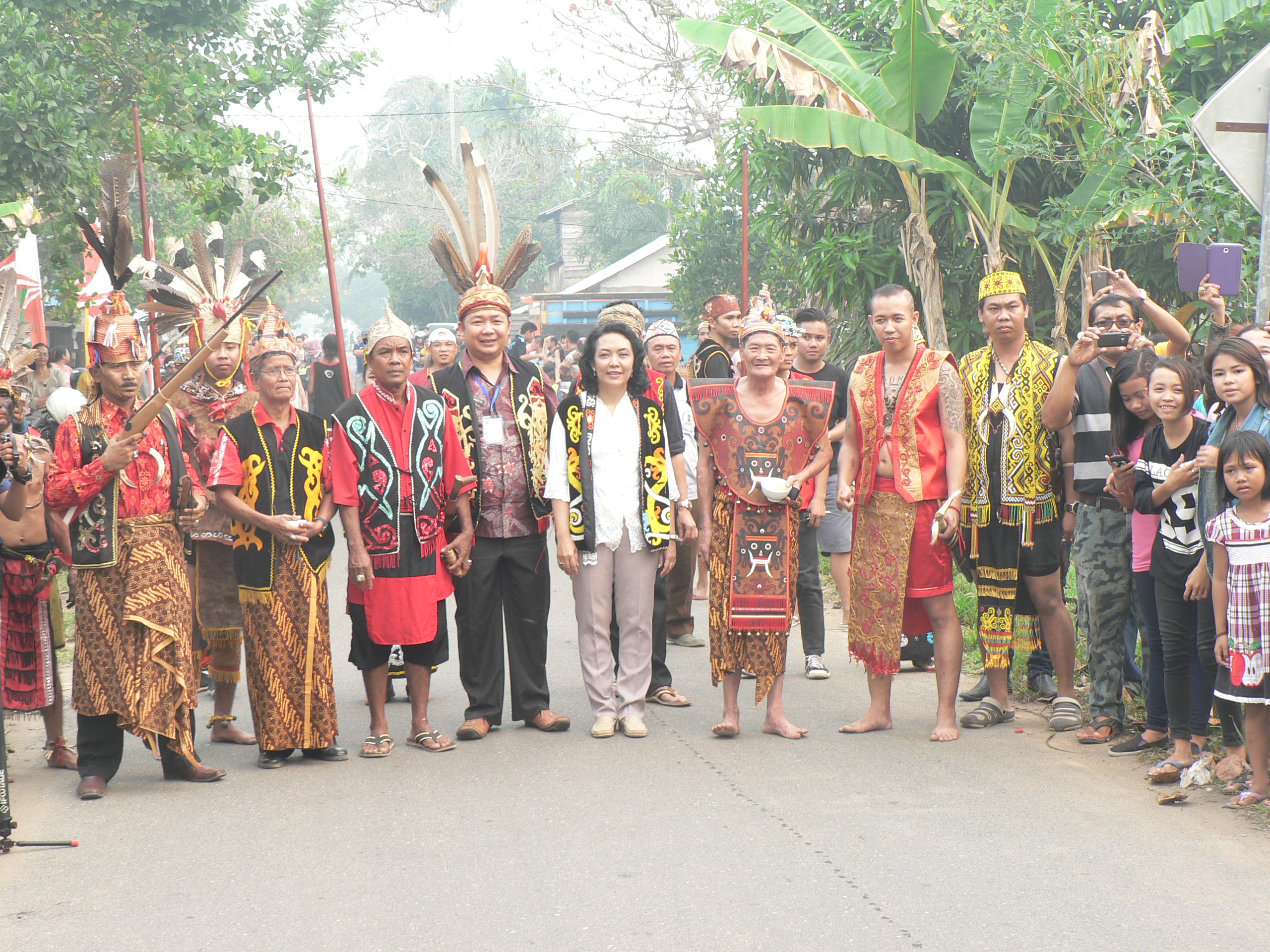
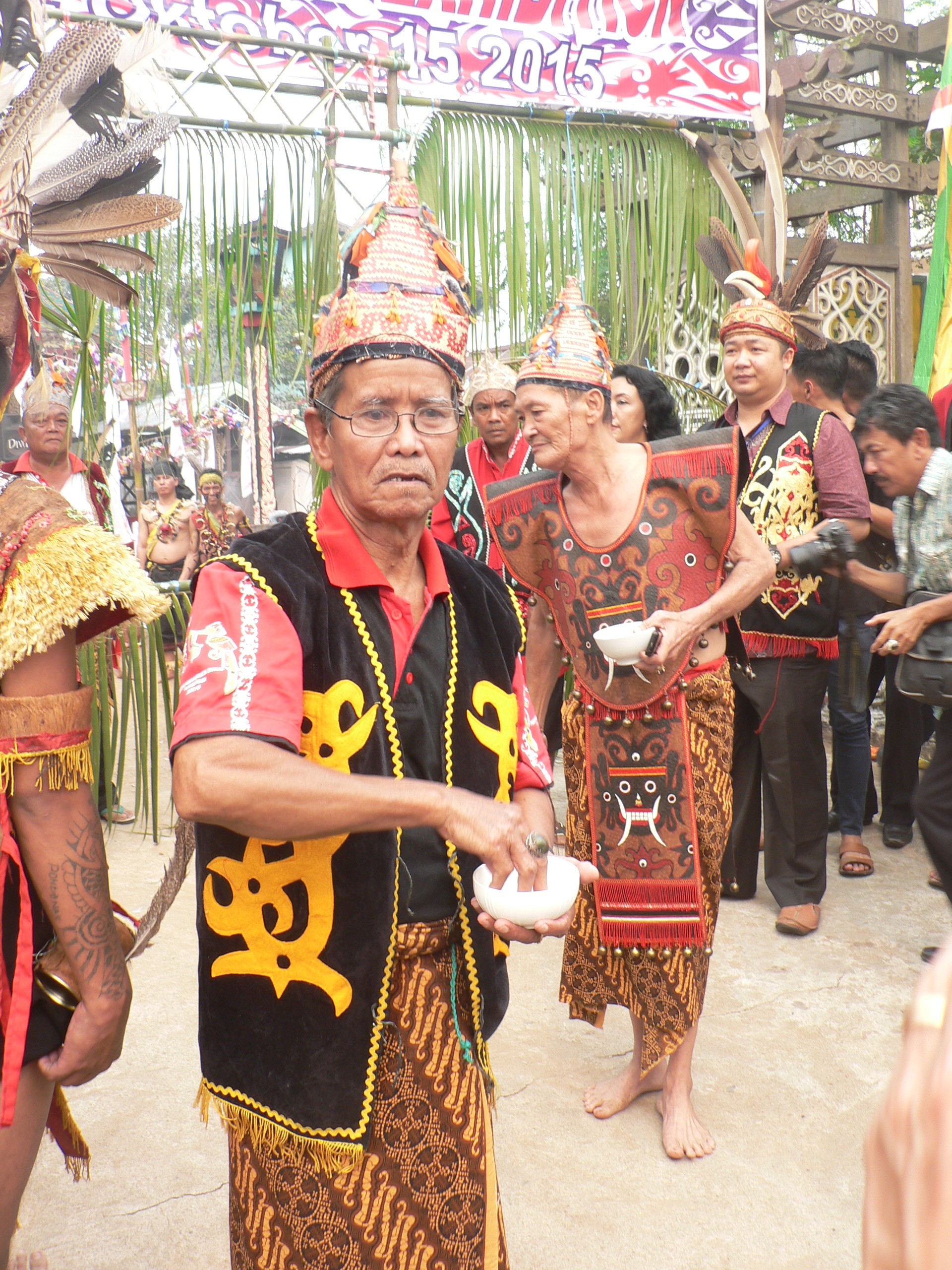
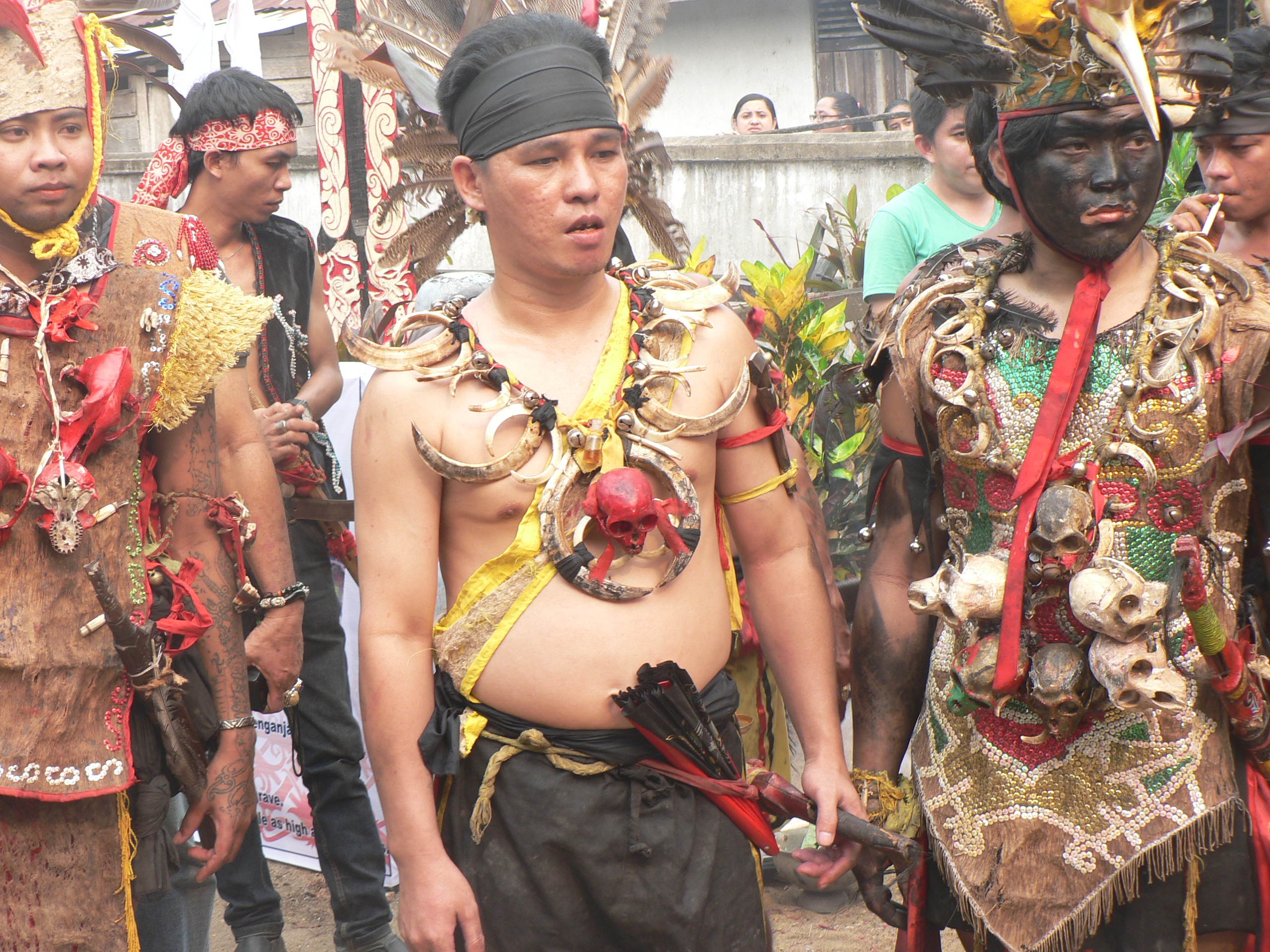
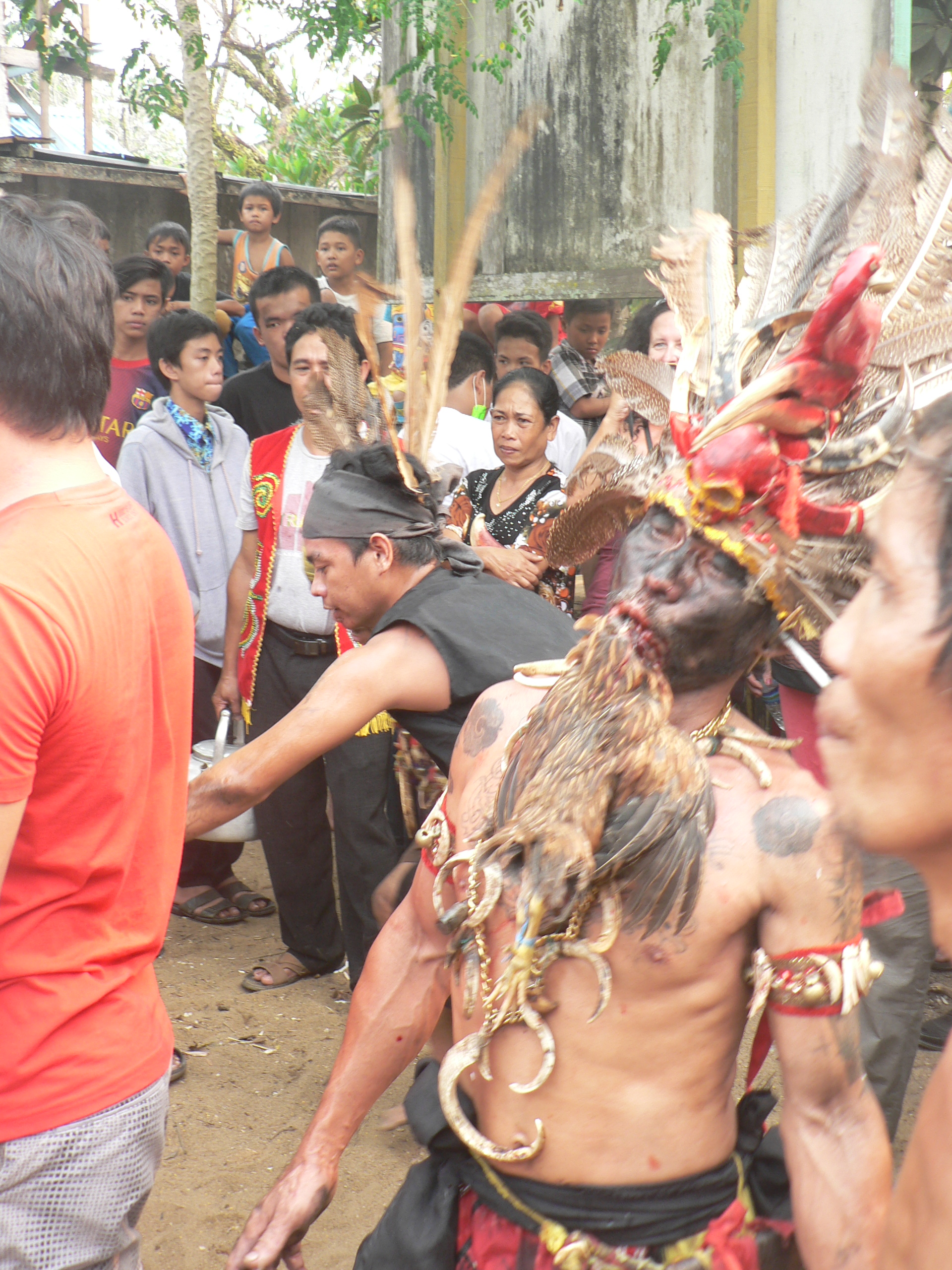
Outside the Dayak men were starting to perform some kind of ritual which apparently had not been performed for Westerners before. Even some of the Dayak people themselves had not seen it previously. I am not sure what the purpose of the ritual is- possibly to display strength (both physical strength and strength of the stomach!). The bystanders certainly needed a strong stomach to watch. If you don’t want to hear about rather gross goings on with live chickens, then I suggest you turn away now and skip the next few paragraphs.
The ritual involved biting off the head of a live chicken and drinking the chicken blood, while dancing around to the music. This was done by only a couple of the men, while the others played supporting roles. To complete the effect the older of the two men kept the chicken head hanging from his mouth while dancing and performing the next part of the ritual which involved standing and lying on what appeared to be sharp knives positioned strategically on a structure that resembled a chair. The other men held the chair firmly in place while the star performers rocked around on it moving from one knife to the next. The younger of the two men was dancing around sucking the blood from a headless chicken which was actually still flapping its wings. These guys appeared to be in some kind of trance and eventually seemed to pass out to be caught and revived by the others.

There were a number of other activities throughout the afternoon and evening. Some balloons were set up on a board high up on the house and we were encouraged to have a go at shooting darts from their traditional pipes which were very long. A few people actually managed to hit the target to much applause. There was also some kind of funeral or death ceremony which involved all of us dancing around a small hut like thing that I think was meant to house either a body or a spirit. At some point there was a smorgasbord early dinner which was very nice. Finally, and this was quite bizarre, there was a kind of piñata set up which required one of us to chop down a large piece of bamboo to release it. The twist was that the bamboo stick was full of their white alcohol which then had to be skulled by the “chopper”. Then the lollies and soft drinks that were in the piñata were handed around to the children. While all of this was going on there was continual music and dancing, and a woman who could have been the chief’s wife was continually circulating giving people buffalo horns full of the white alcohol to drink. The party had started at 2pm and by now it was about 7.30pm. The program had promised a 9pm finish but mercifully we were asked to pile back into the bus at about 8pm.
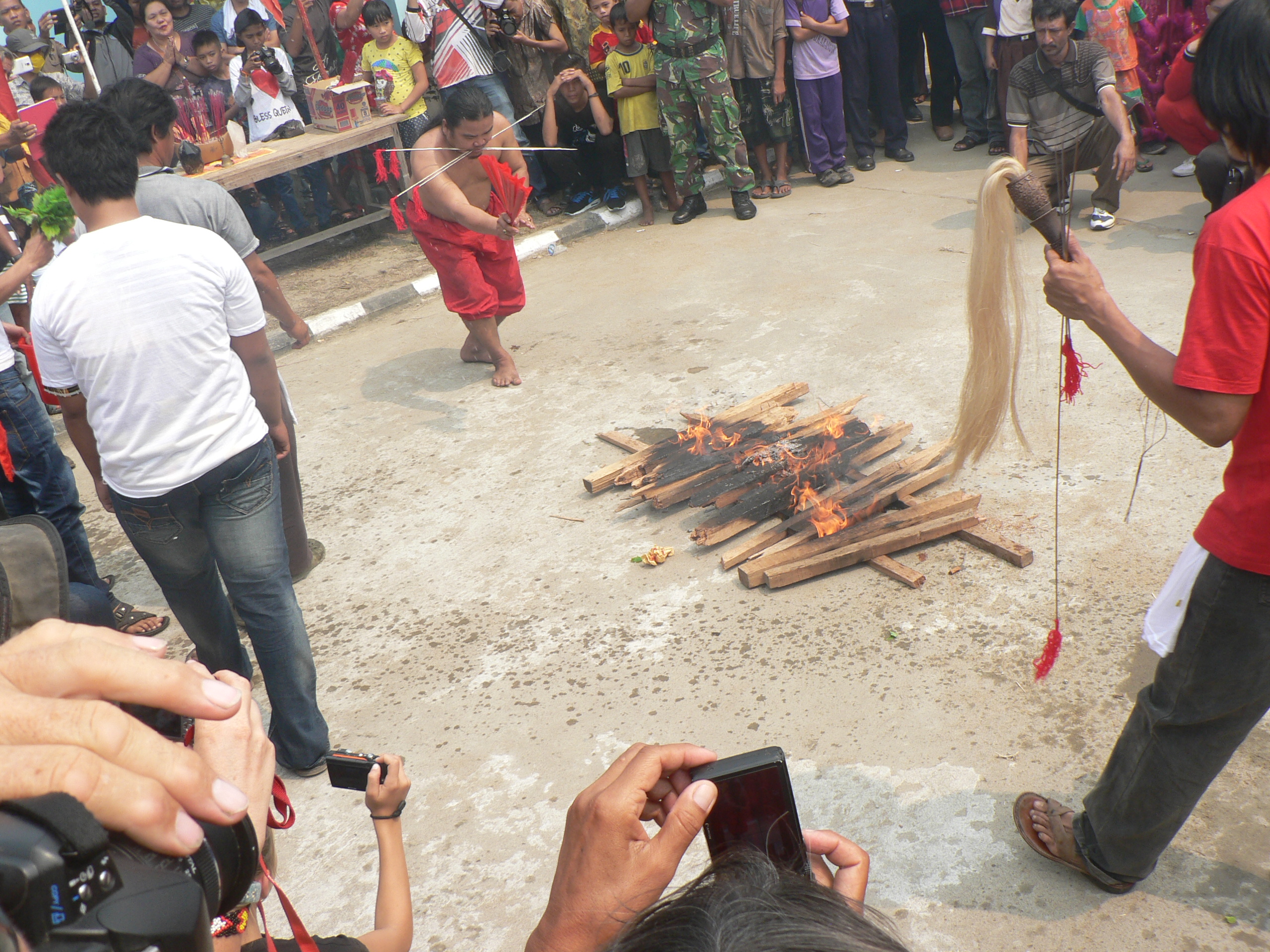
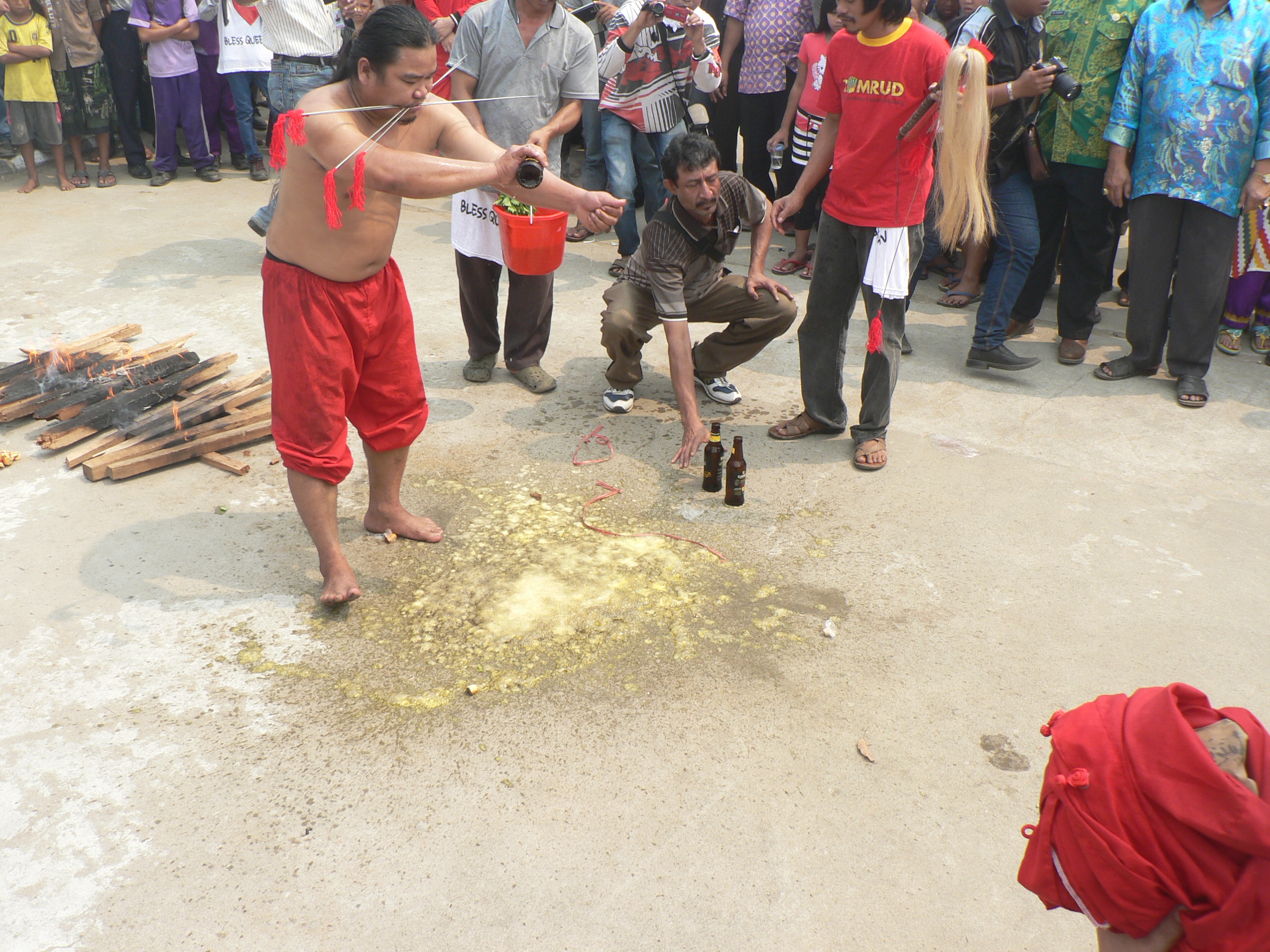
There were further displays of heroic physical acts the next morning at the formal welcome ceremony where one fellow put long sharp skewers through his cheeks, walked on fire, walked across broken glass and rolled around in it, climbed on the same chair of knife torture as we had seen the night before, and poured hydrochloric acid on his arms and then apparently drank some of it. Furthermore, he did all of this without the priming of chicken blood- well not that we saw anyway.

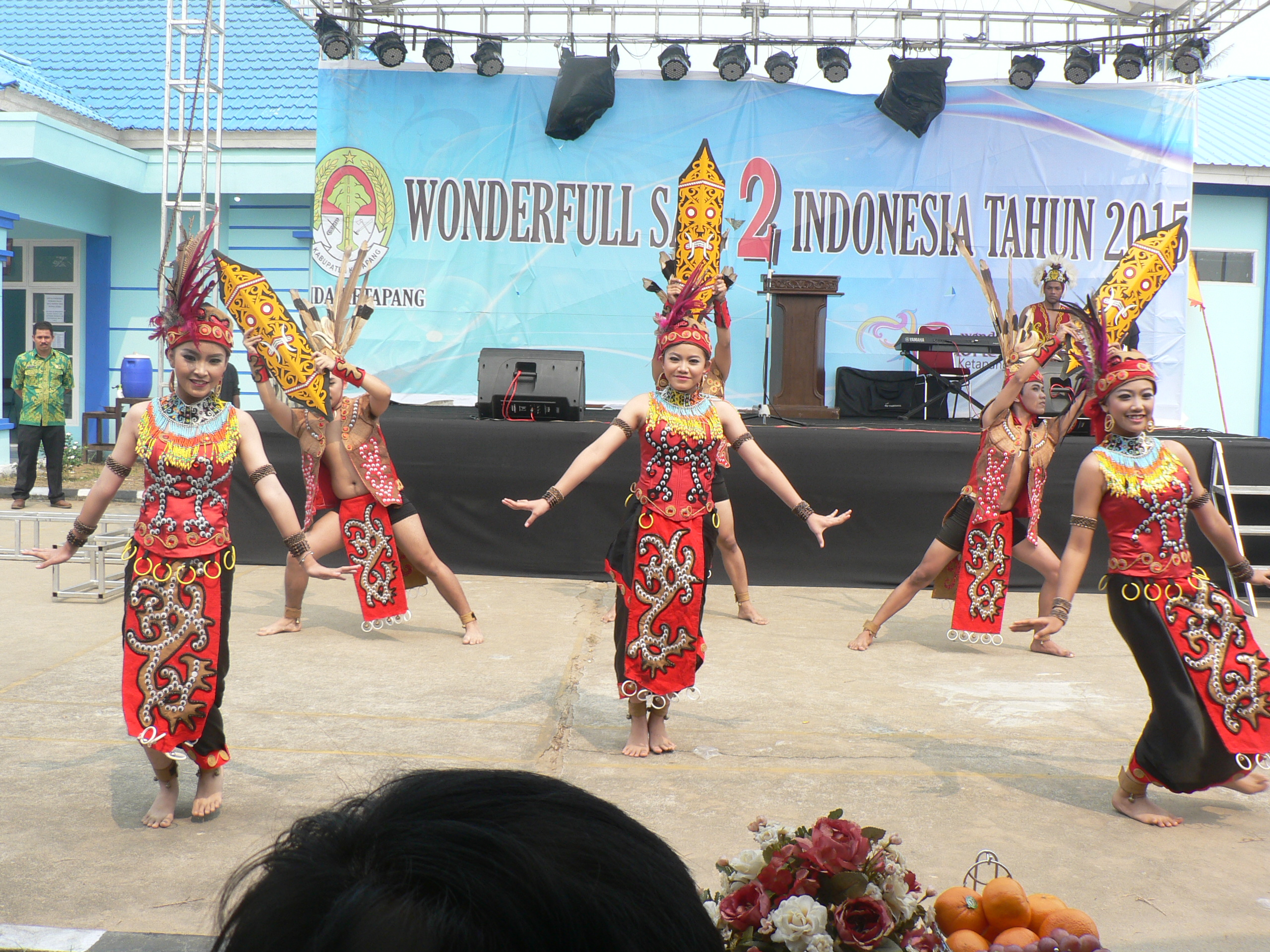

After a bit of a gruesome time, we were all looking forward to a more civilised dinner at the Regent’s house that night, and we were not disappointed. We were treated to a lovely evening with live entertainment by a band and an excellent couple of singers, and the meal was first rate- the best we had had in Indonesia. There was also a chance for us to acknowledge the wonderful guides and we finished the evening with the inevitable dancing. It was a very fitting finale to the highlight stop of the rally.
 paseafique
What a lovely. It was a great time when I could be one of guides that accompany you traveled in Ketapang. It was my first experience being a guide and of course first time going to the jungle with outsiders. I felt sad when you can’t see Orang Untan when we tracking inside the jungle, it’s become more when you going to leave us and I don’t even can see your boat for the last time and say goodbye to you, Philip and Lesley.
We’re missing you so much….
We’re missing you all our yachter
LikeLike